

2 months 3 weeks ago
I know of nothing more terrible than the poor creatures who have learned too much. Instead of the sound powerful judgement which would probably have grown up if they had learned nothing, their thoughts creep timidly and hypnotically after words, principles and formulae, constantly by the same paths. What they have acquired is a spider's web of thoughts too weak to furnish sure supports, but complicated enough to provide confusion.
▼
Source
source
On the Relative Educational Value of the Classics and the Mathematico-Physical Sciences in Colleges and High Schools, an address in (16 April 1886)
4 months 3 weeks ago
There must have been many who had a relationship to Jesus similar to that of Barabbas (his name was Jesus Barrabas). The Danish "Barrabas" is about the same as "N.N." [Mr. X or John Doe], filius patris, his father's son. - It is too bad, however, that we do not know anything more about Barrabas; it seems to me that in many ways he could have become a counterpart to the Wandering Jew. The rest of his life must have taken a singular turn. God knows whether or not he became a Christian. - It would be a poetic motif to have him, gripped by Christ's divine power, step forward and witness for him.

1 month 2 days ago
Science is not distinguished from myth by science being literally true and myth only a type of poetic analogy. While their aims are different, both are composed of symbols we use to deal with a slippery world.
▼
Source
source
Beyond the Last Thought: Freud's cigars and the long way round to Nirvana (p. 96)

2 months 3 weeks ago
The only possible way of accounting for the laws of nature and for uniformity in general is to suppose them results of evolution. This supposes them not to be absolute, not to be obeyed precisely. It makes an element of indeterminacy, spontaneity, or absolute chance in nature. Just as, when we attempt to verify any physical law, we find our observations cannot be precisely satisfied by it, and rightly attribute the discrepancy to errors of observation, so we must suppose far more minute discrepancies to exist owing to the imperfect cogency of the law itself, to a certain swerving of the facts from any definite formula.
1 month 3 weeks ago
In every part and corner of our life, to lose oneself is to be a gainer; to forget oneself is to be happy.
▼
Source
source
Old Mortality (1884).
4 months 3 weeks ago
Truth, like light, blinds. Falsehood, on the contrary, is a beautiful twilight that enhances every object.

1 week 3 days ago
Prove your words by your deeds.
2 months 1 week ago
Power tends to reduce openness... Power tries to solidify and stabilize its position by eradicating spaces open to play, or incalculable spaces.

3 months 3 weeks ago
My desire for knowledge is intermittent; but my desire to bathe my head in atmospheres unknown to my feet is perennial and constant. The highest that we can attain to is not Knowledge, but Sympathy with Intelligence. I do not know that this higher knowledge amounts to anything more definite than a novel and grand surprise on a sudden revelation of the insufficiency of all that we called Knowledge before - a discovery that there are more things in heaven and earth than are dreamed of in our philosophy.
4 months 3 weeks ago
Freedom's possibility is not the ability to choose the good or the evil. The possibility is to be able. In a logical system, it is convenient to say that possibility passes over into actuality. However, in actuality it is not so convenient, and an intermediate term is required. The intermediate term is anxiety, but it no more explains the qualitative leap than it can justify it ethically. Anxiety is neither a category of necessity nor a category of freedom; it is entangled freedom, where freedom is not free in itself but entangled, not by necessity, but in itself.
2 months 3 weeks ago
My immediate consciousness, my absolute perception, cannot go beyond myself, - I have immediate knowledge only of myself, whatever I know further I know only by reasoning, in the same manner in which I have come to those conclusions concerning the original powers of Nature, which certainly do not lie within the circle of my perceptions. I, however, - that which I call myself, - am not the man-forming power of Nature, but only one of its manifestations ; and only of this manifestation am I conscious, not of that power, whose existence I have only discovered from the necessity of explaining my own.
▼
Source
source
Jane Sinnett, trans 1846 p. 13
2 months 2 weeks ago
Stuart was not dismayed by his sexual feelings about the boy.
▼
Source
source
The Good Apprentice (1985), p. 247.
2 months 2 weeks ago
O world, thou choosest not the better part! It is not wisdom to be only wise, And on the inward vision close the eyes, But it is wisdom to believe the heart. Columbus found a world, and had no chart, Save one that faith deciphered in the skies; To trust the soul's invincible surmise Was all his science and his only art.
▼
Source
source
O World, Thou Choosest Not

3 months 3 weeks ago
The great writers to whom the world owes what religious liberty it possesses, have mostly asserted freedom of conscience as an indefeasible right, and denied absolutely that a human being is accountable to others for his religious belief.
▼
Source
source
Ch. 1: Introductory
3 months 2 weeks ago
Monsters cannot be announced. One cannot say: 'here are our monsters', without immediately turning the monsters into pets.
▼
Source
source
Some Statements and Truisms about Neologisms, Newisms, Postisms, Parasitisms, and other small Seismisms, The States of Theory, ed. David Carroll, New York: Columbia University Press, 1989.

3 months 2 days ago
If all things are in common among friends, the most precious is Wisdom. What can Juno give which thou canst not receive from Wisdom? What mayest thou admire in Venus which thou mayest not also contemplate in Wisdom? Her beauty is not small, for the lord of all things taketh delight in her. Her I have loved and diligently sought from my youth up.
▼
Source
source
As quoted in Giordano Bruno : His Life and Thought (1950) by Dorothea Waley Singer
1 month 3 weeks ago
You could give Aristotle a tutorial. And you could thrill him to the core of his being. Aristotle was an encyclopedic polymath, an all time intellect. Yet not only can you know more than him about the world, you also can have a deeper understanding of how everything works. Such is the privilege of living after Newton, Darwin, Einstein, Planck, Watson, Crick and their colleagues.
1 month 3 weeks ago
Adversity shows whether we have friends, or only the shadows of friends.
▼
Source
source
Maxim 35
2 months 1 week ago
It seems as if the female spirit of the world were mourning everlastingly over blessings, not lost, but which she has never had, and which, in her discouragement she feels that she never will have, they are so far off.
2 months 3 days ago
To sum up: we have seen that of the three notions of 'partial interpretation' discussed, each is either unsuitable for Carnap's purposes (starting with observation terms), or incompatible with a rather minimal scientific realism; and, in addition, the second notion depends upon gross and misleading changes in our use of language. Thus in none of these senses is 'a partially interpreted calculus in which only the observation terms are directly interpreted' an acceptable model for a scientific theory.
▼
Source
source
"What theories are not"
2 months 1 week ago
And yet there is nothing so badly imagined: nature seems to have provided, that the follies of men should be transient, but they by writing books render them permanent. A fool ought to content himself with having wearied those who lived with him: but he is for tormenting future generations; he is desirous that his folly should triumph over oblivion, which he ought to have enjoyed as well as his grave; he is desirous that posterity should be informed that he lived, and that it should be known for ever that he was a fool. Commonly paraphrased as "An author is a fool who, not content with having bored those who have lived with him, insists on boring future generations".
▼
Source
source
No. 66. (Rica writing to * * *)



2 months 3 weeks ago
Laws, like houses, lean on one another.
▼
Source
source
From the Tracts Relative to the Laws Against Popery in Ireland (c. 1766), not published during Burke's lifetime.
1 month 2 weeks ago
The conservative response to modernity is to embrace it, but to embrace it critically, in full consciousness that human achievements are rare and precarious, that we have no God-given right to destroy our inheritance, but must always patiently submit to the voice of order, and set an example of orderly living.
▼
Source
source
"Eliot and Conservatism" (p. 208)
3 months 3 weeks ago
You must do nothing before him, which you would not have him imitate. If any thing escape you, which you would have pass as a fault in him, he will be sure to shelter himself under your example, and shelter himself so as that it will not be easy to come at him, to correct it in him the right way.
▼
Source
source
Sec. 71
3 weeks ago
All repressed passion produces its counter-passion which is as malevolent as the natural passion would be beneficial.
▼
Source
source
Le nouveau monde amoureux
3 months 1 week ago
As touching the gods, I do not know whether they exist or not, nor how they are featured; for there is much to prevent our knowing: the obscurity of the subject and the brevity of human life.
▼
Source
source
Opening lines of Concerning the Gods (DK 80 B4).
6 days ago
The most strongly enforced of all known taboos is the taboo against knowing who or what you really are behind the mask of your apparently separate, independent, and isolated ego.
▼
Source
source
Inside Information
3 months 3 weeks ago
Spinoza says that if a stone which has been projected through the air, had consciousness, it would believe that it was moving of its own free will. I add this only, that the stone would be right. The impulse given it is for the stone what the motive is for me, and what in the case of the stone appears as cohesion, gravitation, rigidity, is in its inner nature the same as that which I recognise in myself as will, and what the stone also, if knowledge were given to it, would recognise as will.
3 months 3 weeks ago
The bluebird carries the sky on his back.
▼
Source
source
April 3, 1852
3 months 3 weeks ago
To love truth for truth's sake is the principal part of human perfection in this world, and the seed-plot of all other virtues.
▼
Source
source
Letter to Anthony Collins, 29 October 1703

3 months 3 weeks ago
Everyone feels benevolent if nothing happens to be annoying him at the moment.

2 weeks 2 days ago
The Philosopher of this age is not a Socrates, a Plato, a Hooker, or Taylor, who inculcates on men the necessity and infinite worth of moral goodness, the great truth that our happiness depends on the mind which is within us, and not on the circumstances which are without us; but a Smith, a De Lolme, a Bentham, who chiefly inculcates the reverse of this,-that our happiness depends entirely on external circumstances; nay, that the strength and dignity of the mind within us is itself the creature and consequence of these. Were the laws, the government, in good order, all were well with us; the rest would care for itself! Dissentients from this opinion, expressed or implied, are now rarely to be met with; widely and angrily as men differ in its application, the principle is admitted by all.
3 months 3 weeks ago
It strikes everyone in beginning to form an acquaintance with the treasures of Indian literature, that a land so rich in intellectual products and those of the profoundest order of thought..."
▼
Source
source
quoted in De Riencourt, Amaury The Soul of India Harper & Brothers Publishers New York 1960 p. 301
1 month 2 weeks ago
We have classical associations and great names of our own which we can confidently oppose to the most splendid of ancient times. Senate has not to our ears a sound so venerable as Parliament. We respect the Great Charter more than the laws of Solon. The Capitol and the Forum impress us with less awe than our own Westminster Hall and Westminster Abbey... The list of warriors and statesmen by whom our constitution was founded or preserved, from De Montfort down to Fox, may well stand a comparison with the Fasti of Rome. The dying thanksgiving of Sydney is as noble as the libation which Thrasea poured to Liberating Jove: and we think with far less pleasure of Cato tearing out his entrails than of Russell saying, as he turned away from his wife, that the bitterness of death was past.
▼
Source
source
'History', The Edinburgh Review (May 1828), quoted in The Miscellaneous Writings of Lord Macaulay, Vol. I (1860), p. 252

3 months 3 weeks ago
Let us maintain inviolably equality in the sacred right of suffrage: public security can never have a basis more solid.
▼
Source
source
Author's Inscription: French Edition

3 months 3 weeks ago
Blessed are those who have no talent!
▼
Source
source
February 1850

2 months 3 weeks ago
What a judgment upon the living, if it is true, as has been maintained, that what dies has never existed!
2 months 2 weeks ago
I would say act like a man of thought and think like a man of action.
▼
Source
source
Speech at the Descartes Conference in Paris (1937) Quoted in The Forbes Scrapbook of Thoughts on the Business of Life (1950), p. 442, as "Think like a man of action, act like a man of thought."
3 months 3 weeks ago
Wherever Law ends, Tyranny begins.
▼
Source
source
Second Treatise of Government, Sec. 202

3 months 1 week ago
Neither will the horse be adjudged to be generous, that is sumptuously adorned, but the horse whose nature is illustrious; nor is the man worthy who possesses great wealth, but he whose soul is generous.
▼
Source
source
Pythagorean Ethical Sentences From Stobæus
1 month 1 week ago
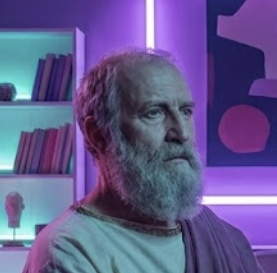
A great chapter of the history of the world is written in the chalk. Few passages in the history of man can be supported by such an overwhelming mass of direct and indirect evidence as that which testifies to the truth of the fragment of the history of the globe, which I hope to enable you to read, with your own eyes, tonight. Let me add, that few chapters of human history have a more profound significance for ourselves. I weigh my words well when I assert, that the man who should know the true history of the bit of chalk which every carpenter carries about in his breeches-pocket, though ignorant of all other history, is likely, if he will think his knowledge out to its ultimate results, to have a truer, and therefore a better, conception of this wonderful universe, and of man's relation to it, than the most learned student who is deep-read in the records of humanity and ignorant of those of Nature.
3 months 1 week ago
Animals are rational; in most of them logos is imperfect, but it is certainly not wholly lacking. So if, as our opponents say, justice applies to rational beings, why should not justice, for us, also apply to animals?
▼
Source
source
3, 18, 1

3 months 3 weeks ago
You must always be puzzled by mental illness. The thing I would dread most, if I became mentally ill, would be your adopting a common sense attitude; that you could take it for granted that I was deluded.
▼
Source
source
Conversation of 1947 or 1948
2 months 1 week ago
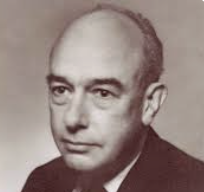
Life is agid. Life is fulgid. Life is a burgeoning, a quickening of the dim primordial urge in the murky wastes of time. Life is what the least of us make most of us feel the least of us make the most of.
▼
Source
source
Quine's response in 1988 when asked his philosophy of life. (He invented the word "agid".) It makes up the entire Chapter 54 in Quine in Dialogue (2008).

2 months 3 weeks ago
The best definition of man is: a being that goes on two legs and is ungrateful.
▼
Source
source
Part 1, Chapter 8 (tr. David Magarshack, 1950) The best definition of man is: a biped, ungrateful.

3 months 4 weeks ago
I pass, at length, to the third and perfectly absolute dominion, which we call democracy.
▼
Source
source
Ch. 11, Of Democracy

3 months 4 weeks ago
The trade of insurance gives great security to the fortunes of private people, and by dividing among a great many that loss which would ruin an individual, makes it fall light and easy upon the whole society.
▼
Source
source
Chapter I, Part III, p. 821.
3 days ago
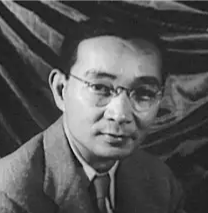
All men and women have passions, natural desires and noble ambitions, and also a conscience; they have sex, hunger, fear, anger, and are subject to sickness, pain, suffering and death. Culture consists in bringing about the expression of these passions and desires in harmony.
▼
Source
source
p. 20

3 months 3 weeks ago
Those who forget good and evil and seek only to know the facts are more likely to achieve good than those who view the world through the distorting medium of their own desires.
▼
Source
source
Ch. 1: Mysticism and Logic
CivilSimian.com created by AxiomaticPanic, CivilSimian, Kalokagathia