


3 months 2 weeks ago
Death is a friend of ours; and he that is not ready to entertain him is not at home.
▼
Source
source
An Essay on Death, published in The Remaines of the Right Honourable Francis Lord Verulam (1648), which may not have been written by Bacon

1 month 3 weeks ago
Often things realised in thought are more vivid than than the same things in inattentive physical experience. But the things apprehended as mental are always subject to the condition that we come to a stop when we come to explore ever higher grades of complexity in their realised relationships. We always find tat we have thought of just this - whatever it may be - and of no more.
▼
Source
source
Ch. 10: "Abstraction", p. 239

1 month 2 weeks ago
Some will ask, what about weak natures, must they not be protected? Yes, but to be able to do that, it will be necessary to realize that education of children is not synonymous with herdlike drilling and training. If education should really mean anything at all, it must insist upon the free growth and development of the innate forces and tendencies of the child. In this way alone can we hope for the free individual and eventually also for a free community, which shall make interference and coercion of human growth impossible.

1 month 2 weeks ago
Capitalism dislikes silence.

2 months 1 week ago
The wise will determine from the gravity of the case; the irritable from sensibility to oppression; the high-minded from disdain and indignation at abusive power in unworthy hands.

3 months 3 weeks ago
God judged it better to bring good out of evil than to suffer no evil to exist.
▼
Source
source
Enchiridion (c. 420 ), Ch. 27
2 months 1 week ago
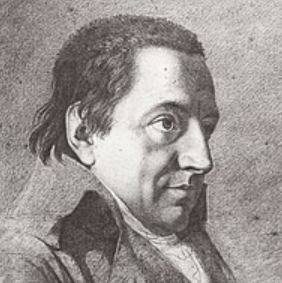
This method of mental training is, therefore, the immediate preparation for the moral; it completely destroys the root of immorality by never allowing sensuous enjoyment to become the motive. Formerly, that was the first motive to be stimulated and developed, because it was believed that otherwise the pupil could not be influenced or controlled at all.
▼
Source
source
General Nature of New Eduction contiunued p. 31
1 month 1 week ago
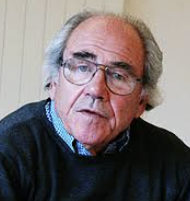
The need to speak, even if one has nothing to say, becomes more pressing when one has nothing to say, just as the will to live becomes more urgent when life has lost its meaning.
▼
Source
source
(p. 30)

3 months 1 week ago
It is better to risk sparing a guilty person than to condemn an innocent one.
▼
Source
source
Zadig, 1747
2 months 1 week ago
The Scientific discourse extracts truths from the errors which surround and oppose it on all sides and in every form; and, by demolition of these opposing views as error, and as impossible to true thought, shows the truth as that which alone remains after their withdrawal, and therefore as the only possible truth:--and in this separation of opposites, and elucidation of the truth from the confused chaos in which truth and error lie mingled together, consists the peculiar and characteristic nature of the Scientific discourse. This method creates and produces truth, before our eyes, out of a world full of error.
▼
Source
source
P. 26-27

3 months 1 week ago
From the comparison of theism and idolatry, we may form some other observations, which will also confirm the vulgar observation that the corruption of the best things gives rise to the worst.
▼
Source
source
Part X - With regard to courage or abasement

2 months 3 days ago
By virtue of depression, we recall those misdeeds we buried in the depths of our memory. Depression exhumes our shames.

1 month 1 week ago
People try to do all sorts of clever and difficult things to improve life instead of doing the simplest, easiest thing-refusing to participate in activities that make life bad.
▼
Source
source
p. 210
1 month 3 weeks ago
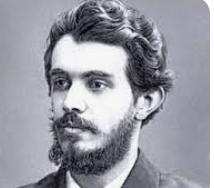
Objectification is above all exteriorization, the alienation of spirit from itself.
▼
Source
source
p. 63

3 months 1 week ago
Brutes are merely brutal; men and women are capable of being devils and lunatics. They are no less capable of being fully human-even, occasionally, of being a bit more than fully human, of being saints, heroes and geniuses.
▼
Source
source
Introduction to You Are Not The Target by Laura Archera Huxley, 1963

1 month 3 days ago
It's almost impossible to say anything against Islam in this country, because you are accused of being racist or Islamophobic.
▼
Source
source
2008 comment quoted in "Fury over Richard Dawkins's burka jibe as atheist tells of his 'visceral revulsion' at Muslim dress", Daily Mail
1 month 2 weeks ago
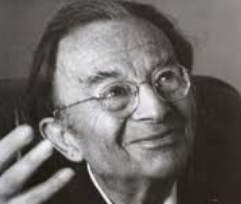
If a person loves only one other person and is indifferent to all others, his love is not love but a symbiotic attachment, or an enlarged egotism.

3 months 1 week ago
So our self-feeling in this world depends entirely on what we back ourselves to be and do.
▼
Source
source
Ch. 10

1 month 2 weeks ago
I could see clearly that this problem could only be solved on the individual and personal level; political revolt is irrelevant. Both Camus and Sartre had been neatly hog-tied by their earlier radicalism. Camus came to see that rebellion is a political roundabout that revolves back to the same old tyranny; too ashamed to admit that he had outgrown his leftism, he found himself in an intellectual cul-de-sac. Sartre accused Camus of being a reactionary; but he paid for his own refusal to reexamine his political convictions by congealing into a grotesque attitude of permanent indignation, shaking his fist at some abstract Authority. Where politics is concerned, he seemed determined to be guided by his emotions.
▼
Source
source
p. 101


3 months 3 weeks ago
It is better to conceal ignorance than to expose it.

1 month 3 weeks ago
It is sad not to be loved, but it is much sadder not to be able to love.
▼
Source
source
To a Young Writer

2 months 1 week ago
The stupider one is, the closer one is to reality. The stupider one is, the clearer one is. Stupidity is brief and artless, while intelligence wriggles and hides itself. Intelligence is a knave, but stupidity is honest and straightforward.
3 months 3 weeks ago
Do you suppose that you can do the things you do now, and yet be a philosopher? Do you suppose that you can eat in the same fashion, drink in the same fashion, give way to anger and to irritation, just as you do now?
▼
Source
source
Book III, ch. 15, 10 (= Enchiridion 29, 10).
1 month 4 days ago
Even a single hair casts its shadow.
▼
Source
source
Maxim 228
3 months 1 week ago
Long discourses, and philosophical readings, at best, amaze and confound, but do not instruct children. When I say, therefore, that they must be treated as rational creatures, I mean that you must make them sensible, by the mildness of your carriage, and in the composure even in the correction of them, that what you do is reasonable in you, and useful and necessary for them; and that it is not out of caprichio, passion or fancy, that you command or forbid them any thing.
▼
Source
source
Sec. 81
3 weeks 2 days ago
Whatever part of the animal fabric-whatever series of muscles, whatever viscera might be selected for comparison-the result would be the same-the lower Apes and the Gorilla would differ more than the Gorilla and the Man.
▼
Source
source
Ch.2, p. 101
2 months 3 weeks ago
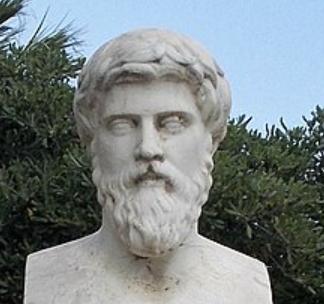
Lamachus chid a captain for a fault; and when he had said he would do so no more, "Sir," said he, "in war there is no room for a second miscarriage." Said one to Iphicrates, "What are ye afraid of?" "Of all speeches," said he, "none is so dishonourable for a general as 'I should not have thought of it.'"
▼
Source
source
52 Iphicrates

3 months 1 week ago
[H]e regarded it with the feelings due not to a mere mental delusion, but to a great moral evil. He looked upon it as the greatest enemy of morality: first, by setting up factitious excellencies,-belief in creeds, devotional feelings, and ceremonies, not connected with the good of human kind,-and causing these to be accepted as substitutes for genuine virtues: but above all, by radically vitiating the standard of morals; making it consist in doing the will of a being, on whom it lavishes indeed all the phrases of adulation, but whom in sober truth it depicts as eminently hateful.
▼
Source
source
(p. 40)

3 months 1 week ago
There is not a negro from the coast of Africa who does not, in this respect, possess a degree of magnanimity which the soul of his sordid master is too often scarce capable of conceiving. Fortune never exerted more cruelly her empire over mankind, than when she subjected those nations of heroes to the refuse of the jails of Europe, to wretches who possess the virtues neither of the countries which they come from, nor of those which they go to, and whose levity, brutality, and baseness, so justly expose them to the contempt of the vanquished.
▼
Source
source
Chap. II.
2 months 4 weeks ago
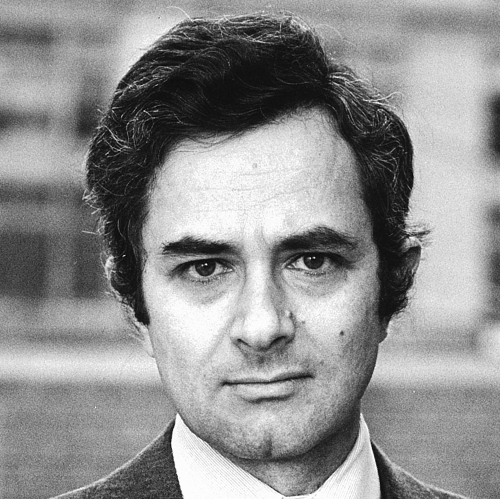
Perhaps there is one chain [of inference] leading from the mental and the physical to a common source. It is conceivable in the abstract that if mental phenomena derive from the properties of matter at all, these may be identical at some level with nonphysical properties from which physical phenomena also derive. ...If there were such properties, they would be discoverable only by explanatory inference from both mental and physical phenomena. ... There would be properties of matter that were not physical from which the mental properties of organic systems were derived. This could still be called panpsychism.
▼
Source
source
"Panpsychism" (1979), pp. 184-185.
1 day ago
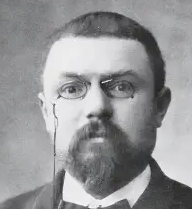
We can not... escape the conclusion that the rule of reasoning by recurrence is irreducible to the principle of contradiction. ...Neither can this rule come to us from experience... This rule, inaccessible to analytic demonstration and to experience, is the veritable type of the synthetic a priori judgment. On the other hand, we can not think of seeing in it a convention, as in some of the postulates of geometry. ...it is only the affirmation of the power of the mind which knows itself capable of conceiving the indefinite repetition of the same act when once this act is possible. The mind has a direct intuition of this power, and experience can only give occasion for using it and thereby becoming conscious of it.
▼
Source
source
Ch. I. (1905) Tr. George Bruce Halstead

3 months 1 week ago
Success treads on every right step. For the instinct is sure, that prompts him to tell his brother what he thinks. He then learns, that in going down into the secrets of his own mind, he has descended into the secrets of all minds. He learns that he who has mastered any law in his private thoughts, is master to that extent of all men whose language he speaks, and of all into whose language his own can be translated.
▼
Source
source
par. 35

1 month 2 weeks ago
There is no getting around authority and power, and no getting around the intellectual's relationship to them. How does the intellectual address authority: as a professional supplicant or as its unrewarded, amateurish conscience?
▼
Source
source
p. 83
2 months 3 days ago
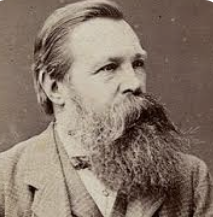
Big industry, competition and generally the individualistic organization of production have become a fetter which it must and will shatter.
2 months 1 week ago
The Doctrine of a Perfect God; in whose nature nothing arbitrary or changeable can have a place; in whose Highest Being we all live, and in this Life may, and ought at all times to be, blessed;-this Doctrine, which ignorant men think they have sufficiently demolished when they have proclaimed it to be Mysticism, is by no means Mysticism, for it has an immediate reference to human action, and in deed to the inmost spirit which ought to inspire and guide all our actions. It can only become Mysticism when it is associated with the pretext that the insight into this truth proceeds from a certain inward and mysterious light, which is not accessible to all men, but is only bestowed upon a few favourites chosen from among the rest:-in which pretext the Mysticism consists, for it betrays a presumptuous contemplation of personal merit, and a pride in mere sensuous Individuality.
▼
Source
source
p, 122-123
3 months 1 week ago
These considerations did not make us overlook the folly of premature attempts to dispense with the inducements of private interest in social affairs, while no substitute for them has been or can be provided: but we regarded all existing institutions and social arrangements as being (in a phrase I once heard from Austin) "merely provisional," and we welcomed with the greatest pleasure and interest all socialistic experiments by select individuals (such as the Co-operative Societies), which, whether they succeeded or failed, could not but operate as a most useful education of those who took part in them, by cultivating their capacity of acting upon motives pointing directly to the general good, or making them aware of the defects which render them and others incapable of doing so.
▼
Source
source
(pp. 233-234)
3 months 1 week ago
If God did not exist, it would be necessary to invent him.
2 months 3 weeks ago
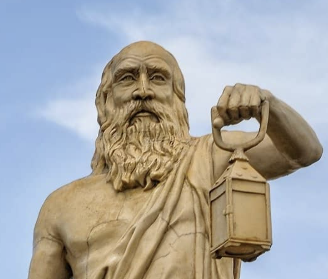
He was going into a theatre, meeting face to face those who were coming out, and being asked why, "This," he said, "is what I practise doing all my life."
▼
Source
source
Diogenes Laërtius, vi. 64

4 months 1 week ago
It is love that leniently and mercifully says: I forgive you everything-if you are forgiven only little, then it is because you love only little. Justice severely sets the boundary and says: No further! This is the limit. For you there is no forgiveness, and there is nothing more to be said.

8 months 1 day ago
Survive in such a way that you avoid limiting others who are also trying to survive. We all live in limited systems. This is the core of ethics.
2 months 1 week ago
The people never give up their liberties but under some delusion.
▼
Source
source
Speech at a County Meeting of Buckinghamshire
2 months 4 weeks ago
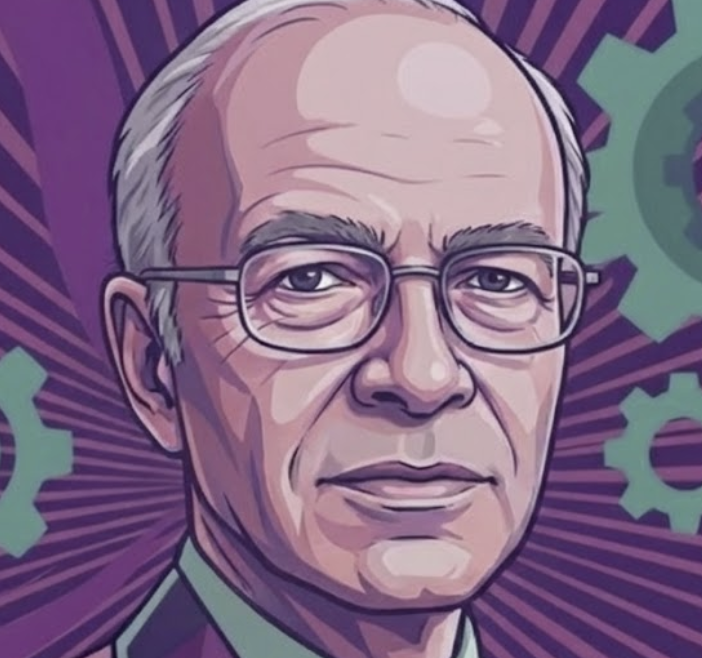
Speciesism is an attitude of prejudice towards beings because they're not members of our species, so just as racism means that you're prejudiced against beings who are not members of your race and sexism means you're prejudiced against people of the other sex. So we humans tend to be speciesist in we think that any being that is a member of the species homo sapien just automatically has a higher moral status and is more important than any being that is a member of any other species, irrespective of the actual characteristics of those beings.
▼
Source
source
Peter Singer - The Genius of Darwin: The Uncut Interviews - Richard Dawkins, 2009.
1 month 2 weeks ago
Violence may capture space, but it does not create space.
3 months 1 week ago
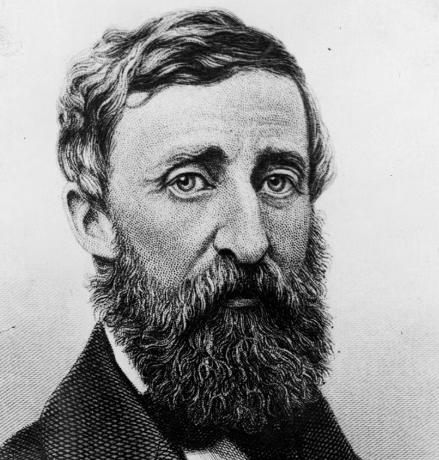
Men remain in their present low and primitive condition; but if they should feel the influence of the spring of springs arousing them, they would of necessity rise to a higher and more ethereal life.
▼
Source
source
p. 49
3 months 1 week ago
I think that yesterday was a crisis in my life. I finished the first part of Renouvier's second Essais and see no reason why his definition of free will-"the sustaining of a thought because I choose to when I might have other thoughts"-need be the definition of an illusion. At any rate, I will assume for the present-until next year-that it is no illusion. My first act of free will shall be to believe in free will.
▼
Source
source
Diary entry (April 30, 1870) as quoted in Ralph Barton Perry, The Thought and Character of William James, vol. 1, p. 323; Letters of William James, vol. I, p. 147.

1 month 1 week ago
When the world fails us, when we ourselves become worldless in the social sense, the body suffers and shows its precarity; that mode of demonstrating precarity is itself, or carries with it, a political demand and even an expression of outrage. To be a body differentially exposed to harm or to death is precisely to exhibit a form of precarity, but also to suffer a form of inequality that is unjust. So, the situation of many populations who are increasingly subject to unlivable precarity raises for us the question of global obligations. If we ask why any of us should care about those who suffer at a distance from us, the answer is not to be found in paternalistic justifications, but in the fact that we inhabit the world together in relations of interdependency. Our fates are, as it were, given over to one another.
▼
Source
source
p. 50
3 months 1 week ago
These preachers of beauty, which light the world with their admonishing smile.
▼
Source
source
p. 248 (Stars)
2 months 5 days ago
The case of mere titles is so absurd that it would deserve to be treated only with ridicule were t not for the serious mischief they impose on mankind. The feudal system was a ferocious monster, devouring, where it came, all that the friend of humanity regards with attachment and love. The system of titles appears under a different form. The monster is at length destroyed, and they who followed in his train, and fattened upon the carcasses of those he slew, have stuffed his skin, and, b exhibiting it, hope still to terrify mankind into patient and pusillanimity.
▼
Source
source
Book V, Chapter 13
CivilSimian.com created by AxiomaticPanic, CivilSimian, Kalokagathia