


4 months ago
All's well that ends well; which is the epitaph I should put on my tombstone if I were the last man left alive.
▼
Source
source
Letter to Lucy Donnely, April 22, 1906

4 months 1 week ago
Live as long as you please, you will strike nothing off the time you will have to spend dead.
▼
Source
source
Ch. 20. Of the Force of Imagination

2 months 2 weeks ago
A race preserves its vigour so long as it harbours a real contrast between what has been and what may be, and so long as it is nerved by the vigour to adventure beyond the safeties of the past. Without adventure, civilization is in full decay.
▼
Source
source
p. 360.
1 month 3 weeks ago
Goodness is achieved not in a vacuum, but in the company of other men, attended by love.
▼
Source
source
Dangling Man (1944) [Penguin Classics, 1996, ISBN 0-140-18935-1], p. 84

3 months ago
The pretended rights of these theorists are all extremes: and in proportion as they are metaphysically true, they are morally and politically false. The rights of men are in a sort of middle, incapable of definition, but not impossible to be discerned. The rights of men in government are their advantages; and these are often in balances between differences of good; in compromises between good and evil, and sometimes between evil and evil. Political reason is a computing principle: adding, subtracting, multiplying, and dividing, morally and not metaphysically or mathematically, true moral denominations.
4 months 2 weeks ago
Religious law makes it illegal for the ignorant to drink wine, but intelligence makes it legal for the intellectual.
2 months 1 week ago
Only the person who has faith in himself is able to be faithful to others.
▼
Source
source
Ch. 4

2 weeks 6 days ago
Adversity is sometimes hard upon a man; but for one man who can stand prosperity, there are a hundred that will stand adversity. (Often shortened to "can't stand prosperity" as an unknown quote).

2 months 3 weeks ago
The kingdom of heaven is like to a grain of mustard seed, which a man took, and sowed in his field: Which indeed is the least of all seeds: but when it is grown, it is the greatest among herbs, and becometh a tree, so that the birds of the air come and lodge in the branches thereof.
▼
Source
source
13:31-32 (KJV)

4 months 1 week ago
No Man is wise at all Times, or is without his blind Side.
▼
Source
source
The Alchymyst, in Colloquies of Erasmus, Volume I.
2 months 1 week ago
Philosophy was never just ontotheology, and even when philosophers were concerned with ontotheology, they were concerned with much more than that. That is the first reason that the idea of a fundamental "crisis" in philosophy and of the "end of philosophy" is deeply mistaken. And if the questions of philosophy are indeed "unsettleable," in the sense that they will always be with us, that is a wonderful thing, not something to be regretted.
▼
Source
source
Science and Philosophy
1 week 3 days ago
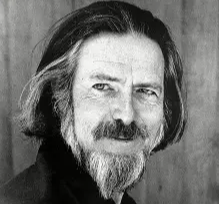
Wonder is not a disease. Wonder, and its expression in poetry and the arts, are among the most important things which seem to distinguish men from other animals, and intelligent and sensitive people from morons.
▼
Source
source
Inside Information p. 7

3 months 4 weeks ago
Who is going to educate the human race in the principles and practice of conservation?
▼
Source
source
Chapter 12 (p. 112)
3 months 2 weeks ago
Ethics seems a morass which we have to cross, but get hopelessly bogged in when we make the attempt.
▼
Source
source
Chapter 6, A New Understanding Of Ethics, p. 167

2 months 3 weeks ago
Consciousness is much more than the thorn, it is the dagger in the flesh.
2 months 1 week ago
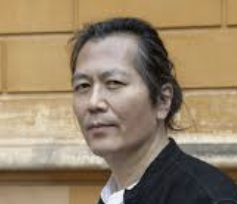
It is a sign of sovereignty to risk one's life, that is, to turn life into a game.
2 weeks 6 days ago
Yes, truly, it is a great thing for a Nation that it get an articulate voice; that it produce a man who will speak forth melodiously what the heart of it means!

2 months 1 week ago
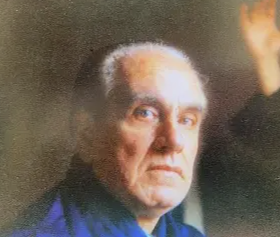
The great and inspiring aims of the Revolution became so clouded with and obscured by the methods used by the ruling political power that it was hard to distinguish what was temporary means and what final purpose. Psychologically and socially the means necessarily influence and alter the aims. The whole history of man is continuous proof of the maxim that to divest one's methods of ethical concepts means to sink into the depths of utter demoralization. In that lies the real tragedy of the Bolshevik philosophy as applied to the Russian Revolution. May this lesson not be in vain.
1 week ago
For a long time there have been no true sovereigns, monarchs by divine right capable of wielding sword and scepter, and symbols of a higher human ideal. More than a century ago, Juan Donoso Cortés stated that no kings existed capable of proclaiming themselves as such except "by the will of the nation," adding that, even if any had existed, they would not have been recognized. The few monarchies still surviving are notoriously impotent and empty, while the traditional nobility has lost its essential character as a political class and any existential prestige and rank along with it. Its current representatives may still interest our contemporaries when put on the same plane as film actors and actresses, sport heroes and opera stars, and when through some private, sentimental, or scandalous chance, they serve as fodder for magazine articles.
▼
Source
source
p. 172
2 months 3 weeks ago
From the cradle to the grave, each individual pays for the sin of not being God. That's why life is an uninterrupted religious crisis, superficial for believers, shattering for doubters.
2 months 3 weeks ago
All the evolution we know of proceeds from the vague to the definite.
▼
Source
source
Vol. VI, par. 191

4 months 3 weeks ago
Earth governments in moments of stress are not famous for being reasonable.
1 week ago
My faith in human dignity consists in the belief that man is the greatest scamp on earth. Human dignity must be associated with the idea of a scamp and not with that of an obedient, disciplined and regimented soldier.
▼
Source
source
Ch. I : The Awakening, p. 12

2 months 2 weeks ago
Faith which does not doubt is dead faith.
▼
Source
source
La Agonía del Cristianismo (The Agony of Christianity)


3 weeks 4 days ago
The political program of nation building in countries like Afghanistan and Iraq is one central example of the productive project of biopower and war. Nothing could be more postmodernist and antiessentialist than this notion of nation building.
4 months 1 week ago
A prudent man should always follow in the path trodden by great men and imitate those who are most excellent.
▼
Source
source
The Prince (1513), Ch. 6; translated by Luigi Ricci


3 months 3 weeks ago
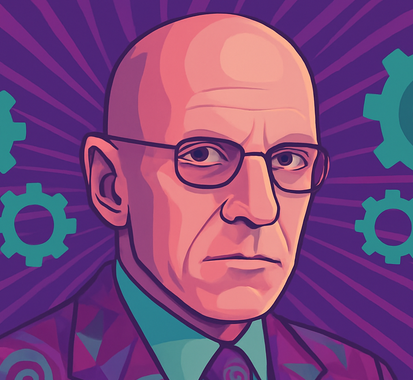
In the Greek conception of parrhesia... truth-having is guaranteed by the possession of... moral qualities... required... to know... and... convey such truth...
2 months 3 weeks ago
When it is evening, ye say, It will be fair weather: for the sky is red. And in the morning, It will be foul weather to day: for the sky is red and lowring. O ye hypocrites, ye can discern the face of the sky; but can ye not discern the signs of the times? A wicked and adulterous generation seeketh after a sign; and there shall no sign be given unto it, but the sign of the prophet Jonas.
▼
Source
source
16:2-4 (KJV)

2 weeks ago
But the wise man knows that all things are in store for him. Whatever happens, he says: "I knew it."
2 months 4 weeks ago
Government must be a transparent garment which tightly clings to the people's body.
▼
Source
source
Act I.
4 months ago
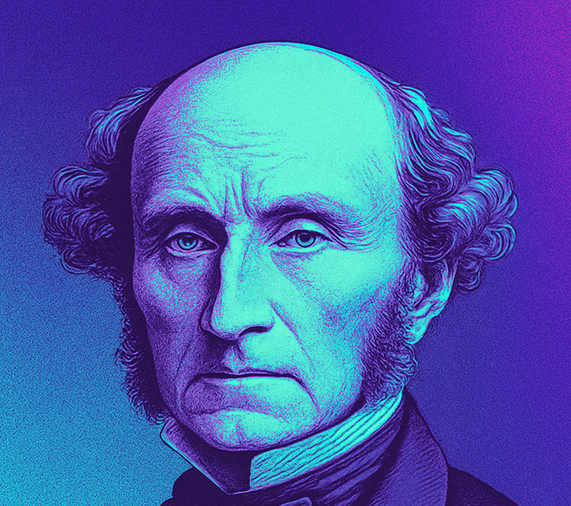
A general State education is a mere contrivance for molding people to be exactly like one another; and as the mold in which it casts them is that which pleases the dominant power in the government, whether this be a monarch, an aristocracy, or a majority of the existing generation; in proportion as it is efficient and successful, it establishes a despotism over the mind, leading by a natural tendency to one over the body.
▼
Source
source
Ch. V: Applications
3 months 4 days ago
There are things I can't force. I must adjust. There are times when the greatest change needed is a change of my viewpoint.
▼
Source
source
As quoted in Cracking the Code of Our Physical Universe : The Key to a Whole New World of Enlightenment and Enrichment (2006) by Matthew M Radmanesh, p. 91
2 months 2 weeks ago
If by enlightenment and intellectual progress we mean the freeing of man from superstitious belief in evil forces, in demons and fairies, in blind fate-in short, emancipation of fear-then denunciation of what is currently called reason is the greatest service reason can render.
5 months ago
The least initial deviation from the truth is multiplied later a thousandfold.
1 week 1 day ago
We must not suppose any corporeal conjunction or marriage in the case - all which are merely the sportive fables of Poetry; but must hold the father and the producer of that Being as something most divine and super-eminent. Of such a nature is He who is above all things, around whom, and by reason of whom, all things do subsist. But Homer calls him by his father's name, "Hyperion," in order to show that he is independent, and not subjected to any constraint.

2 months 1 week ago
Because the book became a freak 'bestseller', because I found myself bracketed with the 'Angry Young Men' of the period, I found myself carried to 'fame' on a wave of publicity -- only to discover that this kind of fame is one of the subtlest forms of obscurity. Everybody knew who I was, and nobody knew what I stood for. The public image meant that nobody was interested in what I had to say, for everyone was convinced that they already knew. I could talk until I was blue in the face about my attempt to revise the pessimistic existentialism of Heidegger, Camus and Sartre; as far as most people were concerned, I was an autodidact who was angry about something or other.
▼
Source
source
p. 188, George Bernard Shaw: A personal view

2 months 3 weeks ago
The range of socially permissible and desirable satisfaction is greatly enlarged, but through this satisfaction, the Pleasure Principle is reduced-deprived of the claims which are irreconcilable with the established society. Pleasure, thus adjusted, generates submission.
▼
Source
source
p. 75
1 week 3 days ago
To be free from convention is not to spurn it but not to be deceived by it. It is to be able to use it as an instrument instead of being used by it.
▼
Source
source
p. 11

4 months 1 week ago
For man seeketh in society comfort, use, and protection: and they be three wisdoms of divers natures, which do often sever: wisdom of the behaviour, wisdom of business, and wisdom of state.
▼
Source
source
Book II, xxiii
3 weeks 1 day ago
It would be silly, of course, to be either 'for' or 'against' modernity tout court, not only because it is pointless to try to stop the development of technology, science, and economic rationality, but because both modernity and antimodernity may be expressed in barbarous and antihuman terms.
▼
Source
source
"Modernity on Endless Trial"
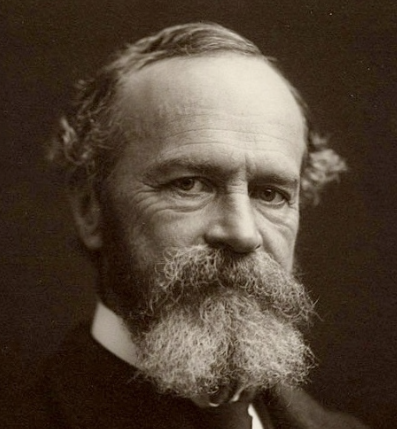
3 months 4 weeks ago
Matter is indeed infinitely and incredibly refined. To anyone who has ever looked on the face of a dead child or parent the mere fact that matter could have taken for a time that precious form, ought to make matter sacred ever after. It makes no difference what the principle of life may be, material or immaterial, matter at any rate co-operates, lends itself to all life's purposes. That beloved incarnation was among matter's possibilities.
▼
Source
source
Lecture III, Some Metaphysical Problems Pragmatically Considered
2 months 2 weeks ago
The mass-man sees in the State an anonymous power, and feeling himself, like it, anonymous, he believes that the State is something of his own. Suppose that in the public life of a country some difficulty, conflict, or problem presents itself, the mass-man will tend to demand that the State intervene immediately and undertake a solution directly with its immense and unassailable resources. This is the gravest danger that to-day threatens civilisation: State intervention; the absorption of all spontaneous social effort by the State.
▼
Source
source
Chapter XIII: The Greatest Danger, The State
4 months 1 week ago
In the country of the blind the one-eyed man is king.
▼
Source
source
Adagia (first published 1500, with numerous expanded editions through 1536), III, IV, 96
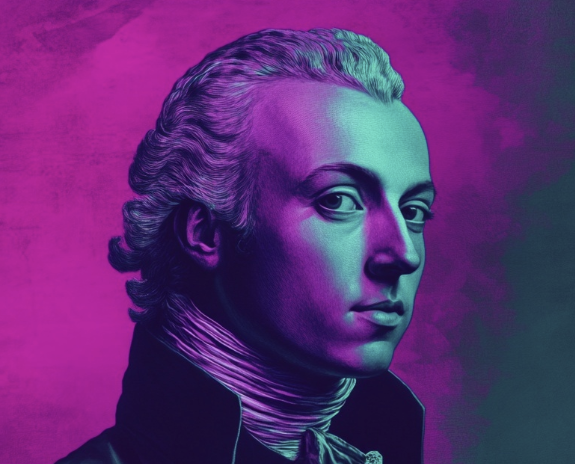
4 months 2 days ago
it is absurd ... to hope that maybe another Newton may some day arise, to make intelligible to us even the genesis of but a blade of grass
▼
Source
source
("Dialectic of Teleological Judgment" §75)
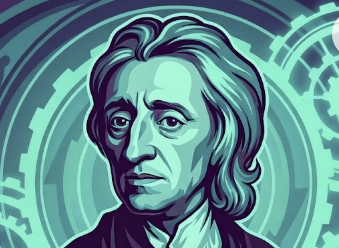
4 months 1 day ago
The boundaries of the species, whereby men sort them, are made by men.
▼
Source
source
Book III, Ch. 6, sec. 37
CivilSimian.com created by AxiomaticPanic, CivilSimian, Kalokagathia