


2 months 3 weeks ago
To get up in the morning, wash and then wait for some unforeseen variety of dread or depression. I would give the whole universe and all of Shakespeare for a grain of ataraxy.

4 months ago
In the part of this universe that we know there is great injustice, and often the good suffer, and often the wicked prosper, and one hardly knows which of those is the more annoying.
▼
Source
source
"The Argument for the Remedying of Injustice"

3 months 4 weeks ago
I have been writing & speaking what were once called novelties, for twenty five or thirty years, & have not now one disciple. Why? Not that what I said was not true; not that it has not found intelligent receivers but because it did not go from any wish in me to bring men to me, but to themselves. I delight in driving them from me. What could I do, if they came to me? - they would interrupt and encumber me. This is my boast that I have no school & no follower. I should account it a measure of the impurity of insight, if it did not create independence.
▼
Source
source
April 1859

3 months 3 weeks ago
A religious symbol does not rest on any opinion. And error belongs only with opinion. One would like to say: This is what took place here; laugh, if you can.
▼
Source
source
Ch. 7 : Remarks on Frazer's Golden Bough, p. 123
3 months 4 weeks ago
I have been quoted as saying captious things about travel; but I mean to do justice. I think, there is a restlessness in our people, which argues want of character. All educated Americans, first or last, go to Europe; - perhaps, because it is their mental home, as the invalid habits of this country might suggest. An eminent teacher of girls said, "the idea of a girl's education, is, whatever qualifies them for going to Europe." Can we never extract this tape-worm of Europe from the brain of our countrymen?
▼
Source
source
Culture

2 months 3 days ago
Truth is ever to be found in simplicity, and not in the multiplicity and confusion of things.
▼
Source
source
Cited in Rules for methodizing the Apocalypse, Rule 9, from a manuscript published in The Religion of Isaac Newton (1974) by Frank E. Manuel, p. 120
3 months 2 weeks ago
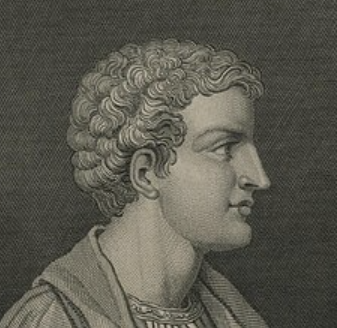
Look round and round the man you recommend, for yours will be the shame should he offend.
▼
Source
source
Book I, epistle xviii, line 76 (translated by John Conington).
4 months ago
The fundamental defect of fathers, in our competitive society, is that they want their children to be a credit to them.
▼
Source
source
Ch. 14: Freedom Versus Authority in Education

3 months ago
On our earth we can only love with suffering and through suffering. We cannot love otherwise, and we know of no other sort of love. I want suffering in order to love. I long, I thirst, this very instant, to kiss with tears the earth that I have left, and I don't want, I won't accept life on any other!"

4 months 3 weeks ago
Since those who rule in the city do so because they own a lot, I suppose they're unwilling to enact laws to prevent young people who've had no discipline from spending and wasting their wealth, so that by making loans to them, secured by the young people's property, and then calling those loans in, they themselves become even richer and more honored.
3 weeks ago
The principles of great men illuminate the universe.
▼
Source
source
Discipline and Character, no. 50

4 months ago
The writers by whom, more than by any others, a new mode of political thinking was brought home to me, were those of the St. Simonian school in France. In 1829 and 1830 I became acquainted with some of their writings. They were then only in the earlier stages of their speculations. They had not yet dressed out their philosophy as a religion, nor had they organized their scheme of Socialism. They were just beginning to question the principle of hereditary property. I was by no means prepared to go with them even this length; but I was greatly struck with the connected view which they for the first time presented to me, of the natural order of human progress; and especially with their division of all history into organic periods and critical periods.
▼
Source
source
(p. 163)

4 months ago
For the world to become philosophic amounts to philosophy's becoming world-order reality; and it means that philosophy, at the same time that it is realized, disappears.

3 months 4 weeks ago
If good music has charms to soothe the savage breast, bad music has no less powerful spells for filling the mildest breast with rage, the happiest with horror and disgust. Oh, those mammy songs, those love longings, those loud hilarities! How was it possible that human emotions intrinsically decent could be so ignobly parodied.
▼
Source
source
"Silence is Golden," p. 59

3 months 4 weeks ago
Then he tried to recall the lessons of Mr. Wisdom. "it is I myself, eternal Spirit, who drives this Me, the slave, along that ledge. I ought not to care whether he falls and breaks his neck or not. It is not he that is real, it is I - I - I.
▼
Source
source
Pilgrim's Regress 137
2 months 3 weeks ago
The capitalists soon had everything in their hands and nothing remained to the workers.

4 months 2 days ago
There is only one man who gets his own way-he who can get it single-handed; therefore freedom, not power, is the greatest good. That man is truly free who desires what he is able to perform, and does what he desires. This is my fundamental maxim. Apply it to childhood, and all the rules of education spring from it. Society has enfeebled man, not merely by robbing him of the right to his own strength, but still more by making his strength insufficient for his needs. This is why his desires increase in proportion to his weakness; and this is why the child is weaker than the man. If a man is strong and a child is weak it is not because the strength of the one is absolutely greater than the strength of the other, but because the one can naturally provide for himself and the other cannot. Thus the man will have more desires and the child more caprices, a word which means, I take it, desires which are not true needs, desires which can only be satisfied with the help of others.
5 months ago
That which is desirable on its own account and for the sake of knowing it is more of the nature of wisdom than that which is desirable on account of its results.

2 months 1 week ago
We might liken the 'two selves' to Laurel and Hardy. Ollie is the objective mind, 'you'. Stan is the subjective mind, the 'hidden you'. But Stan happens to be in control of your energy supply. So if you wake up feeling low and discouraged, you (Ollie) tend to transmit your depression to Stan, who fails to send you energy, which makes you feel lower than ever. This vicious circle is the real cause of most mental illness.
▼
Source
source
p. 121

2 weeks 6 days ago
In a valiant suffering for others, not in a slothful making others suffer for us, did nobleness ever lie.



3 months 3 weeks ago
I remind young people everywhere I go, one of the worst things the older generation did was to tell them for twenty-five years "Be successful, be successful, be successful" as opposed to "Be great, be great, be great". There's a qualitative difference.
▼
Source
source
Speech in San Francisco: Democracy Matters

4 months 1 day ago
An unbiased reader, on opening one of their [Fichte's, Schelling's or Hegel's] books and then asking himself whether this is the tone of a thinker wanting to instruct or that of a charlatan wanting to impress, cannot be five minutes in any doubt. ... The tone of calm investigation, which had characterized all previous philosophy, is exchanged for that of unshakeable certainty, such as is peculiar to charlatanry of every kind and at all times. ... From every page and every line, there speaks an endeavor to beguile and deceive the reader, first by producing an effect to dumbfound him, then by incomprehensible phrases and even sheer nonsense to stun and stupefy him, and again by audacity of assertion to puzzle him, in short, to throw dust in his eyes and mystify him as much as possible.
▼
Source
source
E. Payne, trans. (1974) Vol. 1, p. 23
1 month 3 weeks ago
Kant's position is extremely subtle - so subtle, indeed, that no commentator seems to agree with any other as to what it is.
▼
Source
source
Some More -isms (p. 25)
4 months ago
Each piece of money is a mere coin, or means of circulation, only so long as it actually circulates.
▼
Source
source
Vol. I, Ch. 3, Section 2(c), pg. 145.
4 months ago
Opinion considers the opposition of what is true and false quite rigid, and, confronted with a philosophical system, it expects agreement or contradiction. And in an explanation of such a system, opinion still expects to find one or the other.
▼
Source
source
Preface, § 2
2 months 2 days ago
If the thought enunciates an object as a truth, it is only as a challenge to this object's own self-fulfillment.
3 months 3 weeks ago
One of the most difficult of the philosopher's tasks is to find out where the shoe pinches.
▼
Source
source
p. 61

3 months 3 weeks ago
"What is a thing?" is historical, because every report of the past, that is of the preliminaries to the question about the thing, is concerned with something static. This kind of historical reporting is an explicit shutting down of history, whereas it is, after all, a happening. We question historically if we ask what is still happening even if it seems to be past. We ask what is still happening and whether we remain equal to this happening so that it can really develop.
▼
Source
source
p. 43

3 months 4 weeks ago
So that is what hell is. I would never have believed it. You remember: the fire and brimstone, the torture. Ah! the farce. There is no need for torture: Hell is other people.
▼
Source
source
Garcin, Act 1, sc. 5

4 months 2 weeks ago
The end of living, or the ultimate good, which is to be sought for its own sake, according to the universal opinion of mankind, is happiness; yet men, for the most part, fail in the pursuit of this end, either because they do not form a right idea of the nature of happiness, or because they do not make use of proper means to attain it.

4 months 1 week ago
Whatever can be done another day can be done today.
▼
Source
source
Ch. 20. Of the Force of Imagination (tr. Donald M. Frame)
2 months 2 weeks ago
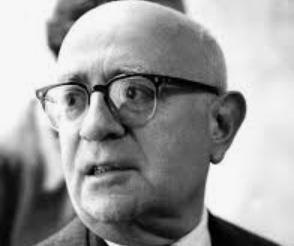
Being, in whose name Heidegger's philosophy increasingly concentrates itself, is for him-as a pure self-presentation to passive consciousness-just as immediate, just as independent of the mediations of the subject as the facts and the sensory data are for the positivists. In both philosophical movements thinking becomes a necessary evil and is broadly discredited. Thinking loses its element of independence. The autonomy of reason vanishes: the part of reason that exceeds the subordinate reflection upon and adjustment to pre-given data. With it, however, goes the conception of freedom and, potentially, the self-determination of human society.
▼
Source
source
p. 9

1 month 3 weeks ago
At electric speed, all forms are pushed to the limits of their potential.
▼
Source
source
p. 109
2 months 1 week ago
The real importance of Swedenborg lies in the doctrines he taught, which are the reverse of the gloom and hell-fire of other breakaway sects. He rejects the notion that Jesus died on the cross to atone for the sin of Adam, declaring that God is neither vindictive nor petty-minded, and that since he is God, he doesn't need atonement. It is remarkable that this common-sense view had never struck earlier theologians. God is Divine Goodness, and Jesus is Divine Wisdom, and Goodness has to be approached through Wisdom. Whatever one thinks about the extraordinary claims of its founder, it must be acknowledged that there is something very beautiful and healthy about the Swedenborgian religion. Its founder may have not been a great occultist, but he was a great man.
▼
Source
source
p. 280
Just now
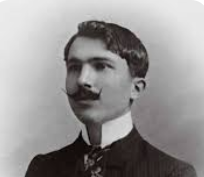
This is our epoch, good or bad, beautiful or ugly, rich or poor - we did not choose it. This is our epoch, the air we breathe, the mud given us, the bread, the fire, the spirit! Let us accept Necessity courageously. It is our lot to have fallen on fighting times. Let us tighten our belts, let us arm our hearts, our minds, and our bodies. Let us take our place in battle!
4 months 2 weeks ago
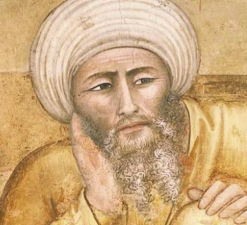
The double meaning has been given to suit people's diverse intelligence. The apparent contradictions are meant to stimulate the learned to deeper study.

3 weeks 3 days ago
What's interesting about the world today is that the fundamental division is... a... sociological one between people that have better educations, that live in big urban agglomerations, that then can then benefit from... a global economy, versus people who live in... smaller cities and towns, or in the countryside... with more traditional values. That division exists almost universally, in Turkey... Hungary... the United States, in Britain... It does reflect different economic opportunities, but more fundamentally... it reflects a... way of life, that in the urban case is... liberal and open, but in some cases... people would say a little... too open and too tolerant of... people that want to break traditional norms that are still maintained by... other parts of the population. So it's really that cultural fight... that's at the center of populism, related to,.. but certainly not fundamentally driven by economic inequality.
▼
Source
source
52:39:00

4 months 3 weeks ago
There is no mystery in humans creation. Will performs this miracle. But at least there is no true creation without a secret.
3 weeks 1 day ago
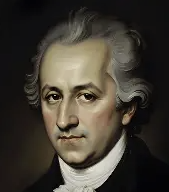
Should I not be proud, when for twenty years I have had to admit to myself that the great Newton and all the mathematicians and noble calculators along with him were involved in a decisive error with respect to the doctrine of color, and that I among millions was the only one who knew what was right in this great subject of nature?
▼
Source
source
Letter to Eckermann
3 months 3 weeks ago
Language is a part of our organism and no less complicated than it.
▼
Source
source
Journal entry (14 May 1915), p. 48
3 months 4 weeks ago
You can put this another way by saying that while in other sciences the instruments you use are things external to yourself (things like microscopes and telescopes), the instrument through which you see God is your whole self. And if a man's self is not kept clean and bright, his glimpse of God will be blurred-like the Moon seen through a dirty telescope. That is why horrible nations have horrible religions: they have been looking at God through a dirty lens.
▼
Source
source
Book IV, Chapter 2, "The Three-personal God"
1 month 1 week ago
Only in growth, reform, and change, paradoxically enough, is true security to be found.
▼
Source
source
The Wave of the Future

3 months 4 days ago
Around us knowledge has been extinguished, and recruitment of men of religion and men of law has ceased; that is to say, we have made Muslim society much more miserable, more disordered, more ignorant, and more barbarous than it had been before knowing us.
▼
Source
source
Travail sur l'Algerie, Travels in Algeria p. 185
4 months ago
All human activity is prompted by desire. There is a wholly fallacious theory advanced by some earnest moralists to the effect that it is possible to resist desire in the interests of duty and moral principle. I say this is fallacious, not because no man ever acts from a sense of duty, but because duty has no hold on him unless he desires to be dutiful. If you wish to know what men will do, you must know not only, or principally, their material circumstances, but rather the whole system of their desires with their relative strengths.
▼
Source
source
(wav audio file of Russell's voice)
2 months 3 weeks ago
Imaginary pains are by far the most real we suffer, since we feel a constant need for them and invent them because there is no way of doing without them.

4 months ago
Dreams are the touchstones of our characters.

5 months ago
An authorship that began with Either/Or and advanced step by step seeks here its decisive place of rest, at the foot of the altar, where the author, personally most aware of his own imperfections and guilt, certainly does not call himself a truth-witness but only a singular kind of poet and thinker who, without authority, has had nothing new to bring but “has wanted once again to read through, if possible in a more inward way, the original text handed down from the fathers.

4 months 1 week ago
It might be wiser for me to avoid Camarina and say nothing of theologians. They are a proud, susceptible race. They will smother me under six hundred dogmas. They will call me heretic and bring thunderbolts out of their arsenals, where they keep whole magazines of them for their enemies. Still they are Folly's servants, though they disown their mistress. They live in the third heaven, adoring their own persons and disdaining the poor crawlers upon earth. They are surrounded with a bodyguard of definitions, conclusions, corollaries, propositions explicit, and propositions implicit. ...They will tell you how the world was created. They will show you the crack where Sin crept in and corrupted mankind.
▼
Source
source
as quoted by James Anthony Froude, Life and Letters of Erasmus: Lectures Delivered at Oxford 1893-4
CivilSimian.com created by AxiomaticPanic, CivilSimian, Kalokagathia