

2 months 1 week ago
I believe that man is the product of natural evolution that is born from the conflict of being a prisoner and separated from nature, and from the need to find unity and harmony with it.
1 month 1 week ago
Language steps in where the angels of experience fear to tread.
▼
Source
source
Chapter 1, The Faces of Silence, p. 5

4 months ago
I heartily accept the motto, "That government is best which governs least"; and I should like to see it acted up to more rapidly and systematically. Carried out, it finally amounts to this, which also I believe - "That government is best which governs not at all"; and when men are prepared for it, that will be the kind of government which they will have.
2 months 1 week ago
There's no need to fear or hope, but only to look for new weapons.
▼
Source
source
from Postscript on the Societies of Control

3 months 4 weeks ago
Subject matters in general do not exist. There are no subject matters; no branches of learning-or, rather, of inquiry: there are only problems, and the urge to solve them.

2 weeks 6 days ago
Consider the great elements of human enjoyment, the attainments and possessions that exalt man's life to its present height, and see what part of these he owes to institutions, to Mechanism of any kind; and what to the instinctive, unbounded force, which Nature herself lent him.
1 month 1 week ago
I believe most people are aware of periods in their lives when they seem to be "in grace" and other periods when they feel "out of grace," even though they may use different words to describe these states. In the first happy condition, one seems to carry all one's tasks before one lightly, as if borne along on a great tide; and in the opposite state one can hardly tie a shoe-string. It is true that a large part of life consists in learning a technique of tying the shoe-string, whether one is in grace or not. But there are techniques of living too; there are even techniques in the search for grace.

3 months 2 weeks ago
To resist him that is set in authority is evil. .
▼
Source
source
Maxim no. 31

3 months ago
The Revolution and Hanover succession had been objects of the highest veneration to the old Whigs. They thought them not only proofs of the sober and steady spirit of liberty which guided their ancestors; but of their wisdom and provident care of posterity.-The modern Whigs have quite other notions of these events and actions. They do not deny that Mr. Burke has given truly the words of the acts of parliament which secured the succession, and the just sense of them. They attack not him but the law.
▼
Source
source
p. 436
3 months 4 weeks ago
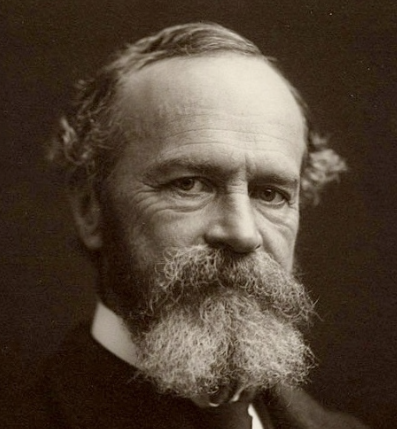
Need and struggle are what excite and inspire us; our hour of triumph is what brings the void. Not the Jews of the captivity, but those of the days of Solomon's glory are those from whom the pessimistic utterances in our Bible come.
▼
Source
source
"Is Life Worth Living?"
2 months 3 weeks ago
How do you think the transition from the present situation to community of Property is to be effected? The first, fundamental condition for the introduction of community of property is the political liberation of the proletariat through a democratic constitution.
▼
Source
source
Draft of a Communist Confession of Faith
Just now
My prayer is not the whimpering of a beggar nor a confession of love. Nor is it the petty reckoning of a small tradesman: Give me and I shall give you. My prayer is the report of a soldier to his general: This is what I did today, this is how I fought to save the entire battle in my own sector, these are the obstacles I encountered, this is how I plan to fight tomorrow.

2 months 2 weeks ago
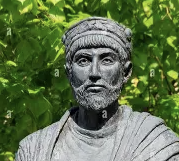
We must leave on one side the beliefs which fill up voids and sweeten what is bitter. The belief in immortality. The belief in the utility of sin: etiam peccata. The belief in the providential ordering of events - in short the "consolations" which are ordinarily sought in religion.
▼
Source
source
p. 258
1 week 1 day ago
Is it not absurd when a human being tries to find happiness somewhere outside himself, and thinks that wealth and birth and the influence of friends...is of the utmost importance?
▼
Source
source
Oration to the Uneducated Cynics
3 months ago
One that confounds good and evil is an enemy to the good.
▼
Source
source
Speech in opening the impeachment of Warren Hastings (18 February 1788), quoted in The Works of the Right Honourable Edmund Burke, Volume the Tenth (1899), p. 48
2 months 1 week ago
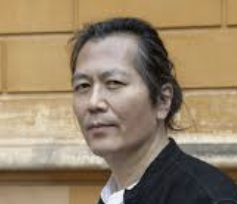
Haikus allow the whole world to appear within things.

4 months ago
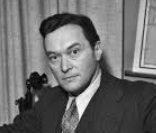
The Chinese are a great nation, incapable of permanent suppression by foreigners. They will not consent to adopt our vices in order to acquire military strength; but they are willing to adopt our virtues in order to advance in wisdom. I think they are the only people in the world who quite genuinely believe that wisdom is more precious than rubies. That is why the West regards them as uncivilized.
▼
Source
source
The Problem of China (1922), Ch. XIII: Higher education in China
3 weeks 5 days ago
There can be no liberty for a community which lacks the information by which to detect lies.
▼
Source
source
What Modern Liberty Means, p. 64
2 months 3 weeks ago
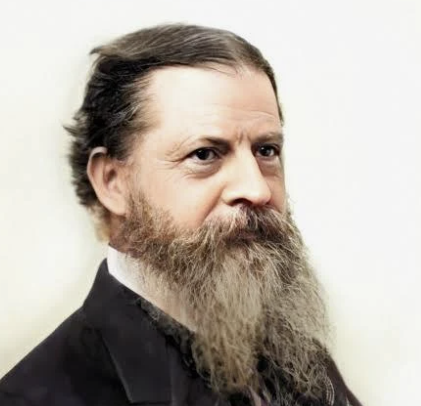
A certain maxim of Logic which I have called Pragmatism has recommended itself to me for diverse reasons and on sundry considerations. Having taken it as my guide for most of my thought, I find that as the years of my knowledge of it lengthen, my sense of the importance of it presses upon me more and more. If it is only true, it is certainly a wonderfully efficient instrument. It is not to philosophy only that it is applicable. I have found it of signal service in every branch of science that I have studied. My want of skill in practical affairs does not prevent me from perceiving the advantage of being well imbued with pragmatism in the conduct of life.
▼
Source
source
Lecture I : Pragmatism : The Normative Sciences, CP 5.14

4 months 3 weeks ago
One does not decide the truth of a thought according to whether it is right-wing or left-wing.
3 months ago
These principles it is necessary strictly to attend to, because they will serve much to explain the whole course both of government and real property, wherever the German nations obtained a settlement; the whole of their government depending for the most part upon two principles in our nature,-ambition, that makes one man desirous, at any hazard or expense, of taking the lead amongst others; and admiration, which makes others equally desirous of following him from the mere pleasure of admiration, and a sort of secondary ambition, one of the most universal passions among men. These two principles, strong both of them in our nature, create a voluntary inequality and dependence.
▼
Source
source
An Essay towards an Abridgment of English History (1757-c. 1763), quoted in The Works of the Right Honourable Edmund Burke, Vol. VI (1856), p. 282

4 months 1 day ago
But the chief design of this paper is not to disprove it, which many have sufficiently done; but to entreat Americans to consider.

3 months 4 weeks ago
The worst of misfortunes is still a stroke of luck, since one feels oneself living when one experiences it.
▼
Source
source
p. 275
1 week 1 day ago
My own belief is, if philosophers be entitled to any credit, that the Sun is the common parent of all men, to use a comprehensive term. It is a true proverb, "Man begets man, and so does the Sun:" but souls that luminary showers down upon earth, both out of himself, and out of the other gods: which souls show to what end they were propagated by the kind of life that they pursue. But well is it for that man who, from the third generation backwards, and a long succession of years, has been dedicated to the service of this god; yet neither is that person's condition to be despised who, feeling in his own nature that he is a servant of this deity, alone, or with few on his side, shall have devoted himself to his worship.
2 months 1 week ago
In spite of the universalistic spirit of the monotheistic Western religions and of the progressive political concepts that are expressed in the idea "that all men are created equal," love for mankind has not become a common experience. Love for mankind is looked upon as an achievement which, at best, follows love for an individual or as an abstract concept to be realized only in the future. But love for man cannot be separated from love for one individual. To love one person productively means to be related to his human core, to him as representing mankind. Love for one individual, in so far as it is divorced from love for man, can refer only to the superficial and to the accidental; of necessity it remains shallow.
▼
Source
source
Ch. 2

5 months 2 days ago
The man who does not wish to belong to the mass needs only to cease taking himself easily; let him follow his conscience, which calls to him: Be your self! All you are now doing, thinking, desiring, is not you yourself.

3 weeks 4 days ago
Empire is emerging today as the center that supports the globalization of productive networks and casts its widely inclusive net to try to envelop all power relations within its world order - and yet at the same time it deploys a powerful police function against the new barbarians and the rebellious slaves who threaten its order.

4 months 2 weeks ago
Sincerity is the way of Heaven. The attainment of sincerity is the way of men. He who possesses sincerity is he who, without an effort, hits what is right, and apprehends, without the exercise of thought — he is the sage who naturally and easily embodies the right way. He who attains to sincerity is he who chooses what is good, and firmly holds it fast. To this attainment there are requisite the extensive study of what is good, accurate inquiry about it, careful reflection on it, the clear discrimination of it, and the earnest practice of it.
2 months 2 weeks ago
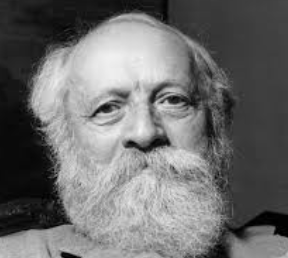
Greatness by nature includes a power, but not a will to power.
▼
Source
source
p. 150
1 month 1 week ago
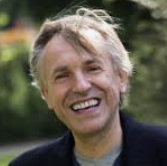
If we don't address the genetic causes of suffering (physical and mental) we will find ourselves in 500 years enjoying material abundance via nanotech, living in a perfect democracy, colonizing space, and still sitting around wondering "Why are we miserable so much of the time? Why can't we all just get along? Why are we not all happy?"
▼
Source
source
David Pearce in SF, Qualia Computing, 7 Oct. 2018
4 months 2 weeks ago
Corpses are more fit to be cast out than dung.

4 months ago
The capitalist cannot store labour-power in warehouses after he has bought it, as he may do with the raw material.
▼
Source
source
Vol. II, Ch. XV, p. 285.
2 weeks 6 days ago
Man is not the creature and product of Mechanism; but, in a far truer sense, its creator and producer: it is the noble People that makes the noble Government; rather than conversely.
1 week 2 days ago
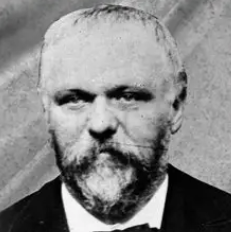
We must not always attach too much importance to violent attacks on the bourgeoisie; they may be motivated by the desire to reform and to perfect capitalism.
▼
Source
source
p. 125
4 months 3 weeks ago
Even before the bomb, one did not breathe too easily in this tortured world. Now we are given a new source of anguish; it has all the promise of being our greatest anguish ever. There can be no doubt that humanity is being offered its last chance. Perhaps this is an occasion for the newspapers to print a special edition. More likely, it should be cause for a certain amount of reflection and a great deal of silence.
1 month 1 week ago
Nothing is too terrible to be true if it is consistent with the laws of nature.
▼
Source
source
The Pinprick Argument, BLTC Research, 2005
4 months 1 day ago
As to the having and possessing of things, teach them to part with what they have, easily and freely to their friends, and let them find by experience that the most liberal has always the most plenty, with esteem and commendation to boot, and they will quickly learn to practise it.
▼
Source
source
Sec. 110
3 months 4 days ago
The blood of Jesus Christ can cover a multitude of sins, it seems to me.

4 months 3 weeks ago
Courtiers don't take wagers against the king's skill.

4 months 1 week ago
A man may be humble through vainglory.
▼
Source
source
Ch. 17

3 months 4 weeks ago
Ever from one who comes to-morrow Men wait their good and truth to borrow.
▼
Source
source
Merlin's Song, II
1 week 1 day ago
It is not Matter itself that is here meant, but the ultimate Cause of things incorporeal, which also existed before Matter. Moreover, it is asserted by Heraclitus: "Death unto souls is but a change to liquid." This Attis, therefore, the intelligible Power, the holder together of things material below the Moon, having intercourse with the pre-ordained Cause of Matter, holds intercourse therewith, not as a male with a female, but as though flowing into it, since he is the same with it.
4 months 1 week ago
There are some men who expose themselves to damnation so foolishly by avarice, by brutality, by debauches, by violence, by excesses, by blasphemies! ...it is always a great folly for a man to expose himself to damnation... He must despise desire and its kingdom, and aspire to that kingdom of love in which all the subjects breathe nothing but love, and desire nothing but the benefits of love.
3 months 4 weeks ago
Kant [...] stated that he had "found it necessary to deny knowledge [...] to make room for faith," but all he had "denied" was knowledge of things that are unknowable, and he had not made room for faith but for thought.
▼
Source
source
p. 63

4 months 3 days ago
No regulation of commerce can increase the quantity of industry in any society beyond what its capital can maintain. It can only divert a part of it into a direction into which it might not otherwise have gone; and it is by no means certain that this artificial direction is likely to be more advantageous to the society than that into which it would have gone of its own accord. Every individual is continually exerting himself to find out the most advantageous employment for whatever capital he can command. It is his own advantage, indeed, and not that of the society, which he has in his view. But the study of his own advantage naturally, or rather necessarily leads him to prefer that employment which is most advantageous to the society.
▼
Source
source
Chapter II, p. 486.

2 months 1 week ago
Christianity is most admirably adapted to the training of slaves, to the perpetuation of a slave society; in short, to the very conditions confronting us to-day.... The rulers of the earth have realized long ago what potent poison inheres in the Christian religion. That is the reason they foster it; that is why they leave nothing undone to instill it into the blood of the people. They know only too well that the subtleness of the Christian teachings is a more powerful protection against rebellion and discontent than the club or the gun.
1 month 3 weeks ago
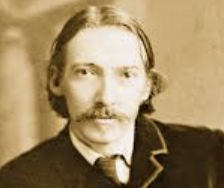
The devil, depend upon it, can sometimes do a very gentlemanly thing.
▼
Source
source
The Suicide Club, Story of the Young Man with the Cream Tarts.
1 month 3 weeks ago
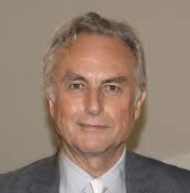
What worries me about religion is that it teaches people to be satisfied with not understanding the world they live in.
▼
Source
source
Heart Of The Matter: God Under The Microscope | BBC
4 months ago
I remain convinced that obstinate addiction to ordinary language in our private thoughts is one of the main obstacles to progress in philosophy.
▼
Source
source
Quoted in Library of Living Philosophers: The Philosophy of Bertrand Russell, 1944
CivilSimian.com created by AxiomaticPanic, CivilSimian, Kalokagathia