

5 months ago
[B]ecause that which is finite is always bounded with reference to something... it is necessary that there should be no end... [N]umber also appears to be infinite, and mathematical magnitudes, and that which is beyond the heavens. And since that which is beyond is infinite, body also appears to be infinite, and it would seem that there are infinite worlds; for why is there rather void here than there? ...If also there is a vacuum, and an infinite place, it is necessary that there should be an infinite body: for in things which have a perpetual subsistence, capacity differs nothing from being. The speculation of the infinite is, however, attended with doubt: for many impossibilities happen both to those who do not admit that it has a subsistence, and to those who do. ...It is ...especially the province of a natural philosopher to consider if there be a sensible infinite magnitude.

2 months 1 week ago
If an angel were ever to tell us anything of his philosophy I believe many propositions would sound like 2 times 2 equals 13.
▼
Source
source
B 44
4 months 1 week ago
Marriage, a market which has nothing free but the entrance.

4 months 1 day ago
Fools admire everything in an author of reputation.

4 months 3 days ago
Of all the things that are beyond my power, I value nothing more highly than to be allowed the honor of entering into bonds of friendship with people who sincerely love truth. For, of things beyond our power, I believe there is nothing in the world which we can love with tranquility except such men.
▼
Source
source
Spinoza, Correspondence, 146, Letter xix
4 months 3 days ago
The ordinary surroundings of life which are esteemed by men (as their actions testify) to be the highest good, may be classed under the three heads - Riches, Fame, and the Pleasures of Sense: with these three the mind is so absorbed that it has little power to reflect on any different good. I, 3 Variant translation: The things which ... are esteemed as the greatest good of all ... can be reduced to these three headings, to wit : Riches, Fame, and Pleasure. With these three the mind is so engrossed that it cannot scarcely think of any other good.

3 months 6 days ago
Before anything else the One must exist eternally; from his power derives everything that always is or will ever be. He is the Eternal and embraces all times. He knows profoundly all events and He himself is everything. He creates everything beyond any beginning of time and beyond any limit of place and space. He is not subject to any numerical law, or to any law of measure or order. He himself is law, number, measure, limit without limit, end without end, act without form.
▼
Source
source
VIII 2, as quoted in The Acentric Labyrinth (1995) by Ramon Mendoza
2 months 4 weeks ago
History is mere Empiricism; it has only facts to communicate, and all its proofs are founded upon facts alone. To attempt to rise to Primeval History on this foundation of fact, or to argue by this means how such or such a thing might have been, and then to take for granted that it has been so in reality,is to stray beyond the limits of History, and produce an a priori History; just as the Philosophy of Nature, referred to in our preceding lecture, endeavoured to find an a priori Science of Physics.
▼
Source
source
p. 140
2 months 3 weeks ago
And as in other things, so in men, not the seller, but the buyer determines the Price.
▼
Source
source
The First Part, Chapter 10, p. 42
2 months 1 week ago
The noble simplicity in the works of nature only too often originates in the noble shortsightedness of him who observes it.
▼
Source
source
H 1

4 months ago
I must confess that I am deeply troubled. I fear that human beings are intent upon acting out a vast deathwish and that it lies with us now to make every effort to promote resistance to the insanity and brutality of policies which encompass the extermination of hundreds of millions of human beings.
▼
Source
source
Letter to Rudolf Carnap, June 21, 1962

1 month 1 week ago
The irrationality of the "appeal to Nature" is illustrated by a simple thought-experiment. Imagine, fancifully, if starvation, disease, parasitism, disembowelling, asphyxiation and being eaten alive were not endemic to the living world - or such miseries have already been abolished and replaced by an earthly paradise. Would anyone propose there is ethical case for (re)introducing them? Even proposing such a thought-experiment can sound faintly ridiculous.
▼
Source
source
"A Welfare State For Elephants?: A Case Study of Compassionate Stewardship", Relations: Beyond Anthropocentrism, Vol. 3, Iss. 2 (Nov. 2015), p. 162
4 months 1 week ago
The only good histories are those that have been written by the persons themselves who commanded in the affairs whereof they write.
▼
Source
source
Book II, Ch. 10. Of Books
4 months ago
It is a waste of energy to be angry with a man who behaves badly, just as it is to be angry with a car that won't go. The difference is that you can compel your car to go to a garage, but you cannot compel Hitler to go to a psychiatrist.
▼
Source
source
A Fresh Look at Empiricism: 1927-42 (1996), p. 544

2 months 1 week ago
No man, not even a doctor, ever gives any other definition of what a nurse should be than this - "devoted and obedient." This definition would do just as well for a porter. It might even do for a horse. It would not do for a policeman.
▼
Source
source
Notes on Nursing

4 months 3 weeks ago
In every rebellion is to be found the metaphysical demand for unity, the impossibility of capturing it, and the construction of a substitute universe.
4 months ago
Our words tend to conceal what is private and particular in our impressions, and to make us believe that different people live in a common world to a greater extent than is in fact the case.
▼
Source
source
An Outline of Philosophy Ch.15 The Nature of our Knowledge of Physics, 1927
4 months 2 weeks ago
If what the philosophers say be true,—that all men's actions proceed from one source; that as they assent from a persuasion that a thing is so, and dissent from a persuasion that it is not, and suspend their judgment from a persuasion that it is uncertain, so likewise they seek a thing from a persuasion that it is for their advantage.
▼
Source
source
Book I, ch. 18, 1.
4 months 2 days ago
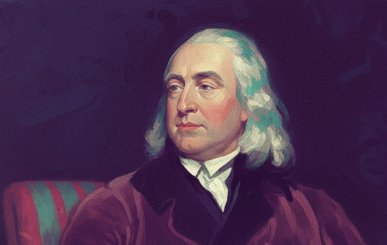
Judges of elegance and taste consider themselves as benefactors to the human race, whilst they are really only the interrupters of their pleasure ... There is no taste which deserves the epithet good, unless it be the taste for such employments which, to the pleasure actually produced by them, conjoin some contingent or future utility: there is no taste which deserves to be characterized as bad, unless it be a taste for some occupation which has mischievous tendency.
▼
Source
source
Théorie des peines et des récompenses (1811); translation by Richard Smith, The Rationale of Reward, J. & H. L. Hunt, London, 1825, Bk. 3, Ch. 1

2 weeks ago
Alexander, king of Macedon, began to study geometry; unhappy man, because he would thereby learn how puny was that earth of which he had seized but a fraction! Unhappy man, I repeat, because he was bound to understand that he was bearing a false title. For who can be "great" in that which is puny?

4 months 2 weeks ago
In this one man, the whole Church has been assumed by the Word.
▼
Source
source
p.434
2 months 2 weeks ago
Nature is a structure of evolving processes. The reality is the process.
▼
Source
source
Ch. 4: "The Eighteenth Century", p. 102

3 months 4 weeks ago
It is certain that we cannot escape anguish, for we are anguish.

2 months 3 weeks ago
Once man loses his faculty of indifference he becomes a potential murderer; once he transforms his idea into a god the consequences are incalculable. We kill only in the name of a god or of his counterfeits: the excesses provoked by the goddess Reason, by the concept of nation, class, or race are akin to those of the Inquisition or of the Reformation.

1 month 1 week ago
We shall have to share out the fruits of technology among the whole of mankind. The notion that the direct and immediate producers of the fruits of technology have a proprietary right to these fruits will have to be forgotten. After all, who is the producer? Man is a social animal, and the immediate producer has been helped to produce by the whole structure of society, beginning with his own education.
▼
Source
source
Surviving the Future (1971; Oxford UP, 1972) p. 95
2 months 1 week ago
When a book and a head collide and a hollow sound is heard, must it always have come from the book?
▼
Source
source
D 66

3 months 4 weeks ago
We inherit the warlike type; and for most of the capacities of heroism that the human race is full of we have to thank this cruel history. Dead men tell no tales, and if there were any tribes of other type than this they have left no survivors. Our ancestors have bred pugnacity into our bone and marrow, and thousands of years of peace won't breed it out of us. The popular imagination fairly fattens on the thought of wars. Let public opinion once reach a certain fighting pitch, and no ruler can withstand it. In the Boer war both governments began with bluff, but they couldn't stay there; the military tension was too much for them.
3 months 2 weeks ago
I should not really object to dying if it were not followed by death.
▼
Source
source
"Death" (1970), p. 3 footnote.

2 weeks 6 days ago
I cannot call this Shakspeare a "Sceptic," as some do; his indifference to the creeds and theological quarrels of his time misleading them. No: neither unpatriotic, though he says little about his Patriotism; nor sceptic, though he says little about his Faith. Such "indifference" was the fruit of his greatness withal: his whole heart was in his own grand sphere of worship (we may call it such); these other controversies, vitally important to other men, were not vital to him.
2 months 3 weeks ago
The law of habit exhibits a striking contrast to all physical laws in the character of its commands. A physical law is absolute. What it requires is an exact relation. Thus, a physical force introduces into a motion a component motion to be combined with the rest by the parallelogram of forces; but the component motion must actually take place exactly as required by the law of force. On the other hand, no exact conformity is required by the mental law. Nay, exact conformity would be in downright conflict with the law ; since it would instantly crystallise thought and prevent all further formation of habit. The law of mind only makes a given feeling more likely to arise. It thus resembles the "non-conservative" forces of physics, such as viscosity and the like, which are due to statistical uniformities in the chance encounters of trillions of molecules.

3 months 4 weeks ago
If He who in Himself can lack nothing chooses to need us, it is because we need to be needed.

4 months 1 week ago
What can only be taught by the rod and with blows will not lead to much good; they will not remain pious any longer than the rod is behind them.
▼
Source
source
The Great Catechism. Second Command
1 week ago
I am here to speak on freedom of speech. It is a great topic, and I am going to make my speech as free as possible. But you know that this cannot be done, for when anyone announces that he is going to speak his mind freely, everyone is frightened. This shows that there is no such thing as true freedom of speech. No one can afford to let his neighbors know what he is thinking about them. Society can exist only on the basis that there is some amount of polished lying and that no one says exactly what he thinks.
▼
Source
source
"Of Freedom of Speech", lecture given in China


2 months 1 week ago
Open, honest, truth-telling individuals value privacy. We all need spaces where we can be alone with thoughts and feelings - where we can experience healthy psychological autonomy and can choose to share when we want to.
▼
Source
source
All About Love: New Visions

4 months 3 days ago
When anyone tells me, that he saw a dead man restored to life, I immediately consider with myself, whether it be more probable, that this person should either deceive or be deceived, or that the fact, which he relates, should really have happened. I weigh the one miracle against the other; and according to the superiority, which I discover, I pronounce my decision, and always reject the greater miracle. If the falsehood of his testimony would be more miraculous, than the event which he relates; then, and not till then, can he pretend to command my belief or opinion.
▼
Source
source
Section 10 : Of Miracles Pt. 1
2 months 1 week ago
Males learn to lie as a way of obtaining power, and females not only do the same but they also lie to pretend powerlessness.
▼
Source
source
Chapter 3, pg. 59

3 months ago
In dreams you sometimes fall from a height, or are stabbed, or beaten, but you never feel pain unless, perhaps, you really bruise yourself against the bedstead, then you feel pain and almost always wake up from it. It was the same in my dream. I did not feel any pain, but it seemed as though with my shot everything within me was shaken and everything was suddenly dimmed, and it grew horribly black around me. I seemed to be blinded, and it benumbed, and I was lying on something hard, stretched on my back; I saw nothing, and could not make the slightest movement.
1 month 2 weeks ago
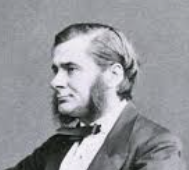
Mr. Darwin's hypothesis is not, so far as I am aware, inconsistent with any known biological fact; on the contrary, if admitted, the facts of Development, of Comparative Anatomy, of Geographical Distribution, and of Palaeontology, become connected together, and exhibit a meaning such as they never possessed before; and I, for one, am fully convinced that if not precisely true, that hypothesis is as near an approximation to the truth as, for example, the Copernican hypothesis was to the true theory of the planetary motions.
▼
Source
source
Ch.2, p. 127
4 months 1 week ago
We are born to inquire after truth; it belongs to a greater power to possess it. It is not, as Democritus said, hid in the bottom of the deeps, but rather elevated to an infinite height in the divine knowledge.
▼
Source
source
Book III, Ch. 8. Of the Art of Conversation

4 months 2 days ago
Human freedom is realised in the adoption of humanity as an end in itself, for the one thing that no-one can be compelled to do by another is to adopt a particular end.
▼
Source
source
Part Two : Metaphysical Principles of Virtue
2 weeks 6 days ago
His Religion is not an easy one: with rigorous fasts, lavations, strict complex formulas, prayers five times a day, and abstinence from wine, it did not "succeed by being an easy religion." As if indeed any religion, or cause holding of religion, could succeed by that! It is a calumny on men to say that they are roused to heroic action by ease, hope of pleasure, recompense, - sugar-plums of any kind, in this world or the next! In the meanest mortal there lies something nobler.
2 months 3 weeks ago
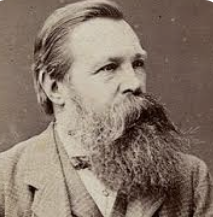
The bourgeoisie is charitable out of self-interest; it gives nothing outright, but regards its gifts as a business matter, makes a bargain with the poor, saying: "If I spend this much upon benevolent institutions, I thereby purchase the right not to be troubled any further, and you are bound thereby to stay in your dusky holes and not to irritate my tender nerves by exposing your misery. You shall despair as before, but you shall despair unseen."
5 months ago
This opinion... appears to be ancient... that the one, excess and defect, are the principles of things... It is not... probable that there are more than three principles... [E]ssence is one certain genus of being: so that principles will differ from each other in prior and posterior alone, but not in genus, for in one genus there is always one contrariety, and all contrarieties appear to be referred to one. That there is neither one element, therefore, nor more than two or three, is evident.
3 weeks 3 days ago
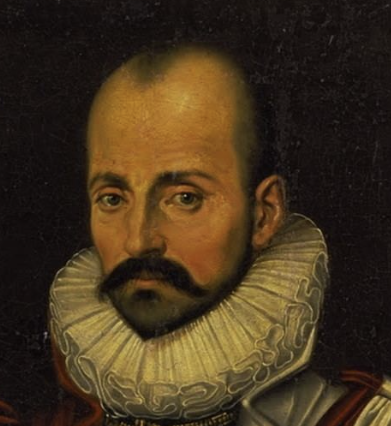
From all these indignities, such as the very beasts of the field would not endure, you can deliver yourselves if you try, not by taking action, but merely by willing to be free.
3 weeks 1 day ago
While the positivists were proclaiming the end "once and for all" of unverifiable metaphysical systems and speculative philosophy in general, new doctrines in flagrant contradiction to those ideals have sprung up one after the other. Positivists see no more in this development than evidence of human stupidity, not any reflection on themselves.
▼
Source
source
Chapter Eight, Logical Empiricism, p. 198
2 weeks 6 days ago
The greatest of faults, I should say, is to be conscious of none.
2 months 3 weeks ago
We replace God as best we can; for every god is good, provided he perpetuates in eternity our desire for a crucial solitude. . . .
CivilSimian.com created by AxiomaticPanic, CivilSimian, Kalokagathia