


4 months ago
Most men do not feel in themselves the competence required for leading their group to victory, and therefore seek out a captain who appears to possess the courage and sagacity necessary for the achievement of supremacy. Even in religion this impulse appears. Nietzsche accused Christianity of inculcating a slave-morality, but ultimate triumph was always the goal. "Blessed are the meek, for they shall inherit the earth."
▼
Source
source
Ch. 2: Leaders and Followers

3 months 4 days ago
The Indian knew how to live without wants, to suffer without complaint, and to die singing.
▼
Source
source
Chapter I.

4 months 2 days ago
Morality is not properly the doctrine of how we may make ourselves happy, but how we may make ourselves worthy of happiness.
1 week 3 days ago
Zen does not confuse spirituality with thinking about God while one is peeling potatoes. Zen spirituality is just to peel the potatoes. Paraphrase of original text which reads "It does not confuse spirituality with thinking about God while one is peeling potatoes. Zen spirituality is just to peel the potatoes.
▼
Source
source
The Way of Zen, Pt. 2, Ch. 2

3 months 4 weeks ago
Every man I meet is in some way my superior, and in that, I can learn of him.
▼
Source
source
As quoted in Think, Vol. 4-5 (1938), p. 32
1 month 1 week ago
Money is everywhere but so is poetry. What we lack are the poets.
▼
Source
source
Poets

2 months 1 week ago
The pleasures of the imagination are as it were only drawings and models which are played with by poor people who cannot afford the real thing.
▼
Source
source
C 38
1 week 3 days ago
Faith which refuses to face indisputable facts is but little faith. Truth is always gain, however hard it is to accommodate ourselves to it. To linger in any kind of untruth proves to be a departure from the straight way of faith.
▼
Source
source
p. 290

4 months 1 week ago
T is one and the same Nature that rolls on her course, and whoever has sufficiently considered the present state of things might certainly conclude as to both the future and the past.
▼
Source
source
Book II, Ch. 12. Apology for Raimond Sebond
4 months ago
In the name of national security, the Commission's hearings were held in secret, thereby continuing the policy which has marked the entire course of the case. This prompts my second question: If, as we are told, Oswald was the lone assassin, where is the issue of national security? Indeed, precisely the same question must be put here as was posed in France during the Dreyfus case: If the Government is so certain of its case, why has it conducted all its inquiries in the strictest secrecy? "
▼
Source
source
16 Questions on the Assassination" in The Minority of One, ed. M.S. Arnoni (1964-09-06), pp. 6-8

2 weeks 6 days ago
For the Scepticism, as I said, is not intellectual only; it is moral also; a chronic atrophy and disease of the whole soul. A man lives by believing something; not by debating and arguing about many things.
2 months 2 days ago
The general nature of the speech act fallacy can be stated as follows, using "good" as our example. Calling something good is characteristically praising or commending or recommending it, etc. But it is a fallacy to infer from this that the meaning of "good" is explained by saying it is used to perform the act of commendation.
▼
Source
source
P. 139.

4 months ago
My education, which was wholly his work, had been conducted without any regard to the possibility of its ending in this result; and I saw no use in giving him the pain of thinking that his plans had failed, when the failure was probably irremediable, and, at all events, beyond the power of his remedies. Of other friends, I had at that time none to whom I had any hope of making my condition intelligible. It was however abundantly intelligible to myself; and the more I dwelt upon it, the more hopeless it appeared.
▼
Source
source
(p. 135)
3 months 4 weeks ago
Though love repine, and reason chafe, There came a voice without reply, - "'T is man's perdition to be safe When for the truth he ought to die."
▼
Source
source
Sacrifice

2 months 3 weeks ago
Opinions, yes; convictions, no. That is the point of departure for an intellectual pride.
3 months 2 weeks ago
Thou shouldst not become presumptuous through much treasure and wealth; for in the end it is necessary for thee to leave all.
2 months 3 weeks ago
In relation to any act of life, the mind acts as a killjoy.
4 months ago
Those only are happy (I thought) who have their minds fixed on some object other than their own happiness; on the happiness of others, on the improvement of mankind, even on some art or pursuit, followed not as a means, but as itself an ideal end. Aiming thus at something else, they find happiness by the way.
▼
Source
source
(p. 142)
2 months 2 days ago
I once had a conversation with a famous French philosopher who's a friend of mine. And I said to him, "Why the hell do you write so badly? Pourquoi tu écris si mal?" ... And this was Michel Foucault. He was a very smart guy and wrote a lot of very good stuff but in general he just wrote badly. When you heard him give a lecture in Berkeley, it was perfectly clear, just as clear as I am. ... And he said, "Well, in France, it would be regarded as somewhat childish and naive if you wrote clearly. ... In France you've got to have 10% incomprehensible."
▼
Source
source
Otherwise people won't think it's deep. They won't think you're a profound thinker.
3 months 3 weeks ago
"Here is the chalk." This is a truth; and here and the now hereby characterize the chalk so that we emphasize by saying; the chalk, which means "this." We take a scrap of paper and we write the truth down: "Here is the chalk." We lay this written statement beside the thing of which it is the truth. After the lecture is finished both doors are opened, the classroom is aired, there will be a draft, and the scrap of paper, let us suppose, will flutter out into the corridor. A student finds it on his way to the cafeteria, reads the sentence. "Here is the chalk," and ascertains that this is not true at all. Through the draft the truth has become an untruth. Strange that a truth should depend on a gust of wind. ... We have made the truth about the chalk independent of us and entrusted it to a scrap of paper.
▼
Source
source
p. 29-30
2 months 3 weeks ago
I think being a woman is like being Irish... Everyone says you're important and nice, but you take second place all the same.
▼
Source
source
The Red and the Green (1965), ch. 2, p. 30.
2 weeks 6 days ago
Democracy is, by the nature of it, a self-canceling business; and it gives in the long run a net result of zero.
▼
Source
source
Ch. 6, Laissez-Faire.

3 months 4 weeks ago
Critics who treat adult as a term of approval, instead of as a merely descriptive term, cannot be adult themselves. To be concerned about being grown up, to admire the grown up because it is grown up, to blush at the suspicion of being childish; these things are the marks of childhood and adolescence. And in childhood and adolescence they are, in moderation, healthy symptoms. Young things ought to want to grow. But to carry on into middle life or even into early manhood this concern about being adult is a mark of really arrested development. When I was ten, I read fairy tales in secret and would have been ashamed if I had been found doing so. Now that I am fifty I read them openly. When I became a man I put away childish things, including the fear of childishness and the desire to be very grown up.
▼
Source
source
"On Three Ways of Writing for Children" (1952) - in Of Other Worlds: Essays and Stories (1967), p. 25
2 weeks ago
Belief and work, knowledge and action are one and the same thing.

3 months 4 weeks ago
What a monument of human smallness is this idea of the philosopher king. What a contrast between it and the simplicity of humaneness of Socrates, who warned the statesmen against the danger of being dazzled by his own power, excellence, and wisdom, and who tried to teach him what matters most - that we are all frail human beings. What a decline from this world of irony and reason and truthfulness down to Plato's kingdom of the sage whose magical powers raise him high above ordinary men; although not quite high enough to forgo the use of lies, or to neglect the sorry trade of every shaman - the selling of spells, of breeding spells, in exchange for power over his fellow-men.
▼
Source
source
Vol. 1, Ch 8 "The Philosopher King"

3 months 5 days ago
To keep our eyes open longer were but to set our Antipodes. The Huntsmen are up in America, and they are already past their first sleep in Persia. But who can be drowsy at that hour which freed us from everlasting sleep? or have slumbering thoughts at that time, when sleep itself must end, and as some conjecture all shall awake again?
▼
Source
source
Ch. 5

3 months 6 days ago
Since I have spread my wings to purpose high, The more beneath my feet the clouds I see, The more I give the winds my pinions free, Spurning the earth and soaring to the sky.
▼
Source
source
As quoted in "Giordano Bruno" by Thomas Davidson, in The Index Vol. VI. No. 36 (4 March 1886), p. 429

5 months 2 days ago
Man has an invincible inclination to allow himself to be deceived and is, as it were, enchanted with happiness when the rhapsodist tells him epic fables as if they were true, or when the actor in the theater acts more royally than any real king. So long as it is able to deceive without injuring, that master of deception, the intellect, is free; it is released from its former slavery and celebrates its Saturnalia. It is never more luxuriant, richer, prouder, more clever and more daring.

3 months 3 weeks ago
The aspects of things that are most important for us are hidden because of their simplicity and familiarity. (One is unable to notice something - because it is always before one's eyes.) The real foundations of his enquiry do not strike a man at all. Unless that fact has at some time struck him. - And this means: we fail to be struck by what, once seen, is most striking and most powerful.
▼
Source
source
§ 129

5 months ago
When Christianity came into the world the task was simply to proclaim Christianity. The same is the case wherever Christianity is introduced into a country the religion of which is not Christianity.

3 months 1 week ago
Above all things reverence thy Self.
▼
Source
source
Variant translations: Respect yourself above all. As quoted in Divine Harmony: The Life and Teachings of Pythagoras by John Strohmeier and Peter Westbrook. (1999) ISBN 0-9653774-5-8

1 month 4 weeks ago
It occurred to him that what had appeared perfectly impossible before, namely that he had not spent his life as he should have done, might after all be true. It occurred to him that his scarcely perceptible attempts to struggle against what was considered good by the most highly placed people, those scarcely noticeable impulses which he had immediately suppressed, might have been the real thing, and all the rest false. And his professional duties and the whole arrangement of his life and of his family, and all his social and official interests, might all have been false. He tried to defend all those things to himself and suddenly felt the weakness of what he was defending.
▼
Source
source
Ch. XI
2 months 3 weeks ago
"What's wrong - what's the matter with you?" Nothing, nothing's the matter, I've merely taken a leap outside my fate, and now I don't know where to turn, what to run for...
2 months 2 weeks ago
Life is agid. Life is fulgid. Life is a burgeoning, a quickening of the dim primordial urge in the murky wastes of time. Life is what the least of us make most of us feel the least of us make the most of.
▼
Source
source
Quine's response in 1988 when asked his philosophy of life. (He invented the word "agid".) It makes up the entire Chapter 54 in Quine in Dialogue (2008).
1 month 1 week ago
I must write it all out, at any cost. Writing is thinking. It is more than living, for it is being conscious of living.
▼
Source
source
Locked Rooms and Open Doors

3 months ago
Abstract liberty, like other mere abstractions, is not to be found.
3 months 4 days ago
People praise virtue, but they hate it, they run away from it. It freezes you to death, and in this world you've got to keep your feet warm.
3 months 4 weeks ago
In the highest civilization, the book is still the highest delight. He who has once known its satisfactions is provided with a resource against calamity.
▼
Source
source
Quotation and Originality


3 months 4 weeks ago
In a world, man must create his own essence: it is in throwing himself into the world, suffering there, struggling there, that he gradually defines himself.
2 weeks 6 days ago
Of America it would ill beseem any Englishman, and me perhaps as little as another, to speak unkindly, to speak unpatriotically, if any of us even felt so. Sure enough, America is a great, and in many respects a blessed and hopeful phenomenon. Sure enough, these hardy millions of Anglosaxon men prove themselves worthy of their genealogy... But as to a Model Republic, or a model anything, the wise among themselves know too well that there is nothing to be said... Their Constitution, such as it may be, was made here, not there... Cease to brag to me of America, and its model institutions and constitutions.
▼
Source
source
Latter Day Pamphlets, No. 1., p. 23, 24.
4 months 2 weeks ago
Appearances to the mind are of four kinds. Things either are what they appear to be; or they neither are, nor appear to be; or they are, and do not appear to be; or they are not, and yet appear to be. Rightly to aim in all these cases is the wise man's task.
▼
Source
source
Book I, ch. 27, § 1.
2 months 1 week ago
If the passion for truthfulness is merely controlled and stilled without being satisfied, it will kill the activities it is supposed to support. This may be one of the reasons why, at the present time, the study of the humanities runs a risk of sliding from professional seriousness, through professionalization, to a finally disenchanted careerism.
▼
Source
source
p. 3
2 months 1 week ago
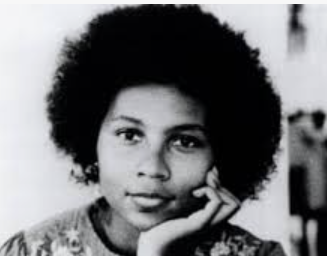
But many of us seek community solely to escape the fear of being alone. Knowing how to be solitary is central to the art of loving. When we can be alone, we can be with others without using them as a means of escape.
▼
Source
source
All About Love: New Visions, 1999
3 months 3 weeks ago
If people did not sometimes do silly things, nothing intelligent would ever get done.
▼
Source
source
p. 50e

4 months 3 days ago
His capital is continually going from him in one shape, and returning to him in another, and it is only by means of such circulation, or successive exchanges, that it can yield him any profit. Such capitals, therefore, may very properly be called circulating capitals.
▼
Source
source
Chapter I, p. 305.

3 months 4 weeks ago
It often happens that reforms merely have the effect of transferring the undesirable tendencies of individuals from one channel to another channel. An old outlet for some particular wickedness is closed; but a new outlet is opened. The wickedness is not abolished; it is merely provided with a different set of opportunities for self-expression.
▼
Source
source
Ch. 3, p. 20 [2012 reprint]
4 months 3 weeks ago
There were many special laws affecting the several kings inscribed about the temples, but the most important was the following: They were not to take up arms against one another, and they were all to come to the rescue if any one in any of their cities attempted to overthrow the royal house; like their ancestors, they were to deliberate in common about war and other matters, giving the supremacy to the descendants of Atlas. And the king was not to have the power of life and death over any of his kinsmen unless he had the assent of the majority of the ten.
1 month 1 week ago
No being can be what he is unless he is putting his essence into action in his field.
▼
Source
source
Vol. 3
5 months ago
Freedom's possibility is not the ability to choose the good or the evil. The possibility is to be able. In a logical system, it is convenient to say that possibility passes over into actuality. However, in actuality it is not so convenient, and an intermediate term is required. The intermediate term is anxiety, but it no more explains the qualitative leap than it can justify it ethically. Anxiety is neither a category of necessity nor a category of freedom; it is entangled freedom, where freedom is not free in itself but entangled, not by necessity, but in itself.
CivilSimian.com created by AxiomaticPanic, CivilSimian, Kalokagathia