


3 months 4 weeks ago
... the fight against suffering must be considered a duty, while the right to care for the happiness of others must be considered a privilege confined to the close circle of their friends. ... Pain, suffering, injustice, and their prevention, these are the eternal problems of public morals, the 'agenda' of public policy ...
▼
Source
source
Vol. 2, Ch. 24 "Oracular Philosophy and the Revolt against Reason"

4 months ago
It is entirely clear that there is only one way in which great wars can be permanently prevented, and that is the establishment of an international government with a monopoly of serious armed force.
▼
Source
source
"The Atomic Bomb and the Prevention of War" in the Bulletin of the Atomic Scientists, 10/1/1945
2 months 1 week ago
Roughly speaking, rationality is concerned with the selection of preferred behavior alternatives in terms of some system of values, whereby the consequences of behavior can be evaluated.
▼
Source
source
p. 84.

1 month 3 weeks ago
The TV camera has no shutter. It does not deal with aspects or facets of objects in high resolution. It is a means of direct pick-up by the electrical groping over surfaces.
▼
Source
source
Arts in society, Volume 3, 1964, p. 242

2 months 1 week ago
Open, honest, truth-telling individuals value privacy. We all need spaces where we can be alone with thoughts and feelings - where we can experience healthy psychological autonomy and can choose to share when we want to.
▼
Source
source
All About Love: New Visions
1 month 3 weeks ago
The real reason people are conservatives is that they are attached to the things that they love, and want to preserve them from abuse and decay. They are attached to their family, their friends, their religion, and their immediate environment. They have made a lifelong distinction between the things that nourish and the things that threaten their security and peace of mind.
▼
Source
source
Conservatism and the Conservatory,, National Review

2 weeks 6 days ago
Paris, which for sixty years past has been the City of Insurrections. The French People had plumed themselves on being, whatever else they were not, at least the chosen "soldiers of liberty," who took the lead of all creatures in that pursuit, at least; and had become, as their orators, editors and litterateurs diligently taught them, a People whose bayonets were sacred, a kind of Messiah People, saving a blind world in its own despite, and earning for themselves a terrestrial and even celestial glory very considerable indeed.
4 months ago
I like mathematics because it is not human and has nothing particular to do with this planet or with the whole accidental universe - because, like Spinoza's God, it won't love us in return.
▼
Source
source
Letter to Lady Ottoline Morrell, March, 1912, as quoted in Gaither's Dictionary of Scientific Quotations (2012), p. 1318
2 months 1 week ago
The most important misunderstanding seems to me to lie in a confusion between the human necessities which I consider part of human nature, and the human necessities as they appear as drives, needs, passions, etc., in any given historical period. This division is not very different from Marx's concept of "human nature in general", to be distinguished from "human nature as modified in each historical period". The same distinction exists in Marx when he distinguishes between "constant" or "fixed" drives and "relative" drives. The constant drives "exist under all circumstances and ... can be changed by social conditions only as far as form and direction are concerned". The relative drives "owe their origin only to a certain type of social organization".
1 month 2 weeks ago
The improver of natural knowledge absolutely refuses to acknowledge authority, as such. For him, scepticism is the highest of duties; blind faith the one unpardonable sin. And it cannot be otherwise, for every great advance in natural knowledge has involved the absolute rejection of authority, the cherishing of the keenest scepticism, the annihilation of the spirit of blind faith; and the most ardent votary of science holds his firmest convictions, not because the men he most venerates hold them; not because their verity is testified by portents and wonders; but because his experience teaches him that whenever he chooses to bring these convictions into contact with their primary source, Nature - whenever he thinks fit to test them by appealing to experiment and to observation - Nature will confirm them. The man of science has learned to believe in justification, not by faith, but by verification. On the advisableness of improving natural knowledge
▼
Source
source
1866

3 months 4 weeks ago
Our condition is like that of the poor wolves: if one of the flock wound himself, or so much as limp, the rest eat him up incontinently. That serene Power interposes the check upon the caprices and officiousness of our wills.

3 months 4 weeks ago
The truth remains that, after adolescence has begun, "words, words, words," must constitute a large part, and an always larger part as life advances, of what the human being has to learn.
▼
Source
source
"The Acquisition of Ideas"
2 months 1 week ago
Actual aristocracy cannot be abolished by any law: all the law can do is decree how it is to be imparted and who is to acquire it.
▼
Source
source
L 44
2 months 3 weeks ago
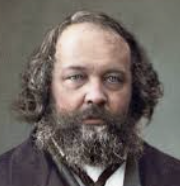
It is the peculiarity of privilege and of every privileged position to kill the intellect and heart of man. The privileged man, whether he be privileged politically or economically, is a man depraved in intellect and heart.
▼
Source
source
As quoted in "Socialism" article of Encyclopaedia Britannica, 9th edition (1887), edited by Thomas Spencer Baynes with assistance of William Robertson Smith, Vol. 22, p. 216, Charles Scribner's Sons

2 months 3 weeks ago
He who has never envied the vegetable has missed the human drama.
▼
Source
source
p. 178, first American edition

4 months 1 week ago
It is the part of cowardice, not of courage, to go and crouch in a hole under a massive tomb, to avoid the blows of fortune.
▼
Source
source
Ch. 3. A Usage of the Island of Cea, tr. George B. Ives, 1925
1 month 3 weeks ago
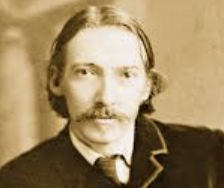
Though the coming of the day is still the most inspiriting, yet day's departure, also, and the return of night refresh, renew, and quiet us; and in the pastures of the dusk we stand, like cattle, exulting in the absence of the load.
▼
Source
source
Toils And Pleasures.
2 months 1 week ago
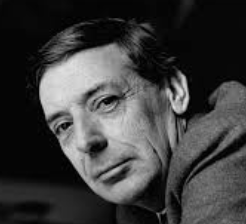
If the passion for truthfulness is merely controlled and stilled without being satisfied, it will kill the activities it is supposed to support. This may be one of the reasons why, at the present time, the study of the humanities runs a risk of sliding from professional seriousness, through professionalization, to a finally disenchanted careerism.
▼
Source
source
p. 3
1 month 1 week ago
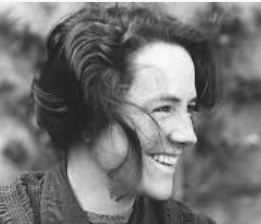
I must write it all out, at any cost. Writing is thinking. It is more than living, for it is being conscious of living.
▼
Source
source
Locked Rooms and Open Doors
3 months 2 weeks ago
When Philip had news brought him of divers and eminent successes in one day, "O Fortune!" said he, "for all these so great kindnesses do me some small mischief."
▼
Source
source
34 Philip
2 months 2 weeks ago
The science of pure mathematics, in its modern developments, may claim to be the most original creation of the human spirit.
▼
Source
source
Ch. 2: "Mathematics as an Element in the History of Thought", p. 28
2 months 3 weeks ago
Once we begin to want, we fall under the jurisdiction of the Devil.
3 months 4 weeks ago
When memory begins to decay, proper names are what go first ...[C]ommon qualities and names have contracted an infinitely greater number of associations ...than the names of most of the persons ...Their memory is better organized. ...'Organization' means numerous associations; and the more numerous the associations, the greater the number of paths of recall. For the same reason... words... which form the grammatical framework of all our speech, are the very last to decay.
▼
Source
source
Ch. 16
2 weeks 6 days ago
Hadst thou not Greek enough to understand thus much: The end of man is an Action, and not a Thought, though it were the noblest.
▼
Source
source
Bk. II, ch. 5 The words Carlyle put in italics are a quotation from Book 1 of Aristotle's Nicomachean Ethics.
5 months ago
The single harmony produced by all the heavenly bodies singing and dancing together springs from one source and ends by achieving one purpose, and has rightly bestowed the name not of "disordered" but of "ordered universe" upon the whole.
2 months 3 weeks ago
It is not by genius, it is by suffering, and suffering alone, that one ceases to be a marionette.

3 months ago
A fool with a heart and no sense is just as unhappy as a fool with sense and no heart.
▼
Source
source
Part 1, Chapter 7

2 weeks ago
You are doing an excellent thing, one which will be wholesome for you, if, as you write me, you are persisting in your effort to attain sound understanding; it is foolish to pray for this when you can acquire it from yourself. We do not need to uplift our hands towards heaven, or to beg the keeper of a temple to let us approach his idol's ear, as if in this way our prayers were more likely to be heard. A god is near you, with you, and in you. This is what I mean, Lucilius: there sits a holy spirit within us, one who marks our good and bad deeds, and is our a guardian.

2 months 3 weeks ago
Be of good courage, and if you are discouraged, still take courage over against the various forms of nature. He who has ears to hear, let him hear.
▼
Source
source
Chapter 4.
4 months ago
The fundamental defect of fathers, in our competitive society, is that they want their children to be a credit to them.
▼
Source
source
Ch. 14: Freedom Versus Authority in Education

4 months 1 day ago
Faith consists in believing what reason cannot.
▼
Source
source
"The Flood", 1764
2 months 3 weeks ago
That a man be willing, when others are so too, as farre-forth, as for Peace, and defence of himself he shall think it necessary, to lay down this right to all things; and be contented with so much liberty against other men, as he would allow other men against himself.
▼
Source
source
The First Part, Chapter 14, p. 64-65
1 month 1 week ago
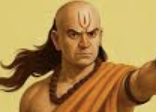
Our bodies are perishable, wealth is not at all permanent and death is always nearby. Therefore we must immediately engage in acts of merit.
4 months 1 week ago
Every man bears the whole stamp of the human condition.
▼
Source
source
Ch. 2

1 month 4 weeks ago
And therefore just as a brigand caught in broad daylight in the act cannot persuade us that he did not lift his knife in order to rob his victim of his purse, and had no thought of killing him, we too, it would seem, cannot persuade ourselves or others that the soldiers and policemen around us are not to guard us, but only for defense against foreign foes, and to regulate traffic and fetes and reviews; we cannot persuade ourselves and others that we do not know that the men do not like dying of hunger, bereft of the right to gain their subsistence from the earth on which they live; that they do not like working underground, in the water, or in the stifling heat, for ten to fourteen hours a day, at night in factories to manufacture objects for our pleasure. One would imagine it impossible to deny what is so obvious. Yet it is denied.
▼
Source
source
Chapter XII, Conclusion-Repent Ye, for the Kingdom of Heaven is at Hand
2 months 3 weeks ago
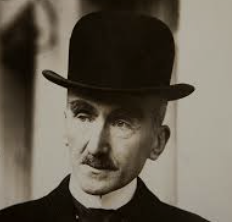
The open society is one that is deemed in principle to embrace all humanity.
▼
Source
source
Chapter IV
3 months 2 weeks ago
Being about to pitch his camp in a likely place, and hearing there was no hay to be had for the cattle, "What a life," said he, "is ours, since we must live according to the convenience of asses!"
▼
Source
source
37 Philip
1 month 1 week ago
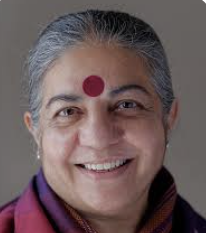
Owning our seeds through seed freedom, our own food through food freedom, our own minds and intelligence through intellectual freedom, our own economies through freedom to produce and consume ecologically and locally, is the 'barbarianism' that the 1% would like to extinguish.
2 months 3 weeks ago
Behold, we go up to Jerusalem; and the Son of man shall be betrayed unto the chief priests and unto the scribes, and they shall condemn him to death, And shall deliver him to the Gentiles to mock, and to scourge, and to crucify him: and the third day he shall rise again.
▼
Source
source
20:18-19 (KJV)
4 months 1 day ago
There cannot be a greater rudeness, than to interrupt another in the current of his discourse... To which, if there be added, as is usual, a correcting of any mistake, or a contradiction of what has been said, it is a mark of yet greater pride and self-conceitedness, when we thus intrude our selves for teachers, and take upon us either to set another right in his story, or shew the mistakes of his judgement.
▼
Source
source
Sec. 145
2 months 3 weeks ago
With men this is impossible; but with God all things are possible.
▼
Source
source
19:26 (KJV)

4 months ago
It is in vain to dream of a wildness distant from ourselves.
▼
Source
source
August 30, 1856

5 months ago
This fact, that the opposite of sin is by no means virtue, has been overlooked. The latter is partly a pagan view, which is content with a merely human standard, and which for that very reason does not know what sin is, that all sin is before God. No, the opposite of sin is faith.
1 month 2 weeks ago
M. Comte's philosophy, in practice, might be compendiously described as Catholicism minus Christianity.
▼
Source
source
On the Physical Basis of Life
2 weeks ago
If one doesn't know his mistakes, he won't want to correct them.
▼
Source
source
Line 9
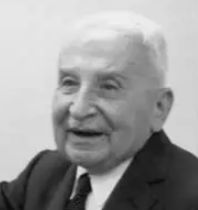
2 weeks 1 day ago
All rational action is economic. All economic activity is rational action. All rational action is in the first place individual action. Only the individual thinks. Only the individual reasons. Only the individual acts.
▼
Source
source
Part II : The Economics of a Socialist Community, § I : The Economics of an Isolated Socialist Community, Ch. 5 : The Nature of Economic Activity, p. 97
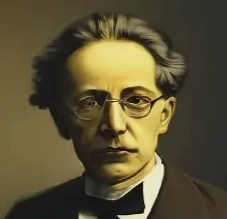
2 weeks 1 day ago
Because the Egoist is to himself the warder of the human, and has nothing to say to the state except: "Get out of my sunshine!"
▼
Source
source
Tucker 1907, p. 307
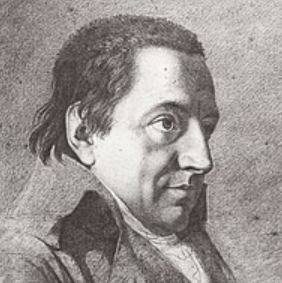
2 months 4 weeks ago
Of what I am, I know no more than that I am, but here no tie is necessary between subject and object. My own being is this tie, I am at once the subject knowing, and the object known of; and this reflection or return of the knowledge on itself is what I designate by the term I, if I have any determinate meaning.
▼
Source
source
Jane Sinnett, trans 1846 p. 50
CivilSimian.com created by AxiomaticPanic, CivilSimian, Kalokagathia