

Just now
No wild beasts are such enemies to mankind as are most of the Christians in their deadly hatred of one another.
▼
Source
source
Reported in Ammianus, Res gestae, bk. 22, ch. 5, sec. 4
1 month 4 days ago
It is the indignity of being treated as disposable that pushes people towards religious fundamentalism in order to retrieve a sense of self, of meaning, of significance. This is why globalization breeds religious fundamentalism and free markets create terrorism and extremism, not democracy.
▼
Source
source
(p80)

2 months 1 week ago
What objection is there in reason to there being no other purpose in the sum of things save only to exist and happen as it does exist and happen? For him who places himself outside of himself, none; but for him who lives and suffers and desires within himself - for him it is a question of life or death.
1 day ago
Time is the primitive form of the stream of consciousness. ...If we project ourselves outside the stream of consciousness and represent its content as an object, it becomes an event happening in time, the separate stages of which stand to one another in the relations of earlier and later.
▼
Source
source
Introduction

3 months 3 weeks ago
When the qualification to vote is regulated by years, it is placed on the firmest possible ground, because the qualification is such as nothing but dying before the time can take away; and the equality of Rights, as a principle, is recognized in the act of regulating the exercise. But when Rights are placed upon, or made dependent upon property, they are on the most precarious of all tenures. "Riches make themselves wings, and fly away," and the rights fly with them ; and thus they become lost to the man when they would be of most value.


6 days ago
Worse than war is the very fear of war.
▼
Source
source
line 572 (Chorus).

3 months 3 weeks ago
Hypothetical liberty is allowed to everyone who is not a prisoner and in chains
▼
Source
source
§ 8.23
2 months 2 weeks ago
Never since the heroic days of Greece has the world had such a sweet, just, boyish master.
▼
Source
source
"The British Character"
2 months 1 week ago
The role of philosophy might be said to be to extend and deepen the self-awareness of mankind.
▼
Source
source
Ch. 9, p. 137

1 month 2 weeks ago
Language does for intelligence what the wheel does for the feet and the body. It enables them to move from thing to thing with greater ease and speed and ever less involvement.
▼
Source
source
(p. 113)
1 month 2 weeks ago
There is certainly some chill and arid knowledge to be found upon the summits of formal and laborious science; but it is all round about you, and for the trouble of looking, that you will acquire the warm and palpitating facts of life.
▼
Source
source
An Apology for Idlers.
2 days ago
As to the viciousness of the philosophers, the meaning of this complaint is succinctly expressed in the charge that the philosophers do not "hold the gods the city holds." And this accusation is most true. The quest for wisdom begins in doubt of the conventional wisdom about the highest things. The most cherished beliefs of the community, the collective hopes and fears, are centered on its gods. The unpardonable thing is to be beyond these hopes and fears, beyond the awe and shame the gods impose.
▼
Source
source
Commerce and Culture, p. 287.

2 months 2 weeks ago
Taught from their infancy that beauty is woman's sceptre, the mind shapes itself to the body, and roaming round its gilt cage, only seeks to adorn its prison.
▼
Source
source
Ch. 3
2 months 1 week ago
Men have been released from [concentration] camps who have taken over the jargon of their jailers and with cold reason and mad consent (the price, as it were, of their survival) tell their story as if it could not have been otherwise than it was, contending that they have not been treated so badly after all.
▼
Source
source
p. 45.
6 days ago
You see that man can endure toil: Cato, on foot, led an army through African deserts. You see that thirst can be endured: he marched over sun-baked hills, dragging the remains of a beaten army and with no train of supplies, undergoing lack of water and wearing a heavy suit of armour; always the last to drink of the few springs which they chanced to find. You see that honour, and dishonour too, can be despised: for they report that on the very day when Cato was defeated at the elections, he played a game of ball. You see also that man can be free from fear of those above him in rank: for Cato attacked Caesar and Pompey simultaneously, at a time when none dared fall foul of the one without endeavouring to oblige the other. You see that death can be scorned as well as exile: Cato inflicted exile upon himself and finally death, and war all the while.

3 months 3 weeks ago
Is not marriage an open question, when it is alleged, from the beginning of the world, that such as are in the institution wish to get out, and such as are out wish to get in?
▼
Source
source
Montaigne; or, The Skeptic
4 months 2 weeks ago
In memory yet green, in joy still felt, The scenes of life rise sharply into view. We triumph; Life's disasters are undealt, And while all else is old, the world is new.

2 months 2 weeks ago
There is only this swarm of dying creatures stricken with longevity, all the more hateful in that they are so good at organizing their agony. p. 120, first American edition
▼
Source
source
1970

3 months 2 weeks ago
The best work is not what is most difficult for you; it is what you do best.
▼
Source
source
Act 6, sc. 2
3 months 2 weeks ago
I was not the one to invent lies: they were created in a society divided by class and each of us inherited lies when we were born. It is not by refusing to lie that we will abolish lies: it is by eradicating class by any means necessary.
▼
Source
source
Act 5, sc. 3
2 weeks ago
Who is the happiest of men? He who values the merits of others, And in their pleasure takes joy, even as though 'twere his own. Not in the morning alone, not only at mid-day he charmeth; Even at setting, the sun is still the same glorious planet.
▼
Source
source
Distichs in The Poems of Goethe (1853) as translated in the original metres by Edgar Alfred Bowring
3 weeks ago
Of course, not everything old is beautiful, any more than everything black, or everything white, or everything young. But the notion that old means ugly is every bit as harmful as the prejudice that black is ugly. In one way it is even more pernicious. The notion that only what is new and young is beautiful poisons our relationship to the past and to our own future. It keeps us from understanding our roots and the greatest works of our culture and other cultures. It also makes us dread what lies ahead of us and leads many to shirk reality.
▼
Source
source
Time is an Artist (1978) Epilogue : Old is Beautiful

3 months 3 weeks ago
Nothing is so common as to imitate one's enemies, and to use their weapons.
▼
Source
source
"Oracles", 1770
2 months 1 week ago
As an empiricist I continue to think of the conceptual scheme of science as a tool, ultimately, for predicting future experience in the light of past experience. Physical objects are conceptually imported into the situation as convenient intermediaries-not by definition in terms of experience, but simply as irreducible posits comparable, epistemologically, to the gods of Homer. For my part I do, qua lay physicist, believe in physical objects and not in Homer's gods; and I consider it a scientific error to believe otherwise. But in point of epistemological footing the physical objects and the gods differ only in degree and not in kind. Both sorts of entities enter our conception only as cultural posits. The myth of physical objects is epistemologically superior to most in that it has proved more efficacious than other myths as a device for working a manageable structure into the flux of experience.
▼
Source
source
"Two Dogmas of Empiricism"
4 months 2 weeks ago
Some say that the body is the "tomb" of the soul, their notion being that the soul is buried in the present life; and again, because by its means the soul gives any signs which it gives, it is for this reason also properly called "sign". But I think it most likely that the Orphic poets gave this name, with the idea that the soul is undergoing punishment for something; they think it has the body as an enclosure to keep it safe, like a prison, and this is, as the name itself denotes, the "safe" for the soul, until the penalty is paid, and not even a letter needs to be changed.
3 months 3 weeks ago
A great deal of capital, which appears to-day in the United States without any certificate of birth, was yesterday, in England, the capitalised blood of children.
▼
Source
source
Vol. I, Ch. 31, pg. 829.
2 months 1 week ago
Whoever desires to live among men has to obey their laws-this is what the secular morality of Western civilization comes down to. ... Rationality in the form of such obedience swallows up everything, even the freedom to think.
▼
Source
source
p. 29.
2 months 2 weeks ago
Scaffolds, dungeons, jails flourish only in the shadow of a faith - of that need to believe which has infested the mind forever. The devil pales beside the man who owns a truth, his truth. We are unfair to a Nero, a Tiberius: it was not they who invented the concept heretic: they were only degenerate dreamers who happened to be entertained by massacres. The real criminals are men who establish an orthodoxy on the religious or political level, men who distinguish between the faithful and the schismatic.
2 months 2 weeks ago
And Jesus answered and said unto her, Martha, Martha, thou art careful and troubled about many things, but one thing is needful: and Mary hath chosen that good part, which shall not be taken away from her.
▼
Source
source
10:41-42 (King James Version| KJV)
4 months 2 weeks ago
The papers were always talking about the debt owed to society. According to them, it had to be paid. But that doesn't speak to the imagination. What really counted was the possibility of escape, a leap to freedom, out of the implacable ritual, a wild run for it that would give whatever chance for hope there was. Of course, hope meant being cut down on some street corner, as you ran like mad, by a random bullet. But when I really thought it through, nothing was going to allow me such a luxury. Everything was against it; I would just be caught up in the machinery again.
3 months 3 weeks ago
So much of our time is spent in preparation, so much in routine and so much in retrospect, that the amount of each person's genius is confined to a very few hours.
▼
Source
source
Quoted in Simon Brown (ed.) The New England Farmer, vol. 9 (January 1857) p. 18
3 months 1 week ago
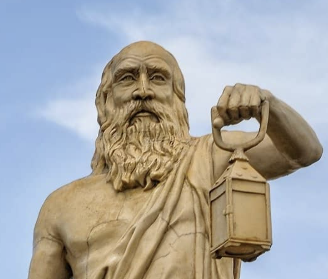
When asked why people give to beggars but not to philosophers, he replied, 'Because they expect they may become lame and blind, but never that they will become philosophers.'
▼
Source
source
Diogenes Laërtius, vi. 56, as reported in Diogenes the Cynic: Sayings and Anecdotes as translated by Robin Hard (Oxford: 2012), p. 18
3 months 3 weeks ago
His heart was as great as the world, but there was no room in it to hold the memory of a wrong.
▼
Source
source
Greatness
3 months 5 days ago
The Athenians are right to accept advice from anyone, since it is incumbent on everyone to share in that sort of excellence, or else there can be no city at all.
▼
Source
source
As quoted in Protagoras by Plato
2 months 2 weeks ago
The aim of research is the discovery of the equations which subsist between the elements of phenomena.
▼
Source
source
p. 205; On aim of research.
3 months 3 weeks ago
No man's knowledge here can go beyond his experience.
▼
Source
source
Book II, Ch. 1, sec. 19

1 month 3 weeks ago
'BUT science and art! You are denying science and art: that is you are denying that by which humanity lives.' People constantly make this rejoinder to me, and they employ: this method in order to reject my arguments without examination. 'He rejects science and art, he wishes man to revert to a state of savagery - why listen to him or discuss with him?' But this is unjust. Not only do I not repudiate science, that is, the reasonable activity of humanity, and art - the expression of that reasonable activity - but it is just on behalf of that reasonable activity and its expression that I speak, only that It may be possible for mankind to escape from the savage state into which it is rapidly lapsing thanks to the false teaching of our time. It is only on that account that I speak as I do.

3 months 3 weeks ago
How shall we define a god? Expressed in psychological terms (which are primary-there is no getting behind them) a god is something that gives us the peculiar kind of feeling which Professor Otto has called "numinous". Numinous feelings are the original god-stuff from which the theory-making mind extracts the individualised gods of the pantheon.
▼
Source
source
"Meditation on the Moon"

2 months 3 weeks ago
The moment a sovereign removes the idea of security and protection from his subjects, and declares that he is everything and they nothing, when he declares that no contract he makes with them can or ought to bind him, he then declares war upon them: he is no longer sovereign; they are no longer subjects.
▼
Source
source
Speech in opening the impeachment of Warren Hastings (16 February 1788), quoted in The Works of the Right Honourable Edmund Burke, Volume the Ninth (1899), p. 459
3 months 1 week ago
Other dogs bite only their enemies, whereas I bite also my friends in order to save them.
▼
Source
source
Stobaeus, iii. 13. 44

3 months 2 weeks ago
We are born helpless. As soon as we are fully conscious we discover loneliness. We need others physically, emotionally, intellectually; we need them if we are to know anything, even ourselves. Introduction
2 months 3 weeks ago
The determination to print them (his lectures), and to communicate them to the General Public, must also speak for itself; and should it not do so, any other recommendation of them would be thrown away. Thus, with respect to the appearance of this work, I have nothing further to say to the Public, than that I have nothing to say.
▼
Source
source
Preface
2 weeks 1 day ago
This shows, perhaps, why we have tried to put all physical phenomena into the same frame. But that can not pass for a definition of simultaneity, since this hypothetical intelligence, even if it existed, would be for us impenetrable. It is... necessary to seek something else.

2 months 3 weeks ago
Your worst sin is that you have destroyed and betrayed yourself for nothing.
2 months 2 weeks ago
Woes and wonders of power, that tonic hell, synthesis of poison and panacea.

3 months 2 weeks ago
But if you say: "How am I to know what he means, when I see nothing but the signs he gives?" then I say: "How is he to know what he means, when he has nothing but the signs either?"
▼
Source
source
§ 504
3 months 3 weeks ago
One right-thinking man thinks like all other right-thinking men of his time-that is to say, in most cases, like some wrong-thinking man of another time.
▼
Source
source
"One and Many," p. 12
3 months 4 weeks ago
Since the law is good, the will, which is hostile to it, cannot be good.
▼
Source
source
Thesis 87
1 month 2 weeks ago
The core of common culture is religion. Tribes survive and flourish because they have gods, who fuse many wills into a single will, and demand and reward the sacrifices on which social life depends.
▼
Source
source
"Culture and Cult" (p. 5)
CivilSimian.com created by AxiomaticPanic, CivilSimian, Kalokagathia