

3 months 1 week ago
To have a great man for an intimate friend seems pleasant to those who have never tried it; those who have, fear it.
▼
Source
source
Book I, epistle xviii, line 86

2 months 2 weeks ago
A harmonious being cannot believe in God. Saints, criminals, and paupers have launched him, making him available to all unhappy people.

3 weeks 4 days ago
Ridden with conflicts and lacking the industrial base of communism and nazism, Islamism is nowhere near a danger of the magnitude of those that were faced down in the 20th century.

1 month 1 week ago
I'm delighted to hear someone make the claim that there is moral progress because it can be such a incendiary thing to say, and its something that I say and deeply believe in.

3 months 2 weeks ago
When they have really learned to love their neighbours as themselves, they will be allowed to love themselves as their neighbours.
▼
Source
source
Letter XIV

3 months 2 weeks ago
It is the nature and intention of a constitution to prevent governing by party, by establishing a common principle that shall limit and control the power and impulse of party, and that says to all parties, thus far shalt thou go and no further. But in the absence of a constitution, men look entirely to party; and instead of principle governing party, party governs principle.
2 months 2 weeks ago
To have grazed every form of failure, including success.
2 months 2 weeks ago
Ennui is the echo in us of time tearing itself apart.
3 months 2 weeks ago
He [Jesus] not only forbids actual uncleanness, but all irregular desires, upon pain of hell-fire; causeless divorces; swearing in conversation, as well as forswearing in judgment; revenge; retaliation; ostentation of charity, of devotion, and of fasting; repetitions in prayer, covetousness, worldly care, censoriousness: and on the other side commands loving our enemies, doing good to those that hate us, blessing those that curse us, praying for those that despitefully use us; patience and meekness under injuries, forgiveness, liberality, compassion: and closes all; his particular injunctions, with this general golden rule, Matt. VII. 12, "All things whatsoever ye would that men should do to you, do you even so to them, for this is the law and the prophets." And to show how much He is in earnest, and expects obedience to these laws, He tells them, Luke VI. 35, That if they obey, " great shall be their reward".
▼
Source
source
§ 116
4 months 2 days ago
For human beings, the measure of every action is the impression of the senses.
▼
Source
source
Book I, ch. 28, 10
3 months 3 weeks ago
All our knowledge falls with the bounds of experience.
▼
Source
source
A 146, B 185
1 month 3 weeks ago
Economic man deals with the "real world" in all its complexity. Administrative man recognizes that the world he perceives is a drastic simplified model... He makes his choices using a simple picture of the situation that takes into account just a few of the factors that he regards as most relevant and crucial.
▼
Source
source
p. xxix; As cited in: Jesper Simonsen (1994) Administrative Behavior: How Organizations can be Understood in Terms of Decision Processes. Roskilde Universitet.

3 months 1 week ago
A man will be imprisoned in a room with a door that's unlocked and opens inwards; as long as it does not occur to him to pull rather than push it.
▼
Source
source
p. 42e

1 week 2 days ago
Love is ever the beginning of Knowledge as fire is of light.
▼
Source
source
Essays, Death of Goethe.
3 months 1 week ago
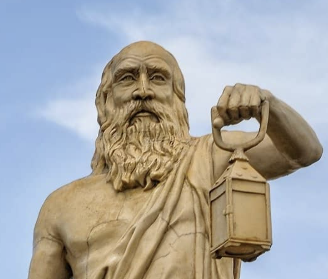
Asked where he came from, he said, "I am a citizen of the world."
▼
Source
source
Diogenes Laërtius, vi. 63
4 months 2 weeks ago
We may assume the superiority ceteris paribus [all things being equal] of the demonstration which derives from fewer postulates or hypotheses—in short from fewer premisses; for... given that all these are equally well known, where they are fewer knowledge will be more speedily acquired, and that is a desideratum. The argument implied in our contention that demonstration from fewer assumptions is superior may be set out in universal form...

3 months 3 weeks ago
In our reasonings concerning matter of fact, there are all imaginable degrees of assurance, from the highest certainty to the lowest species of moral evidence. A wise man, therefore, proportions his belief to the evidence.
▼
Source
source
Section X: Of Miracles; Part I. 87

2 months 3 weeks ago
I know of no country in which there is so little independence of mind and real freedom of discussion as in America.
▼
Source
source
Chapter XV.

2 months 2 weeks ago
...no legislator, at any period of the world, has willingly placed the seat of active power in the hands of the multitude: Because there it admits of no control, no regulation; no steady direction whatsoever. The people are the natural control on authority; but to exercise and to control together is contradictory and impossible.
▼
Source
source
p. 441
1 month 1 week ago
How do we remember the parts of our histories we'd rather forget?
▼
Source
source
Repression and revision are always options.
2 months 2 weeks ago
It seems that I have spent my entire time trying to make life more rational and that it was all wasted effort.
▼
Source
source
As quoted in The Observer (17 August 1986).
2 months 3 weeks ago
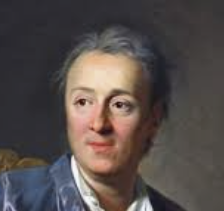
I am beginning to feel that I am growing old; soon, I shall have to eat mush like children. I shall no longer be able to speak, which will be a rather great advantage for others and but a small inconvenience for myself.... The time in which I count in years is gone; that in which I count in days is here.... I had thought that the fibers of the heart would grow callous with age, it's not at all the case. I am not sure that my sensitivity hasn't increased; everything moves me, affects me.... To fade out between a man feeling your pulse and another bothering your head; not to know where one comes from, why one came, where one is going ...
▼
Source
source
Letter to his sister Denise, as quoted in Diderot, Reason and Resonance (1982) by Élisabeth de Fontenay, pp. 270-271
2 months 2 weeks ago
We suffer: the external world begins to exist . . . ; we suffer to excess: it vanishes. Pain instigates the world only to unmask its unreality.

3 months 2 weeks ago
Facts do not cease to exist because they are ignored.
▼
Source
source
"Note on Dogma"


2 months 2 weeks ago
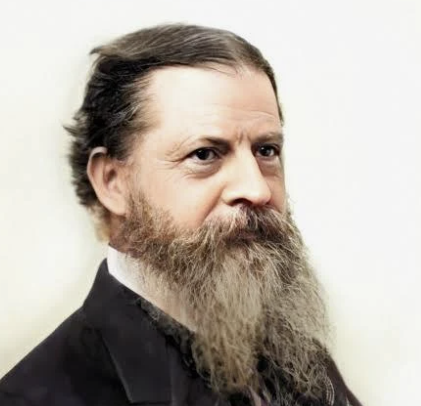
The first character of a general idea so resulting is that it is living feeling. A continuum of this feeling, infinitesimal in duration, but still embracing innumerable parts, and also, though infinitesimal, entirely unlimited, is immediately present. And in its absence of boundedness a vague possibility of more than is present is directly felt.
2 months 1 week ago
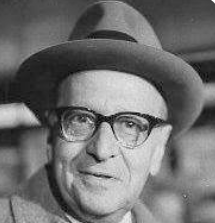
Pragmatism, in trying to turn experimental physics into a prototype of all science and to model all spheres of intellectual life after the techniques of the laboratory, is the counterpart of modern industrialism, for which the factory is the prototype of human existence, and which models all branches of culture after production on the conveyor belt.
▼
Source
source
p. 50.
3 months 2 weeks ago
He [God] lends us a little of His reasoning powers and that is how we think: He puts a little of His love into us and that is how we love one another. When you teach a child writing, you hold its hand while it forms the letters: that is, it forms the letters because you are forming them. We love and reason because God loves and reasons and holds our hand while we do it.
▼
Source
source
Book II, Chapter 4, "The Perfect Penitent"

2 months 2 days ago
It is in literature that the concrete outlook of humanity receives its expression.
▼
Source
source
Ch. 5: "The Romantic Reaction", p. 106
3 months 2 weeks ago
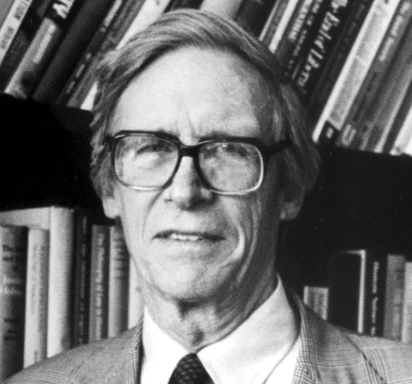
A conception of justice cannot be deduced from self evident premises or conditions on principles; instead, its justification is a matter of the mutual support of many considerations, of everything fitted together into one coherent view.
▼
Source
source
Chapter I, Section 4, p. 21
1 week 5 days ago
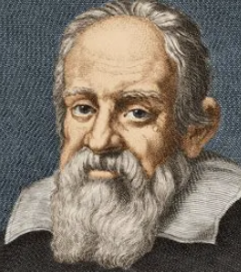
If what we are discussing were a point of law or of the humanities, in which neither true nor false exists, one might trust in subtlety of mind and readiness of tongue and in the greater experience of the writers, and expect him who excelled in those things to make his reasoning most plausible, and one might judge it to be the best. But in the natural sciences, whose conclusions are true and necessary and have nothing to do with human will, one must take care not to place oneself in the defense of error; for here a thousand Demostheneses and a thousand Aristotles would be left in the lurch by every mediocre wit who happened to hit upon the truth for himself. Therefore, Simplicio, give up this idea and this hope of yours that there may be men so much more learned, erudite, and well-read than the rest of us as to be able to make that which is false become true in defiance of nature.
▼
Source
source
Salviati, p. 61

3 months 3 weeks ago
A wise man never loses anything, if he has himself.
▼
Source
source
Ch. 38. Of Solitude, tr. Cotton, rev. W. Hazlitt, 1842
1 week 2 days ago
Fire is the best of servents; but what a master!
▼
Source
source
Bk. II, ch. 9.
4 months 2 days ago
The propositions which are true and evident must of necessity be employed even by those who contradict them.
▼
Source
source
Book II, ch. 20, 1

1 month 2 weeks ago
We are not ostriches, and cannot believe that if we refuse to look at what we do not wish to see, it will not exist. This is especially the case when what we do not wish to see is what we wish to eat. If it were really indispensable, or, if not indispensable, at least in some way useful! But it is quite unnecessary ... And this is continually being confirmed by the fact that young, kind, undepraved people - especially women and girls - without knowing how it logically follows, feel that virtue is incompatible with beefsteaks, and, as soon as they wish to be good, give up eating flesh.
▼
Source
source
Ch. X

2 months 4 days ago
Those who keep the masses of men in subjection by exercising force and cruelty deprive them at once of two vital foods, liberty and obedience; for it is no longer within the power of such masses to accord their inner consent to the authority to which they are subjected. Those who encourage a state of things in which the hope of gain is the principal motive take away from men their obedience, for consent which is its essence is not something which can be sold.
▼
Source
source
p. 97

4 months 1 week ago
They hate not to make use of their abilities... they do not necessarily work for their own self-interest.
2 months 2 weeks ago
Life creates itself in delirium and is undone in ennui.
1 month 1 week ago
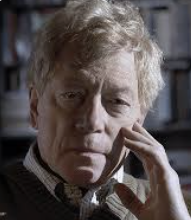
In all the areas of life where people have sought and found consolation through forbidding their desires-sex in particular, and taste in general-the habit of judgment is now to be stamped out.
▼
Source
source
"Rays of Hope" (p. 106)
2 days ago
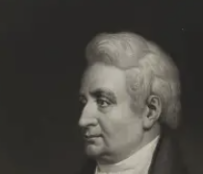
In the four quarters of the globe, who reads an American book? Or goes to an American play? or looks at an American picture or statue? What does the world yet owe to American physicians or surgeons? What new substances have their chemists discovered? Or what old ones have they advanced? What new constellations have been discovered by the telescopes of Americans? Who drinks out of American glasses? Or eats from American plates? Or wears American coats or gowns? or sleeps in American blankets? Finally, under which of the old tyrannical governments of Europe is every sixth man a slave, whom his fellow-creatures may buy and sell and torture?
▼
Source
source
Referring to the lack of established culture and the established institution of slavery in the United States, in "Review of Seybert's Annals of the United States", The Edinburgh Review (1820), pp. 79-80
3 months 2 weeks ago
I doubt not but one great reason why many children abandon themselves wholly to silly sports, and trifle away all their time insipidly, is, because they have found their curiosity baulk'd, and their inquiries neglected. But had they been treated with more kindness and respect, and their questions answered, as they should, to their satisfaction; I doubt not but that they would have taken more pleasure in learning, and improving their knowledge, wherein there would still be newness and variety, which is what they are delighted with, than in returning over and over to the same play and play-things.
▼
Source
source
Sec. 118
1 week 2 days ago
We have chosen Mahomet not as the most eminent Prophet; but as the one we are freest to speak of. He is by no means the truest of Prophets; but I do esteem him a true one. Farther, as there is no danger of our becoming, any of us, Mahometans, I mean to say all the good of him I justly can. It is the way to get at his secret: let us try to understand what he meant with the world; what the world meant and means with him, will then be a more answerable question. Our current hypothesis about Mahomet, that he was a scheming Impostor, a Falsehood incarnate, that his religion is a mere mass of quackery and fatuity, begins really to be now untenable to any one. The lies, which well-meaning zeal has heaped round this man, are disgraceful to ourselves only.

2 months ago
The poor, stupid, free American citizen! Free to starve, free to tramp the highways of this great country, he enjoys universal suffrage, and, by that right, he has forged chains about his limbs. The reward that he receives is stringent labor laws prohibiting the right of boycott, of picketing, in fact, of everything, except the right to be robbed of the fruits of his labor.
3 days ago
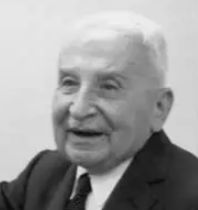
Value is not intrinsic, it is not in things. It is within us; it is the way in which man reacts to the conditions of his environment. Neither is value in words and doctrines, it is reflected in human conduct. It is not what a man or groups of men say about value that counts, but how they act.

1 month 3 weeks ago
Organizations and institutions permit stable expectations to be formed by each member of the group as to the behavior of the other members under specified conditions.
▼
Source
source
p. 100.
2 months 2 weeks ago
You are of all my friends the one who illustrates pragmatism in its most needful forms. You are a jewel of pragmatism.
▼
Source
source
Letter to William James (16 March 1903), published in The thought and character of William James, as revealed in unpublished correspondence and notes (1935) by Ralph Barton Perry, Vol. 2, p. 427
2 months 3 weeks ago
They call, in fact, for the forfeiture, to a greater or less degree, of human liberty, to the point where, were I to attempt to sum up what socialism is, I would say that it was simply a new system of serfdom.
▼
Source
source
Notes for a Speech on Socialism (1848). http://oll.libertyfund.org/pages/tocqueville-s-critique-of-socialism-1848
2 months 1 week ago
Power as is really divided, and as dangerously to all purposes, by sharing with another an Indirect Power, as a Direct one.
▼
Source
source
The Third Part, Chapter 42, p. 315
CivilSimian.com created by AxiomaticPanic, CivilSimian, Kalokagathia