


3 months 1 week ago
Courage, not cleverness; not even inspiration, is the grain of mustard that grows up to be a great tree.
▼
Source
source
p. 44e

1 week 2 days ago
"By what method or methods can the able men from every rank of life be gathered, as diamond-grains from the general mass of sand: the able men, not the sham-able;-and set to do the work of governing, contriving, administering and guiding for us!" It is the question of questions. All that Democracy ever meant lies there: the attainment of a truer and truer Aristocracy, or Government again by the Best.

1 month 2 weeks ago
Advertising is the greatest art form of the twentieth century.
▼
Source
source
quoted in Advertising Age, Sep. 3, 1976

3 months 1 week ago
The circle of day and night is the law of the classical world: the most restricted but most demanding of the necessities of the world, the most inevitable but the simplest of the legislations of nature.This was a law that excluded all dialectics and all reconciliation, consequently laying the foundations for the smooth unity of knowledge as well as the uncompromising division of tragic existence. It reigns on a world without darkness, which knows neither effusiveness nor the gentle charms of lyricism. All is waking or dreams, truth or error, the light of being or the nothingness of shadow.
▼
Source
source
Part Two: 2. The Transcendence of Delirium

2 months 2 weeks ago
Woes and wonders of power, that tonic hell, synthesis of poison and panacea.
3 months 1 week ago
A religious symbol does not rest on any opinion. And error belongs only with opinion. One would like to say: This is what took place here; laugh, if you can.
▼
Source
source
Ch. 7 : Remarks on Frazer's Golden Bough, p. 123
2 months 2 weeks ago
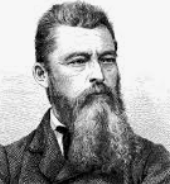
If therefore my work is negative, irreligious, atheistic, let it be remembered that atheism - at least in the sense of this work - is the secret of religion itself; that religion itself, not indeed on the surface, but fundamentally, not in intention or according to its own supposition, but in its heart, in its essence, believes in nothing else than the truth and divinity of human nature. Preface

4 months 2 weeks ago
A line by Thomas à Kempis which perhaps could be used as a motto sometime. He says of Paul: Therefore he turned everything over to God, who knows all, and defended himself solely by means of patience and humility . . . . He did defend himself now and then so that the weak would not be offended by his silence.
3 months 1 week ago
A great prison structure was planned, whose different levels would correspond exactly to the levels of the centralized administration. The scaffold, where the body of the tortured criminal had been exposed to the ritually manifested force of the sovereign, the punitive theatre in which the representation of punishment was permanently available to the social body, was replaced by a great enclosed, complex and hierarchized structure that was integrated into the very body of the state apparatus.
▼
Source
source
Chapter Three, The Gentle Way in Punishment

2 months 3 weeks ago
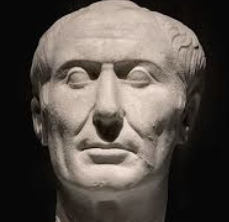
There is no kind of harassment that a man may not inflict on a woman with impunity in civilized societies.
▼
Source
source
"On Women" (1772), as translated in Selected Writings (1966) edited by Lester G. Crocker
1 month 2 weeks ago
Either be silent or say something better than silence.
▼
Source
source
Maxim 960
1 week 2 days ago
Nothing that was worthy in the past departs; no truth or goodness realized by man ever dies, or can die.

3 months 1 week ago
He who abhors and shuns the light of the Sun, He who refuses to behold with respect the living creation of God, He who leads the good to wickedness, He who makes the meadows waterless and the pastures desolate, He who lets fly his weapon against the innocent, An enemy of my faith, a destroyer of Thy principles is he, O Lord!
▼
Source
source
Ahunuvaiti Gatha; Yasna 32, 10.
3 months 1 week ago
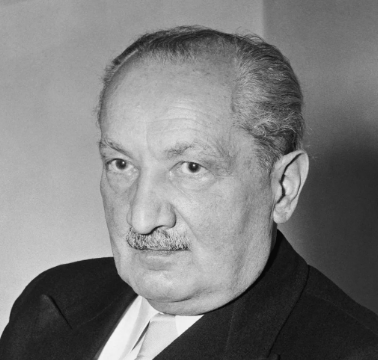
This Europe, which in its ruinous blindness is forever on the point of cutting its own throat, lies today in a great pincers, squeezed between Russia on one side and America on the other. From a metaphysical point of view, Russia and America are the same: the same dreary technological frenzy, the same unrestricted organization of the average man...

3 months 2 weeks ago
It was the excess to which imaginary systems of religion had been carried, and the intolerance, persecutions, burnings, and massacres, they occasioned, that first induced certain persons to propagate infidelity; thinking, that upon the whole, that it was better not to believe at all, than to believe a multitude of things and complicated creeds, that occasioned so much mischief in the world. But those days are past, persecution has ceased, and the antidote then set up against it has no longer even the shadow of apology. We profess, and we proclaim in peace, the pure, unmixed, comfortable, and rational belief of a God, as manifested to us in the universe. We do this without any apprehension of that belief being made a cause of persecution as other beliefs have been, or of suffering persecution ourselves. To God, and not to man, are all men to account for their belief.
▼
Source
source
A Discourse, &c. &c.

3 months 2 weeks ago
Wisdom: The first error is that of the southern people, and it consists in holding that these eastern and western places are real places. ... give no quarter to that thought, whether it threatens you with fear, or tempts you with hopes. For this is Superstition and all who believe it will come in the end to the swamps to the south and the jungles to the far south.
▼
Source
source
Part of the same error is to think that the Landlord is a real man: Pilgrim's Regress 117
3 months 1 week ago
Plato has preserved in the Theaetetus - the story is that Thales, while occupied in studying the heavens above and looking up, fell into a well. A good-looking and whimsical maid from Thrace laughed at him and told him that while he might passionately want to know all things in the universe, the things in front of his very nose and feet were unseen by him." Plato added: "This jest also fits all those who become involved in Philosophy." Therefore, the question, What is a thing?" must always be rated as one that causes housemaids to laugh.
▼
Source
source
p. 3

3 months 2 weeks ago
Belief in God and a future life makes it possible to go through life with less of stoic courage than is needed by skeptics. A great many young people lose faith in these dogmas at an age at which despair is easy, and thus have to face a much more intense unhappiness than that which falls to the lot of those who have never had a religious upbringing. Christianity offers reasons for not fearing death or the universe, and in so doing it fails to teach adequately the virtue of courage. The craving for religious faith being largely an outcome of fear, the advocates of faith tend to think that certain kinds of fear are not to be deprecated. In this, to my mind, they are gravely mistaken. To allow oneself to entertain pleasant beliefs as a means of avoiding fear is not to live in the best way. In so far as religion makes its appeal to fear, it is lowering to human dignity.
▼
Source
source
p. 107

3 months 2 weeks ago
Each the herald is who wrote His rank, and quartered his own coat. There is no king nor sovereign state That can fix a hero's rate.
▼
Source
source
Astræa
4 days ago
The only certain fact about Russian affairs under the Soviet regime with regard to which all people agree is: that the standard of living of the Russian masses is much lower than ... the paragon of capitalism, the United States of America. If we were to regard the Soviet regime as an experiment, we would have to say that the experiment has clearly demonstrated the superiority of capitalism and the inferiority of socialism.
2 months 1 week ago
The transition from Hegel to Marx is, in all respects, a transition to an essentially different order of truth, no to be interpreted in terms of philosophy. We shall see that all the philosophical concepts of Marxian theory are social and economic categories, whereas Hegel's social and economic categories are all philosophical concepts.
▼
Source
source
P. 258
4 months 2 weeks ago
Every art, and every system, and in like manner every action and purpose aims, it is thought, at some good; for which reason a common and by no means a bad description of the good is, that at which all things aim.
3 months 2 weeks ago
He who is in love is wise and is becoming wiser, sees newly every time he looks at the object beloved, drawing from it with his eyes and his mind those virtues which it possesses.
▼
Source
source
The Method of Nature, 1841

3 months 2 weeks ago
... the fight against suffering must be considered a duty, while the right to care for the happiness of others must be considered a privilege confined to the close circle of their friends. ... Pain, suffering, injustice, and their prevention, these are the eternal problems of public morals, the 'agenda' of public policy ...
▼
Source
source
Vol. 2, Ch. 24 "Oracular Philosophy and the Revolt against Reason"
2 months 2 weeks ago
The multiplication of our kind borders on the obscene; the duty to love them, on the preposterous.

3 months 3 weeks ago
Further, it will not be amiss to distinguish the three kinds and, as it were, grades of ambition in mankind. The first is of those who desire to extend their own power in their native country, a vulgar and degenerate kind. The second is of those who labor to extend the power and dominion of their country among men. This certainly has more dignity, though not less covetousness. But if a man endeavor to establish and extend the power and dominion of the human race itself over the universe, his ambition (if ambition it can be called) is without doubt both a more wholesome and a more noble thing than the other two. Now the empire of man over things depends wholly on the arts and sciences. For we cannot command nature except by obeying her.
▼
Source
source
Aphorism 129

2 months 1 week ago
What, could ye not watch with me one hour? Watch and pray, that ye enter not into temptation: the spirit indeed is willing, but the flesh is weak.
▼
Source
source
26:40-41 (KJV)



3 months 2 weeks ago
No punishment has ever possessed enough power of deterrence to prevent the commission of crimes. On the contrary, whatever the punishment, once a specific crime has appeared for the first time, its reappearance is more likely than its initial emergence could ever have been.
▼
Source
source
Epilogue

2 months 2 weeks ago
They say in the grave there is peace, and peace and the grave are one and the same.
▼
Source
source
Act I.

1 month 1 week ago
However long Jewish, Christian and Muslim theologians struggle to find multiple meanings in this text, the dominant seems to be this: Abraham's unquestioning willingness to heed gods command to sacrifice the thing he loved most is what qualified him to become the father of what are called still the Abrahamic faiths.
1 month 3 weeks ago
Probability fractions arise from our knowledge and from our ignorance.
▼
Source
source
Chapter 14, Equipossibility, p. 132.
3 months 2 weeks ago
Is anything more certain than that in all those vast times and spaces, if I were allowed to search them, I should nowhere find her face, her voice, her touch? She died. She is dead. Is the word so difficult to learn?
2 months 2 weeks ago
History proves nothing because it contains everything.
1 week 5 days ago
The sun, with all those planets revolving around it and dependent on it, can still ripen a bunch of grapes as if it had nothing else in the universe to do.
▼
Source
source
Loose paraphrase of Salviati on Day 3

2 weeks ago
The fact of being within capital and sustaining capital is what defines the proletariat as a class.
▼
Source
source
53
3 months 2 weeks ago
It is said (I do not know with what truth) that a certain Hindu thinker believed the earth to rest upon an elephant. When asked what the elephant rested upon, he replied that it rested upon a tortoise. When asked what the tortoise rested upon, he said, "I am tired of this. Suppose we change the subject." This illustrates the unsatisfactory character of the First-Cause argument.
▼
Source
source
"Is There a God?", 1952

2 months 3 weeks ago
There is surely a piece of Divinity within us, something that was before the Elements, and owes no homage unto the Sun.
▼
Source
source
Section 11
1 week 3 days ago
The abolition of the market means not only that the consumers-that is all members of society-are robbed of virtually all choice of consumption and all influence over production; it also means that the information and communication are monopolized by the State, as they too need a vast material base in order to operate. The abolition of the market means, then, that both material and intellectual assets would be totally rationed. To say nothing of the inefficiency of production convincingly demonstrated in the history of communism, this economy requires an omnipotent police state. Briefly: the abolition of the market means a gulag society.
▼
Source
source
"The Self-Poisoning of the Open Society"

3 days ago
Why does God afflict the best of men with ill-health, or sorrow, or other troubles? Because in the army the most hazardous services are assigned to the bravest soldiers: a general sends his choicest troops to attack the enemy in a midnight ambuscade, to reconnoitre his line of march, or to drive the hostile garrisons from their strong places. No one of these men says as he begins his march, " The general has dealt hardly with me," but "He has judged well of me."
▼
Source
source
De Providentia (On Providence), 4.8, translated by Aubrey Stewart
1 month 1 week ago
The ethical life... is maintained in being by a common culture, which also upholds the togetherness of society... Unlike the modern youth culture, a common culture sanctifies the adult state, to which it offers rites of passage.
▼
Source
source
"Idle Hands" (p. 127)
2 months 1 week ago
The transition from philosophy to the domain of state and society had been an intrinsic part of Hegel's system.
▼
Source
source
P. 251
3 months 2 weeks ago
Most men do not feel in themselves the competence required for leading their group to victory, and therefore seek out a captain who appears to possess the courage and sagacity necessary for the achievement of supremacy. Even in religion this impulse appears. Nietzsche accused Christianity of inculcating a slave-morality, but ultimate triumph was always the goal. "Blessed are the meek, for they shall inherit the earth."
▼
Source
source
Ch. 2: Leaders and Followers

3 months 1 week ago
My aim is not to provide excuses for black behavior or to absolve blacks of personal responsibility. But when the new black conservatives accent black behavior and responsibility in such a way that the cultural realities of black people are ignored, they are playing a deceptive and dangerous intellectual game with the lives and fortunes of disadvantaged people. We indeed must criticize and condemn immoral acts of black people, but we must do so cognizant of the circumstances into which people are born and under which they live. By overlooking these circumstances, the new black conservatives fall into the trap of blaming black poor people for their predicament. It is imperative to steer a course between the Scylla of environmental determinism and the Charybdis of a blaming-the-victims perspective.
▼
Source
source
(p56)
3 months 1 week ago
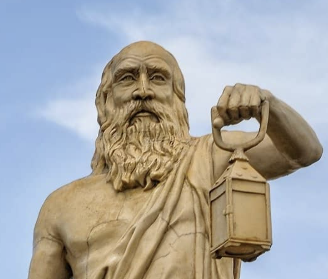
Virtue cannot dwell with wealth either in a city or in a house.
▼
Source
source
Stobaeus, iv. 31c. 88

3 months 2 weeks ago
Undeterred by this examination, the French Revolution gave rise to ideas which led beyond the ideas of the entire old world order. The revolutionary movement which began in 1789 in the Cercle Social, which in the middle of its course had as its chief representatives Leclerc and Roux, and which finally with Babeuf's conspiracy was temporarily defeated, gave rise to the communist idea which Babeuf's friend Buonarroti re-introduced in France after the Revolution of 1830. This idea, consistently developed, is the idea of the new world order.
▼
Source
source
Chapter 6, 3

3 months 2 days ago
But Eudoxus the Cnidian, who was somewhat junior to Leon, and the companion of Plato, first of all rendered the multitude of those theorems which are called universals more abundant; and to three proportions added three others; and things relative to a section, which received their commencement from Plato, he diffused into a richer multitude, employing also resolutions in the prosecution of these.
▼
Source
source
Ch. IV.
1 month 4 weeks ago
Once the good man was dead, one wore his hat and another his sword as he had worn them, a third had himself barbered as he had, a fourth walked as he did, but the honest man that he was - nobody any longer wanted to be that.
▼
Source
source
C 36

2 months 1 day ago
The "passion for incredulity" can produce as much self-deception as the uncritical will to believe.
▼
Source
source
p. 209

3 months 3 weeks ago
Of all human and ancient opinions concerning religion, that seems to me the most likely and most excusable, that acknowledged God as an incomprehensible power, the original and preserver of all things, all goodness, all perfection, receiving and taking in good part the honour and reverence that man paid him, under what method, name, or ceremonies soever
▼
Source
source
Ch. 12
CivilSimian.com created by AxiomaticPanic, CivilSimian, Kalokagathia