


1 month 2 weeks ago
There is a real, living unity in our time, as in any other, but it lies submerged under a superficial hubbub of sensation.
▼
Source
source
Letter to Harold Adam Innis (14 March 1951), published in Letters of Marshall McLuhan (1987), p. 223

3 months 1 week ago
What has to be accepted, the given, is - so one could say - forms of life.
▼
Source
source
Pt II, p. 226 of the 1968 English edition
2 months 1 week ago
Even at the outset, the total and massive quality has its uniqueness; even when vague and undefined, it is just that which it is and not anything else. If the perception continues, discrimination inevitably sets in. Attention must move, and as it moves, parts, members, emerge from the background. And if attention moves in a unified direction instead of wandering, it is controlled by the pervading qualitative unity; attention is controlled by it because it operates within it.
▼
Source
source
p. 199
3 days ago
We know nothing of tomorrow; our business is to be good and happy today.
▼
Source
source
Vol. I, ch. 12, p. 472

3 months 2 weeks ago
It is for the sake of order that I seduced Clytemnestra, for the sake of order that I killed my king. I wanted for order to rule and that it rule through me. I have lived without desire, without love, without hope: I made order. Oh! terrible and divine passion!
▼
Source
source
Aegistheus, Act 2

3 months 3 weeks ago
Nothing but the most exemplary morals can give dignity to a man of small fortune.
▼
Source
source
Chapter I, Part III, Article III, p. 874.

2 months 1 week ago
What is exalted among men is an abomination in the sight of God.
▼
Source
source
16:15 ESV

3 months 3 weeks ago
There is nothing in any object, consider'd in itself, which can afford us a reason for drawing a conclusion beyond it; [...] even after the observation of the frequent or constant conjunction of objects, we have no reason to draw any inference concerning any object beyond those of which we have had experience.
▼
Source
source
Part 3, Section 12
1 month 2 weeks ago
In fact writing a computer program is a pretty good way to summarize knowledge about any set of rules.
▼
Source
source
Chapter 2, "Silken Fetters" (p. 58)

3 months 2 weeks ago
Just as we teach children to avoid being destroyed by motor cars if they can, so we should teach them to avoid being destroyed by cruel fanatics, and to this end we should seek to produce independence of mind, somewhat sceptical and wholly scientific, and to preserve, as far as possible, the instinctive joy of life that is natural to healthy children. This is the task of a liberal education: to give a sense of the value of things other than domination, to help create wise citizens of a free community, and through the combination of citizenship with liberty in individual creativeness to enable men to give to human life that splendour which some few have shown that it can achieve.
▼
Source
source
Ch. 18: The Taming of Power
1 month 3 weeks ago
The problem with all this--the problem I discussed in the first lecture--is that if the causes/background conditions distinction is fundamentally subjective, not descriptive of the world in itself, then current philosophical explanations of the metaphysical nature of reference are bankrupt.
▼
Source
source
Lecture II: Realism and Reasonableness
1 month 4 weeks ago
Once we know our weaknesses they cease to do us any harm.
▼
Source
source
D 5

3 months ago
Most men and women, by birth or nature, lack the means to advance in wealth and power, but all have the ability to advance in knowledge.
▼
Source
source
As quoted in The Golden Ratio (2002) by Mario Livio
2 months 1 week ago
Beyond all conscious lying and falsifying, there is a deeper "organic mendacity." Here the falsification is not formed in consciousness, but at the same stage of the mental process as the impressions and value feelings themselves: on the road of experience into consciousness. There is "organic mendacity" whenever a man's mind admits only those impressions which serve his "interest" or his instinctive attitude. Already in the process of mental reproduction and recollection, the contents of his experience are modified in this direction. He who is "mendacious" has no need to lie! In his case, the automatic process of forming recollections, impressions, and feelings is involuntarily slanted, so that conscious falsification becomes unnecessary.
▼
Source
source
L. Coser, trans. (1973), pp. 77-78
3 months ago
Many words befall men, mean and noble alike; do not be astonished by them, nor allow yourself to be constrained. If a lie is told, bear with it gently. But whatever I tell you, let it be done completely. Let no one persuade you by word or deed to do or say whatever is not best for you.
▼
Source
source
As quoted in Divine Harmony: The Life and Teachings of Pythagoras by John Strohmeier and Peter Westbrook.

3 months 2 weeks ago
It is sometimes said, common sense is very rare.
▼
Source
source
Philosophical Dictionary ('Sens Commun') (1767). Compare Juvenal, Satires, viii:73: Original Latin: rarus enim ferme sensus communis in illa fortuna.
2 months 1 week ago
The basic word I-Thou can be spoken only with one's whole being. The concentration and fusion into a whole being can never be accomplished by me, can never be accomplished without me. I require a Thou to become; becoming I, I say Thou.

1 week 2 days ago
These things, which we state lightly enough here, are yet of deep import, and indicate a mighty change in our whole manner of existence. For the same habit regulates not our modes of action alone, but our modes of thought and feeling. Men are grown mechanical in head and in heart, as well as in hand. They have lost faith in individual endeavour, and in natural force, of any kind. Not for internal perfection, but for external combinations and arrangements, for institutions, constitutions, for Mechanism of one sort or other, do they hope and struggle. Their whole efforts, attachments, opinions, turn on mechanism, and are of a mechanical character.


3 months ago
Step not beyond the beam of the balance.
▼
Source
source
Symbol 14
2 months 2 days ago
If you have had your attention directed to the novelties in thought in your own lifetime, you will have observed that almost all really new ideas have a certain aspect of foolishness when they are first produced.
▼
Source
source
Ch. 3: "The Century of Genius", pp. 67-68
1 week 5 days ago
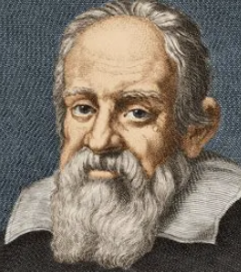
It always seems to me extreme rashness on the part of some when they want to make human abilities the measure of what nature can do. On the contrary, there is not a single effect in nature, even the least that exists, such that the most ingenious theorists can arrive at a complete understanding of it. This vain presumption of understanding everything can have no other basis than never understanding anything. For anyone who had experienced just once the perfect understanding of one single thing, and had truly tasted how knowledge is accomplished, would recognize that of the infinity of other truths he understands nothing.
▼
Source
source
Day One

2 months 2 weeks ago
The only interesting philosophers are the ones who have stopped thinking and have begun to search for happiness.

2 months 2 weeks ago
I have been baptised and educated in the Church of England; and have seen no cause to abandon that communion. ... I think that Church harmonises with our civil constitution, with the frame and fashion of our Society, and with the general Temper of the people. I think it is better calculated, all circumstances considered, for keeping peace amongst the different sects, and of affording to them a reasonable protection, than any other System. Being something in a middle, it is better disposed to moderate.
▼
Source
source
Letter to an unknown correspondent (26 January 1791), quoted in Alfred Cobban and Robert A. Smith (eds.), The Correspondence of Edmund Burke, Volume VI: July 1789-December 1791 (1967), p. 215
3 months 2 weeks ago
Talent works for money and fame; the motive which moves genius to productivity is, on the other hand, less easy to determine. It isn't money, for genius seldom gets any. It isn't fame: fame is too uncertain and, more closely considered, of too little worth. Nor is it strictly for its own pleasure, for the great exertion involved almost outweighs the pleasure. It is rather an instinct of a unique sort by virtue of which the individual possessed of genius is impelled to express what he has seen and felt in enduring works without being conscious of any further motivation. It takes place, by and large, with the same sort of necessity as a tree brings forth fruit, and demands of the world no more than a soil on which the individual can flourish.
▼
Source
source
Vol. 2 "On Philosophy and the Intellect" as translated in Essays and Aphorisms (1970), as translated by R. J. Hollingdale
1 month 3 weeks ago
The real is not only what can be reproduced, but that which is already reproduced, the hyper-real.
▼
Source
source
Simulations (1983), New York: Semiotext, p. 146
1 week 2 days ago
We are firm believers in the maxim that for all right judgment of any man or thing it is useful, nay, essential, to see his good qualities before pronouncing on his bad.
▼
Source
source
Goethe.
2 months 2 weeks ago
The world begins and ends with us. Only our consciousness exists, it is everything, and this everything vanishes with it. Dying, we leave nothing. Then why so much fuss around an event that is no such thing?

3 months 3 weeks ago
T is so much to be a king, that he only is so by being so. The strange lustre that surrounds him conceals and shrouds him from us; our sight is there broken and dissipated, being stopped and filled by the prevailing light.
▼
Source
source
Book III, Ch. 7. Of the Inconveniences of Greatness

3 months 1 week ago
The public execution, then, has a juridico-political function. It is a ceremonial by which a momentarily injured sovereignty is reconstituted. It restores that sovereignty by manifesting it at its most spectacular. The public execution, however hasty and everyday, belongs to a whole series of great rituals in which power is eclipsed and restored (coronation, entry of the king into a conquered city, the submission of rebellious subjects); over and above the crime that has placed the sovereign in contempt, it deploys before all eyes an invincible force. Its aim is not so much to re-establish a balance as to bring into play, as its extreme point, the dissymmetry between the subject who has dared to violate the law and the all-powerful sovereign who displays his strength.
▼
Source
source
Chapter One, The Spectacle of the Scaffold
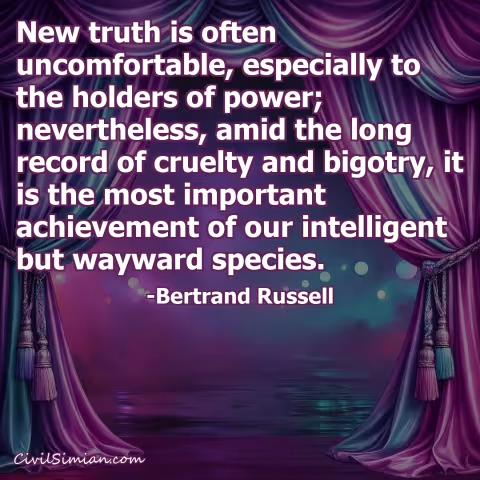

2 months 1 week ago
The real field of knowledge is not the given fact about things as they are, but the critical evaluation of them as a prelude to passing beyond their given form. Knowledge deals with appearances in order to get beyond them. .... The concept of reality has thus turned into the concept of possibility. The real is not yet 'actual,' but is at first only the possibility of an actual.
▼
Source
source
P. 145
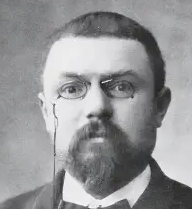
1 week 5 days ago
Point set topology is a disease from which the human race will soon recover.
▼
Source
source
Quoted in D MacHale, Comic Sections
1 month 2 weeks ago
Bless Madison Ave for restoring the magical art of the cavemen to suburbia.
▼
Source
source
(p. 130)
2 months 2 weeks ago
Freedom can be manifested only in the void of beliefs, in the absence of axioms, and only where the laws have no more authority than a hypothesis.
3 months 2 weeks ago
"Everything is both a trap and a display; the secret reality of the object is what the Other makes of it."
1 month 2 weeks ago
I'm not clever enough to be a physicist. When asked about why he chose to become a biologist.
▼
Source
source
UR Samtiden - Verklighetens magi 27 October 2012.
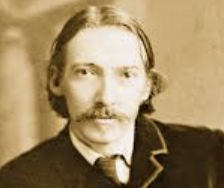
1 month 2 weeks ago
In many ways an artistic nature unfits a man for practical existence.
▼
Source
source
A Lodging for the Night.
3 months 2 weeks ago
He was free, free in every way, free to behave like a fool or a machine, free to accept, free to refuse, free to equivocate; to marry, to give up the game, to drag this death weight about with him for years to come. He could do what he liked, no one had the right to advise him, there would be for him no Good or Evil unless he thought them into being.
▼
Source
source
L'âge de raison (The Age of Reason)
2 months 2 weeks ago
The reasons for persisting in Being seem less and less well founded, and our successors will find it easier than we to be rid of such obstinacy.
3 months 2 weeks ago
I do like clarity and exact thinking and I believe that very important to mankind because when you allow yourself to think inexactly your prejudices, your bias, your self interest comes in in ways you don't notice and you do bad things without knowing that you are doing them: self deception is very easy. So that I do think clear thinking immensely important.
▼
Source
source
Television interview ("On clarity and exact thinking" - available on youtube)
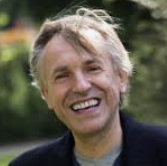
3 weeks 6 days ago
[B]oth natural selection and the historical record offer powerful reasons for doubting the trustworthiness of our naive moral intuitions. So the possibility that human civilisation might be founded upon some monstrous evil should be taken seriously - even if the possibility seems transparently absurd at the time.
▼
Source
source
The Antispeciesist Revolution, Institute for Ethics and Emerging Technologies, 26 Jul. 2013

3 months 2 weeks ago
"They have an engine called the Press whereby the people are deceived."
▼
Source
source
Ch. 13 : They Have Pulled Down Deep Heaven on Their Heads

2 months 5 days ago
I am dreaming ...? Let me dream, if this dream is my life. Do not awaken me from it. I believe in the immortal origin of this yearning for immortality, which is the very substance of my soul. But do I really believe in it ...? And wherefore do you want to be immortal? you ask me, wherefore? Frankly, I do not understand the question, for it is to ask the reason of the reason, the end of the end, the principle of the principle.

2 months 2 days ago
Hooks is a contentious writer, and I don't always agree with her contentions, but Ain't I a Woman has an intellectual vitality and daring that should set new standards for the discussion of race and sex.
▼
Source
source
Ellen Willis in No More Nice Girls: Countercultural Essays
2 months 2 weeks ago
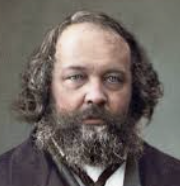
If there is a state, then necessarily there is domination and consequently slavery. A state without slavery, open or camouflaged, is inconceivable - that is why we are enemies of the state.

3 months 2 weeks ago
Religious suffering is, at one and the same time, the expression of real suffering and a protest against real suffering. Religion is the sigh of the oppressed creature, the heart of a heartless world, and the soul of soulless conditions. It is the opium of the people.The abolition of religion as the illusory happiness of the people is the demand for their real happiness. To call on them to give up their illusions about their condition is to call on them to give up a condition that requires illusions. The criticism of religion is, therefore, in embryo, the criticism of that vale of tears of which religion is the halo.Criticism has plucked the imaginary flowers on the chain not in order that man shall continue to bear that chain without fantasy or consolation, but so that he shall throw off the chain and pluck the living flower.

2 months 2 weeks ago
The ideal form for a poem, essay, or fiction, is that which the ideal writer would evolve spontaneously. One in whom the powers of expression fully responded to the state of feeling, would unconsciously use that variety in the mode of presenting his thoughts, which Art demands.
▼
Source
source
Pt. II, sec. 4, "The Ideal Writer"
2 months 4 days ago
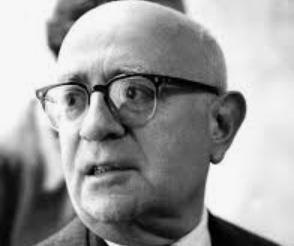
Elements of empirical language are manipulated in their rigidity, as if they were elements of a true and revealed language. The empirical usability of the sacred ceremonial words makes both the speaker and listener believe in their corporeal presence.
▼
Source
source
p. 7
CivilSimian.com created by AxiomaticPanic, CivilSimian, Kalokagathia