


3 months 1 week ago
He that will have his son have a respect for him and his orders, must himself have a great reverence for his son.
▼
Source
source
Maxima debetur pueris reverentia [The greatest respect is owed to the children]. Sec. 71; Note: Here Locke quotes Juvenal
1 month 2 weeks ago
Materialism ends up denying the existence of any irreducible subjective qualitative states of sentience or awareness.
▼
Source
source
Consciousness and Language (2002) p. 47.

4 months 1 week ago
The rest of the story, to Grand's thinking, was very simple. The common lot of married couples. You get married, you go on loving a bit longer, you work. And you work so hard that it makes you forget to love.

3 months 1 week ago
In my individual heart I fully believe my faith is as robust as yours. The trouble with your robust and full bodied faiths, however, is, that they begin to cut each others throats too soon, and for getting on in the world and establishing a modus vivendi these pestilential refinements and reasonablenesses and moderations have to creep in.
▼
Source
source
Letter to John Jay Chapman, 5 April 1897

3 months 1 week ago
God may forgive sins, he said, but awkwardness has no forgiveness in heaven or earth.
▼
Source
source
Society and Solitude

2 weeks 4 days ago
Many people today hold to a Gnostic view of things without realizing the fact. Believing that human beings can be fully understood in the terms of scientific materialism, they reject any idea of free will. But they cannot give up hope of being masters of their destiny. So they have come to believe that science will somehow enable the human mind to escape the limitations that shape its natural condition. Throughout much of the world, and particularly in western countries, the Gnostic faith that knowledge can give humans a freedom no other creature can possess has become the predominant religion.
▼
Source
source
The Faith of Puppets: The Freedom of the Marionette (p. 9)
3 months 1 week ago
In its flight from death, the craving for permanence clings to the very things sure to be lost in death.
▼
Source
source
p. 17

2 months 1 week ago
Our place is somewhere between being and nonbeing - between two fictions.
2 weeks 4 days ago
What I liked was Thatcherism's Bolshevik aspect, which was to shake up the whole of Britain quite fundamentally, and if you read what I wrote in those years I think you might agree that in taking the view that I did then - that this was necessary and desirable - I never subscribed to the main delusion of the Thatcherites, which was that you could change everything and everything would remain the same. If what you wanted was a very anarchic, globalised, polyglot, mixed-up society in which most of the structures which had somehow been renewed from the Edwardian period to the Sixties were destroyed, then Thatcherism was what would do the job.
▼
Source
source
Quoted in Will Self, "John Gray: Forget everything you know," The Independent

3 weeks 6 days ago
It cannot be doubted, I think, that Mr. Darwin has satisfactorily proved that what he terms selection, or selective modification, must occur, and does occur, in nature; and he has also proved to superfluity that such selection is competent to produce forms as distinct, structurally, as some genera even are. If the animated world presented us with none but structural differences, I should have no hesitation in saying that Mr. Darwin has demonstrated the existence of a true physical cause, amply competent to account for the origin of living species, and of man among the rest.
▼
Source
source
Ch.2, p. 126

3 months 1 day ago
Teach him what has been said in the past; then he will set a good example to the children of the magistrates, and judgement and all exactitude shall enter into him. Speak to him, for there is none born wise.
▼
Source
source
Introduction.

3 weeks 3 days ago
Just like Chief Seattle talked about being in the web of life, in India we talk about vasudhaiva kutumbkam, which means the earth family. Indian cosmology has never separated the human from the non-human-we are a continuum.
3 months 1 day ago
I will begin to speak when I am not going to say what were better left unsaid.
▼
Source
source
Quoted by Plutarch, Life of Cato the Younger, 4 Bernadotte Perrin, ed. Plutarch's Lives, Vol. 8, LCL 100 (1919), pp. 247, 361

3 months 1 week ago
Hatred comes from the heart; contempt from the head; and neither feeling is quite within our control.
▼
Source
source
"Psychological Observations"

3 months 1 week ago
She believed in nothing; only her skepticism kept her from being an atheist.
▼
Source
source
The Words (1964), speaking of his grandmother.

1 month 1 week ago
Only the truth and its expression can establish that new public opinion which will reform the ancient obsolete and pernicious order of life; and yet we not only do not express the truth we know, but often even distinctly give expression to what we ourselves regard as false. If only free men would not rely on that which has no power, and is always fettered - upon external aids; but would trust in that which is always powerful and free - the truth and its expression!
▼
Source
source
Ch. 17

2 months 1 week ago
What terrible tragedies realism inflicts on people.'
2 months 3 days ago
The office of the sovereign, be it a monarch or an assembly, consisteth in the end for which he was trusted with the sovereign power, namely the procuration of the safety of the people, to which he is obliged by the law of nature, and to render an account thereof to God, the Author of that law, and to none but Him. But by safety here is not meant a bare preservation, but also all other contentments of life, which every man by lawful industry, without danger or hurt to the Commonwealth, shall acquire to himself. And this is intended should be done, not by care applied to individuals, further than their protection from injuries when they shall complain; but by a general providence, contained in public instruction, both of doctrine and example; and in the making and executing of good laws to which individual persons may apply their own cases.
▼
Source
source
The Second Part, Chapter 30: Of the Office of the Sovereign Representative

3 months 1 week ago
The language of excitement is at best but picturesque merely. You must be calm before you can utter oracles.
▼
Source
source
Pearls of Thought (1881) p. 80



1 month 1 week ago
In television, images are projected at you. You are the screen. The images wrap around you. You are the vanishing point.
▼
Source
source
(p. 125)

6 days ago
Any American ally will welcome Biden as president, will be happy that he was elected, but will be a little... distrustful because the Republicans could make a come-back in 2022. They could win the presidency again in 2024. ...There's is still a good third of the American public that remain very strong Trump voters. They're very angry and... are not going to go away... Therefore the ability of the United States to resume its role as the chief defender of the liberal order... is going to be contested, both domestically and... by American friends. If this leads to more self-reliance on their part, that may not be the worst thing in the world, but it is going to mean a very different kind of world order than the one I grew up arguing with Owen Harries about.
▼
Source
source
30:41:00
1 month 2 weeks ago
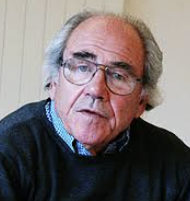
THERE IS NEVER ANYTHING TO PRO-DUCE. In spite of all its materialist efforts, production remains a utopia. We can wear ourselves out in materializing things, in rendering them visible, but we will never cancel the secret.
▼
Source
source
(p. 65)
3 months 1 week ago
I heartily accept the motto, "That government is best which governs least"; and I should like to see it acted up to more rapidly and systematically. Carried out, it finally amounts to this, which also I believe - "That government is best which governs not at all"; and when men are prepared for it, that will be the kind of government which they will have.
3 months 1 week ago
Obey the voice at eve obeyed at prime.
▼
Source
source
Terminus

3 months 2 weeks ago
People who invented the word charity, and used it in a good sense, inculcated more clearly, and much more efficaciously, the precept, Be charitable, than any pretended legislator or prophet, who should insert such a maxim in his writings.
▼
Source
source
Part I, Essay 22: Of the Standard of Taste

2 days ago
Alas, our noble men of genius, Heaven's real messengers to us, they also rendered nearly futile by the wasteful time;-preappointed they everywhere, and assiduously trained by all their pedagogues and monitors, to "rise in Parliament," to compose orations, write books, or in short speak words, for the approval of reviewers; instead of doing real kingly work to be approved of by the gods!
1 month 3 weeks ago
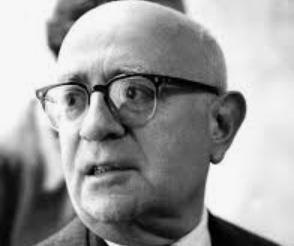
Impulse, subjectivity and profanation, the old adversaries of materialistic alienation, now succumb to it. ... The representatives of the opposition to the authoritarian schema become witnesses to the authority of commercial success. ... In the service of success they renounce that insubordinate character which was theirs.
▼
Source
source
p. 273


3 months 1 week ago
The miracles in fact are a retelling in small letters of the very same story which is written across the whole world in letters too large for some of us to see. Of that larger script part is already visible, part is still unsolved. In other words, some of the miracles do locally what God has already done universally: others do locally what He has not yet done, but will do. In that sense, and from our human point of view, some are reminders and others prophecies.
▼
Source
source
"Miracles" (1942), p. 29
3 months 1 week ago
I doubt not but one great reason why many children abandon themselves wholly to silly sports, and trifle away all their time insipidly, is, because they have found their curiosity baulk'd, and their inquiries neglected. But had they been treated with more kindness and respect, and their questions answered, as they should, to their satisfaction; I doubt not but that they would have taken more pleasure in learning, and improving their knowledge, wherein there would still be newness and variety, which is what they are delighted with, than in returning over and over to the same play and play-things.
▼
Source
source
Sec. 118
1 month 2 weeks ago
The close-up of a face is as obscene as a sexual organ seen from up close. It is a sexual organ. The promiscuity of the detail, the zoom-in, takes on a sexual value.
▼
Source
source
(p. 43)

2 months 2 weeks ago
As the past has ceased to throw its light upon the future, the mind of man wanders in obscurity. Variant translation: When the past no longer illuminates the future, the spirit walks in darkness.
▼
Source
source
Book Four, Chapter VIII

3 months 2 weeks ago
Saying is one thing and doing is another.
▼
Source
source
Ch. 31

3 months 1 day ago
What odds does it make to the man who lives within Nature's bounds, whether he ploughs a hundred acres or a thousand?
▼
Source
source
Book I, satire i, line 48

1 month 2 weeks ago
1. Fidelity & Allegiance sworn to the King is only such a fidelity and obedience as is due to him by the law of the land; for were that faith and allegiance more than what the law requires, we would swear ourselves slaves, and the King absolute; whereas, by the law, we are free men, notwithstanding those Oaths. 2. When, therefore, the obligation by the law to fidelity and allegiance ceases, that by the Oath also ceases...
▼
Source
source
Letter to Dr. Covel Feb. 21, (1688-9) Thirteen Letters from Sir Isaac Newton to J. Covel, D.D.
2 months 1 day ago
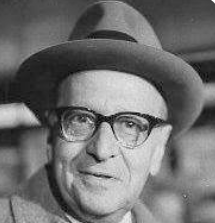
The metaphysical apologia at least betrayed the injustice of the established order through the incongruence of concept and reality. The impartiality of scientific language deprived what was powerless of the strength to make itself heard and merely provided the existing order with a neutral sign for itself. Such neutrality is more metaphysical than metaphysics.
▼
Source
source
E. Jephcott, trans., p. 17.

1 month 4 weeks ago
And thus the soul pities God and feels itself pitied by him; loves Him and feels loved by Him, sheltering its misery in the bosom of the eternal and infinite misery, which, in eternalizing itself and infinitizing itself, is the supreme happiness itself.
2 days ago
The highest ensign that men ever met and embraced under, the Cross itself, had no meaning save an accidental extrinsic one.
▼
Source
source
Bk. III, ch. 3.

2 months 3 days ago
If the flesh came into being because of spirit, it is a wonder. But if spirit came into being because of the body, it is a wonder of wonders. Indeed, I am amazed at how this great wealth has made its home in this poverty.
1 week ago
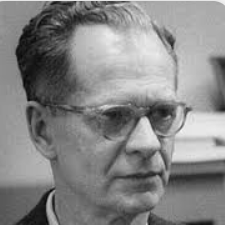
It is a mistake to suppose that the whole issue is how to free man. The issue is to improve the way in which he is controlled.
▼
Source
source
"I have been misunderstood" An interview with B.F.Skinner, Center Magazine (March/April 1972), pp. 63
2 months 1 week ago
The best definition of man is: a being that goes on two legs and is ungrateful.
▼
Source
source
Part 1, Chapter 8 (tr. David Magarshack, 1950) The best definition of man is: a biped, ungrateful.

3 months 1 week ago
The past treatment of Africans must naturally fill them with abhorrence of Christians; lead them to think our religion would make them more inhuman savages, if they embraced it; thus the gain of that trade has been pursued in opposition to the Redeemer's cause, and the happiness of men: Are we not, therefore, bound in duty to him and to them to repair these injuries, as far as possible, by taking some proper measures to instruct, not only the slaves here, but the Africans in their own countries? Primitive Christians laboured always to spread their Divine Religion; and this is equally our duty while there is an Heathen nation: But what singular obligations are we under to these injured people!
2 months 1 week ago
All philosophers should end their days at Pythia's feet. There is only one philosophy, that of unique moments.

4 months 1 week ago
The Bible and science agree in being unable to say anything certainly about what happened before the beginning. There is this difference. The Bible will never be able to tell us. It has reached its final form, and it simply doesn't say. Science, on the other hand, is still developing, and the time may come when it can answer questions that, at present, it cannot.

3 months 6 days ago
The authority of science ... promotes and encourages the activity of observing, comparing, measuring and ordering the physical characteristics of human bodies.... Cartesian epistemology and classical ideals produced forms of rationality, scientificity and objectivity that, though efficacious in the quest for truth and knowledge, prohibited the intelligibility and legitimacy of black equality.... In fact, to "think" such an idea was to be deemed irrational, barbaric or mad.
▼
Source
source
Prophesy Deliverance!
2 months 1 week ago
The worst is not ennui nor despair but their encounter, their collision. To be crushed between the two!

2 weeks 6 days ago
Nothing is too terrible to be true if it is consistent with the laws of nature.
▼
Source
source
The Pinprick Argument, BLTC Research, 2005
5 days ago
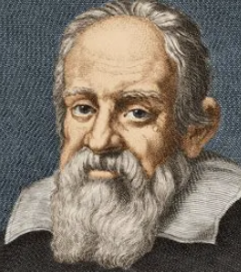
I esteem myself happy to have as great an ally as you in my search for truth. I will read your work ... all the more willingly because I have for many years been a partisan of the Copernican view because it reveals to me the causes of many natural phenomena that are entirely incomprehensible in the light of the generally accepted hypothesis. To refute the latter I have collected many proofs, but I do not publish them, because I am deterred by the fate of our teacher Copernicus who, although he had won immortal fame with a few, was ridiculed and condemned by countless people (for very great is the number of the stupid).
▼
Source
source
Letter to Johannes Kepler (1596), as quoted in The Story of Civilization : The Age of Reason Begins, 1558-1648 (1935) by Will Durant, p. 603
CivilSimian.com created by AxiomaticPanic, CivilSimian, Kalokagathia