


2 weeks 5 days ago
Many city-dwellers have a romanticized conception of the living world. From another perspective, some "conservation biologists" favour e.g. "Pleistocene rewilding". By contrast, I think any truly compassionate person should be horrified at the terrible suffering of Nature "red in tooth and claw". Why not aim for a cruelty-free world instead?
▼
Source
source
"Interview with Pensata Animal", Pensata Animal, 25 Oct. 2009

3 months 2 weeks ago
The rulers of Great Britain have, for more than a century past, amused the people with the imagination that they possessed a great empire on the west side of the Atlantic. This empire, however, has hitherto existed in imagination only.
▼
Source
source
Chapter III, Part V, p. 1032 (Last Page).
6 days ago
It is a mistake to suppose that the whole issue is how to free man. The issue is to improve the way in which he is controlled.
▼
Source
source
"I have been misunderstood" An interview with B.F.Skinner, Center Magazine (March/April 1972), pp. 63

3 months 2 weeks ago
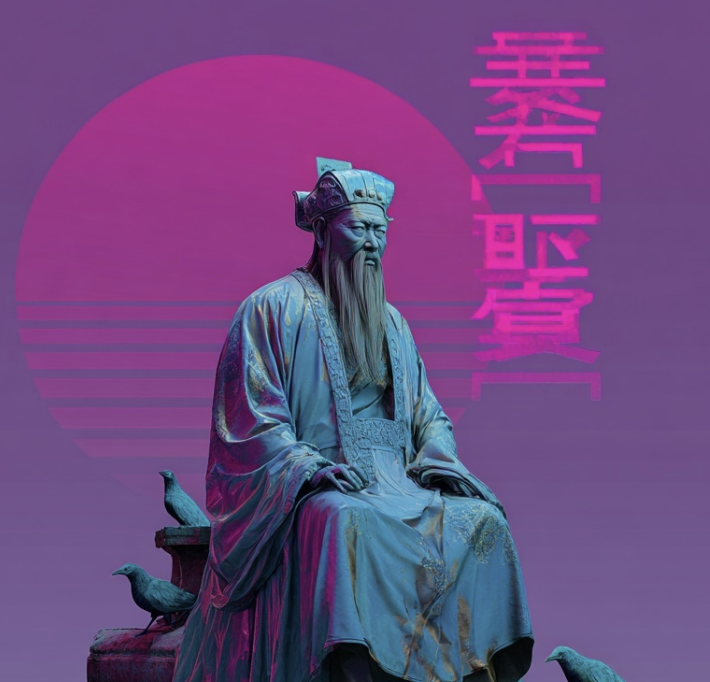
Not to be a proud and haughty person, you have to follow the old proverb and "know thyself." That is to say, you must regard your special talents, whatever beauty or fame you have, as gifts from God, and not as things you earned for yourself. Whatever is low and mean is not God's doing, however. Here you can only blame yourself. Remember the squalor of your birth and how naked and poor you were when you crawled into the light of day like a little animal.
▼
Source
source
p.154
4 months ago
He that in his studies wholly applies himself to labour and exercise, and neglects meditation, loses his time, and he that only applies himself to meditation, and neglects labour and exercise, only wanders and loses himself.

2 months 1 week ago
Time: That which man is always trying to kill, but which ends in killing him.
▼
Source
source
Definitions, as quoted in The Dictionary of Essential Quotations (1983) by Kevin Goldstein-Jackson, p. 154
2 months 6 days ago
The slave is outside competition; the proletarian is in it and experiences all its vagaries.

3 months 1 week ago
Noise is the most impertinent of all forms of interruption. It is not only an interruption, but also a disruption of thought.
▼
Source
source
"On Noise"

3 months 1 week ago
We have nothing to do but to receive, resting absolutely upon the merit, power, and love of our Redeemer.
▼
Source
source
Reported in Dictionary of Burning Words of Brilliant Writers (1895) edited by Josiah Hotchkiss Gilbert, p. 225

2 months 1 week ago
...the French business is no light or trivial thing, or such as has commonly occurd in the course of political Events. At present the whole political State of Europe hinges upon it. On the Continent there is little doubt; every thing will take is future shape and colour from the good or ill success of the Duke of Brunswick. In my opinion, it is the most important crisis that ever existed in the World. ... My poor opinion is, that these principles...cannot possibly be realized in practice in France, without an absolute certainty and that at no remote period, of overturning the whole fabrick of the British Constitution.
▼
Source
source
Letter to the Foreign Secretary, Lord Grenville (19 September 1792), quoted in P. J. Marshall and John A. Woods (eds.), The Correspondence of Edmund Burke, Volume VII: January 1792-August 1794 (1968), pp. 218-219

1 month 3 weeks ago
The new tinge to modern minds is a vehement and passionate interest in the relation of general principles to irreducible and stubborn facts. All the world over and at all times there have been practical men, absorbed in 'irreducible and stubborn facts'; all the world over and at all times there have been men of philosophic temperament, who have been absorbed in the weaving of general principles. It is this union of passionate interest in the detailed facts with equal devotion to abstract generalisation which forms the novelty of our present society.
▼
Source
source
Ch. 1: "The Origins of Modern Science", pp. 3-4

1 month 3 weeks ago
An ethos of freedom stops power from solidifying into domination and makes sure it remains an open game.

1 month 1 week ago
Even pacifist agitation or the nation-wide fever of big sports competitions acts as a spur to war fever in circumstances like ours. Any kind of excitement or emotion contributes to the possibility of dangerous explosions when the feelings of huge populations are kept inflamed even in peacetime for the sake of the advancement of commerce. Headlines mean street sales. It takes emotion to move merchandise. And wars and rumors of wars are the merchandise and also the emotion of the popular press.
▼
Source
source
p. 7
2 months 1 week ago
The writers against religion, whilst they oppose every system, are wisely careful never to set up any of their own.
▼
Source
source
Preface

3 months 5 days ago
Science can only be comprehended epistemologically, which means as one category of possible knowledge, as long as knowledge is not equated either effusively with the absolute knowledge of a great philosophy or blindly with scientistic self-understanding of the actual business of research.
▼
Source
source
p. 4
1 month 6 days ago
I am not advocating a morality based on evolution. I am saying how things have evolved. I am not saying how we humans morally ought to behave.
▼
Source
source
Ch. 1. Why Are People?

3 months 1 week ago
Arithmetic must be discovered in just the same sense in which Columbus discovered the West Indies, and we no more create numbers than he created the Indians.
▼
Source
source
Principles of Mathematics (1903), p. 451
3 months 1 week ago
Consider MacArthur and his Republican supporters. So limited is his intelligence and his imagination that he is never puzzled for one moment. All we have to do is to go back to the days of the Opium War. After we have killed a sufficient number of millions of Chinese, the survivors among them will perceive our moral superiority and hail MacArthur as a saviour. But let us not be one-sided. Stalin, I should say, is equally simple- minded and equally out of date. He, too, believes that if his armies could occupy Britain and reduce us all to the economic level of Soviet peasants and the political level of convicts, we should hail him as a great deliverer and bless the day when we were freed from the shackles of democracy. One of the painful things about our time is that those who feel certainty are stupid, and those with any imagination and understanding are filled with doubt and indecision.
▼
Source
source
Part I: Man and Nature, Ch. 1: Current Perplexities, pp. 4-5

3 months 3 weeks ago
Reason is not measured by size or height, but by principle.
▼
Source
source
Book I, ch. 12, 26.
2 months 3 days ago
A special kind of beauty exists which is born in language, of language, and for language.
▼
Source
source
A Retrospective Glance at the Lifework of a Master of Books
1 month 1 week ago
The end of history is, alas, also the end of the dustbins of history. There are no longer any dustbins for disposing of old ideologies, old regimes, old values. Where are we going to throw Marxism, which actually invented the dustbins of history? (Yet there is some justice here since the very people who invented them have fallen in.) Conclusion: if there are no more dustbins of history, this is because History itself has become a dustbin. It has become its own dustbin, just as the planet itself is becoming its own dustbin.
▼
Source
source
The Illusion of the End (1992) (L'Illision de la Fin) Tr. Chris Turner, 1994, Stanford University Press, ISBN 0804725012, p. 26, "The Event Strike"

4 months 1 week ago
In the course of my fight with the school, I couldn't help but notice that I became a pariah. [...] Once, however, a fellow faculty member, making sure we were unobserved, said to me, "Isaac, the faculty is proud of you for your courage in fighting the administration for academic freedom."I said, "There's no courage involved in it. Don't you know my definition of academic freedom?""No. What's your definition of academic freedom?"I said, "Independent income."

7 months 2 weeks ago
Canned laughter: After some supposedly funny or witty remark you can hear the laughter and applause included in the soundtrack of the show itself - here we have the exact counterpart of the Chorus in classical tragedy; it is here that we have to look for 'living Antiquity.' That is to say, why this laughter? The first possible answer - that it serves to remind us when to laugh - is interesting enough, because it implies the paradox that laughter is a matter of duty and not of some spontaneous feeling; but this answer is not sufficient because we do not usually laugh. The only correct answer would be that the Other - embodied in the television set - is relieving us even of our duty to laugh - is instead laughing for us. So even if, tired from a hard days stupid work, all evening we did nothing but gaze drowsily into the television screen, we can say afterwards that objectively, through the medium of the other, we had a really good time.
1 month 1 week ago
During the Vietnam War, which lasted longer than any war we've ever been in -- and which we lost -- every respectable artist in this country was against the war. It was like a laser beam. We were all aimed in the same direction. The power of this weapon turns out to be that of a custard pie dropped from a stepladder six feet high.
▼
Source
source
Vonnegut at 80 Interview with David Hoppe Alternet

3 months 2 weeks ago
The diversity of physical arguments and opinions embraces all sorts of methods.
▼
Source
source
Book III, Ch. 13. Of Experience
2 months 3 days ago
Progress, far from consisting in change, depends on retentiveness. When change is absolute there remains no being to improve and no direction is set for possible improvement: and when experience is not retained, as among savages, infancy is perpetual. Those who cannot remember the past are condemned to repeat it. This famous statement has produced many paraphrases and variants: Those who cannot learn from history are doomed to repeat it. Those who do not remember their past are condemned to repeat their mistakes. Those who do not read history are doomed to repeat it. Those who fail to learn from the mistakes of their predecessors are destined to repeat them. Those who do not know history's mistakes are doomed to repeat them.
▼
Source
source
There is a similar quote by Edmund Burke (in Revolution in France) that often leads to misattribution: "People will not look forward to posterity, who never look backward to their ancestors."
1 month 1 week ago
Every innovation scraps its immediate predecessor and retrieves still older figures - it causes floods of antiques or nostalgic art forms and stimulates the search for museum pieces.
1 month 3 days ago
A writer who says that there are no truths, or that all truth is 'merely relative,' is asking you not to believe him. So don't.
▼
Source
source
"The Nature of Philosophy" (p. 6)

2 months 1 week ago
Who consciously throws himself into the water or onto the knife?
▼
Source
source
Part 2, Chapter ?

4 months 1 week ago
For legislators make the citizens good by forming habits in them, and this is the wish of every legislator, and those who do not effect it miss their mark, and it is in this that a good constitution differs from a bad one.

3 months 1 week ago
What potent blood hath modest May!
▼
Source
source
May-Day

1 month 3 weeks ago
Raillery is a mode of speaking in favor of one's wit at the expense of one's better nature.

3 weeks 3 days ago
The system of technological production that we have today has been justified in terms of creating more goods to feed more people and to meet more needs. But it actually destroys more of the resources that we need in order to meet those multiple needs. If we shift to an ecological perception, a diversity perception, we realize that some of the instruments of which we are very proud are actually extremely primitive for dealing with nature. To me that is the great lesson of ecological awareness at the turn of the millennium.
▼
Source
source
1998

3 months 1 week ago
The simple-minded positivism that believes it has found a firm ground of certainty if it only excludes all mental phenomena from consideration and holds fast to observable facts.
▼
Source
source
p. 39

2 months 2 weeks ago
If you want me to believe in God, you must make me touch him.
▼
Source
source
as quoted in Diderot and the Encyclopædists (1897) by John Morley, p. 92.
1 month 6 days ago
When things fall out opportunely for the person concerned, he is not apt to be critical about the how or why, his own immediate personal convenience seeming a sufficient reason for the strangest oddities and revolutions in our sublunary things.
▼
Source
source
The Sire de Maletroit's Door.
1 month 4 days ago
The advantage of pure, and the disadvantage of impure air are experienced each time we breathe, and all who understand the causes of disease know that an impure atmosphere is most unfavourable to the enjoyment of health, and an efficient cause to shorten human existence within the natural life of man. It is therefore most desirable that decisive measures should be devised and generally adopted to ensure to all a pure atmosphere, in which to live during their lives.
▼
Source
source
3rd Part
2 months 1 week ago
Each citizen of a state promises, in the original compact, that he will promote, as far as lies in his power, all the conditions of the possibility of the state ; hence, also, the condition just mentioned. This he can best do by educating children who may grow up to realize various ends of reason. The state has the right to make this education of children a condition of the state-compact, and thus education becomes an external, legal obligation, which the parents owe to the state.
▼
Source
source
P. 459

2 months 6 days ago
That fear which gives birth to thoughts, and the fear of thoughts...

2 months 3 days ago
This mutual dependencies no longer the dialectical relationship between master and servant, which has been broken in the struggle for mutual recognition, but rather a vicious circle which encloses both the master and the servant. Do the technicians rule, or is their rule that of the others, who rely on the technicians as their planners and executors?
▼
Source
source
p. 33

2 months 2 weeks ago
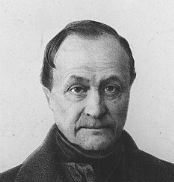
Every attempt to refer chemical questions to mathematical doctrines must be considered, now and always, profoundly irrational, as being contrary to the nature of the phenomena. . . . but if the employment of mathematical analysis should ever become so preponderant in chemistry (an aberration which is happily almost impossible) it would occasion vast and rapid retrogradation....
1 month 3 weeks ago
The human body is an instrument for the production of art in the life of the human soul.
▼
Source
source
p. 349.
3 months 2 weeks ago
The government of an exclusive company of merchants is, perhaps, the worst of all governments for any country whatever.
▼
Source
source
Chapter VII, Part Second, p. 619.

1 month 2 weeks ago
What makes our poetry so contemptible nowadays is its paucity of ideas. If you want to be read, invent. Who the Devil wouldn't like to read something new?
▼
Source
source
D 62
3 weeks 5 days ago
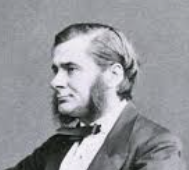
Most of us, shrinking from the difficulties and dangers which beset the seeker after original answers to these riddles, are contented to ignore them altogether, or to smother the investigating spirit under the featherbed of respected and respectable tradition. But, in every age, one or two restless spirits, blessed with that constructive genius, which can only build on a secure foundation, or cursed with the mere spirit of scepticism, are unable to follow in the well-worn and comfortable track of their forefathers and contemporaries, and unmindful of thorns and stumbling-blocks, strike out into paths of their own.
▼
Source
source
Ch.2, p. 71
1 month 3 weeks ago
A clash of doctrines is not a disaster - it is an opportunity.
▼
Source
source
Ch. 12: "Religion and Science", p. 259

1 month 1 week ago
We should provide in peace what we need in war.
▼
Source
source
Maxim 709

4 months 1 week ago
By such reflections and by the continuance in them of a divine nature, the qualities which we have described grew and increased among them; but when the divine portion began to fade away, and became diluted too often and too much with the mortal admixture, and the human nature got the upper hand, they then, being unable to bear their fortune, behaved unseemly, and to him who had an eye to see grew visibly debased, for they were losing the fairest of their precious gifts; but to those who had no eye to see the true happiness, they appeared glorious and blessed at the very time when they were full of avarice and unrighteous power.
3 months 1 week ago
My first advice (on how not to grow old) would be to choose you ancestors carefully. Although both my parents died young, I have done well in this respect as regards my other ancestors. My maternal grandfather, it is true, was cut off in the flower of his youth, at the age of sixty-seven, but my other three grandparents all lived to be over eighty. Of remoter ancestors I can only discover one who did not live to a great age, and he died of a disease which is now rare, namely, having his head cut off.
▼
Source
source
p. 50
CivilSimian.com created by AxiomaticPanic, CivilSimian, Kalokagathia