

2 months 1 week ago
The complexity of the connection between the world of perception and the world of physics does not preclude that such a connection can be shown to exist at any time.
▼
Source
source
p. 133.

3 months 2 weeks ago
What strength belongs to every plant and animal in nature. The tree or the brook has no duplicity, no pretentiousness, no show. It is, with all its might and main, what it is, and makes one and the same impression and effect at all times. All the thoughts of a turtle are turtles, and of a rabbit, rabbits. But a man is broken and dissipated by the giddiness of his will; he does not throw himself into his judgments; his genius leads him one way but 't is likely his trade or politics in quite another.
▼
Source
source
"The Natural History of Intellect", p. 46

3 months 2 weeks ago
If the many, the specialists, gain the day, it will be the end of science as we know it - of great science. It will be a spiritual catastrophe comparable in its consequences to nuclear armament.
▼
Source
source
K. Popper, The Myth of the Framework, London: Routledge. As quoted in The Cambridge Companion to Karl Popper (2016) by J. Shearmur, G. Stokes

3 months 1 week ago
As long as we try to project from the relative and conditioned to the absolute and unconditioned, we shall keep the pendulum swinging between dogmatism and skepticism. The only way to stop this increasingly tiresome pendulum swing is to change our conception of what philosophy is good for. But that is not something which will be accomplished by a few neat arguments. It will be accomplished, if it ever is, by a long, slow process of cultural change - that is to say, of change in common sense, changes in the intuitions available for being pumped up by philosophical arguments.
▼
Source
source
Introduction to Truth and Progress: Philosophical Papers, Volume 3 (1998).

3 months 3 weeks ago
Money is the password, and all doors, which are closed to the man of lesser means, fly open to those whom Plutus favors. The invention of money, which has no other usefulness (or at least it should not have any) except for the commercial exchange of the products of man's industry, now serves all that is physically good among men. Especially after money was represented by metal, it has produced avarice which, finally, without indulgence, but by its mere possession, and even with the resolution (of the stingy) not to spend it, still contains a power which people believe can sufficiently compensate for the lack of any other power.
▼
Source
source
Kant, Immanuel (1996), pages 181-182
2 months 1 week ago
No human acquisition is stable. Even what appears to us most completely won and consolidated can disappear in a few generations. This thing we call "civilization" - all these physical and moral comforts, all these conveniences, all these shelters, all these virtues and disciplines which have become habit now, on which we count, and which in effect constitute a repertory or system of securities which man made for himself like a raft in the initial shipwreck which living always is - all these securities are insecure securities which in the twinkling of an eye, at the least carelessness, escape from man's hands and vanish like phantoms.
▼
Source
source
p. 25
2 months 6 days ago
Whoever is versed in the jargon does not have to say what he thinks, does not even have to think it properly. The jargon takes over this task.
▼
Source
source
p. 9

2 months 2 weeks ago
Our psychology is ... a science of mere phenomena without any metaphysical implications. [It] Treats all metaphysical claims and assertions as mental phenomena, and regards them as statements about the mind and its structure.
▼
Source
source
Psychology and Religion: West and East (1958), p. 476, as cited in Psychotherapy East and West (1961), p. 14

2 months 5 days ago
He has been named respectively, Jehovah, Allah, Brahma, Father in Heaven, Order of Heaven, First Cause, Supreme Being, Chance. Each name corresponds to a system of thought derived from the experiences of those who have used it.Among medieval and modern philosophers, anxious to establish the religious significance of God, an unfortunate habit has prevailed of paying Him metaphysical compliments. He has been conceived as the foundation of the metaphysical situation with its ultimate activity. If this conception be adhered to, there can be no alternative except to discern in Him the origin of all evil as well as of all good. He is then the supreme author of the play, and to Him must therefore be ascribed its shortcomings as well as its success.
▼
Source
source
Ch. 11: "God", pp. 250-251

3 months 2 days ago
Truth is so great a perfection, that if God would render himself visible to men, he would choose light for his body and truth for his soul.
▼
Source
source
As quoted in A Dictionary of Thoughts: Being a Cyclopedia of Laconic Quotations from the Best Authors of the World, both Ancient and Modern (1908) by Tyron Edwards, p. 592

3 months 2 weeks ago
Most human beings have an almost infinite capacity for taking things for granted.
▼
Source
source
"Variations on a Philosopher" in Themes and Variations, 1950
1 month 4 weeks ago
Modem mainstream economic theory bravely assumes that people make their decisions in such a way as to maximize their utility. Accepting this assumption enables economics to predict a great deal of behavior (correctly or incorrectly) without ever making empirical studies of human actors.
▼
Source
source
Simon (1990) "Invariants of Human Behavior" in: Annu. Rev. Psychol. 41: p. 6.
3 months 3 weeks ago
Abbot Terrasson tells us that if the size of a book were measured not by the number of its pages but by the time required to understand it, then we could say about many books that they would be much shorter were they not so short.
▼
Source
source
A xix

3 months 3 weeks ago
I cannot imagine how the clockwork of the universe can exist without a clockmaker.
▼
Source
source
As attributed in More Random Walks in Science : An Anthology (1982) by Robert L. Weber, p. 65
1 day ago
For several years I have referred to this, hitherto, rare and inaccessible work as the I-told-you-so-book, because it has often been implied that I have invented my explanations of Buddhism out of thin air, thus falsifying its authentic teachings... Yet, despite the occultist flavor of its title, The Secret Oral Teachings in the Tibetan Buddhist Sects is the most direct, no-nonsense, and down-to-earth explanation of Mahayana Buddhism which has thus far been written.
▼
Source
source
Watts' Foreward to The Secret Oral Teachings in the Tibetan Buddhist Sects (1964)], by Alexandra David Neel

3 months 3 weeks ago
One capitalist always kills many.
▼
Source
source
Vol. I, Ch. 32, p. 836.

2 months ago
What most clearly characterizes true freedom and its true employment is its misemployment.
▼
Source
source
L 49

2 months 1 week ago
The free will, the actual motor of reason in society, necessarily creates wrong. The individual must clash with the social order that claims to represent his own will in its objective form. But the wrong and the 'avenging justice' that remedies it not only expresses a 'higher logical necessity,' but also prepare the transition to a higher social form of freedom, the transition from abstract right to morality. For, in committing a wrong, and in accepting punishment for his deed, the individual becomes conscious of the 'infinite subjectivity' of his freedom. He learns that he is free only as a private person.
▼
Source
source
P. 198

2 months 4 days ago
When contemporary feminist movement first began, feminist writings and scholarship by black women was groundbreaking. The writings of black women like Cellestine Ware, Toni Cade Bambara, Michele Wallace, Barbara Smith, and Angela Davis, to name a few, were all works that sought to articulate, define, speak to and against the glaring omissions in feminist work, the erasure of black female presence.
▼
Source
source
Teaching to Transgress: Education as the Practice of Freedom

2 months 3 weeks ago
I pray you, magnificent Sir, do not trouble yourself to return to us, but await our coming to you.
▼
Source
source
Third Dialogue

3 months 3 weeks ago
Advocates of capitalism are very apt to appeal to the sacred principles of liberty, which are embodied in one maxim: The fortunate must not be restrained in the exercise of tyranny over the unfortunate.
▼
Source
source
Ch. 13: Freedom in Society

1 week 4 days ago
Be not the slave of Words.
▼
Source
source
Bk. I, ch. 8.
1 week 6 days ago
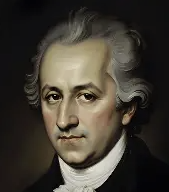
I have found a paper of mine among some others in which I call architecture 'petrified music.' Really there is something in this; the tone of mind produced by architecture approaches the effect of music.
▼
Source
source
Conversations with Eckermann (23 March 1829) - Often quoted as "Architecture is frozen music."
2 months ago
There are people who believe everything is sane and sensible that is done with a solemn face. ... It is no great art to say something briefly when, like Tacitus, one has something to say; when one has nothing to say, however, and none the less writes a whole book and makes truth ... into a liar - that I call an achievement.
▼
Source
source
E 59 Variant translation: There are people who think that everything one does with a serious face is sensible…
3 months 2 weeks ago
Nevertheless, among all the temptations I will have to resist today. There would be the temptation of memory: to recount what was for me, and for those of my generation who shared it during a whole lifetime. The experience of Marxism. The quasi-paternal figure of Marx, the way it fought in us with other filiations, the reading of texts and the interpretation of a world in which the Marxist inheritance was-and still remains, and so it will remain-absolutely and thoroughly determinate. One need not be a Marxist or a communist in order to accept this obvious fact. We all live in a world, some would say a culture, that still bears, at an incalculable depth, the mark of this inheritance, whether in a directly visible fashion or not.
▼
Source
source
Injunctions of Marx
3 months 2 weeks ago
Solitude, the safeguard of mediocrity, is to genius the stern friend.
▼
Source
source
Culture
3 months 3 weeks ago
The sensuous may be exceedingly distinct, while intellectual concepts are extremely confused. The former we observe in the prototype of sensuous knowledge geometry; the latter, in the organon of all intellectual concepts, metaphysics. It is evident how much toil the latter is expending to dispel the fogs of confusion darkening the common intellect, though not always with the happy success of the former science.

2 months 1 week ago
The foxes have holes, and the birds of the air have nests; but the Son of man hath not where to lay his head.
▼
Source
source
8:20 (KJV)

2 months 2 weeks ago
To say, therefore, that thought cannot happen in an instant, but requires a time, is but another way of saying that every thought must be interpreted in another, or that all thought is in signs.
▼
Source
source
Vol. V, par. 254

4 months 2 weeks ago
Indeed, it may well be argued that one reason for the decline in science, art, and literature was the increasing absorption of the better minds into a new sort of intellectual pursuit, theology.
3 months 3 weeks ago
In every stock-jobbing swindle everyone knows that some time or other the crash must come, but every one hopes that it may fall on the head of his neighbour, after he himself has caught the shower of gold and placed it in safety.
▼
Source
source
Vol. I, Ch. 10, Section 5, pg. 296.
2 weeks ago
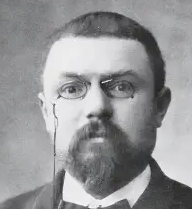
Does the harmony the human intelligence thinks it discovers in nature exist outside of this intelligence? No, beyond doubt, a reality completely independent of the mind which conceives it, sees or feels it, is an impossibility. A world as exterior as that, even if it existed, would for us be forever inaccessible.

4 months 1 week ago
It is soft, smooth and shining like intelligence. Its edges seem sharp but do not cut like justice. It hangs down to the ground like humility. When struck, it gives a clear, ringing sound like music. The strains in it are not hidden and add to its beauty like truthfulness.' What imagination! Confucius extolled Jade's virtues this way.

4 months 2 weeks ago
Some say that the body is the "tomb" of the soul, their notion being that the soul is buried in the present life; and again, because by its means the soul gives any signs which it gives, it is for this reason also properly called "sign". But I think it most likely that the Orphic poets gave this name, with the idea that the soul is undergoing punishment for something; they think it has the body as an enclosure to keep it safe, like a prison, and this is, as the name itself denotes, the "safe" for the soul, until the penalty is paid, and not even a letter needs to be changed.
1 month 4 weeks ago
Probability fractions arise from our knowledge and from our ignorance.
▼
Source
source
Chapter 14, Equipossibility, p. 132.
3 months 3 weeks ago
Not only must philosophy be in agreement with our empirical knowledge of Nature, but the origin and formation of the Philosophy of Nature presupposes and is conditioned by empirical physics. However, the course of a science's origin and the preliminaries of its construction are one thing, while the science itself is another. In the latter, the former can no longer appear as the foundation of the science; here, the foundation must be the necessity of the Concept.
2 months 1 week ago
Even the eye that is artificially trained to see color as color, apart from things that colors qualify, cannot shut out the resonances and transfers of value.
▼
Source
source
p. 126

3 months 3 weeks ago
Whenever the general disposition of the people is such, that each individual regards those only of his interests which are selfish, and does not dwell on, or concern himself for, his share of the general interest, in such a state of things, good government is impossible.
▼
Source
source
Ch. II: The Criterion of a Good Form of Government (p. 167)

3 months 3 weeks ago
The most perfect philosophy of the natural kind only staves off our ignorance a little longer: as perhaps the most perfect philosophy of the moral or metaphysical kind serves only to discover larger portions of it. Thus the observation of human blindness and weakness is the result of all philosophy, and meets us at every turn, in spite of our endeavours to elude or avoid it.
▼
Source
source
Section 4 : Sceptical Doubts Concerning The Operations of The Understanding
2 months 2 weeks ago
To conceive that compulsion and punishment are the proper means of reformation, is the sentiment of a barbarian; civilisation and science are calculated to explode so ferocious an idea. It was once universally admitted and approved; it is now necessarily upon the decline.
▼
Source
source
Vol. 2, bk. 7, ch. 5

2 months 3 weeks ago
Impenetrable in their dissimulation, cruel in their vengeance, tenacious in their purposes, unscrupulous as to their methods, animated by profound and hidden hatred for the tyranny of man - it is as though there exists among them an ever-present conspiracy toward domination, a sort of alliance like that subsisting among the priests of every country.
▼
Source
source
"On Women" (1772), as translated in Selected Writings (1966) edited by Lester G. Crocker

5 days ago
It would be some consolation for the feebleness of ourselves and our works, if all things should perish as slowly as they come into being; but as it is, increases are of sluggish growth, but the way to ruin is rapid.
▼
Source
source
Letters to Lucilius, letter 91, page 294.

1 month 2 weeks ago
Just then another visitor entered the drawing room: Prince Andrew Bolkónski, the little princess' husband. He was a very handsome young man, of medium height, with firm, clearcut features. Everything about him, from his weary, bored expression to his quiet, measured step, offered a most striking contrast to his quiet, little wife. It was evident that he not only knew everyone in the drawing room, but had found them to be so tiresome that it wearied him to look at or listen to them. And among all these faces that he found so tedious, none seemed to bore him so much as that of his pretty wife. He turned away from her with a grimace that distorted his handsome face, kissed Anna Pávlovna's hand, and screwing up his eyes scanned the whole company.
▼
Source
source
Bk. I, Ch. IV
2 months 2 weeks ago
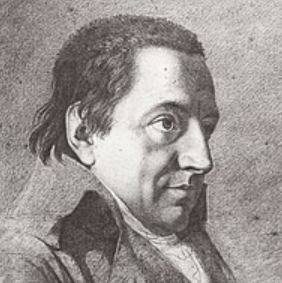
The End of the Life of Mankind on Earth is this,-that in this Life they may order all their relations with FREEDOM according to REASON.
▼
Source
source
p. 5

3 months 3 weeks ago
Let me have none of your Popish stuff! Get away with you, good morning.
▼
Source
source
Last words (June 1809), as quoted in The Fortnightly, vol. 25; vol. 31, p. 398

3 months 2 weeks ago
Freedom is what you do with what's been done to you.
CivilSimian.com created by AxiomaticPanic, CivilSimian, Kalokagathia