


4 months 1 day ago
It is the magician's bargain: give up our soul, get power in return. But once our souls, that is, ourselves, have been given up, the power thus conferred will not belong to us. We shall in fact be the slaves and puppets of that to which we have given our souls.
2 months 5 days ago
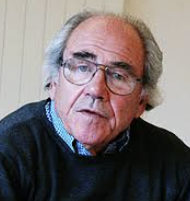
Challenge, and not desire, lies at the heart of seduction.
▼
Source
source
(p. 57)
1 month 3 weeks ago
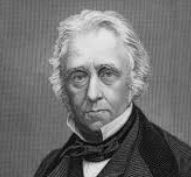
We have seen that the true source of the power of demagogues is the obstinacy of rulers and that a liberal Government makes a conservative people.
▼
Source
source
Speech in the House of Commons on the Reform Bill (5 July 1831), quoted in Speeches of the Right Honourable T. B. Macaulay, M.P. (1854), pp. 28-29


5 months 5 days ago
May I really say it! All truths are bloody truths to me, take a look at my previous writings.

2 weeks 3 days ago
As our acts and our thoughts are, so will our lives be.
3 months 4 weeks ago
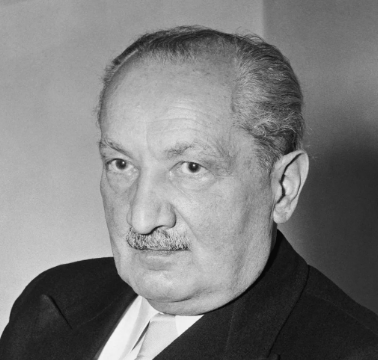
The most thought provoking thing in our thought provoking time is that we are still not thinking.
▼
Source
source
What is Called Thinking? (1951-1952), as translated by Fred D. Wieck and J. Glenn Gray
Just now
To know the nature of man, the most direct and wisest way undoubtedly is to know what he has always been. Since when can theories be opposed to facts? History is experimental politics; this is the best or rather the only good politics.
▼
Source
source
p. 21

4 months 3 days ago
If you think that your belief is based upon reason, you will support it by argument, rather than by persecution, and will abandon it if the argument goes against you. But if your belief is based on faith, you will realize that argument is useless, and will therefore resort to force either in the form of persecution or by stunting and distorting the minds of the young in what is called "education". This last is particularly dastardly, since it takes advantage of the defencelessness of immature minds. Unfortunately it is practiced in greater or less degree in the schools of every civilised country.
▼
Source
source
p. 220
1 week 5 days ago
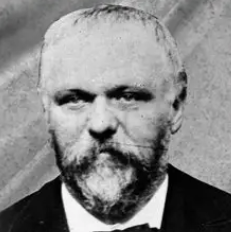
Everyone explains that discussions about Socialism are exceedingly obscure; this obscurity is due, to a large extent, to the fact that contemporary socialists use a terminology which no longer corresponds to their ideas.
▼
Source
source
p. 47

4 months 2 days ago
But such a straight identification of religion with any and every form of happiness leaves the essential peculiarity of religious happiness out. The more commonplace happinesses which we get are 'reliefs,' occasioned by our momentary escapes from evils either experienced or threatened. But in its most characteristic embodiments, religious happiness is no mere feeling of escape. It cares no longer to escape. It consents to the evil outwardly as a form of sacrifice - inwardly it knows it to be permanently overcome. ... In the Louvre there is a picture, by Guido Reni, of St. Michael with his foot on Satan's neck. The richness of the picture is in large part due to the fiend's figure being there. The richness of its allegorical meaning also is due to his being there - that is, the world is all the richer for having a devil in it, so long as we keep our foot upon his neck.
▼
Source
source
Lecture II, "Circumscription of the Topic"
3 months ago
If there be such a thing as truth, it must infallibly be struck out by the collision of mind with mind.
▼
Source
source
Vol. 1, bk. 1, ch.4

2 months 2 weeks ago
No artist can develop without increasing his self-knowledge; but self-knowledge supposes a certain preoccupation with the meaning of human life and the destiny of man. A definite set of beliefs - Methodist Christianity, for example - may only be a hindrance to development; but it is not more so than Beckett's refusal to think at all. Shaw says somewhere that all intelligent men must be preoccupied with either religion, politics, or sex. (He seems to attribute T. E. Lawrence's tragedy to his refusal to come to grips with any of them.) It is hard to see how an artist could hope to achieve any degree of self-knowledge without being deeply concerned with at least one of the three.
▼
Source
source
p. 197
2 months 2 weeks ago
The thesis of the identity of concept and thing is in general the vital nerve of idealist thought, and indeed traditional thought in general. ... Negative dialectics as critique means above all criticism of precisely this claim to identity.
▼
Source
source
p. 20
1 week 6 days ago
Wouldn't it be as farfetched to call birth the cause of death as to call the cat's head the cause of the tail? Lifting the neck of a bottle implies lifting the bottom as well, for the "two parts" come up at the same time. If I pick up an accordion by one end, the other will follow a little later, but the principle is the same. Total situations are, therefore, patterns in time as much as patterns in space.
▼
Source
source
p. 72
3 months 2 weeks ago
Every body is in place; but nothing essentially incorporeal, or any thing of this kind, has any locality.

4 months 3 days ago
The commonest and cheapest sounds, as the barking of a dog, produce the same effect on fresh and healthy ears that the rarest music does. It depends on your appetite for sound. Just as a crust is sweeter to a healthy appetite than confectionery to a pampered or diseased one.
▼
Source
source
December 27, 1857

4 months 6 days ago
But though all the general rules of art are founded only on experience and on the observation of the common sentiments of human nature, we must not imagine, that, on every occasion, the feelings of men will be conformable to these rules.

2 months 4 weeks ago
Try as I will, I don't see what might exist...
4 months 2 days ago
The war against war is going to be no holiday excursion or camping party. The military feelings are too deeply grounded to abdicate their place among our ideals until better substitutes are offered than the glory and shame that come to nations as well as to individuals from the ups and downs of politics and the vicissitudes of trade.
4 months 3 weeks ago
Recompense hatred with justice, and recompense kindness with kindness.
2 months 3 weeks ago
The avant-garde and the beatniks share in the function of entertaining without endangering the good conscience of the men of good will.
▼
Source
source
p. 70

3 weeks 2 days ago
Oceans of horse-hair, continents of parchment, and learned-sergeant eloquence, were it continued till the learned tongue wore itself small in the indefatigable learned mouth, cannot make unjust just.
3 months ago
The case of mere titles is so absurd that it would deserve to be treated only with ridicule were t not for the serious mischief they impose on mankind. The feudal system was a ferocious monster, devouring, where it came, all that the friend of humanity regards with attachment and love. The system of titles appears under a different form. The monster is at length destroyed, and they who followed in his train, and fattened upon the carcasses of those he slew, have stuffed his skin, and, b exhibiting it, hope still to terrify mankind into patient and pusillanimity.
▼
Source
source
Book V, Chapter 13

2 months 2 weeks ago
We must wish either for that which actually exists or for that which cannot in any way exist - or, still better, for both. That which is and that which cannot be are both outside the realm of becoming.
▼
Source
source
p. 154
5 months 3 days ago
The essential nature (concerning the soul) cannot be corporeal, yet it is also clear that this soul is present in a particular bodily part, and this one of the parts having control over the rest (heart).
4 months 2 weeks ago
A doubtful balance is made between truth and pleasure, and... the knowledge of one and the feeling of the other stir up a combat the success of which is very uncertain, since, in order to judge of it, it would be necessary to know all that passes in the innermost spirit of the man, of which man himself is scarcely ever conscious.
4 months 1 day ago
The humans live in time but our Enemy (God) destines them for eternity.
▼
Source
source
Letter XV
3 weeks 5 days ago
It is the sidereal day, that is, the duration of the rotation of the earth, which is the constant unit of time. ...However ...many astronomers ...think that the tides act as a check on our globe, and that the rotation of the earth is becoming slower and slower. Thus would be explained the apparent acceleration of the motion of the moon...
3 weeks 2 days ago
No nobler feeling than this of admiration for one higher than himself dwells in the breast of man. It is to this hour, and at all hours, the vivifying influence in man's life.
4 months 1 day ago
To be taken without consent from my home and friends; to lose my liberty; to undergo all those assaults on my personality which modern psychotherapy knows how to deliver; to be re-made after some pattern of "normality" hatched in a Viennese laboratory to which I never professed allegiance; to know that this process will never end until either my captors have succeeded or I have grown wise enough to cheat them with apparent success-who cares whether this is called Punishment or not? "The Humanitarian Theory of Punishment"
▼
Source
source
1949
1 month 2 weeks ago
The history of almost every civilization furnishes examples of geographical expansion coinciding with deterioration in quality.
▼
Source
source
Abridgement of Vols. 1-6 by D. C. Somervell
4 months 1 day ago
This is the terrible fix we are in. If the universe is not governed by an absolute goodness, then all our efforts are in the long run hopeless. But if it is, then we are making ourselves enemies to that goodness every day, and are not in the least likely to do any better tomorrow, and so our case is hopeless again....God is the only comfort, He is also the supreme terror: the thing we most need and the thing we most want to hide from.
▼
Source
source
Book I, Chapter 5, "We Have Cause to Be Uneasy"

4 months 2 weeks ago
O pitiable minds of men, O blind intelligences! In what gloom of life, in how great perils is passed all your poor span of time! not to see that all nature barks for is this, that pain be removed away out of the body, and that the mind, kept away from care and fear, enjoy a feeling of delight!
▼
Source
source
Book II, lines 14-19 (tr. Rouse)
2 days ago
'Intuitive' is opposed to 'discursive' reason. In intuition, we obtain our conclusions by dwelling upon 'one' aspect of the fundamental Idea; in discursive reasoning, we combine several aspects of the Idea
2 months 3 weeks ago
The nineteenth century, utilitarian throughout, set up a utilitarian interpretation of the phenomenon of life which has come down to us and may still be considered as the commonplace of everyday thinking. ... An innate blindness seems to have closed the eyes of this epoch to all but those facts which show life as a phenomenon of utility.
▼
Source
source
p. 16
1 week 3 days ago
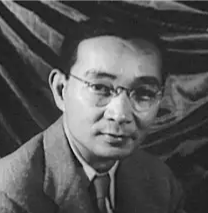
When the mirror meets with an ugly woman, when a rare ink-stone finds a vulgar owner, and when a good sword is in the hands of a common general, there is utterly nothing to be done about it.
▼
Source
source
p. 317

4 months 4 weeks ago
A character is never the author who created him. It is quite likely, however, that an author may be all his characters simultaneously.
Just now
If we do not return to the old maxims, if education is not restored into the hands of priests, and if science is not every where placed in the second rank, the evils which await us are incalculable: we shall become brutalized by science, and this is the lowest degree of brutality.
▼
Source
source
XXXIX, p. 112
2 months 2 weeks ago
The materialists say, it is by means of a series of straight lines more or less perfect that one imagines the perfect straight line as an ideal limit. That is right, but the progression in itself necessarily contains what is infinite; it is in relation to the perfect straight line that one can say that such and such a straight line is less twisted than some other. ... Either one conceives the infinite or one does not conceive at all.
▼
Source
source
p. 87
2 days ago
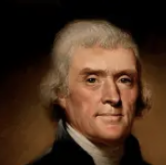
Dispersed as the Jews are, they still form one nation, foreign to the land they live in.
▼
Source
source
As quoted in The Americans by Daniel Boorstin. See Truth from the "Zog Bog" by Gyeorgos Ceres Hatonn, 1993, 224 p.
2 months 1 week ago
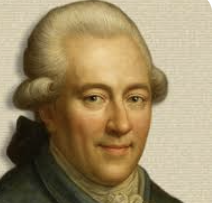
People often become scholars for the same reason they become soldiers: simply because they are unfit for any other station. Their right hand has to earn them a livelihood; one might say they lie down like bears in winter and seek sustenance from their paws.
▼
Source
source
B 41
4 months 5 days ago
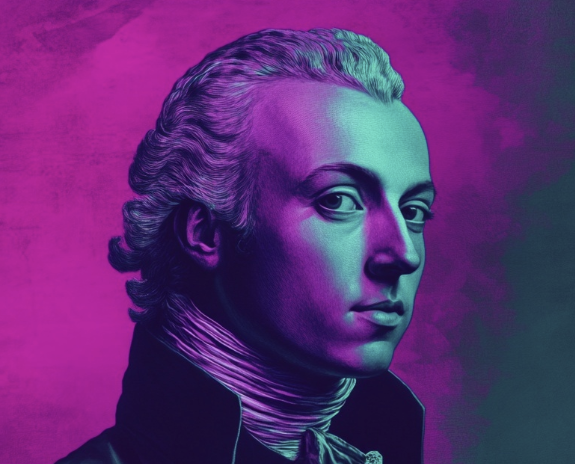
A public can only arrive at enlightenment slowly. Through revolution, the abandonment of personal despotism may be engendered and the end of profit-seeking and domineering oppression may occur, but never a true reform of the state of mind. Instead, new prejudices, just like the old ones, will serve as the guiding reins of the great, unthinking mass. All that is required for this enlightenment is freedom; and particularly the least harmful of all that may be called freedom, namely, the freedom for man to make public use of his reason in all matters. But I hear people clamor on all sides: Don't argue! The officer says: Don't argue, drill! The tax collector: Don't argue, pay! The pastor: Don't argue, believe!

2 months 2 days ago
The most difficult subjects can be explained to the most slow-witted man if he has not formed any idea of them already; but the simplest thing cannot be made clear to the most intelligent man if he is firmly persuaded that he knows already, without a shadow of doubt, what is laid before him.
▼
Source
source
Chapter III, Christianity Misunderstood by Believers
2 weeks 4 days ago
One is not worthy to have what one, through weakness, lets be taken from him; one is not worthy of it because one is not capable of it.
2 months 2 weeks ago
But Zarathustra made it clear in which direction the answer lay; it is towards the artist-psychologist, the intuitional thinker. There are very few such men in the world's literature; the great artists are not thinkers, the great thinkers are seldom artists.
▼
Source
source
p. 158
CivilSimian.com created by AxiomaticPanic, CivilSimian, Kalokagathia