


4 months 5 days ago
Only the skilled can judge the skilfulness, but that is not the same as judging the value of the result.
▼
Source
source
A Preface to Paradise Lost (1942), Chapter 2: "Is Criticism Possible?"

4 months 3 weeks ago
So rolling time changes the seasons of things. What was of value, becomes in turn of no worth.
▼
Source
source
Book V, lines 1276-1277 (tr. Bailey)
6 days ago
Enlighten the people generally, and tyranny and oppressions of body and mind will vanish like evil spirits at the dawn of day.
▼
Source
source
Letter to Éleuthère Irénée du Pont de Nemours
2 months 2 weeks ago
He who is enamored of himself will at least have the advantage of being inconvenienced by few rivals.
▼
Source
source
H 10 Variant translation: He who is in love with himself has at least this advantage - he won't encounter many rivals.


2 months 2 weeks ago
Perhaps it is not true to speak of God as a judge at all, or of his judgements. There does not seem to be really any evidence that His worlds are places of trial but rather schools, place of training, or that He is a judge but rather a Teacher, a Trainer, not in the imperfect sense in which men are teachers, but in the sense of His contriving and adapting His whole universe for one purpose of training every intelligent being to be perfect. ... I think God would not be the Almighty, the All-Wise, the All-Good, if he were the judge, in the sense that the evangelical and Roman Catholic Christians impute judgement to him. ... Our business is, I think, to understand, not to judge. What He does, as far as we know, to rule by law down to the most infinitesimally small portion of His universe, not to judge.
▼
Source
source
As quoted in Florence Nightingale's Theology: Collected Works of Florence Nightingale (2002) by Lynn McDonald, pps. 177-179

3 weeks 6 days ago
His Religion is not an easy one: with rigorous fasts, lavations, strict complex formulas, prayers five times a day, and abstinence from wine, it did not "succeed by being an easy religion." As if indeed any religion, or cause holding of religion, could succeed by that! It is a calumny on men to say that they are roused to heroic action by ease, hope of pleasure, recompense, - sugar-plums of any kind, in this world or the next! In the meanest mortal there lies something nobler.
6 days ago
With respect to the new Government, nine or ten States will probably have accepted by the end of this month. The others may oppose it. Virginia, I think, will be of this number. Besides other objections of less moment, she will insist on annexing a bill of rights to the new Constitution, i.e. a bill wherein the Government shall declare that, 1. Religion shall be free; 2. Printing presses free; 3. Trials by jury preserved in all cases; 4. No monopolies in commerce; 5. No standing army. Upon receiving this bill of rights, she will probably depart from her other objections; and this bill is so much to the interest of all the States, that I presume they will offer it, and thus our Constitution be amended, and our Union closed by the end of the present year.
▼
Source
source
Letter to Mr. Dumas
4 weeks 1 day ago
The spirits that I summoned up, I now can't rid myself of.
▼
Source
source
Der Zauberlehrling (The Sorcerer's Apprentice)

4 months 3 weeks ago
The superior man, even when he is not moving, has a feeling of reverence, and while he speaks not, he has the feeling of truthfulness.

4 months 1 week ago
Metaphysics has as the proper object of its enquiries three ideas only: God, freedom, and immortality.
▼
Source
source
B 395

4 months 2 weeks ago
In order to seek truth, it is necessary once in the course of our life, to doubt, as far as possible, of all things.
▼
Source
source
Descartes, René (1644). Principles of Philosophy.

2 months 2 weeks ago
If a person loves only one other person and is indifferent to all others, his love is not love but a symbiotic attachment, or an enlarged egotism.


3 months 1 week ago
I am convinced that we have a degree of delight, and that no small one, in the real misfortunes and pains of others.
▼
Source
source
Part I Section XIV
2 months 1 week ago
If every strategy today is that of mental terror and of deterrence tied to the suspension and the eternal simulation of catastrophe, then the only means of mitigating this scenario would be to make the catastrophe arrive, to produce or to reproduce a real catastrophe. To which Nature is at times given: in its inspired moments, it is God who through his cataclysms unknots the equilibrium of terror in which humans are imprisoned. Closer to us, this is what terrorism is occupied with as well: making real, palpable violence surface in opposition to the invisible violence of security. Besides, therein lies terrorism's ambiguity.
▼
Source
source
"The China Syndrome," p. 58
3 months 2 weeks ago
Things essentially incorporeal, because they are more excellent than all body and place, are every where, not with interval, but impartibly. Things essentially incorporeal are not locally present with bodies but are present with them when they please; by verging towards them so far as they are naturally adapted so to verge. They are not, however, present with them locally, but through habitude, proximity, and alliance. Things essentially incorporeal, are not present with bodies, by hypostasis and essence; for they are not mingled with bodies. But they impart a certain power which is proximate to bodies, through verging towards them. For tendency constitutes a certain secondary power proximate to bodies.

2 months 2 weeks ago
An absolute power would be one that never becomes apparent, never pointed to itself, one that rather blended completely into what goes without saying. Power shines in its own absence.
4 months 3 weeks ago
Virtue (or the man of virtue) is not left to stand alone. He who practices it will have neighbors.
4 months 2 weeks ago
These philosophers of the world place contrarieties in the same subject; for the one attributed greatness to nature and the other weakness to this same nature, which could not subsist; whilst faith teaches us to place them in different subjects: all that is infirm belonging to nature, all that is powerful belonging to grace. Such is the marvelous and novel union which God alone could teach, and which he alone could make, and which is only a type and an effect of the ineffable union of two natures in the single person of a Man-God.
4 months 5 days ago
"'Are the gods not just?' 'Oh no, child. What would become of us if they were?'"
▼
Source
source
Orual & The Fox
2 months 4 weeks ago
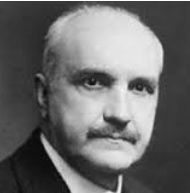
I like to walk about amidst the beautiful things that adorn the world; but private wealth I should decline, or any sort of personal possessions, because they would take away my liberty.
▼
Source
source
"The Irony of Liberalism"
3 months 3 weeks ago
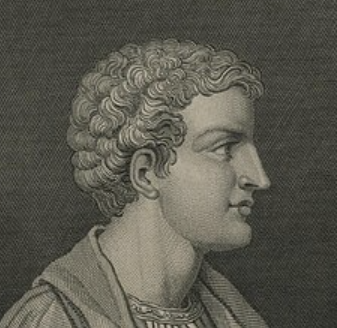
Often must you turn your pencil to erase, if you hope to write something worth a second reading.
▼
Source
source
Book I, satire i, lines 72-3,
3 months 2 days ago
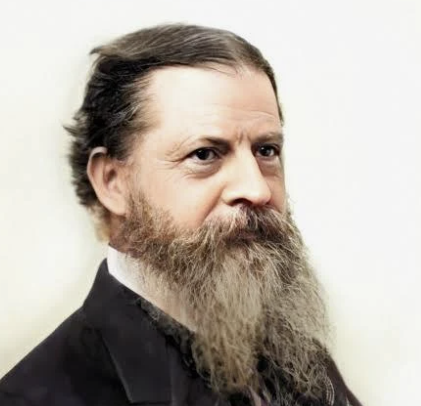
Accordingly, time logically supposes a continuous range of intensity of feeling. It follows then, from the definition of continuity, that when any particular kind of feeling is present, an infinitesimal continuum of all feelings differing infinitesimally from that, is present.
1 month 3 weeks ago
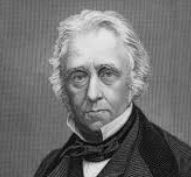
If it is the moral right we are to look at, I say, that on every principle of moral obligation, I hold that the Jew has a right to political power.
▼
Source
source
Speech in the House of Commons (5 April 1830) in favour of Robert Grant's Jewish Disabilities Bill
2 weeks 3 days ago
As a human being it is just my nature to enjoy and share philosophy. I do this in the same way that some birds are eagles and some doves, some flowers lilies and some roses.
▼
Source
source
p. 22
2 months 2 days ago
There is but one art, to omit.
▼
Source
source
As cited in The Harper Book of Quotations, Revised Edition (1993), Ed. R. Fitzhenry, HarperCollins, p. 498 : ISBN 0062732137, 9780062732132
6 days ago
And even should the cloud of barbarism and despotism again obscure the science and libraries of Europe, this country remains to preserve and restore light and liberty to them. In short, the flames kindled on the fourth of July, 1776, have spread over too much of the globe to be extinguished by the feeble engines of despotism; on the contrary, they will consume these engines and all who work them.
▼
Source
source
Letter to John Adams, 12 September 1821
2 months 3 weeks ago
In the ice of solitude man becomes most inexorably a question to himself, and just because the question pitilessly summons and draws into play his most secret life he becomes an experience to himself.
▼
Source
source
p. 150
2 months 2 days ago
Age may have one side, but assuredly Youth has the other. There is nothing more certain than that both are right, except perhaps that both are wrong. Let them agree to differ; for who knows but what agreeing to differ may not be a form of agreement rather than a form of difference?
▼
Source
source
Crabbed Age and Youth.
4 months 3 weeks ago
Honesty and trust are promoted, and good neighborliness cultivated.
3 months 1 week ago
Poetry must have something in it that is barbaric, vast and wild.

5 months 3 days ago
This heart within me I can feel, and I judge that it exists. This world I can touch, and I likewise judge that it exists. There ends all my knowledge, and the rest is construction. For if I try to seize this self of which I feel sure, if I try to define and to summarize it, it is nothing but water slipping through my fingers. I can sketch one by one all the aspects it is able to assume, all those likewise that have been attributed to it, this upbringing, this origin, this ardor or these silences, this nobility or this vileness. But aspects cannot be added up. This very heart which is mine will forever remain indefinable to me. Between the certainty I have of my existence and the content I try to give to that assurance, the gap will never be filled. Forever I shall be a stranger to myself.

3 months 6 days ago
That the uneducated and the ill-educated should think the hypothesis that all races of beings, man inclusive, may in process of time have been evolved from the simplest monad, a ludicrous one, is not to be wondered at. But for the physiologist, who knows that every individual being is so evolved-who knows, further, that in their earliest condition the germs of all plants and animals whatever are so similar, "that there is no appreciable distinction amongst them, which would enable it to be determined whether a particular molecule is the germ of a Conferva or of an Oak, of a Zoophyte or of a Man";-for him to make a difficulty of the matter is inexcusable.
▼
Source
source
Spencer here references William Benjamin Carpenter, Principles of Comparative Physiology see p. 473

4 months 2 weeks ago
The cause and root of nearly all evils in the sciences is this - that while we falsely admire and extol the powers of the human mind we neglect to seek for its true helps.
▼
Source
source
Aphorism 9

2 months 4 days ago
Prose is private drama; poetry is corporate drama.
▼
Source
source
(p. 275)
4 months 5 days ago
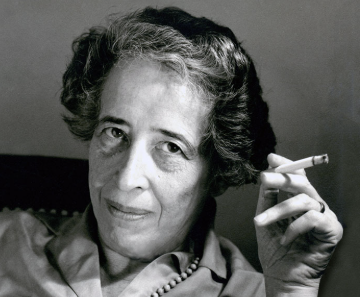
Forgiveness is the key to action and freedom.
▼
Source
source
As quoted in The Concise Columbia Dictionary of Quotations (1989) edited by Robert Andrews, p. 114
2 months 4 days ago
Language is a form of organized stutter.
▼
Source
source
Interview with John Lennon, December 1969, CBS Television
2 months 3 weeks ago
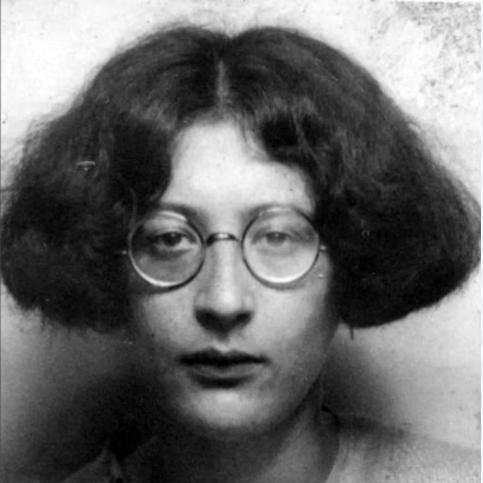
To wish to escape from solitude is cowardice. Friendship is not to be sought, not to be dreamed, not to be desired; it is to be exercised (it is a virtue).
▼
Source
source
p. 274
2 months 2 weeks ago
A book is a mirror: if an ape looks into it an apostle is hardly likely to look out. We have no words for speaking of wisdom to the stupid. He who understands the wise is wise already.
▼
Source
source
E 49
3 weeks ago
It is true that every increase of knowledge may possibly render depravity more depraved, as well as it may increase the strength of virtue. It is in itself only power; and its value depends on its application.
▼
Source
source
"Female Education" (review of Thomas Broadhurst, Advice to Young Ladies on the Improvement of Mind, 1808), in The Edinburgh Review, No. 30 (January 1810), p. 314

2 months 2 days ago
Contrary to earlier prejudices, there is nothing inherently progressive about evolution.
▼
Source
source
Chapter 7 "Constructive Evolution" (p. 178)

4 months 2 weeks ago
...God commanded in the law [Deut. 22:22-24] that adulterers be stoned . . . The temporal sword and government should therefore still put adulterers to death . . . Where the government is negligent and lax, however, and fails to inflict the death penalty, the adulterer may betake himself to a far country and there remarry if he is unable to remain continent. But it would be better to put him to death, lest a bad example be set . . .

4 months 2 weeks ago
Observe, observe perpetually.
5 months 3 days ago
Every rebellion implies some kind of unity.

2 months 2 weeks ago
In the mid nineteenth century, the typical murderer was a drunken illiterate; a hundred years later the typical murderer regards himself as a thinking man.
▼
Source
source
Introductory Essay, p. xiv
3 months 2 days ago
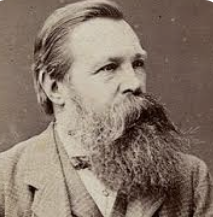
What each individual wills is obstructed by everyone else, and what emerges is something that no one willed.
▼
Source
source
Letter to Jean-Richard Bloch

5 months 4 days ago
An unpleasant nest of nasty, materialistic and aggressive people, careless of the rights of others, imperfectly democratic at home though quick to see the minor slaveries of others, and greedy without end.

6 days ago
Let me say and not mourn: the world lives in the death of speech and sings there.
▼
Source
source
The Silence
CivilSimian.com created by AxiomaticPanic, CivilSimian, Kalokagathia