


4 months 2 days ago
Quite a heavy weight, a name too quickly famous.
▼
Source
source
La Henriade, chant troisième, l.41, 1722

4 months 2 weeks ago
It is only the individual possessed of the most entire sincerity that can exist under Heaven, who can adjust the great invariable relations of mankind, establish the great fundamental virtues of humanity, and know the transforming and nurturing operations of Heaven and Earth; shall this individual have any being or anything beyond himself on which he depends? Call him man in his ideal, how earnest is he! Call him an abyss, how deep is he! Call him Heaven, how vast is he! Who can know him, but he who is indeed quick in apprehension, clear in discernment, of far-reaching intelligence, and all-embracing knowledge, possessing all Heavenly virtue?
4 months 2 days ago
One always speaks badly when one has nothing to say.
▼
Source
source
1827

1 month 1 week ago
With other beliefs crumbling, many seek to return to what they piously describe as "Enlightenment values". But these values were not as unambiguously benign as is nowadays commonly supposed.
▼
Source
source
2015

3 months 2 weeks ago
It is better to correct your own faults than those of another.

4 months 2 weeks ago
Christ's whole body groans in pain. Until the end of the world, when pain will pass away, this man groans and cries to God. And each one of us has part in the cry of that whole body. Thou didst cry out in thy day, and thy days have passed away; another took thy place and cried out in his day. Thou here, he there, and another there. The body of Christ ceases not to cry out all the day, one member replacing the other whose voice is hushed. Thus there is but one man who reaches unto the end of time, and those that cry are always His members.
▼
Source
source
p.423

4 months 4 weeks ago
And the true order of going, or being led by another, to the things of love, is to begin from the beauties of earth and mount upwards for the sake of that other beauty, using these steps only, and from one going on to two, and from two to all fair forms to fair practices, and from fair practices to fair notions, until from fair notions he arrives at the notion of absolute beauty, and at last knows what the essence of beauty is.

1 month 1 week ago
[I]n the wake of the growth of the animal-rights movement, there has recently arisen a hitherto unfelt need to demonise and demean our non-human victims - and those who try to help them - now that our previously well-nigh unquestioned right to kill and exploit them is being challenged. Bloodsports enthusiasts, for instance, currently spend a lot of time cataloguing the alleged depredations of our victims on the environment. Recreational animal-killers go to extraordinarily lengths to avoid admitting that they themselves enjoy hunting and killing other creatures for fun. But then until a few years ago such rationalisations seemed scarcely called for. Selfish DNA had honed our intuitions so that the most agonising bloodshed seemed simply "natural". "The Post-Darwinian Transition", The Animal Rights Library, 1996

Just now
Love the quick profit, the annual raise, vacation with pay. Want more of everything ready-made. Be afraid to know your neighbors and to die. And you will have a window in your head. Not even your future will be a mystery any more. Your mind will be punched in a card and shut away in a little drawer. When they want you to buy something they will call you. When they want you to die for profit they will let you know. So, friends, every day do somethingthat won't compute. Love the Lord. Love the world. Work for nothing. Take all that you have and be poor.Love someone who does not deserve it. Denounce the government and embracethe flag. Hope to live in that freerepublic for which it stands. Give your approval to all you cannotunderstand. Praise ignorance, for what manhas not encountered he has not destroyed.
▼
Source
source
"Manifesto: The Mad Farmer Liberation Front" in Farming: A Hand Book

5 months 1 day ago
This opinion... appears to be ancient... that the one, excess and defect, are the principles of things... It is not... probable that there are more than three principles... [E]ssence is one certain genus of being: so that principles will differ from each other in prior and posterior alone, but not in genus, for in one genus there is always one contrariety, and all contrarieties appear to be referred to one. That there is neither one element, therefore, nor more than two or three, is evident.

4 months 4 days ago
China has been long one of the richest, that is, one of the most fertile, best cultivated, most industrious, and most populous countries in the world. It seems, however, to have been long stationary. Marco Polo, who visited it more than five hundred years ago, describes its cultivation, industry, and populousness, almost in the same terms in which they are described by travellers in the present times.
▼
Source
source
Chapter VIII, p. 86.
1 month 4 weeks ago
To spare the guilty is to injure the innocent.
▼
Source
source
Maxim 113
Just now
You say you are a Calvinist. I am not. I am of a sect by myself, as far as I know.
▼
Source
source
Letter to Ezra Stiles Ely (25 June 1819), published in The Papers of Thomas Jefferson (1983) by Dickinson W. Adams
4 months ago
But such a straight identification of religion with any and every form of happiness leaves the essential peculiarity of religious happiness out. The more commonplace happinesses which we get are 'reliefs,' occasioned by our momentary escapes from evils either experienced or threatened. But in its most characteristic embodiments, religious happiness is no mere feeling of escape. It cares no longer to escape. It consents to the evil outwardly as a form of sacrifice - inwardly it knows it to be permanently overcome. ... In the Louvre there is a picture, by Guido Reni, of St. Michael with his foot on Satan's neck. The richness of the picture is in large part due to the fiend's figure being there. The richness of its allegorical meaning also is due to his being there - that is, the world is all the richer for having a devil in it, so long as we keep our foot upon his neck.
▼
Source
source
Lecture II, "Circumscription of the Topic"


1 month 1 week ago
America is like a large, friendly dog in a very small room. Every time it wags its tail, it knocks over a chair!
▼
Source
source
In Quote: The Weekly Digest, vol. 23, no. 19 (4 May 1952) p. 16


4 months 1 day ago
The hopes which inspire communism are, in the main, as admirable as those instilled by the Sermon on the Mount, but they are held as fanatically and are as likely to do as much harm.
▼
Source
source
Part I, The Present Condition of Russia, Ch. 1: What Is Hoped From Bolshevism
4 months 1 day ago
In fact, contempt for happiness is usually contempt for other people's happiness, and is an elegant disguise for hatred of the human race.
▼
Source
source
p. 198

2 weeks 1 day ago
Drunkenness is nothing but voluntary madness.
▼
Source
source
Line 18.

3 months 2 weeks ago
The Platonic doctrine of Ideas has been, in all ages, the derision of the vulgar, and the admiration of the wife. Indeed, if we consider that ideas are the most sublime objects of speculation, and that their nature is no less bright in itself, than difficult to investigate, this opposition in the conduct of mankind will be natural and necessary; for, from our connection with a material nature, our intellectual eye, previous to the irradiations of science, is as ill adapted to objects the most splendid of all, "as the eyes of bats to the light of day.
▼
Source
source
A Dissertation on the Doctrine of Ideas, &c." Footnote: see second book of Aristotle's Metaphysics.
1 week 3 days ago
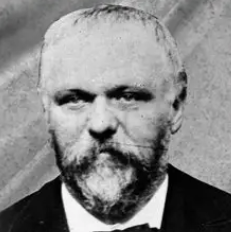
Engels feared that the Socialists, in order to gain adherents in the electoral struggles rapidly, would make promises which were contrary to Marxist doctrine. The antisemites told the peasants and the small shopkeepers that they would protect them from the development of capitalism. Engels thought that an imitation of this procedure would be dangerous, since, in his opinion, the social revolution could only be realised when capitalism had almost completely destroyed the small proprietors and small industries; if the Socialists, then, endeavoured to hinder this evolution, they would ultimately compromise their own cause.
▼
Source
source
Reflections on Violence, London: UK, George Allen & Unwin, (reprinted in Saxony 1925) p. 180

4 months 4 days ago
The same good sense, that directs men in the ordinary occurrences of life, is not hearkened to in religious matters, which are supposed to be placed altogether above the cognizance of human reason.
2 months 3 weeks ago
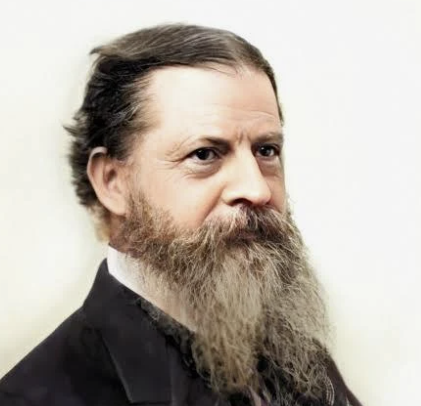
Logical analysis applied to mental phenomenon shows that there is but one law of mind, namely that ideas tend to spread continuously and to affect certain others which stand to them in a peculiar relation of affectibility. In this spreading they lose intensity, and especially the power of affecting others, but gain generality and become welded with other ideas.
2 weeks 1 day ago
Who, then, can be more ignorant of nature than he who classes this cruel and hurtful vice as belonging to her best and most polished work?

3 months 1 day ago
...what was done in France was a wild attempt to methodize anarchy; to perpetuate and fix disorder. That it was a foul, impious, monstrous thing, wholly out of the course of moral nature. He undertook to prove, that it was generated in treachery, fraud, falsehood, hypocrisy, and unprovoked murder. ... That by the terror of assassination they had driven away a very great number of the members, so as to produce a false appearance of a majority.-That this fictitious majority had fabricated a constitution, which as now it stands, is a tyranny far beyond any example that can be found in the civilized European world of our age.
▼
Source
source
p. 376
2 months 3 weeks ago
Well both original seizure and subsequent critical discrimination have equal claims, each to its own complete development and must not be forgotten that direct and unreasoned impression comes first. There is such occasions something of the quality of the wind that bloweth where it listeth. Sometimes it comes and sometimes it does not, even in the presence of the same object. It cannot be forced and when it does not arrive it is not wise to seek to recover by direct action the first fine rapture.
▼
Source
source
p. 151

2 months 2 weeks ago
Knowledge is employed in the service of the necessity of life and primarily in the service of the instinct of personal preservation. The necessity and this instinct have created in man the organs of knowledge and given them such capacity as they possess. Man sees, hears, touches, tastes and smells that which it is necessary for him to see, hear, touch, taste and smell in order to preserve his life. The decay or loss of any of these senses increases the risks with which his life is environed, and if it increases them less in the state of society in which we are actually living, the reason is that some see, hear, touch, taste and smell for others. A blind man, by himself and without a guide, could not live long. Society is an additional sense; it is the true common sense.
3 weeks 6 days ago
Looking back we can see how indirectly we know the environment in which nevertheless we live. We can see that the news of it comes to us now fast, now slowly; but that whatever we believe to be a true picture, we treat as if it were the environment itself.
▼
Source
source
Ch. I: "The World Outside and the Pictures in Our Heads", p. 4

4 months 2 days ago
Boundless compassion for all living beings is the surest and most certain guarantee of pure moral conduct, and needs no casuistry. Whoever is filled with it will assuredly injure no one, do harm to no one, encroach on no man's rights; he will rather have regard for every one, forgive every one, help every one as far as he can, and all his actions will bear the stamp of justice and loving-kindness. ... In former times the English plays used to finish with a petition for the King. The old Indian dramas close with these words: "May all living beings be delivered from pain." Tastes differ; but in my opinion there is no more beautiful prayer than this.
▼
Source
source
Part III, Ch. VIII, 4, pp. 213-214 First line often paraphrased as: Compassion is the basis of all morality.
2 months 3 weeks ago
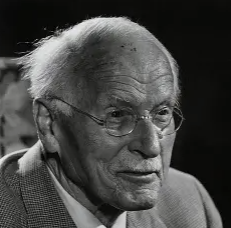
Metaphysical assertions, however, are statements of the psyche, and are therefore psychological. ... Whenever the Westerner hears the word "psychological," it always sounds to him like "only psychological."
▼
Source
source
Psyche and Symbol (1958), p. 285

2 months 1 week ago
The fundamental tenet of Steiner's teaching is that if we take the trouble to recognize the independent existence of the inner worlds of thought, and keep the mind turned in that direction, we shall soon become increasingly conscious of their reality. We are not, as Sartre believed, stranded in the universe of matter like a whale on a beach. That inner world is our natural home. Moreover, once we grasp this truth, we can also recognize that we ourselves possess an "essential ego," a "true self," a fundamental identity that goes far beyond our usual feeble sense of being "me."
▼
Source
source
p. 26
1 week 4 days ago
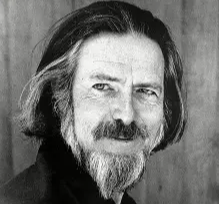
I am amazed that Congressmen can pass a bill imposing severe penalties on anyone who burns the American flag, whereas they are responsible for burning that for which the flag stands: the United States as a territory, as a people, and as a biological manifestation. That is an example of our perennial confusion of symbols with realities.
▼
Source
source
Audio lecture "Individual and Society"

2 months 2 weeks ago
The chief danger to philosophy is narrowness in the selection of evidence.
▼
Source
source
Pt. V, ch. 1, sec. 1.
Just now
Certainly no nation ever before abandoned to the avarice and jugglings of private individuals to regulate according to their own interests, the quantum of circulating medium for the nation - to inflate, by deluges of paper, the nominal prices of property, and then to buy up that property at 1s. in the pound, having first withdrawn the floating medium which might endanger a competition in purchase. Yet this is what has been done, and will be done, unless stayed by the protecting hand of the legislature. The evil has been produced by the error of their sanction of this ruinous machinery of banks; and justice, wisdom, duty, all require that they should interpose and arrest it before the schemes of plunder and spoliation desolate the country.
▼
Source
source
Letter to William C. Rives (1819) ME 15:232
2 months 3 weeks ago
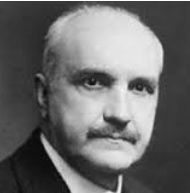
Friendship is almost always the union of a part of one mind with the part of another; people are friends in spots.
▼
Source
source
"Friendships"
2 months 1 week ago
Suffering is admittedly one of the central problems of human existence; but this is because we have a suspicion that it is all for nothing. If we had a certainty about meaning, the suffering would be bearable. With no certainty of meaning, even comfort begins to feel futile.
▼
Source
source
p. 89

3 months 6 days ago
That some have never dreamed is as improbable as that some have never laughed.
1 month 2 weeks ago
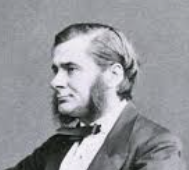
Logical consequences are the scarecrows of fools and the beacons of wise men.

2 months 3 weeks ago
I foresee the day when we shall read nothing but telegrams and prayers.
2 weeks 6 days ago
Happiness is the free play of the instincts, and so is youth.
▼
Source
source
Ch. 2 : On Youth
Just now
Ask the world to reveal its quietude - not the silence of machines when they are still, but the true quiet by which birdsongs, trees, bellworts, snails, clouds, storms become what they are, and are nothing else.

4 months 4 weeks ago
Often, writers on historical events tend to consider ... a loss of willingness to fight as a sign of "decadence," as though there were something despicable about not being a bully and not being willing to engage in mass murder. Perhaps we ought to feel instead that to cease to be warlike means to begin to be civilized and decent.
1 day ago
At every moment of crisis an array of men risk their lives in the front ranks as standard-bearers of God to fight and take upon themselves the whole responsibility of the battle. Once long ago it was the priests, the kings, the noblemen, or the burghers who created civilizations and set divinity free. Today God is the common worker made savage by toil and rage and hunger

3 months 4 weeks ago
You can choose whatever name you like for the two types of government. I personally call the type of government which can be removed without violence "democracy", and the other "tyranny".
▼
Source
source
As quoted in Freedom: A New Analysis (1954) by Maurice William Cranston, p. 112
4 months 4 days ago
The man who esteems himself as he ought, and no more than he ought, seldom fails to obtain from other people all the esteem that he himself thinks due. He desires no more than is due to him, and he rests upon it with complete satisfaction.
▼
Source
source
Section III.
2 months 1 week ago
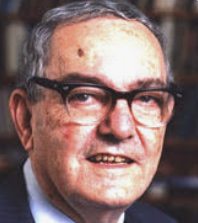
At the time of its initial publication, Public Administration helped to define this field of study and practice by introducing two major new emphases: an orientation toward human behavior and human relations in organizations, and an emphasis on the interaction between administration, politics, and policy. Without neglecting more traditional concerns with organization structure, Simon, Thompson, and Smithburg viewed administration in its behavioral and political contexts. The viewpoints they express still are at the center of public administration's concerns.
▼
Source
source
Book abstract, 1991
2 months 3 weeks ago
Losing love is so rich a philosophical ordeal that it makes a hairdresser into a rival of Socrates.

4 months 1 day ago
Revolutions are the locomotives of history.
▼
Source
source
Chapter 3, The Class Struggles in France, 1848 to 1850, 1850
1 week 1 day ago
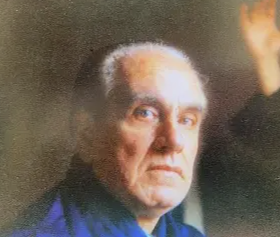
Heinrich Himmler's political tendencies were philo-monarchist and Right-wing conservative, inherited from his father who had been the loyalist instructor of Heinrich, hereditary prince of Bavaria. He was especially fascinated by the ideal of the Order of Teutonic Knights, which we spoke of earlier. He wanted to make the SS a corps that would perform the same function of the state's central nucleus that the nobility had played with its unquestioning loyalty to the regime, but in a new form. For the formation of a man of the SS, he considered a blend of Spartan spirit and Prussian discipline. But he also had in view the order of Jesuits (Hitler jokingly used to call Himmler 'my Ignatius of Loyola').
CivilSimian.com created by AxiomaticPanic, CivilSimian, Kalokagathia