


2 months 3 weeks ago
What is marvelous is that each day brings us a new reason to disappear.
2 months 3 weeks ago
Only one thing matters: learning to be the loser.
4 months 1 week ago
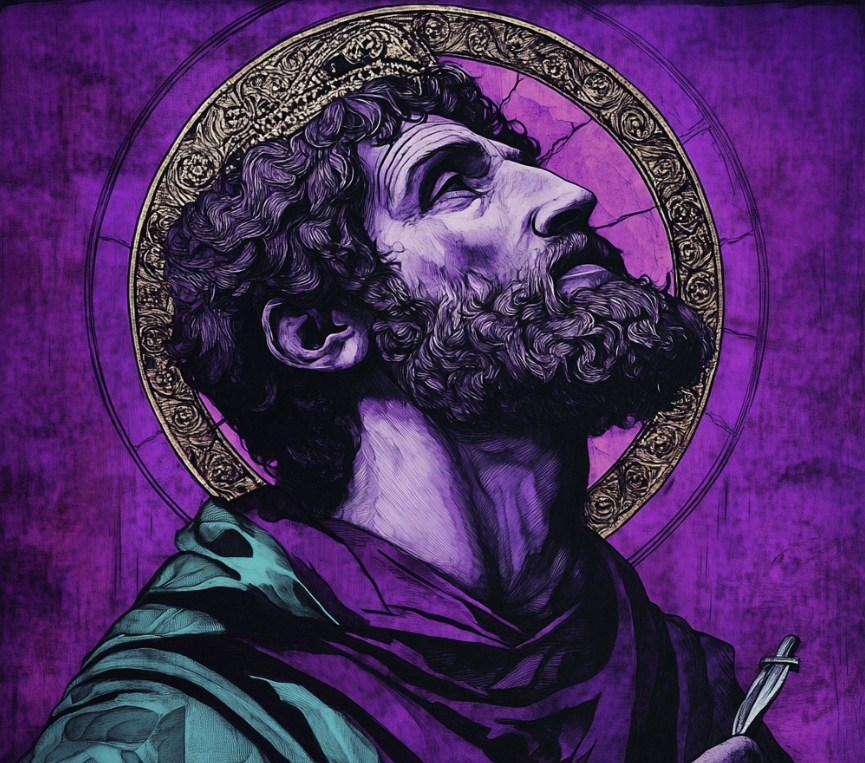
Even then [at the time of Peter's speech in Acts 2] it was the last days; how much more so now, when there must still be as much time till the end of the world as has passed since the ascension of the Lord! We do not know the end of the world, because it is not for us to know the times or the seasons that the Father has set in his power; but we know that, like the apostles, we live in the last times, in the last days, in the last hour. Those who lived after the apostles and before us were more in what we call the last times, and we ourselves are in them even more than they; those who will come after us will be so much more, till one gets to those who will be, if one may say so, the last of the last, and finally till that day, the very last, of which the Lord means to speak when he said, "And I will raise him up on the last day". How far are we from that day? That is an impenetrable secret.
2 months 3 weeks ago
The Scientific discourse extracts truths from the errors which surround and oppose it on all sides and in every form; and, by demolition of these opposing views as error, and as impossible to true thought, shows the truth as that which alone remains after their withdrawal, and therefore as the only possible truth:--and in this separation of opposites, and elucidation of the truth from the confused chaos in which truth and error lie mingled together, consists the peculiar and characteristic nature of the Scientific discourse. This method creates and produces truth, before our eyes, out of a world full of error.
▼
Source
source
P. 26-27

1 month 3 weeks ago
Just then another visitor entered the drawing room: Prince Andrew Bolkónski, the little princess' husband. He was a very handsome young man, of medium height, with firm, clearcut features. Everything about him, from his weary, bored expression to his quiet, measured step, offered a most striking contrast to his quiet, little wife. It was evident that he not only knew everyone in the drawing room, but had found them to be so tiresome that it wearied him to look at or listen to them. And among all these faces that he found so tedious, none seemed to bore him so much as that of his pretty wife. He turned away from her with a grimace that distorted his handsome face, kissed Anna Pávlovna's hand, and screwing up his eyes scanned the whole company.
▼
Source
source
Bk. I, Ch. IV
3 months 3 weeks ago
Justice as fairness provides what we want.
▼
Source
source
Chapter III, Section 30, pg. 190

3 months 4 weeks ago
So much of modern mathematical work is obviously on the border-line of logic, so much of modern logic is symbolic and formal, that the very close relationship of logic and mathematics has become obvious to every instructed student. The proof of their identity is, of course, a matter of detail: starting with premisses which would be universally admitted to belong to logic, and arriving by deduction at results which as obviously belong to mathematics, we find that there is no point at which a sharp line can be drawn, with logic to the left and mathematics to the right. If there are still those who do not admit the identity of logic and mathematics, we may challenge them to indicate at what point, in the successive definitions and deductions of Principia Mathematica, they consider that logic ends and mathematics begins. It will then be obvious that any answer must be quite arbitrary.
▼
Source
source
Ch. 18: Mathematics and Logic

3 months 3 weeks ago
What the rest of us see only under the influence of mescalin, the artist is congenitally equipped to see all the time. His perception is not limited to what is biologically or socially useful.
▼
Source
source
Page 168
1 month 4 weeks ago
What television does is rent us friends and relatives who are quite satisfactory. The child watching TV loves these people, you know -- they're in color, and they're talking to the child. Why wouldn't a child relate to these people? And you know, if you can't sleep at 3 o'clock in the morning, you can turn on a switch, and there are your friends and relatives, and they obviously like you. And they're charming. Who wouldn't want Peter Jennings for a relative? This is quite something, to rent artificial friends and relatives right inside the house.
▼
Source
source
Interviewed by Frank Houston, "The Salon Interview: Kurt Vonnegut", Salon

3 months 3 weeks ago
I believe that one of the things Christianity says is that sound doctrines are all useless. That you have to change your life. (Or the direction of your life.)
▼
Source
source
p. 53e
4 months 1 week ago
Yet God hath not only granted these faculties, by which we may bear every event without being depressed or broken by it, but like a good prince and a true father, hath placed their exercise above restraint, compulsion, or hindrance, and wholly within our own control.
▼
Source
source
Book I, ch. 6, 40.
2 months 1 week ago
Modern empiricism has been conditioned in large part by two dogmas. One is a belief in some fundamental cleavage between truths which are analytic, or grounded in meanings independently of matters of fact, and truths which are synthetic, or grounded in fact. The other dogma is reductionism: the belief that each meaningful statement is equivalent to some logical construct upon terms which refer to immediate experience. Both dogmas, I shall argue, are ill-founded. One effect of abandoning them is, as we shall see, a blurring of the supposed boundary between speculative metaphysics and natural science. Another effect is a shift toward pragmatism.
▼
Source
source
"Two dogmas of Empiricism"
1 month 3 weeks ago
To travel hopefully is a better thing than to arrive.
▼
Source
source
El Dorado.
2 months 2 weeks ago
When we rise out of [the night] into the new life and there begin to receive the signs, what can we know of that which - of him who gives them to us? Only what we experience from time to time from the signs themselves. If we name the speaker of this speech God, then it is always the God of a moment, a moment God.
▼
Source
source
Between Man and Man (1965), p. 15
3 months 4 weeks ago
The scientific attitude of mind involves a sweeping away of all other desires in the interests of the desire to know-it involves suppression of hopes and fears, loves and hates, and the whole subjective emotional life, until we become subdued to the material, able to see it frankly, without preconceptions, without bias, without any wish except to see it as it is, and without any belief that what it is must be determined by some relation, positive or negative, to what we should like it to be, or to what we can easily imagine it to be.
2 months 3 weeks ago
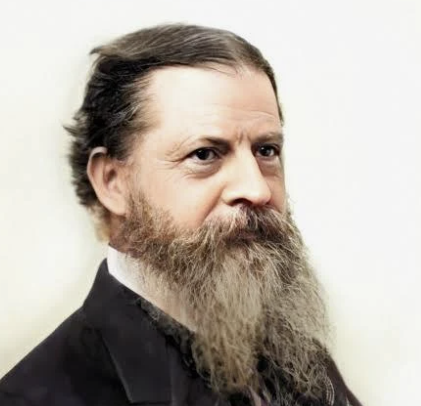
Were the ends of a person already explicit, there would be no room for development, for growth, for life; and consequently there would be no personality. The mere carrying out of predetermined purposes is mechanical. This remark has an application to the philosophy of religion. It is that genuine evolutionary philosophy, that is, one that makes the principle of growth a primordial element of the universe, is so far from being antagonistic to the idea of a personal creator, that it is really inseparable from that idea; while a necessitarian religion is in an altogether false position and is destined to become disintegrated. But a pseudo-evolutionism which enthrones mechanical law above the principle of growth is at once scientifically unsatisfactory, as giving no possible hint of how the universe has come about, and hostile to all hopes of personal relations to God.

2 weeks 4 days ago
This Burns appeared under every disadvantage: uninstructed, poor, born only to hard manual toil; and writing, when it came to that, in a rustic special dialect, known only to a small province of the country he lived in. Had he written, even what he did write, in the general language of England, I doubt not he had already become universally recognized as being, or capable to be, one of our greatest men.
2 weeks 4 days ago
Paganism we recognized as a veracious expression of the earnest awe-struck feeling of man towards the Universe; veracious, true once, and still not without worth for us. But mark here the difference of Paganism and Christianism; one great difference. Paganism emblemed chiefly the Operations of Nature; the destinies, efforts, combinations, vicissitudes of things and men in this world; Christianism emblemed the Law of Human Duty, the Moral Law of Man. One was for the sensuous nature: a rude helpless utterance of the first Thought of men,-the chief recognized virtue, Courage, Superiority to Fear. The other was not for the sensuous nature, but for the moral. What a progress is here, if in that one respect only-!
1 week 1 day ago
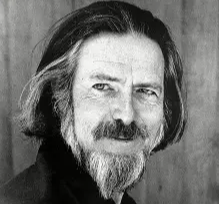
If Christianity is wine and Islam coffee, Buddhism is most certainly tea.
▼
Source
source
p. 190
1 month 1 week ago
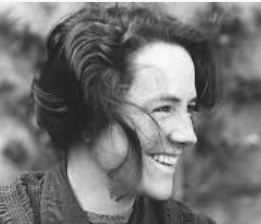
When one is a stranger to oneself then one is estranged from others too. If one is out of touch with oneself, then one cannot touch others.

2 months 2 weeks ago
The march, as ever, is toward the future, and he who marches is getting there, even though he march walking backwards. And who knows if that is not the better way!...
3 months 4 weeks ago
Change is one thing, progress is another.
3 weeks 3 days ago
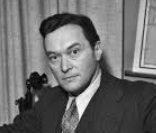
Where all think alike, no one thinks very much.
▼
Source
source
Ch. IV: "The Line of Least Resistance", p. 51


2 months 4 weeks ago
Through a wise and salutary neglect [of the colonies], a generous nature has been suffered to take her own way to perfection; when I reflect upon these effects, when I see how profitable they have been to us, I feel all the pride of power sink and all presumption in the wisdom of human contrivances melt and die away within me. My vigour relents. I pardon something to the spirit of liberty.

3 months 3 weeks ago
I appeal to the philosophers of all countries to unite and never again mention Heidegger or talk to another philosopher who defends Heidegger. This man was a devil. I mean, he behaved like a devil to his beloved teacher, and he has a devilish influence on Germany. ... One has to read Heidegger in the original to see what a swindler he was.
▼
Source
source
As quoted in "At 90, and Still Dynamic : Revisiting Sir Karl Popper and Attending His Birthday Party" by Eugene Yue-Ching Ho, in Intellectus 23
2 months 3 weeks ago
Impossible to spend sleepless nights and accomplish anything: if, in my youth, my parents had not financed my insomnias, I should surely have killed myself.
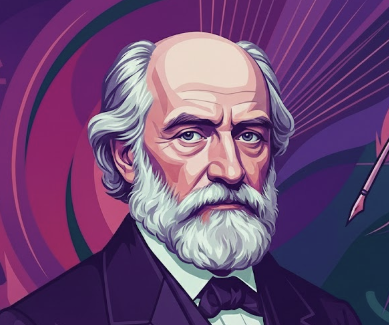
3 months 4 weeks ago
The chief objection I have to Pantheism is that it says nothing. To call the world "God" is not to explain it; it is only to enrich our language with a superfluous synonym for the word "world".
▼
Source
source
On Pantheism as quoted in Faiths of Famous Men in Their Own Words (1900) by John Kenyon Kilbourn; also in Religion: A Dialogue and Other Essays (2007), p. 40

4 months 3 weeks ago
Scientists have pushed back the horizon of time from the biblical 6,000 years to 4,600,000,000 years for the age of Earth a 760,000-fold increase.
4 months 1 week ago
No man is free who is not master of himself.
▼
Source
source
Fragment 35 (Oldfather translation)
2 months 1 week ago
To do the opposite of something is also a form of imitation, namely an imitation of its opposite.
▼
Source
source
D 96 Variant translation: To do just the opposite is also a form of imitation.

2 months 1 week ago
The individual begins that long effort as an Outsider; he may finish it as a saint.
▼
Source
source
Chapter Nine, Breaking the Circuit, final sentence
2 months 3 weeks ago
The case of mere titles is so absurd that it would deserve to be treated only with ridicule were t not for the serious mischief they impose on mankind. The feudal system was a ferocious monster, devouring, where it came, all that the friend of humanity regards with attachment and love. The system of titles appears under a different form. The monster is at length destroyed, and they who followed in his train, and fattened upon the carcasses of those he slew, have stuffed his skin, and, b exhibiting it, hope still to terrify mankind into patient and pusillanimity.
▼
Source
source
Book V, Chapter 13
2 months 1 week ago
To hope means to be ready at every moment for that which is not yet born, and yet not become desperate if there is no birth in our lifetime.

5 days ago
A man may own a thousand acres of land, and yet he still sleeps upon a bed of five feet.
▼
Source
source
p. 38 (Chinese saying)
2 months 3 weeks ago
Crime in full glory consolidates authority by the sacred fear it inspires.
5 days ago
What is the purpose of houses? It is to protect us from the wind and cold of winter, the heat and rain of summer, and to keep out robbers and thieves. Once these ends have been secured, that is all. Whatever does not contribute to these ends should be eliminated.
▼
Source
source
Ch 20, as quoted in Van Norden, Bryan W. (2011). Introduction to Classical Chinese Philosophy. Hackett Publishing. p. 52. ISBN 978-1-60384-468-0.

5 months ago
One common false conclusion is that because someone is truthful and upright towards us he is spreading the truth. Thus the child believes his parents' judgements, the Christian believes the claims of the church's founders. Likewise, people do not want to admit that all those things which men defended with the sacrifice of their lives and happiness in earlier centuries were nothing but errors.
1 month 3 weeks ago
After Plotinus, says Schassler, fifteen centuries passed without the slightest scientific interest for the world of beauty and art. ...In reality, nothing of the kind happened. The science of aesthetics ... neither did nor could vanish, because it never existed. ... the Greeks were so little developed that goodness and beauty seemed to coincide. On that obsolete Greek view of life the science of aesthetics was invented by men of the eighteenth century, and especially shaped and mounted in Baumgarten's theory. The Greeks (as anyone may read in Bénard's book on Aristotle and Walter's work on Plato) never had a science of aesthetics.
2 months 3 weeks ago
To hope is to contradict the future.
2 months 1 week ago
When we subordinate rest to work, we ignore the divine.
4 months 1 week ago
Therefore let every Christian, yea, let the whole body of Christ everywhere cry out, despite the tribulations it endures, despite temptations and countless scandals, saying: "Preserve my soul, for I am holy; save Thy servant, O my God, that trusteth in thee" (Ps. 85:2) No, this holy one is not proud, for he trusts in God.
▼
Source
source
p.429
5 days ago
All too often people forget that spirituality is essentially a way of life and that its measure does not consist of notions, theories, and ideas that have been stored in one's head. Spirituality is actually what has been successfully actualized and translated into a sense of superiority which is experienced inside by the soul, and a noble demeanor, which is expressed in the body.
▼
Source
source
Meditations on the Peaks: Mountain Climbing as Metaphor for the Spiritual Quest
4 months 3 weeks ago
I am an atheist, out and out. It took me a long time to say it. I've been an atheist for years and years, but somehow I felt it was intellectually unrespectable to say one was an atheist, because it assumed knowledge that one didn't have. Somehow, it was better to say one was a humanist or an agnostic. I finally decided that I'm a creature of emotion as well as of reason. Emotionally, I am an atheist. I don't have the evidence to prove that God doesn't exist, but I so strongly suspect he doesn't that I don't want to waste my time.
4 months ago
The public use of a man's reason must be free at all times, and this alone can bring enlightenment among men...
2 months 3 weeks ago
We make choices, decisions, as long as we keep to the surface of things; once we reach the depths, we can neither choose nor decide, we can do nothing but regret the surface...
3 months 4 weeks ago
The next good quality belonging to a gentleman, is good breeding [manners]. There are two sorts of ill-breeding: the one a sheepish bashfulness, and the other a mis-becoming negligence and disrespect in our carriage; both of which are avoided by duly observing this one rule, not to think meanly of ourselves, and not to think meanly of others.
▼
Source
source
Sec. 141
2 months 2 weeks ago
Liberalism has merely cleared a field in which every soul and every corporate interest may fight with every other for domination. Whoever is victorious in this struggle will make an end of liberalism; and the new order, which will deem itself saved, will have to defend itself in the following age against a new crop of rebels.
▼
Source
source
"The Irony of Liberalism"

2 months 1 week ago
My life - I had lived in its heights and its depths, in bitter sorrow and ecstatic joy, in black despair and fervent hope. I had drunk the cup to the last drop. I had lived my life. Would I had the gift to paint the life I had lived!
▼
Source
source
chapter 56
CivilSimian.com created by AxiomaticPanic, CivilSimian, Kalokagathia