

3 months 4 weeks ago
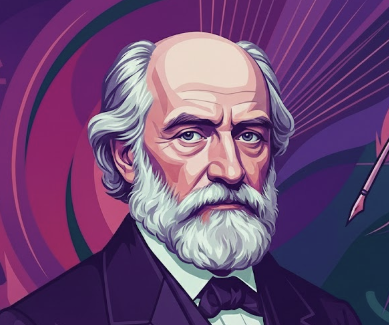
Europeans are awakening more and more to a sense that beasts have rights, in proportion as the strange notion is being gradually overcome and outgrown, that the animal kingdom came into existence solely for the benefit and pleasure of man. This view, with the corollary that non-human living creatures are to be regarded merely as things, is at the root of the rough and altogether reckless treatment of them, which obtains in the West.
▼
Source
source
Part III, Ch. VIII, 7, p. 225
2 months 3 weeks ago
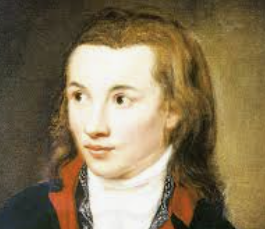
Poetry heals the wounds inflicted by reason.
▼
Source
source
As quoted in Quote, Unquote (1989) by Jonathan Williams, p. 136

2 months 1 day ago
We are to admit no more causes of natural things than such as are both true and sufficient to explain their appearances.
▼
Source
source
"Rules of Reasoning in Philosophy" : Rule I

1 week 5 days ago
The archer must know what he is seeking to hit; then he must aim and control the weapon by his skill. Our plans miscarry because they have no aim. When a man does not know what harbour he is making for, no wind is the right wind. Chance must necessarily have great influence over our lives, because we live by chance. It is the case with certain men, however, that they do not know that they know certain things. Just as we often go searching for those who stand beside us, so we are apt to forget that the goal of the Supreme Good lies near us.
▼
Source
source
Line 3



3 months 4 weeks ago
A man cannot become a child again, or he becomes childish.
▼
Source
source
Introduction, p. 31.

3 months 3 weeks ago
Deconstruction never had meaning or interest, at least in my eyes, than as a radicalization, that is to say, also within the tradition of a certain Marxism, in a certain spirit of Marxism.
▼
Source
source
Specters of Marx. Routledge, 1994. p. 115
2 months 5 days ago
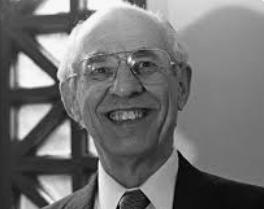
Analytic philosophers - both in the 'constructivist' camp and in the camp that studies 'the ordinary use of words' - are disturbingly unanimous in regarding 2-valued logic as having a privileged position: privileged, not just in the sense of corresponding to the way we do speak, but in the sense of having no serious rival for logical reasons. If the foregoing analysis is correct, this is a prejudice of the same kind as the famous prejudice in favor of a privileged status for Euclidean geometry (a prejudice that survives in the tendency to cite 'space has three dimensions' as some kind of 'necessary' truth). One can go over from a 2-valued to a 3-valued logic without totally changing the meaning of 'true' and 'false'; and not just in silly ways, like the ones usually cited (e.g. equating truth with high probability, falsity with low probability, and middlehood with 'in between' probability).
▼
Source
source
"Three-valued logic"

2 months 3 weeks ago
Life is too full of death for death to be able to add anything to it.

3 months 3 days ago
Men that look upon my outside, perusing only my condition, and fortunes, do err in my altitude; for I am above Atlas his shoulders.
▼
Source
source
Section 11

3 months 3 weeks ago
I was seeing what Adam had seen on the morning of his creation - the miracle, moment by moment, of naked existence.
▼
Source
source
Pages 160-61

4 months 1 week ago
Therefore death is nothing to us, it matters not one jot, since the nature of the mind is understood to be mortal.
▼
Source
source
Book III, lines 830-831 (tr. Rouse)

3 weeks 2 days ago
To rule the imperial population, behold our vocation.
▼
Source
source
94
1 week 5 days ago
"What," say you, "are you giving me advice? Indeed, have you already advised yourself, already corrected your own faults? Is this the reason why you have leisure to reform other men?" No, I am not so shameless as to undertake to cure my fellow-men when I am ill myself. I am, however, discussing with you troubles which concern us both, and sharing the remedy with you, just as if we were lying ill in the same hospital.
2 months 2 weeks ago
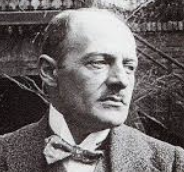
The ultimate goal of the arriviste's aspirations is not to acquire a thing of value, but to be more highly esteemed than others. He merely uses the "thing" as an indifferent occasion for overcoming the oppressive feeling of inferiority which results from his constant comparisons.
▼
Source
source
L. Coser, trans. (1973), pp. 55-56
1 month 1 week ago
Simplicity and nonviolence are the basis of an economy of wellbeing, and such an economy must be localised.
2 months 3 weeks ago
There have always been poor and working classes; and the working class have mostly been poor. But there have not always been workers and poor people living under conditions as they are today.

3 months 4 weeks ago
There is one very serious defect to my mind in Christ's moral character, and that is that He believed in hell. I do not myself feel that any person who is really profoundly humane can believe in everlasting punishment.
▼
Source
source
"The Moral Problem"

4 months 2 days ago
In reality, during the continuance of any one regulated proportion, between the respective values of the different values of the different metals in the coin, the value of the most precious metal regulates the value of the whole coin.
▼
Source
source
Chapter V, p. 50.

4 months 5 days ago
All that is under heaven, says the sage, runs one law and one fortune.
▼
Source
source
Ch. 12, tr. Cotton, rev. W. Carew Hazlitt, 1877
2 months 1 week ago
In a certain sense, everything is everywhere at all times. For every location involves an aspect of itself in every other location. Thus every spatio-temporal standpoint mirrors the world.
▼
Source
source
Ch. 5: "The Romantic Reaction", p. 128
1 week 5 days ago
A large part of mankind is angry not with the sins, but with the sinners.
▼
Source
source
De Ira (On Anger): Book 2, cap. 28, line 8

3 months 4 weeks ago
It is strange that men will talk of miracles, revelations, inspiration, and the like, as things past, while love remains.
▼
Source
source
Pearls of Thought (1881) p. 163
3 months 4 weeks ago
Capacity for the nobler feelings is in most natures a very tender plant, easily killed, not only by hostile influences, but by the mere want of sustenance; and in the majority of young persons it speedily dies away if the occupations to which their position in life has devoted them, and the society into which it has thrown them, are not favourable to keeping that higher capacity in existence.
▼
Source
source
Ch. 2
2 months 3 weeks ago
Each of us believes, quite unconsciously of course, that we alone pursue the truth, which the rest are incapable of seeking out and unworthy of attaining. This madness is so deep-rooted and so useful that it is impossible to realize what would become of each of us if it were someday to disappear.

2 months 1 week ago
Sex also concentrates the mind wonderfully, and that is why civilised man is so obsessed by it. It enables him to "savour every fraction of an inch," not merely of the act of sexual intercourse, but of living itself. But that, of course, only underlines the basic problem: after coitus, "man becomes sad," because he quickly returns to his unconcentrated and defocused state. In sexual excitement, it is the spirit itself that becomes erect, and becomes capable of penetrating the meaning of life. Normal consciousness is limp and flaccid; its attitude towards reality is defensive. This is what Sartre called contingency, that feeling of being at the mercy of chance.
▼
Source
source
pp. 45-46
2 months 1 week ago
Instead of gambling on the eternal impossibility of the revolution and on the fascist return of a war-machine in general, why not think that a new type of revolution is in the course of becoming possible, and that all kinds of mutating, living machines conduct wars, are combined and trace out a plane of consistence which undermines the plane of organization of the World and the States?
▼
Source
source
from Dialogues with Claire Parnet, p. 147 [emphasis in original].
2 months 1 week ago
Moral activity? There is scarcely such a thing possible! Everything is sketchy. The world does nothing but sketch.
2 months 3 weeks ago
Surely this voice meant our Teacher; for it is he that can collect the indications which lie scattered on all sides. A singular light kindles in his looks, when at length the high Rune lies before us, and he watches in our eyes whether the star has yet risen upon us, which is to make the Figure visible and intelligible.

5 months ago
The pride connected with knowing and sensing lies like a blinding fog over the eyes and senses of men, thus deceiving them concerning the value of existence. For this pride contains within itself the most flattering estimation of the value of knowing. Deception is the most general effect of such pride, but even its most particular effects contain within themselves something of the same deceitful character.

4 months 3 weeks ago
The dullness of fact is the mother of fiction.

4 months ago
The right of voting for representatives is the primary right by which other rights are protected. To take away this right is to reduce a man to slavery, for slavery consists in being subject to the will of another, and he that has not a vote in the election of representatives is in this case.
2 months 2 weeks ago
Now I am about to take my last voyage, a great leap in the dark.
▼
Source
source
Last words
3 months 4 weeks ago
To fear love is to fear life, and those who fear life are already three parts dead.

2 weeks 5 days ago
We shall either learn to know a Hero, a true Governor and Captain, somewhat better, when we see him; or else go on to be forever governed by the Unheroic;-had we ballot-boxes clattering at every street-corner, there were no remedy in these.
3 months 2 weeks ago
After he routed Pharnaces Ponticus at the first assault, he wrote thus to his friends: "I came, I saw, I conquered."
▼
Source
source
Cæsar
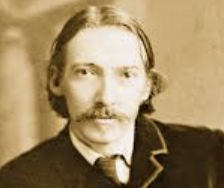
1 month 3 weeks ago
Man is a creature who lives not upon bread alone, but principally by catchwords; and the little rift between the sexes is astonishingly widened by simply teaching one set of catchwords to the girls and another to the boys.
▼
Source
source
Virginibus Puerisque, Ch. 2.
3 months 4 weeks ago
I once received a letter from an eminent logician, Mrs. Christine Ladd Franklin, saying that she was a solipsist, and was surprised that there were no others. Coming from a logician, this surprise surprised me.
▼
Source
source
Human Knowledge: Its Scope and Limits (1948), Part III, chapter II, "Solipsism", p. 196
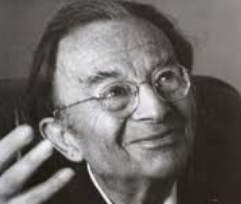
2 months 1 week ago
The two most far-reaching critical theories at the beginning of the latest phase of industrial society were those of Marx and Freud. Marx showed the moving powers and the conflicts in the social-historical process. Freud aimed at the critical uncovering of the inner conflicts. Both worked for the liberation of man, even though Marx's concept was more comprehensive and less time-bound than Freud's.
▼
Source
source
The Art of Being" Pt. 3
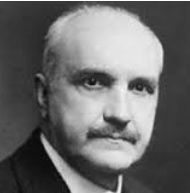
2 months 2 weeks ago
All his life he [the American] jumps into the train after it has started and jumps out before it has stopped; and he never once gets left behind, or breaks a leg.
▼
Source
source
"Materialism and Idealism" p. 175 (Hathi Trust)
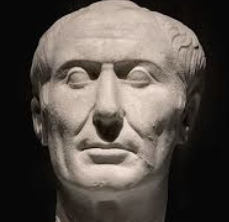
1 month 3 weeks ago
Necessity gives the law without itself acknowledging one.
▼
Source
source
Maxim 444
3 months 4 weeks ago
The teaching of my philosophy... that our whole existence is something which had better not have been, and that to disown and disclaim it is the highest wisdom.
▼
Source
source
Ch 1
3 months 4 weeks ago
The directing motive, the end and aim of capitalist production, is to extract the greatest possible amount of surplus value, and consequently to exploit labor-power to the greatest possible extent.
▼
Source
source
Vol. I, Ch. 13, pg. 363.
1 week 2 days ago
Doctors try to get rid of their patients - clergymen try to get them hooked on the medicine so that they will become addicts to the church.
2 months 2 weeks ago
In Walt Whitman democracy is carried into psychology and morals. The various sights, moods, and emotions are given each one vote; they are declared to be all free and equal, and the innumerable commonplace moments of life are suffered to speak like the others. Those moments formerly reputed great are not excluded, but they are made to march in the ranks with their companions-plain foot-soldiers and servants of the hour.
▼
Source
source
p. 53
2 months 3 weeks ago
Creation is in fact a fault, man's famous sin thereby appearing as a minor version of a much graver one. What are we guilty of, except of having followed, more or less slavishly, the Creator's example? Easy to recognize in ourselves the fatality which was His: not for nothing have we issued from the hands of a wicked and woebegone god, a god accursed.
3 months 4 weeks ago
Money is itself a product of circulation.
▼
Source
source
Notebook VI, The Chapter on Capital, p. 579.

2 months 4 weeks ago
To kill someone for committing murder is a punishment incomparably worse than the crime itself. Murder by legal sentence is immeasurably more terrible than murder by brigands.
▼
Source
source
Part 1, Chapter 2
4 months 2 days ago
If a workman can conveniently spare those three halfpence, he buys a pot of porter. If he cannot, he contents himself with a pint, and, as a penny saved is a penny got, he thus gains a farthing by his temperance.
▼
Source
source
Chapter II, Part II, Article IV, p. 951.

4 months 5 days ago
The Law continues to exist and to function. But it no longer exists for me.
▼
Source
source
Chapter 2, Verse 19
CivilSimian.com created by AxiomaticPanic, CivilSimian, Kalokagathia