

1 month 2 weeks ago
Rollers on the beach, wind in the pines, the slow flapping of herons across sand dunes, drown out the hectic rhythms of city and suburb, time tables and schedules. One falls under their spell, relaxes, stretches out prone. One becomes, in fact, like the element on which one lies, flattened by the sea; bare, open, empty as the beach, erased by today's tides of all yesterday's scribblings.

2 months 4 weeks ago
Unto whomsoever much is given, of him shall be much required: and to whom men have committed much, of him they will ask the more.
▼
Source
source
12:48
3 months 4 days ago
Of escape there are but three methods - two chimerical and a third real. The first two are the dram-shop and the church, debauchery of the body or debauchery of the mind; the third is social revolution.
1 month 4 weeks ago
There is simply too much to think about. It is hopeless - too many kinds of special preparation are required. In electronics, in economics, in social analysis, in history, in psychology, in international politics, most of us are, given the oceanic proliferating complexity of things, paralyzed by the very suggestion that we assume responsibility for so much. This is what makes packaged opinion so attractive.
▼
Source
source
There Is Simply Too Much to Think About (1992), pp. 173-174

4 months 2 weeks ago
Few men have been admired by their own domestics.
▼
Source
source
Book iii. Chap 2. Of Repentance


1 month 2 weeks ago
If you look at the graph of the growth of G.M.O.s, the growth of application of glyphosate and autism, it's literally a one-to-one correspondence. And you could make that graph for kidney failure, you could make that graph for diabetes, you could make that graph even for Alzheimer's.
▼
Source
source
On the correlation of autism, kidney failure, diabetes and Alzheimer's with GMOs and glyphosate, as quoted in "Seeds of Doubt" by Michael Specter, The New Yorker

3 months 2 days ago
Tragic paradox of freedom: the mediocre men who alone make its exercise possible cannot guarantee its duration.

6 days ago
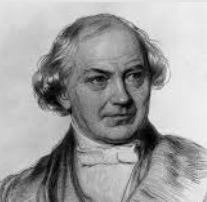
Discovery depends upon the previous cultivation or natural clearness of the appropriate Idea, and therefore no discovery is the work of accident.
4 months 6 days ago
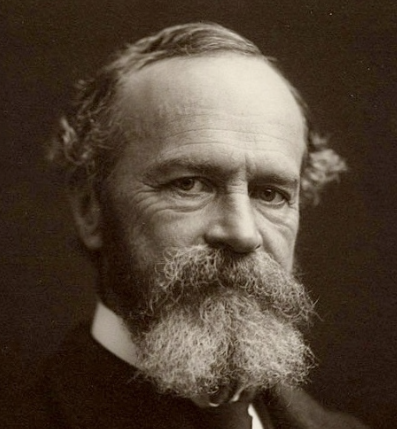
First, you know, a new theory is attacked as absurd; then it is admitted to be true, but obvious and insignificant; finally it is seen to be so important that its adversaries claim that they themselves discovered it.
▼
Source
source
Lecture VI, Pragmatism's Conception of Truth
3 months 3 weeks ago
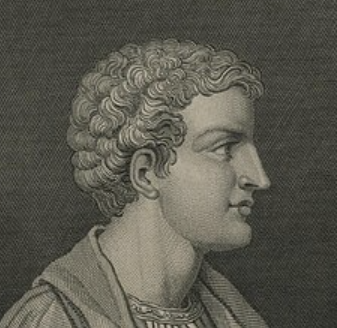
This to the right, that to the left hand strays, and all are wrong, but wrong in different ways.
▼
Source
source
Book II, satire iii, line 50 (trans. Conington)


4 months 1 week ago
I feel like that intellectual but plain-looking lady who was warmly complimented on her beauty. In accepting his Nobel Prize, in December 1950; Russell denied that he had contributed anything in particular to literature.
▼
Source
source
Quoted in LIFE, Editorials: "A great mind is still annoying and adorning our age", 26 May 1952
2 weeks 2 days ago
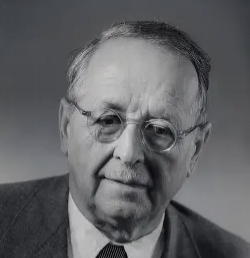
This letter, if judged by the novelty and profundity of ideas it contains, is perhaps the most substantial piece of writing in the whole literature of mankind.
▼
Source
source
Symmetry (1952), quote on p. 138; referring to a letter by Évariste Galois to Auguste Chevalier from May 29, 1832, two days before Galois' death, containing a testamentary summary of Galois' discoveries

4 months 5 days ago
It is the magician's bargain: give up our soul, get power in return. But once our souls, that is, ourselves, have been given up, the power thus conferred will not belong to us. We shall in fact be the slaves and puppets of that to which we have given our souls.
2 months 2 days ago
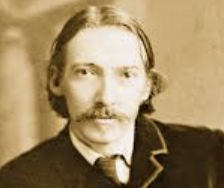
They say cowardice is infectious; but then argument is, on the other hand, a great emboldener.
▼
Source
source
Ch. 4, The Sea Chest.

4 months 1 week ago
Tis evident, that sympathy, or the communication of passions, takes place among animals, no less than among men. Fear, anger, courage and other affections are frequently communicated from one animal to another [...] And 'tis remarkable, that tho' almost all animals use in play the same member, and nearly the same action as in fighting; a lion, a tyger, a cat their paws; an ox his homs; a dog his teeth; a horse his heels: Yet they most carefully avoid harming their companion, even tho' they have nothing to fear from his resentment; which is an evident proof of the sense brutes have of each other's pain and pleasure.
▼
Source
source
Part 2, Section 12

2 months 4 weeks ago
The capabilities (intellectual and material) of contemporary society are immeasurably greater than ever before-which means that the scope of society's domination over the individual is immeasurably greater than ever before. Our society distinguishes itself by conquering the centrifugal social forces with Technology rather than Terror, on the dual basis of an overwhelming efficiency and an increasing standard of living.
▼
Source
source
p. xliii

3 weeks 6 days ago
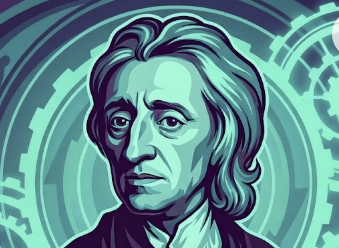
Again, and again, we say, the great, the creative and enduring is ever a secret to itself; only the small, the barren and transient is otherwise.
▼
Source
source
Characteristics.
4 months 1 week ago
The law of faith, being a covenant of free grace, God alone can appoint what shall be necessarily believed by everyone whom He will justify. What is the faith which He will accept and account for righteousness, depends wholly on his good pleasure. For it is of grace, and not of right, that this faith is accepted. And therefore He alone can set the measures of it: and what he has so appointed and declared is alone necessary. No-body can add to these fundamental articles of faith; nor make any other necessary, but what God himself hath made, and declared to be so. And what these are which God requires of those who will enter into, and receive the benefits of the new covenant, has already been shown. An explicit belief of these is absolutely required of all those to whom the gospel of Jesus Christ is preached, and salvation through his name proposed.
▼
Source
source
§ 156
2 months 4 days ago
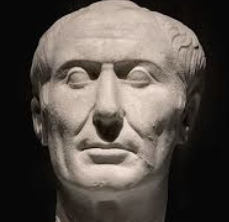
He sleeps well who knows not that he sleeps ill.
▼
Source
source
Maxim 77

4 months 6 days ago
Great men, great nations, have not been boasters and buffoons, but perceivers of the terror of life, and have manned themselves to face it.
▼
Source
source
Fate
3 months 4 days ago
No theory, no ready-made system, no book that has ever been written will save the world. I cleave to no system. I am a true seeker.
▼
Source
source
As quoted in Michael Bakunin (1937) by E.H. Carr, p. 175
4 months 2 days ago
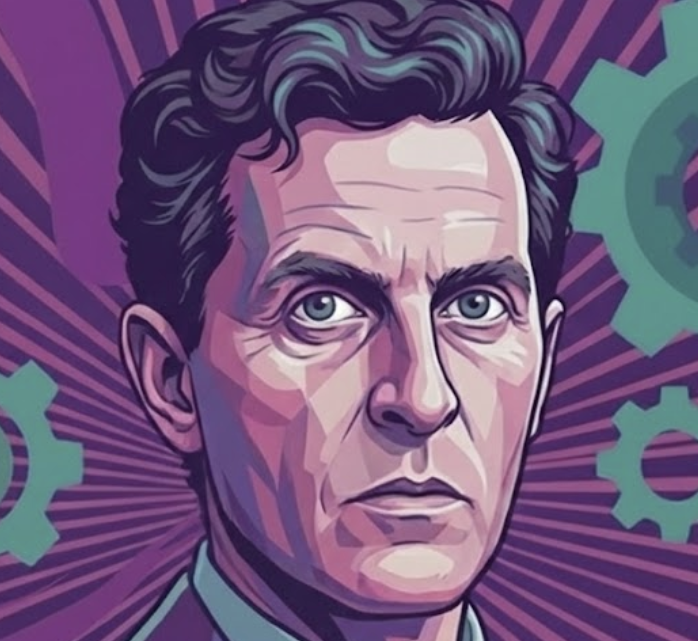
I am showing my pupils details of an immense landscape which they cannot possibly know their way around.
▼
Source
source
p. 56e
2 months 2 weeks ago
A clever child brought up with a foolish one can itself become foolish. Man is so perfectable and corruptible he can become a fool through good sense.
▼
Source
source
F 69
1 month 2 days ago
Ignorant as regards the unity of man with himself, the world is still more ignorant in respect to the two other unities - unity of man with God and the universe.
4 months 5 days ago
Inequalities are permissible when they maximize, or at least all contribute to, the long term expectations of the least fortunate group in society.
▼
Source
source
Chapter III, Section 26, pg. 151

1 month 1 week ago
Though it is often assumed that naturalism must be hostile to religion, the opposite is true. Enemies of religion think of it as an intellectual error, which humanity will eventually grow out of. It is hard to square this view with Darwinian science - why should religion be practically universal, if it has no evolutionary value?
▼
Source
source
Sweet Morality (p. 224)
3 months 4 days ago
Ministers become a sort of miniature kings in their turn. Though they have the greatest opportunity of observing the impotence and unmeaningness of the character, they envy it. It is their trade perpetually to extol the dignity and importance of the master they serve; and men cannot long anxiously endeavor to convince others of the truth of any proposition without becoming half convinced themselves.
▼
Source
source
Book V, Ch. 5
2 months 2 weeks ago
Administration is not unlike play-acting. The task of the good actor is to know and play his role, although different roles may differ greatly in content. The effectiveness of the performance will depend on the effectiveness of the play and the effectiveness with which it is played. The effectiveness of the administrative process will vary with the effectiveness of the organization and the effectiveness with which its members play their parts.
▼
Source
source
p. 252; As cited in: Herbert Simon (1996) The Sciences of the Artificial. page xii.
2 months 2 weeks ago
One cannot demand of a scholar that he show himself a scholar everywhere in society, but the whole tenor of his behavior must none the less betray the thinker, he must always be instructive, his way of judging a thing must even in the smallest matters be such that people can see what it will amount to when, quietly and self-collected, he puts this power to scholarly use.
▼
Source
source
J 85

3 months 1 week ago
The principle of equality does not destroy the imagination, but lowers its flight to the level of the earth.
▼
Source
source
Book Three, Chapter XI.
4 months 1 week ago
It is the duty of every patriot to protect his country from its government.
▼
Source
source
Edward Abbey, "A patriot must always be ready to defend his country against his government." as written in "A Voice Crying in the Wilderness" (Vox Clamantis en Deserto): Notes from a Secret Journal (1990), ISBN 0312064888
1 month 6 days ago
If it does not upset, it is not philosophy.
2 months 4 days ago
It takes a long time to bring excellence to maturity.
▼
Source
source
Maxim 780
3 weeks 6 days ago
We must now ask how changes of this sort can come about, considering first discoveries, or novelties of fact, and then inventions, or novelties of theory. That distinction between discovery and invention or between fact and theory will, however, immediately prove to be exceedingly artificial.
▼
Source
source
p. 52
3 months 2 days ago
The feeling of being ten thousand years behind, or ahead, of the others, of belonging to the beginnings or to the end of humanity...
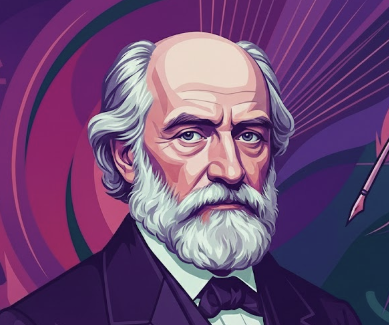
4 months 1 week ago
Correct and accurate conclusions may be arrived at if we carefully observe the relation of the spheres of concepts, and only conclude that one sphere is contained in a third sphere, when we have clearly seen that this first sphere is contained in a second, which in its turn is contained in the third. On the other hand, the art of sophistry lies in casting only a superficial glance at the relations of the spheres of the concepts, and then manipulating these relations to suit our purposes, generally in the following way: - When the sphere of an observed concept lies partly within that of another concept, and partly within a third altogether different sphere, we treat it as if it lay entirely within the one or the other, as may suit our purpose.
▼
Source
source
Vol. I, Ch. 10, as translated by R. B. Haldane
4 months 1 week ago
Power, like vanity, is insatiable. Nothing short of omnipotence could satisfy it completely. And as it is especially the vice of energetic men, the causal efficacy of love of power is out of all proportion to its frequency. It is, indeed, by far the strongest motive in the lives of important men. Love of power is greatly increased by the experience of power, and this applies to petty power as well as to that of potentates.

2 months 4 days ago
All words at every level of prose and poetry and all devices of language and speech derive their meaning from figure / ground relation.
▼
Source
source
quoted in McLuhan: A Guide for the Perplexed by W. Terrence Gordon, 2010, p. 167
3 weeks 6 days ago
The barrenest of all mortals is the sentimentalist.
▼
Source
source
Characteristics.
2 months 4 days ago
Manuscript culture is conversational if only because the writer and his audience are physically related by the form of publication as performance.
▼
Source
source
(p. 96)
2 months 4 weeks ago
Beauty is a pledge of the possible conformity between the soul and nature, and consequently a ground of faith in the supremacy of the good.
▼
Source
source
Pt. IV, Expression; § 67: "Conclusion.", p. 270
2 months 2 weeks ago
Nietzsche ... did not settle for a demure civic conversation in the style of Richard Rorty's ironist, or saunter off with the smug nod that registers a deconstructive job neatly done. He was aware that his own criticisms and exposures owed both their motivation and their effect to the spirit of truthfulness. His aim was to see how far the values of truth could be revalued, how they might be understood in a perspective quite different from the Platonic and Christian metaphysics which had provided their principal source in the West up to now.
▼
Source
source
p. 18
2 months 2 days ago
I am often accused of expressing contempt and despising religious people. I don't despise religious people, I despise what they stand for. I like to quote the British journalist Johann Hari who said, "I have so much respect for you, that I cannot respect your ridiculous ideas."
▼
Source
source
Reason Rally, National Mall, Washington, DC, 2012-03-24 Richard Dawkins and his Foundation at the Reason Rally, YouTube, 7 April 2012
2 months 2 days ago
There is no foreign land; it is the traveller only that is foreign, and now and again, by a flash of recollection, lights up the contrasts of the ear.
▼
Source
source
Pt. II, ch. III.

5 months 4 days ago
What, then, of human activities? Is humankind itself hastening its own end? Man has, for instance, been burning carbon-containing fuel — wood, coal, oil, gas — at a steadily accelerating rate. All these fuels form carbon dioxide. Some is absorbed by plants and the oceans but not as fast as it is produced. This means the carbon dioxide content of the air is going up — slightly but nevertheless up. Carbon dioxide retains heat, and even a small rise means a warming of the Earth's atmosphere. This may result in the melting of the polar ice caps with unusual speed, flooding the world before we have learned climate control. In reverse, our industrial civilization is making our atmosphere dustier so that it reflects more sunlight away and cools the Earth slightly — thus making possible a glacial advance in a few centuries, also before we have learned climate control.
3 weeks 6 days ago
Find in any country the Ablest Man that exists there; raise him to the supreme place, and loyally reverence him: you have a perfect government for that country; no ballot-box, parliamentary eloquence, voting, constitution-building, or other machinery whatsoever can improve it a whit.
4 months 2 days ago
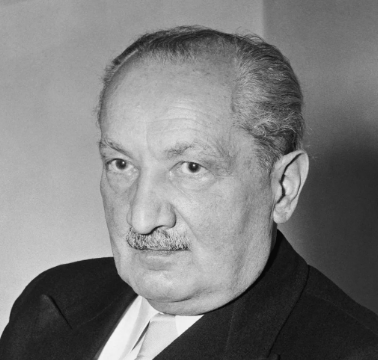
The human body is essentially something other than an animal organism.
▼
Source
source
Letter on Humanism
CivilSimian.com created by AxiomaticPanic, CivilSimian, Kalokagathia