


2 days ago
Never regard something as doing you good if it makes you betray a trust or lose your sense of shame or makes you show hatred, suspicion, ill-will or hypocrisy or a desire for things best done behind closed doors.
▼
Source
source
III. 7, trans. Gregory Hays
2 days ago
Does anything genuinely beautiful need supplementing? No more than justice does-or truth, or kindness, or humility. Are any of those improved by being praised? Or damaged by contempt? Is an emerald suddenly flawed if no one admires it? Or gold, or ivory, or purple? Lyres? Knives? Flowers? Bushes?
▼
Source
source
(Hays translation) IV, 20

5 days ago
The object of walking is to relax the mind. You should therefore not permit yourself even to think while you walk; but divert your attention by the objects surrounding you. Walking is the best possible exercise. Habituate yourself to walk very far. The Europeans value themselves on having subdued the horse to the uses of man; but I doubt whether we have not lost more than we have gained, by the use of this animal. No one has occasioned so much, the degeneracy of the human body. An Indian goes on foot nearly as far in a day, for a long journey, as an enfeebled white does on his horse; and he will tire the best horses. There is no habit you will value so much as that of walking far without fatigue.

4 months 1 week ago
When at first thought we think of a creator our ideas appear to us undefined and confused; but if we reason philosophically, those ideas can be easily arranged and simplified. It is a Being, whose power is equal to his will.
▼
Source
source
A Discourse, &c. &c.

4 months 1 week ago
They should always be heard, and fairly and kindly answer'd, when they ask after any thing they would know, and desire to be informed about. Curiosity should be as carefully cherish'd in children, as other appetites suppress'd.
▼
Source
source
Sec. 108

4 months 5 days ago
I am against bigness and greatness in all their forms, and with the invisible molecular moral forces that work from individual to individual, stealing in through the crannies of the world like so many soft rootlets, or like the capillary oozing of water, and yet rending the hardest monuments of man's pride, if you give them time. The bigger the unit you deal with, the hollower, the more brutal, the more mendacious is the life displayed. So I am against all big organizations as such, national ones first and foremost; against all big successes and big results; and in favor of the eternal forces of truth which always work in the individual and immediately unsuccessful way, under-dogs always, till history comes, after they are long dead, and puts them on top. - You need take no notice of these ebullitions of spleen, which are probably quite unintelligible to anyone but myself.
▼
Source
source
Letter to Mrs. Henry Whitman (7 June 1899), in The Letters of William James, ed. Henry James, vol. 2, p. 90, 1926

4 months ago
Critical social science attempts to determine when theoretical statements grasp invariant regularities of social action as such and when they express ideologically frozen relations of dependence that can in principle be transformed.
▼
Source
source
p. 310 as cited in: Dominick LaCapra (1983) Rethinking Intellectual History: Texts, Contexts, Language. p. 170

3 months 1 week ago
And surely, he that hath taken the true Altitude of Things, and rightly calculated the degenerate state of this Age, is not like to envy those that shall live in the next, much less three or four hundred Years hence, when no Man can comfortably imagine what Face this World will carry.
2 months 4 weeks ago
My atheism, like that of Spinoza, is true piety towards the universe and denies only gods fashioned by men in their own image, to be servants of their human interests.
▼
Source
source
"On My Friendly Critics"

4 months 5 days ago
Genius is always sufficiently the enemy of genius by over influence.
▼
Source
source
par. 19
3 weeks 4 days ago
Sixty years ago I knew everything. Now I know nothing. Education is a progressive discovery of our own ignorance.
▼
Source
source
Quoted in "Teachers: The Essence of the Centuries", Time magazine, 13 August 1965

4 months 2 weeks ago
You venerate the saints, and you take pleasure in touching their relics. But you disregard their greatest legacy, the example of a blameless life. No devotion is more pleasing to Mary than the imitation of Mary's humility. No devotion is more acceptable and proper to the saints than striving to imitate their virtues.
▼
Source
source
The Erasmus Reader (1990), p. 144.
4 days ago
Those who are most to be considered, those for whose help the struggle must be made, if labor is to be enfranchised, and social justice won, are those least able to help or struggle for themselves, those who have no advantage of property or skill or intelligence, - the men and women who are at the very bottom of the social scale. In securing the equal rights of these we shall secure the equal rights of all. Hence it is, as Mazzini said, that it is around the standard of duty rather than around the standard of self-interest that men must rally to win the rights of man. And herein may we see the deep philosophy of Him who bade men love their neighbors as themselves. In that spirit, and in no other, is the power to solve social problems and carry civilization onward.
▼
Source
source
Ch. 21 : Conclusion

4 months 6 days ago
The application of algebra to geometry... far more than any of his metaphysical speculations, has immortalized the name of Descartes, and constitutes the greatest single step ever made in the progress of the exact sciences.
▼
Source
source
An Examination of Sir William Hamilton's Philosophy (1865) as quoted in 5th ed. (1878) p. 617.

4 months 3 weeks ago
Perfect is the virtue which is according to the Mean! Rare have they long been among the people, who could practice it!
2 weeks 6 days ago
Men who prefer any load of infamy, however great, to any pressure of taxation, however light.
▼
Source
source
The Humble Petition of the Rev. Sydney Smith to the House of Congress at Washington (May 18, 1843), in Letters on American Debts (London: Longman, Brown, Green, & Longmans, 1843), p. 9

4 months 1 week ago
It is truly a marvelous thing to consider to what greatness Athens arrived in the space of one hundred years after she freed herself from the tyranny of Pisistratus; but, above all, it is even more marvelous to consider the greatness Rome reached when she freed herself from her kings. The reason is easy to understand, for it is the common good and not private gain that makes cities great. Yet, without a doubt, this common good is observed only in republics, for in them everything that promotes it is practised, and however much damage it does to this or that private individual, those who benefit from the said common good are so numerous that they are able to advance in spite of the inclination of the few citizens who are oppressed by it.
▼
Source
source
Book 2, Chapter 2
1 month 3 weeks ago
As free constitutions are the strongest supports of governments, social order is the best safeguard of freedom. Liberty has no enemies so pernicious as those misguided friends whose ardour in her cause leads them to outrage the moral sense of mankind, and to arm against her the interests and feelings which are her natural allies. Even the prejudices of nations should be respected.
▼
Source
source
'Essay on the Life and Character of King William III' (1822), written for the Greaves Historical Prize at Cambridge, quoted in The Times Literary Supplement (1 May 1969), p. 469
2 months 1 day ago
Times are changed with him who marries; there are no more by-path meadows, where you may innocently linger, but the road lies long and straight and dusty to the grave. Idleness, which is often becoming and even wise in the bachelor, begins to wear a different aspect when you have a wife to support.
▼
Source
source
Virginibus Puerisque, Ch. 2.

2 weeks 6 days ago
A great fortune is a great slavery.
▼
Source
source
From Ad Polybium De Consolatione (Of Consolation, To Polybius), chap. VI, line 5
6 days ago
A woman's body is a dark and monstrous mystery;between her supple thighs a heavy whirlpool swirls,two rivers crash, and woe to him who slips and falls!
▼
Source
source
Odysseus, Book II, line 1017

5 days ago
It is wrong to condemn people for doing a thing and then offer no alternative but failure. A person could get mad about that.
▼
Source
source
"The Problem of Tobacco"

2 months 3 weeks ago
And thus the soul pities God and feels itself pitied by him; loves Him and feels loved by Him, sheltering its misery in the bosom of the eternal and infinite misery, which, in eternalizing itself and infinitizing itself, is the supreme happiness itself.
2 months 3 days ago
Practice is the best of all instructors.
▼
Source
source
Maxim 439

2 months 3 weeks ago
Nietzsche, driven by the absolute demand of his existential truthfulness, could not abide the bourgeois world, even when its representative had human nobility.

4 months ago
Between the fine point of the brush and the steely gaze, the scene is about to yield up its volume.
▼
Source
source
Las Meninas

1 month 2 weeks ago
The world's biggest power is the youth and beauty of a woman.

2 months 2 weeks ago
People do not go into the company of their fellow-creatures for what would seem a very sufficient reason, namely, that they have something to say to them, or something that they want to hear from them; but in the vague hope that they may find something to say.
3 weeks 6 days ago
It is a course which perhaps would not have been necessary had it been possible to form a state composed of wise men, but as every multitude is fickle, full of lawless desires, unreasoned passion, and violent anger, the multitude must be held in by invisible terrors and suchlike pageantry. For this reason I think, not that the ancients acted rashly and at haphazard in introducing among the people notions concerning the gods and beliefs in the terrors of hell, but that the moderns are most rash and foolish in banishing such beliefs.
2 months 3 weeks ago
The demagogues, impresarios of alteracion, who have already caused the death of several civilizations, harass men so that they shall not reflect, see to it that they are kept herded together in crowds so that they cannot reconstruct their individuality in the one place where it can be reconstructed, which is in solitude.
▼
Source
source
p. 33
5 days ago
It has always been denied by the republican party in this country, that the Constitution had given the power of incorporation to Congress. On the establishment of the Bank of the United States, this was the great ground on which that establishment was combated; and the party prevailing supported it only on the argument of its being an incident to the power given them for raising money.
▼
Source
source
Letter to Dr. Maese, 1809. ME 12:231

3 months 1 day ago
To think we could have spared ourselves from living all that we have lived!
5 days ago
I sincerely rejoice at the acceptance of our new Constitution by nine States. It is a good canvas, on which some strokes only want retouching. What these are, I think are sufficiently manifested by the general voice from north to south, which calls for a bill of rights.
▼
Source
source
Letter to James Madison (July 31, 1788); reported in Memoir, correspondence, and miscellanies from the papers of Thomas Jefferson, Volumes 1-2 (1829), p. 343
4 months 5 days ago
By the rude bridge that arched the flood, Their flag to April's breeze unfurled, Here once the embattled farmers stood, And fired the shot heard round the world. The foe long since in silence slept; Alike the conqueror silent sleeps; And Time the ruined bridge has swept Down the dark stream which seaward creeps. On this green bank, by this soft stream, We set to-day a votive stone; That memory may their deed redeem, When, like our sires, our sons are gone. Spirit, that made those heroes dare, To die, and leave their children free, Bid Time and Nature gently spare The shaft we raise to them and thee.
▼
Source
source
Concord Hymn, 1837

2 months 1 day ago
Contrary to earlier prejudices, there is nothing inherently progressive about evolution.
▼
Source
source
Chapter 7 "Constructive Evolution" (p. 178)

2 months 2 weeks ago
The mystical impulse in men is somehow a desire to possess the universe. In women, it's a desire to be possessed.
▼
Source
source
p. 108
4 months 1 week ago
Fear of evil is greater than the evil itself.
▼
Source
source
Act III, scene xi
4 months 1 week ago
Childish and altogether ludicrous is what you yourself are and all philosophers; and if a grown-up man like me spends fifteen minutes with fools of this kind, it is merely a way of passing the time. I've now got more important things to do. Goodbye!
▼
Source
source
Thrasymachus, in On the Indestructibility of our Essential Being by Death, in Essays and Aphorisms (1970) as translated by R. J. Hollingdale, p. 76
2 months 2 weeks ago
At the time of its initial publication, Public Administration helped to define this field of study and practice by introducing two major new emphases: an orientation toward human behavior and human relations in organizations, and an emphasis on the interaction between administration, politics, and policy. Without neglecting more traditional concerns with organization structure, Simon, Thompson, and Smithburg viewed administration in its behavioral and political contexts. The viewpoints they express still are at the center of public administration's concerns.
▼
Source
source
Book abstract, 1991


2 months 2 weeks ago
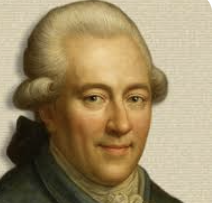
Prejudices are so to speak the mechanical instincts of men: through their prejudices they do without any effort many things they would find too difficult to think through to the point of resolving to do them.
▼
Source
source
A 58
3 months 3 weeks ago
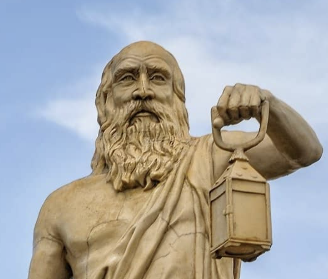
When asked why people give to beggars but not to philosophers, he replied, 'Because they expect they may become lame and blind, but never that they will become philosophers.'
▼
Source
source
Diogenes Laërtius, vi. 56, as reported in Diogenes the Cynic: Sayings and Anecdotes as translated by Robin Hard (Oxford: 2012), p. 18
4 months 5 days ago
A third illusion haunts us, that a long duration, as a year, a decade, a century, is valuable. But an old French sentence says, "God works in moments," - "En peu d'heure Dieu labeure." We ask for long life, but 't is deep life, or grand moments, that signify. Let the measure of time be spiritual, not mechanical. Life is unnecessarily long. Moments of insight, of fine personal relation, a smile, a glance, - what ample borrowers of eternity they are! Life culminates and concentrates; and Homer said, "The Gods ever give to mortals their appointed share of reason only on one day."
▼
Source
source
Works and Days
2 months 2 weeks ago
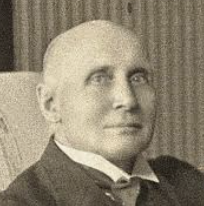
It is a profoundly erroneous truism, repeated by all copy-books and by eminent people when they are making speeches, that we should cultivate the habit of thinking of what we are doing. The precise opposite is the case. Civilization advances by extending the number of important operations which we can perform without thinking about them. Operations of thought are like cavalry charges in a battle - they are strictly limited in number, they require fresh horses, and must only be made at decisive moments.
▼
Source
source
ch. 5.
4 months 1 week ago
Reading is merely a surrogate for thinking for yourself; it means letting someone else direct your thoughts. Many books, moreover, serve merely to show how many ways there are of being wrong, and how far astray you yourself would go if you followed their guidance. You should read only when your own thoughts dry up, which will of course happen frequently enough even to the best heads; but to banish your own thoughts so as to take up a book is a sin against the holy ghost; it is like deserting untrammeled nature to look at a herbarium or engravings of landscapes.
▼
Source
source
Vol. 2, Ch. 22, § 261
4 months 2 weeks ago
Let me mention another requirement for a better understanding of Holy Scripture. I would suggest that you read those commentators who do not stick so closely to the literal sense. The ones I would recommend most highly after St. Paul himself are Origen, Ambrose, Jerome, and Augustine. Too many of our modern theologians are prone to a literal interpretation, which they subtly misconstrue.
▼
Source
source
p.37

2 months 2 weeks ago
The period of the actual revolution, the so-called transitory stage, must be the introduction, the prelude to the new social conditions. It is the threshold to the NEW LIFE, the new HOUSE OF MAN AND HUMANITY. As such it must be of the spirit of the new life, harmonious with the construction of the new edifice.

4 months 6 days ago
We have, in fact, two kinds of morality side by side; one which we preach but do not practise, and another which we practise but seldom preach.
▼
Source
source
Ch. 8: Eastern and Western Ideals of Happiness
5 days ago
Of all the systems of morality, ancient or modern, which have come under my observation, none appear to me so pure as that of Jesus. He who follows this steadily need not, I think, be uneasy, although he cannot comprehend the subtleties and mysteries erected on his doctrines by those who, calling themselves his special followers and favorites, would make him come into the world to lay snares for all understandings but theirs. These metaphysical heads, usurping the judgment seat of God, denounce as his enemies all who cannot perceive the Geometrical logic of Euclid in the demonstrations of St. Athanasius, that three are one, and one is three; and yet that the one is not three nor the three one.
▼
Source
source
Letter to William Canby
3 months 3 days ago
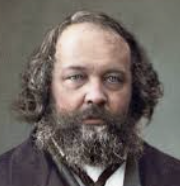
We are firmly convinced that the most imperfect republic is a thousand times better than the most enlightened monarchy. In a republic, there are at least brief periods when the people, while continually exploited, is not oppressed; in the monarchies, oppression is constant. The democratic regime also lifts the masses up gradually to participation in public life--something the monarchy never does. Nevertheless, while we prefer the republic, we must recognise and proclaim that whatever the form of government may be, so long as human society continues to be divided into different classes as a result of the hereditary inequality of occupations, of wealth, of education, and of rights, there will always be a class-restricted government and the inevitable exploitation of the majorities by the minorities. The State is nothing but this domination and this exploitation, well regulated and systematised.
CivilSimian.com created by AxiomaticPanic, CivilSimian, Kalokagathia