

2 weeks 6 days ago
It is, they say, not Russia that plans aggression but, on the contrary, the decaying capitalist democracies. Russia wants merely to defend its own independence. This is an old and well-tried method of justifying aggression. Louis XIV and Napoleon I, Wilhelm II and Hitler were the most peace-loving of all men. When they invaded foreign countries, they did so only in just self-defence. Russia was as much menaced by Estonia or Latvia as Germany was by Luxemburg or Denmark.

3 months 5 days ago
They defend their errors as if they were defending their inheritance.
2 months 2 weeks ago
Sex also concentrates the mind wonderfully, and that is why civilised man is so obsessed by it. It enables him to "savour every fraction of an inch," not merely of the act of sexual intercourse, but of living itself. But that, of course, only underlines the basic problem: after coitus, "man becomes sad," because he quickly returns to his unconcentrated and defocused state. In sexual excitement, it is the spirit itself that becomes erect, and becomes capable of penetrating the meaning of life. Normal consciousness is limp and flaccid; its attitude towards reality is defensive. This is what Sartre called contingency, that feeling of being at the mercy of chance.
▼
Source
source
pp. 45-46
3 months 4 weeks ago
Whatever the poverty of our knowledge in this respect, it is certain that the question of the sign is itself more or less, or in any event something other, than a sign of the times. To dream of reducing it to a sign of the times is to dream of violence.
▼
Source
source
Force and Signification

4 months 1 week ago
The education of the common people requires, perhaps, in a civilized and commercial society, the attention of the public more than that of people of some rank and fortune.
▼
Source
source
Chapter I, Part III, p. 845.

4 months 4 days ago
There is one thing, and only one, in the whole universe which we know more about than we could learn from external observation. That one thing is Man. We do not merely observe men, we are men. In this case we have, so to speak, inside information; we are in the know.
▼
Source
source
Book I, Chapter 4, "What Lies behind the Law"

3 weeks 5 days ago
Who is there that can recognize real intellect, and do reverence to it; and discriminate it well from sham intellect, which is so much more abundant, and deserves the reverse of reverence? He that himself has it!-One really human Intellect, invested with command, and charged to reform Downing Street for us, would continually attract real intellect to those regions, and with a divine magnetism search it out from the modest corners where it lies hid. And every new accession of intellect to Downing Street would bring to it benefit only, and would increase such divine attraction in it, the parent of all benefit there and elsewhere!
3 months 3 weeks ago
The kind of equality utilitarianism supports is given by Bentham's formula...: 'everybody to count for one, and nobody for more than one'...Utilitarianism seeks to maximize happiness, and in deciding how to calculate whether happiness is being maximized, no one's pleasures or pains should count for less because they are peasants rather than aristocrats, slaves rather than slave-owners, Africans rather than Europeans, poor rather than rich, illiterates rather than doctors of philosophy, children rather than adults, females rather than males, or even, as we have seen, non-human animals rather than human beings.
▼
Source
source
p. 349
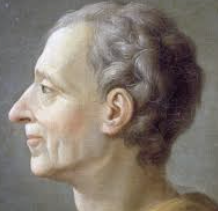
2 months 3 weeks ago
There are only two cases in which war is just: first, in order to resist the aggression of an enemy, and second, in order to help an ally who has been attacked.
▼
Source
source
No. 95. (Usbek writing to Rhedi)
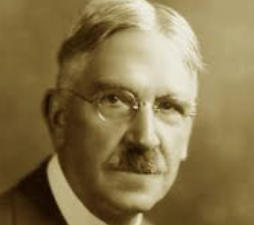
2 months 3 weeks ago
In ordinary visual perception, we see by means of light; we distinguish by means of reflected and refracted colors. But in ordinary perception, this medium of color is mixed, adulterated. While we see, we also hear; we feel pressures, and heat and cold. In a painting, color renders the scene without these alloys and impurities. They are part of the dross that is squeezed out and left behind in an act of intensified expression. The medium becomes color alone, and since color alone must now carry the qualities of movement, touch, sound, etc., that are present physically on their own account in ordinary vision, the expressiveness and energy of color are enhanced.
▼
Source
source
p. 203

3 months 3 weeks ago
Now as of old the gods give men all good things, excepting only those that are baneful and injurious and useless. These, now as of old, are not gifts of the gods: men stumble into them themselves because of their own blindness and folly.
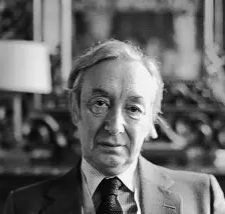
3 months 1 day ago
There is philosophy, which is about conceptual analysis - about the meaning of what we say - and there is all of this ... all of life.
▼
Source
source
Emphasizing his views on philosophy as something abstract and separate from normal life to Isaiah Berlin, in the early 1930s, as quoted in A.J. Ayer: A Life (1999) by Ben Rogers, p. 2.

2 months 3 weeks ago
And killing time is perhaps the essence of comedy, just as the essence of tragedy is killing eternity.

4 months 5 days ago
In capitalist society spare time is acquired for one class by converting the whole life-time of the masses into labour-time.
▼
Source
source
Vol. I, Ch. 17, Section IV, pg. 581.
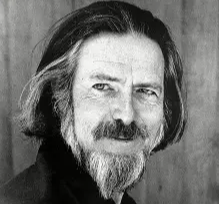
2 weeks 2 days ago
I realized that the difference that I saw between things was the same thing as their unity, because differences (borders, lines, surfaces, boundaries) don't really divide things from each other at all, they join them together, because all boundaries are held in common.
3 months 5 days ago
One that confounds good and evil is an enemy to the good.
▼
Source
source
Speech in opening the impeachment of Warren Hastings (18 February 1788), quoted in The Works of the Right Honourable Edmund Burke, Volume the Tenth (1899), p. 48

3 months 1 week ago
I should have loved freedom, I believe, at all times, but in the time in which we live I am ready to worship it.
▼
Source
source
Book Four, Chapter VII.
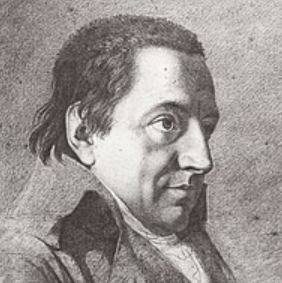
3 months 5 days ago
The Doctrine of a Perfect God; in whose nature nothing arbitrary or changeable can have a place; in whose Highest Being we all live, and in this Life may, and ought at all times to be, blessed;-this Doctrine, which ignorant men think they have sufficiently demolished when they have proclaimed it to be Mysticism, is by no means Mysticism, for it has an immediate reference to human action, and in deed to the inmost spirit which ought to inspire and guide all our actions. It can only become Mysticism when it is associated with the pretext that the insight into this truth proceeds from a certain inward and mysterious light, which is not accessible to all men, but is only bestowed upon a few favourites chosen from among the rest:-in which pretext the Mysticism consists, for it betrays a presumptuous contemplation of personal merit, and a pride in mere sensuous Individuality.
▼
Source
source
p, 122-123
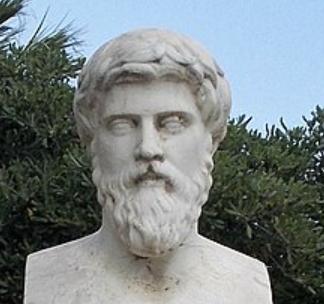
3 months 3 weeks ago
Being nimble and light-footed, his father encouraged him to run in the Olympic race. "Yes," said he, "if there were any kings there to run with me."
▼
Source
source
41 Alexander
5 months 5 days ago
[T]he infinite is in capacity. That, however, which is infinite in capacity is not to be assumed as that which is infinite in energy. ...[I]t has its being in capacity, and in division and diminution. ...[I]t is always possible to assume something beyond it. It does not, however, on this account surpass every definite magnitude; as in division it surpasses every definite magnitude, and will be less.
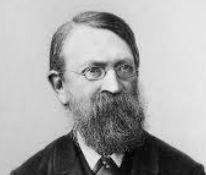
3 months 1 day ago
Not bodies produce sensations, but element-complexes (sensation-complexes) constitute the bodies. When the physicist considers the bodies as the permanent reality, the `elements' as the transient appearance, he does not realise that all `bodies' are only mental symbols for element-complexes (sensation-complexes)
▼
Source
source
p. 23, as quoted in Lenin as Philosopher: A Critical Examination of the Philosophical Basis of Leninism (1948) by Anton Pannekoek, p. 33
1 month 3 weeks ago
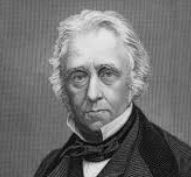
Oh! wherefore come ye forth, in triumph from the North,With your hands, and your feet, and your raiment all red? And wherefore doth your rout send forth a joyous shout? And whence be the grapes of the wine-press which ye tread?
▼
Source
source
The Battle of Naseby (1824), quoted in The Works of Lord Macaulay Complete, Vol. VIII, ed. Lady Trevelyan (1866), p. 551

2 months 2 weeks ago
What the learned world tends to offer is one second-hand scrap of information illustrating ideas derived from another second-hand scrap of information. The second-handedness of the learned world is the secret of its mediocrity.
4 days ago
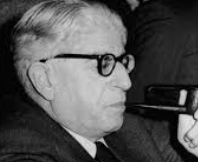
The Roman came into the Promised Land that had become less and less as promised. The rich got along quite well with the foreign occupation; it provided protection from desperate peasants and patriotic resistance fighters. It provided protection from prophets who could be labeled "agitators" now, without any qualms.
▼
Source
source
p. 121
3 months 3 weeks ago
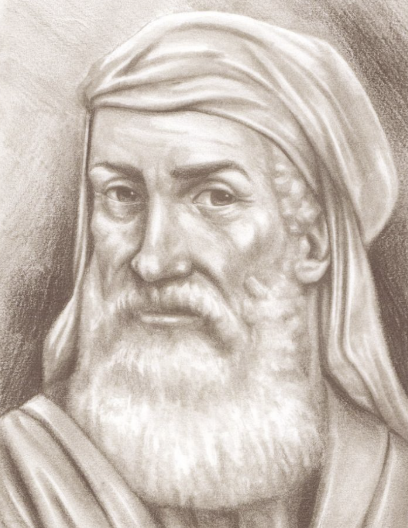
With deep roots Ether plunged into earth.
▼
Source
source
fr. 54

1 month 1 week ago
Against the many Russian thinkers influenced by Hegel who believed that history was governed by universal laws to which one could only submit, Turgenev upheld the freedom of different societies to pursue different paths of development and of individuals to pursue, even in opposition to powerful historical forces, their own goals and values. Here Turgenev endorsed the celebrated dictum of Alexander Herzen, with whom he disagreed on other matters: that history has no libretto. Human history is a realm of contingency and unpredictability, in which each generation faces conflicts that have no ideal solution.
▼
Source
source
'Isaiah Berlin: The Value of Decency' (p.105)

5 days ago
Much protest is naive; it expects quick, visible improvement and despairs and gives up when such improvement does not come. Protesters who hold out for longer have perhaps understood that success is not the proper goal. If protest depended on success, there would be little protest of any durability or significance. History simply affords too little evidence that anyone's individual protest is of any use. Protest that endures, I think, is moved by a hope far more modest than that of public success: namely, the hope of preserving qualities in one's own heart and spirit that would be destroyed by acquiescence.
▼
Source
source
A Poem of Difficult Hope
4 months 5 days ago
It is impossible to pursue this nonsense any further.
▼
Source
source
(Bastiat and Carey), p. 813 (last text page, second last line).
4 months 4 days ago
"I wish I had never been born," she said. "What are we born for?" "For infinite happiness," said the Spirit. "You can step out into it at any moment..."
▼
Source
source
Ch. 8

5 months 2 days ago
I see your vile implication. My only explanation for it is that you are criminally insane.

4 months 5 days ago
Landlords... grow richer, as it were in their sleep, without working, risking, or economizing.
▼
Source
source
Book V, Chapter 1, Section 5

2 months 3 weeks ago
When I read the catechism of the Council of Trent, it seems as though I had nothing in common with the religion there set forth.
1 week 6 days ago
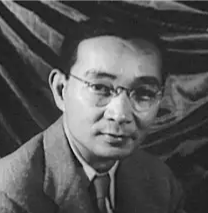
My faith in human dignity consists in the belief that man is the greatest scamp on earth. Human dignity must be associated with the idea of a scamp and not with that of an obedient, disciplined and regimented soldier.
▼
Source
source
Ch. I : The Awakening, p. 12
2 months 3 weeks ago
Having given up autonomy, reason has become an instrument.
▼
Source
source
p. 21.

2 days ago
Think not disdainfully of death, but look on it with favor; for even death is one of the things that Nature wills.
▼
Source
source
IX, 3

4 months 5 days ago
My sympathies are, of course, with the Government side, especially the Anarchists; for Anarchism seems to me more likely to lead to desirable social change than highly centralized, dictatorial Communism.
▼
Source
source
Authors Take Sides on the Spanish War (1937) edited by Nancy Cunard and publisehd by the Left Review

2 months 3 weeks ago
The Superego, in censoring the unconscious and in implanting conscience, also censors the censor.
▼
Source
source
p. 76
4 months 3 weeks ago
If a man has no humaneness what can his propriety be like? If a man has no humaneness what can his happiness be like?

4 months 6 days ago
To acquire immunity to eloquence is of the utmost importance to the citizens of a democracy.
▼
Source
source
Ch. 18: The Taming of Power

4 months 5 days ago
Man flows at once to God when the channel of purity is open.

3 months 1 day ago
I find that all my thoughts circle around God like the planets around the sun, and are as irresistibly attracted by Him. I would feel it to be the grossest sin if I were to oppose any resistance to this force.
▼
Source
source
Sources: David John Tacey (2007)

1 month ago
There is an unquestionable relationship between economic development and liberal democracy, which one can observe simply by looking around the world. But the exact nature of that relationship is more complicated than it first appeared, and is not adequately explained by any of the theories presented up to this point. The logic of modern natural science and the industrialization process it fosters does not point in a single direction in the sphere of politics, as it does in the sphere of economics. Liberal democracy is compatible with industrial maturity, and is preferred by the citizens of many industrially advanced states, but there does not appear to be a necessary connection between the two. The Mechanism underlying our directional history leads equally well to a bureaucratic-authoritarian future as to a liberal one. We will therefore have to look elsewhere in trying to understand the current crisis of authoritarianism and the worldwide democratic revolution.
▼
Source
source
p. 125
2 days ago
Unhappily, history proves that war is, in a certain sense, the habitual state of mankind, which is to say that human blood must flow without interruption somewhere or other on the globe, and that for every nation, peace is only a respite.
▼
Source
source
Chapter III, p. 23

3 months 2 weeks ago
A good Soul hath neither too great joy, nor too great sorrow: for it rejoiceth in goodness; and it sorroweth in wickedness. By the means whereof, when it beholdeth all things, and seeth the good and bad so mingled together, it can neither rejoice greatly; nor be grieved with over much sorrow.
4 months 5 days ago
Whatever crushes individuality is despotism, by whatever name it may be called, and whether it professes to be enforcing the will of God or the injunctions of men.
▼
Source
source
Ch. III: Of Individuality, As One of the Elements of Well-Being

4 months 3 weeks ago
Chance seldom interferes with the wise man; his greatest and highest interests have been, are, and will be, directed by reason throughout his whole life.

4 months 1 week ago
We think it also necessary to express our astonishment that a government, desirous of being called free, should prefer connection with the most despotic and arbitrary powers in Europe.
▼
Source
source
Address and Declaration at a Select Meeting of the Friends of Universal Peace and Liberty (August 20, 1791) p. 5
5 days ago
Our century of war, militarism, and political terror has produced great - and successful - advocates of true peace, among whom Mohandas Gandhi and Martin Luther King, Jr., are the paramount examples. The considerable success that they achieved testifies to the presence, in the midst of violence, of an authentic and powerful desire for peace and, more important, of the proven will to make the necessary sacrifices.
2 days ago
This thou must always bear in mind, what is the nature of the whole...
▼
Source
source
II, 9
CivilSimian.com created by AxiomaticPanic, CivilSimian, Kalokagathia