


3 months 3 weeks ago
The cultural treasures of the past, believed to be dead, are being made to speak, in the course of which it turns out that they propose things altogether different than what had been thought.
▼
Source
source
"Martin Heidegger at Eighty," in Heidegger and Modern Philosophy: Critical Essays (1978) by Michael Murray, p. 294
4 months 2 weeks ago
They despised everything but virtue, caring little for their present state of life, and thinking lightly of the possession of gold and other property, which seemed only a burden to them; neither were they intoxicated by luxury; nor did wealth deprive them of their self-control; but they were sober, and saw clearly that all these goods are increased by virtue and friendship with one another, whereas by too great regard and respect for them, they are lost and friendship with them.
2 months 1 week ago
At the bottom of the heart of every human being, from earliest infancy until the tomb, there is something that goes on indomitably expecting, in the teeth of all experience of crimes committed, suffered, and witnessed, that good and not evil will be done to him. It is this above all that is sacred in every human being.The good is the only source of the sacred. There is nothing sacred except the good and what pertains to it.
▼
Source
source
p. 51

4 weeks 1 day ago
Many people today hold to a Gnostic view of things without realizing the fact. Believing that human beings can be fully understood in the terms of scientific materialism, they reject any idea of free will. But they cannot give up hope of being masters of their destiny. So they have come to believe that science will somehow enable the human mind to escape the limitations that shape its natural condition. Throughout much of the world, and particularly in western countries, the Gnostic faith that knowledge can give humans a freedom no other creature can possess has become the predominant religion.
▼
Source
source
The Faith of Puppets: The Freedom of the Marionette (p. 9)
2 months 4 days ago
Moral activity? There is scarcely such a thing possible! Everything is sketchy. The world does nothing but sketch.

2 months 2 weeks ago
Sadness makes you God's prisoner.
3 months 3 weeks ago
Those truly natural wants, which reason alone, without some other help, is not able to fence against, nor keep from disturbing us. The pains of sickness and hurts, hunger, thirst, and cold, want of sleep and rest or relaxation of the part weary'd with labour, are what all men feel and the best dispos'd minds cannot but be sensible of their uneasiness; and therefore ought, by fit applications, to seek their removal, though not with impatience, or over great haste, upon the first approaches of them, where delay does not threaten some irreparable harm. The pains that come from the necessities of nature, are monitors to us to beware of greater mischiefs, which they are the forerunner of; and therefore they must not be wholly neglected, and strain'd too far. But yet the more children can be inur'd to hardships of this kind, by a wise care to make them stronger in body and mind, the better it will be for them.
▼
Source
source
Sec. 107
2 months 1 week ago
The ultimate metaphysical principle is the advance from disjunction to conjunction, creating a novel entity other than the entities given in disjunction.
▼
Source
source
Pt. I, ch. 2, sec. 2.

3 months 3 weeks ago
I do not pretend to start with precise questions. I do not think you can start with anything precise. You have to achieve such precision as you can, as you go along.
3 months 3 weeks ago
In our monogamous part of the world, to marry means to halve one's rights and double one's duties.
▼
Source
source
Vol. 2, Ch. 27, § 370 Variant translation: To marry is to halve your rights and double your duties.


3 months 3 weeks ago
Whatever is known to us by consciousness, is known beyond possibility of question. What one sees or feels, whether bodily or mentally, one cannot but be sure that one sees or feels. No science is required for the purpose of establishing such truths; no rules of art can render our knowledge of them more certain than it is in itself. There is no logic for this portion of our knowledge.
▼
Source
source
p. 4

3 months 3 weeks ago
It is error only, and not truth, that shrinks from inquiry.

2 weeks 4 days ago
All wars today tend to be netwars.
▼
Source
source
55

2 months 5 days ago
Society creates the victims that it afterwards vainly attempts to get rid of.
1 month 3 weeks ago
And so one can imagine that in amorous seduction the other is the locus of your secret - the other unknowingly holds that which you will never have the chance to know.
▼
Source
source
(p. 65)
2 months 2 weeks ago
The utmost possible regarding an individual is a statement as to some order of probability about the future. Heisenberg's principle has been seized upon as a basis for wild statements to the effect that the doctrine of arbitrary free will and totally uncaused activity are now scientifically substantiated. Its actual force and significance is generalization of the idea that the individual is a temporal career whose future cannot logically be deduced from its past.
4 months 1 week ago
The members of Christ, many though they be, are bound to one another by the ties of charity and peace under the one Head, who is our Saviour Himself, and form one man. Often their voice is heard in the Psalms as the voice of one man; the cry of one is as the cry of all, for all are one in One.
▼
Source
source
p.430

2 months 2 weeks ago
It is the most advanced industrial society which feels most directly threatened by the rebellion, because it is here that the social necessity of repression and alienation, of servitude and heteronomy is most transparently unnecessary, and unproductive in terms of human progress. Therefore the cruelty and violence mobilized in the struggle against the threat, therefore the monotonous regularity with which the people are made familiar with, and accustomed to inhuman attitudes and behavior-to wholesale killing as patriotic act.

4 months 2 weeks ago
Nobody realizes that some people expend tremendous energy merely to be normal.
2 months 3 weeks ago
In order to shake a hypothesis, it is sometimes not necessary to do anything more than push it as far as it will go.
▼
Source
source
No. 50
4 months 1 week ago
By extensively studying all learning, and keeping himself under the restraint of the rules of propriety, one may thus likewise not err from what is right.

1 month 3 weeks ago
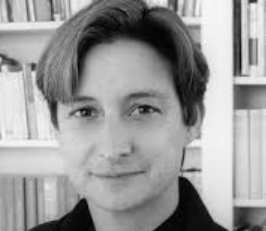
There was a brief moment after 9/11 when Colin Powell said "we should not rush to satisfy the desire for revenge." It was a great moment, an extraordinary moment, because what he was actually asking people to do was to stay with a sense of grief, mournfulness, and vulnerability.
▼
Source
source
Interview with Judith Butler. in: The Believer. May 2003
2 weeks 1 day ago
Marx sees Epicurus as a destroyer of the Greek myths and as a philosopher bringing to light the break-up of a tribal community. His system destroyed the visible heaven of the ancients as a keystone of political and religious life. Marx allies himself, so to speak, with Epicurean atheism, which he regards at this stage as a challenge by the intellectual élite to the cohorts of common sense. 'As long as a single drop of blood pulses in her world-conquering and totally free heart, philosophy will continually shout at her opponents the cry of Epicurus: "Impiety does not consist in destroying the gods of the crowd but rather in ascribing to the gods the ideas of the crowd."'
▼
Source
source
(pp. 102-3)
2 months 2 weeks ago
The endeavor to keep alive any hoary establishment beyond its natural date is often pernicious and always useless.
▼
Source
source
The French Revolution, Bk. V, ch. 4

1 week 6 days ago
Nature admits no lie.
▼
Source
source
Latter Day Pamphlet, No. 5.
2 months 2 weeks ago
To be is to be cornered.

2 months 3 weeks ago
Limiting the liberty of each by the like liberty of all, excludes a wide range of improper actions, but does not exclude certain other improper ones.
▼
Source
source
Pt. II, Ch. 4 : Derivation of a First Principle, § 4

3 months 3 weeks ago
The qualities most useful to ourselves are, first of all, superior reason and understanding, by which we are capable of discerning the remote consequences of all our actions, and of foreseeing the advantage or detriment which is likely to result from them: and secondly, self-command, by which we are enabled to abstain from present pleasure or to endure present pain, in order to obtain a greater pleasure or to avoid a greater pain in some future time. In the union of those two qualities consists the virtue of prudence, of all the virtues that which is most useful to the individual.
▼
Source
source
Chap. II.
3 months 3 weeks ago
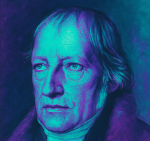
Reading the morning newspaper is the realist's morning prayer. One orients one's attitude toward the world either by God or by what the world is. The former gives as much security as the latter, in that one knows how one stands.
▼
Source
source
Miscellaneous writings of G.W.F. Hegel, translation by Jon Bartley Stewart, Northwestern University Press, 2002, page 247.
2 days ago
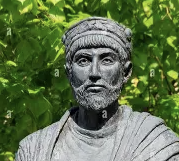
The visible world has, as I have said, subsisted around him from all eternity: and the Light also which surrounds the world has also its place from all eternity, not intermittently, nor in different degrees at different times, but constantly and in an equable manner. But whosoever will attempt to estimate, as far as thought goes, this external Nature, by the measure of Time, he will very easily discover respecting the Sun, Sovereign of all things, of how many blessings he is, from all eternity, the author to the world.
1 day ago
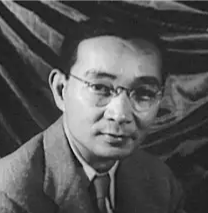
A man who has to be punctually at a certain place at five o'clock has the whole afternoon from one to five ruined for him already.
▼
Source
source
p. 163
1 week 6 days ago
Is it not a right glorious thing, and set of things, this that Shakspeare has brought us? For myself, I feel that there is actually a kind of sacredness in the fact of such a man being sent into this Earth.
3 months 1 week ago
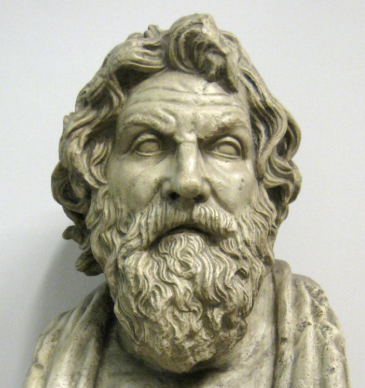
Count all wickedness foreign and alien.
▼
Source
source
§ 5
3 months 3 weeks ago
It is never to be expected in a revolution that every man is to change his opinion at the same moment. There never yet was any truth or any principle so irresistibly obvious that all men believed it at once. Time and reason must cooperate with each other to the final establishment of any principle; and therefore those who may happen to be first convinced have not a right to persecute others, on whom conviction operates more slowly. The moral principle of revolutions is to instruct, not to destroy.
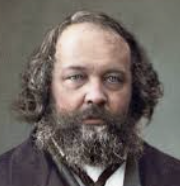
2 months 2 weeks ago
All exercise of authority perverts, and submission to authority humiliates.
▼
Source
source
As quoted in Michael Bakunin (1937), E.H. Carr, p. 453
4 months 3 weeks ago
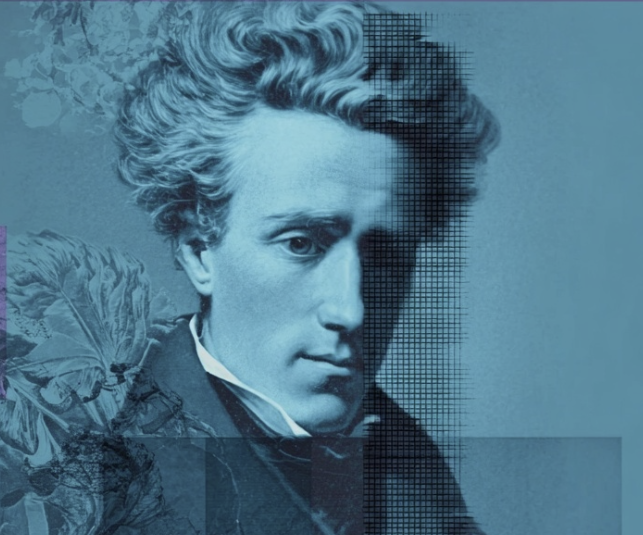
Oh, can I really believe the poet's tales, that when one first sees the object of one's love, one imagines one has seen her long ago, that all love like all knowledge is remembrance, that love too has its prophecies in the individual. ... it seems to me that I should have to possess the beauty of all girls in order to draw out a beauty equal to yours; that I should have to circumnavigate the world in order to find the place I lack and which the deepest mystery of my whole being points towards, and at the next moment you are so near to me, filling my spirit so powerfully that I am transfigured for myself, and feel that it's good to be here.

4 months 2 weeks ago
Start with a planet like the earth, with a complement of simple compounds bound to exist upon it, add the energy of a nearby sun, and you are bound to end with nucleic acids. You can't avoid it.
2 months 2 days ago
The American who first discovered Columbus made a bad discovery.
▼
Source
source
G 42
4 months 1 week ago
When the apostle James was talking about faith and works against those who thought their faith was enough, and didn't want to have good works, he said, You believe God is one; you do well; the demons also believe, and tremble.
▼
Source
source
(Jas 2:19) 183:13:2
2 months 1 week ago
In the study of ideas, it is necessary to remember that insistence on hard-headed clarity issues from sentimental feeling, as if it were a mist, cloaking the perplexities of fact. Insistence on clarity at all costs is based on sheer superstition as to the mode in which human intelligence functions. Our reasoning grasps at straws for premises and floats on gossamer for deductions.
▼
Source
source
p. 91.

2 months 4 weeks ago
Life itself is but the shadow of death, and souls departed but the shadows of the living: All things fall under this name. The Sun itself is but the dark simulacrum, and the light but the shadow of God.
▼
Source
source
Ch. 4

2 months 3 weeks ago
Men reject their prophets and slay them, but they love their martyrs and honor those they have slain.
1 month 1 week ago
Within the last fifty years, the extraordinary growth of every department of physical science has spread among us mental food of so nutritious and stimulating a character that a new ecdysis seems imminent.
▼
Source
source
Ch.2, p. 73
4 months 2 weeks ago
A robot must protect its own existence as long as such protection does not conflict with the First or Second Laws.

1 month 2 weeks ago
Non-literate societies cannot see films or photos without much training.
▼
Source
source
(p. 41)

3 months 3 weeks ago
Do not be too moral. You may cheat yourself out of much life so. Aim above morality. Be not simply good; be good for something.
▼
Source
source
Pearls of Thought (1881) p. 177
1 month 3 weeks ago
The public health authorities never mention the main reason many Americans have for smoking heavily, which is that smoking is a fairly sure, fairly honorable form of suicide.
▼
Source
source
Preface (p. xi)
CivilSimian.com created by AxiomaticPanic, CivilSimian, Kalokagathia