

3 months 3 days ago
Freedom is the absolute right of every human being to seek no other sanction for his actions but his own conscience, to determine these actions solely by his own will, and consequently to owe his first responsibility to himself alone.
▼
Source
source
As quoted in Anarchism: From Theory to Practice, Daniel Guérin, New York: NY, Monthly Review Press (1970) p. 31
1 month 1 week ago
Liberals tend to regard being subjects of the Queen as an insult to their dignity. But at least the archaic structures by which we are ruled do not force us to define ourselves by blood, soil or faith, and we are protected from the poisonous politics of identity.
▼
Source
source
"Monarchy is the key to our liberty,", The Observer

3 months 2 weeks ago
A transition, therefore, is not undeservedly made from sense to consideration, and from this to the nobler energies of intellect. Hence, as the certain knowledge of numbers received its origin among the Phœnicians, on account of merchandise and commerce, so geometry was found out among the Egyptians from the distribution of land. When Thales, therefore, first went into Egypt, he transferred this knowledge from thence into Greece: and he invented many things himself, and communicated to his successors the principles of many. Some of which were, indeed, more universal, but others extended to sensibles.
▼
Source
source
Chap. IV.

2 months 3 days ago
The only cool PR is provided by one's enemies. They toil incessantly and for free.

4 months 3 weeks ago
Before you embark on a journey of revenge, dig two graves.
1 month 1 week ago
It is because human needs are contradictory that no human life can be perfect. That does not mean that human life is imperfect. It means that the idea of perfection has no meaning.
▼
Source
source
'Modus Vivendi' (p.29)

4 months 6 days ago
Every great study is not only an end in itself, but also a means of creating and sustaining a lofty habit of mind.
▼
Source
source
Ch. 4: The Study of Mathematics

2 months 4 weeks ago
Have ye not read what David did, when he was an hungred, and they that were with him; How he entered into the house of God, and did eat the shewbread, which was not lawful for him to eat, neither for them which were with him, but only for the priests? Or have ye not read in the law, how that on the sabbath days the priests in the temple profane the sabbath, and are blameless? But I say unto you, That in this place is one greater than the temple. But if ye had known what this meaneth, I will have mercy, and not sacrifice, ye would not have condemned the guiltless.
▼
Source
source
For the Son of man is Lord even of the sabbath day. 12:3-8 (KJV) Said to some Pharisees.
2 months 3 weeks ago
Some would deny any legitimate use of the word God because it has been misused so much. Certainly it is the most burdened of all human words. Precisely for that reason it is the most imperishable and unavoidable. And how much weight has all erroneous talk about God's nature and works (although there never has been nor can be any such talk that is not erroneous) compared with the one truth that all men who have addressed God really meant him? For whoever pronounces the word God and really means Thou, addresses, no matter what his delusion, the true Thou of his life that cannot be restricted by any other and to whom he stands in a relationship that includes all others.

4 months 4 days ago
We all want progress. But progress means getting nearer to the place where you want to be. And if you have taken a wrong turning, then to go forward does not get you any nearer. If you are on the wrong road, progress means doing an about-turn and walking back to the right road; in that case the man who turns back soonest is the most progressive man.
▼
Source
source
Book I, Chapter 5, "We Have Cause to Be Uneasy"
2 months 1 week ago
To me it seems clear that the descriptions of human life we find in the novels of Tolstoy or George Eliot are not mere entertainment; they teach us to perceive what goes on in social and individual life. And such descriptions require the many subtle distinctions that ordinary language has made available to us. The question of the relevance or irrelevance of "how we speak" is not just a question for philosophers, although it is that too. It is a question for philosophers because once ordinary language is laughed out of the room, philosophical theories are no longer held responsible at all to the ways we actually speak and actually live; but it is a question for more than just philosophers because, at bottom, contempt for ordinary language is contempt for all the humanities.
▼
Source
source
"Science and Philosophy"

3 weeks 5 days ago
Were we required to characterise this age of ours by any single epithet, we should be tempted to call it, not an Heroical, Devotional, Philosophical, or Moral Age, but, above all others, the Mechanical Age. It is the Age of Machinery, in every outward and inward sense of that word; the age which, with its whole undivided might, forwards, teaches and practises the great art of adapting means to ends. Nothing is now done directly, or by hand; all is by rule and calculated contrivance. For the simplest operation, some helps and accompaniments, some cunning abbreviating process is in readiness. Our old modes of exertion are all discredited, and thrown aside. On every hand, the living artisan is driven from his workshop, to make room for a speedier, inanimate one. The shuttle drops from the fingers of the weaver, and falls into iron fingers that ply it faster.

5 months 2 days ago
To be happy, we must not be too concerned with others.
1 month 4 weeks ago
The first effect of modernism was to make high culture difficult: to surround beauty with a wall of erudition.
▼
Source
source
Avant-garde and Kitsch (p. 85)
1 month 3 weeks ago
There is only one cure for the evils which newly acquired freedom produces, and that cure is freedom.
▼
Source
source
p. 41
4 weeks 1 day ago
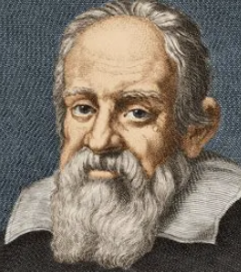
I do not feel obliged to believe that the same God who has endowed us with senses, reason, and intellect has intended us to forgo their use and by some other means to give us knowledge which we can attain by them.

3 months 3 weeks ago
Many who have not learned wisdom live wisely, and many who do the basest deeds can make most learned speeches.

4 months 4 days ago
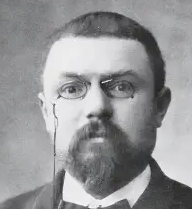
In order to make himself thoroughly undesirable, he will speak.
▼
Source
source
p. 463
4 weeks 1 day ago
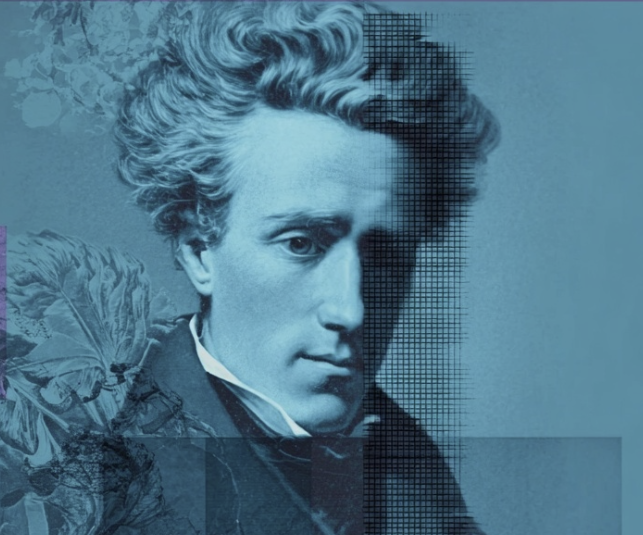
It is because simplicity and vastness are both beautiful that we seek by preference simple facts and vast facts; that we take delight, now in following the giant courses of the stars, now in scrutinizing the microscope that prodigious smallness which is also a vastness, and now in seeking in geological ages the traces of a past that attracts us because of its remoteness.
▼
Source
source
Part I. Ch. 1 : The Selection of Facts, p. 23
5 months 6 days ago
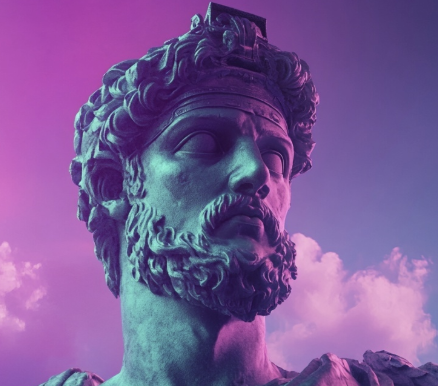
It was a purely Christian satisfaction to me that if ordinarily there was no one else there was one who in action tried a little to do the doctrine about loving the neighbor, alas, one who precisely by his act also received a frightful into what an illusion Christendom is and indeed, particularly later, also into how the common people let themselves be seduced by wretched journalists, whose striving and fighting for equality can only lead, if it leads to anything, since it is in the service of the lie, to making the elite, in self-defense, proud of their aloofness from the common man, and the common man brazen in his rudeness.
2 days ago
The mind which is free from passions is a citadel, for man has nothing more secure to which he can fly for refuge and for the future be inexpugnable. He then who has not seen this is an ignorant man: but he who has seen it and does not fly to this refuge is unhappy.
▼
Source
source
VIII, 48
2 months 3 days ago
The name of a man is a numbing blow from which he never recovers.
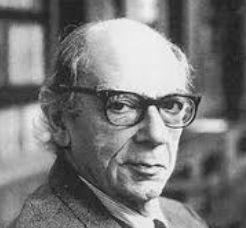
2 months 3 weeks ago
By freedom he meant a condition in which men were not prevented from choosing both the object and the manner of their worship. For him only a society in which this condition was realised could be called fully human. Its realisation was an ideal which Mill regarded as more precious than life itself.
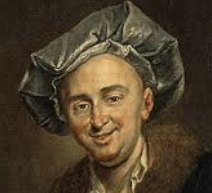
2 days ago
Why should we divide the sensitive principle which thinks in man? ...For a thing that is divided can no longer without absurdity be regarded as indivisible.
1 month 1 week ago
Might there not be a connection between the attempt to eradicate religion and the loss of freedom? It is unlikely that Mao, who launched his assault on the people and culture of Tibet with the slogan "Religion is poison," would have agreed that his atheist world-view had no bearing on his policies.
6 days ago
I am a weak, ephemeral creature made of mud and dream. But I feel all the powers of the universe whirling within me.
3 weeks 5 days ago
Examine the man who lives in misery because he does not shine above other men; who goes about producing himself, pruriently anxious about his gifts and claims; struggling to force everybody, as it were begging everybody for God's sake, to acknowledge him a great man, and set him over the heads of men! Such a creature is among the wretchedest sights seen under this sun. A great man? A poor morbid prurient empty man; fitter for the ward of a hospital, than for a throne among men. I advise you to keep out of his way. He cannot walk on quiet paths; unless you will look at him, wonder at him, write paragraphs about him, he cannot live. It is the emptiness of the man, not his greatness. Because there is nothing in himself, he hungers and thirsts that you would find something in him. In good truth, I believe no great man, not so much as a genuine man who had health and real substance in him of whatever magnitude, was ever much tormented in this way.
1 month 3 weeks ago
If...we look at the essential characteristics of the Whig and the Tory, we may consider each of them as the representative of a great principle, essential to the welfare of nations. One is, in an especial manner, the guardian of liberty, and the other, of order. One is the moving power, and the other the steadying power of the state. One is the sail, without which society would make no progress, the other the ballast, without which there would be small safety in a tempest.
▼
Source
source
The Earl of Chatham', The Edinburgh Review (October 1844), quoted in T. B. Macaulay, Critical and Historical Essays Contributed to The Edinburgh Review: A New Edition (1852), p. 725
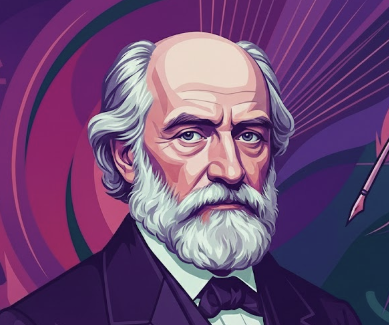
4 months 1 week ago
Wealth is like sea-water; the more we drink, the thirstier we become.
▼
Source
source
E. Payne, trans. (1974) Vol. 1, p. 347
5 days ago
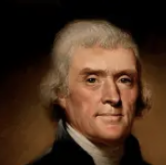
The idea of creating a national bank I do not concur in, because it seems now decided that Congress has not that power (although I sincerely wish they had it exclusively), and because I think there is already a vast redundancy rather than a scarcity of paper medium.
▼
Source
source
Letter to Thomas Law, 1813. FE 9:433

3 months 1 week ago
The world that I regard is my selfe, it is the Microcosme of mine owne frame, that I cast mine eye on; for the other, I use it but like my Globe, and turne it round sometimes for my recreation. Men that look upon my outside, perusing onely my condition, and fortunes, do erre in my altitude; for I am above Atlas his shoulders.
▼
Source
source
Section 12
3 weeks ago
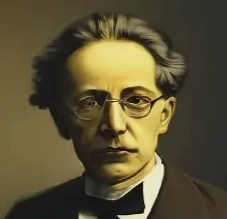
An appeal to men's self-sacrificing disposition and self-renouncing love ought at least to have lost its seductive plausibility when, after an activity of thousands of years, it has left nothing behind but the - misery of today. Why then still fruitlessly expect self-sacrifice to bring us better times? Why not rather hope for them from usurpation? Salvation comes no longer from the giver, the bestower, the loving one, but from the taker, the appropriator (usurper), the owner. Communism, and, consciously, egoism-reviling humanism, still count on love.
▼
Source
source
Cambridge 1995, p. 274

4 months 5 days ago
...this Jewish doctrine of the primacy of economic values has found the widest acceptance and been most whole-heartedly acted upon. From America it has begun to infect the rest of the world. We may be pardoned for wishing that the Jews had remained not forty, but four thousand years in their repulsive wilderness.
▼
Source
source
"One and Many," pp. 18

2 months 2 weeks ago
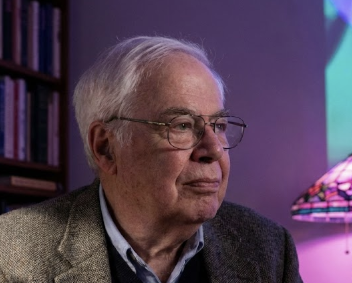
On the whole, the scientist is better off if he collects his facts by accident, little by little, so he can study them before he tries to fit them into a jigsaw puzzle, This is how the late Tom Lethbridge came to arrive at his theories about other dimensions of reality. It is also how Guy Lyon Playfair came to develop his own theories about the nature of the poltergeist.
▼
Source
source
p. 196
3 months 3 weeks ago
Contemporary intellectuals have given up the Enlightenment assumption that religion, myth, and tradition can be opposed to something ahistorical, something common to all human beings qua human.

3 months 1 week ago
There is hardly a pioneer's hut which does not contain a few odd volumes of Shakespeare. I remember reading the feudal drama of Henry V for the first time in a log cabin.
▼
Source
source
Book One, Chapter XIII.

4 months 6 days ago
The perception of beauty is a moral test.
▼
Source
source
June 21, 1852
3 months 6 days ago
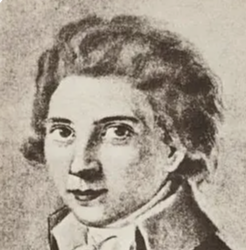
One can only become a philosopher, but not be one. As one believes he is a philosopher, he stops being one.
▼
Source
source
"Selected Aphorisms from the Athenaeum (1798)", Dialogue on Poetry and Literary Aphorisms, Ernst Behler and Roman Struc, trans. (Pennsylvania University Press:1968) #54
5 days ago
Merchants have no country. The mere spot they stand on does not constitute so strong an attachment as that from which they draw their gains. In every country and in every age, the priest has been hostile to liberty. He is always in alliance with the despot, abetting his abuses in return for protection to his own. It is easier to acquire them, and to effect this, they have perverted the best religion ever preached to man into mystery and jargon, unintelligible to all mankind, and therefore the safer engine for their purposes. With the lawyers it is a new thing. They have, in the mother country, been generally the primest supporters of the free principles of their constitution. But there, too, they have changed.
▼
Source
source
Letter to Horatio G. Spafford

4 months 1 week ago
Truth that is naked is the most beautiful, and the simpler its expression the deeper is the impression it makes; this is partly because it gets unobstructed hold of the hearer's mind without his being distracted by secondary thoughts, and partly because he feels that here he is not being corrupted or deceived by the arts of rhetoric, but that the whole effect is got from the thing itself.
4 weeks ago
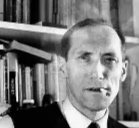
The history of utopias is no less fascinating than the history of metallurgy or of chemical engineering.
▼
Source
source
New Preface, p. vi
1 week 6 days ago
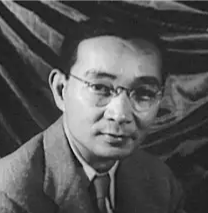
Life after all is made up of eating and sleeping, of meeting and saying good-by to friends, of reunions and farewell parties, of tears and laughter, of having a haircut once in two weeks, of watering a potted flower and watching one's neighbor fall off his roof.
▼
Source
source
p. 202
4 weeks 1 day ago
Indeed, I think we may concede to our Academician, without flattery, his claim that in the principle [principio, i. e., accelerated motion] laid down in this treatise he has established a new science dealing with a very old subject. Observing with what ease and clearness he deduces from a single principle the proofs of so many theorems, I wonder not a little how such a question escaped the attention of Archimedes, Apollonius, Euclid and so many other mathematicians and illustrious philosophers, especially since so many ponderous tomes have been devoted to the subject of motion.
▼
Source
source
(Galileo referred to himself as the/our Academician in his dialogue) Sagredo, Third Day P. 242

4 months 1 day ago
Your questions refer to words; so I have to talk about words. You say: The point isn't the word, but its meaning, and you think of the meaning as a thing of the same kind as the word, though also different from the word. Here the word, there the meaning.
▼
Source
source
§ 120

3 months 2 weeks ago
Place is the greatest thing, as it contains all things.
▼
Source
source
As quoted in Diogenes Laërtius, The Lives and Opinions of Eminent Philosophers, I, 35
2 months 2 weeks ago
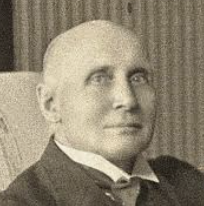
Rightness of limitation is essential for growth of reality.Unlimited possibility and abstract creativity can procure nothing. The limitation, and the basis arising from what is already actual, are both of them necessary and interconnected.
▼
Source
source
Religion in the Making (February 1926), Lecture IV: "Truth and Criticism".
5 months 6 days ago
There is no one at the Communion table who retains against you even the least of your sins, no one, unless you yourself do it. So cast them away from yourself, and the recollection of them, lest in it your retain them; and cast the recollection of your having cast your sins away, lest in it you retain them.
CivilSimian.com created by AxiomaticPanic, CivilSimian, Kalokagathia