

3 months 1 week ago
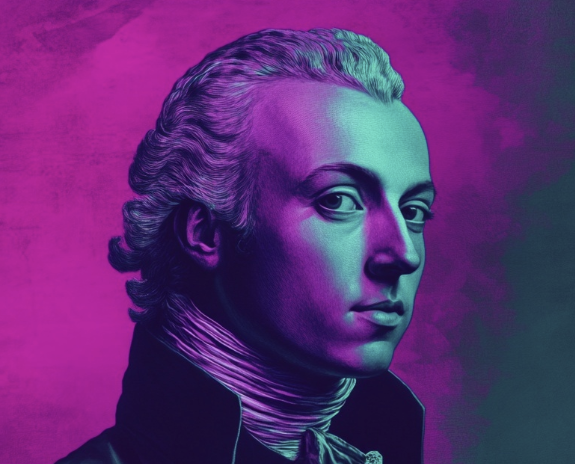
All wars are accordingly so many attempts (not in the intention of man, but in the intention of Nature) to establish new relations among states, and through the destruction or at least the dismemberment of all of them to create new political bodies, which, again, either internally or externally, cannot maintain themselves and which must thus suffer like revolutions; until finally, through the best possible civic constitution and common agreement and legislation in external affairs, a state is created which, like a civic commonwealth, can maintain itself automatically.
▼
Source
source
Seventh Thesis
1 month 1 week ago
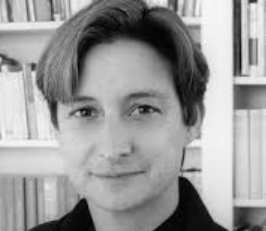
We do not have to love one another to be obligated to build a world in which all lives are sustainable. The right to persist can only be understood as a social right, as the subjective instance of a social and global obligation we bear toward one another.
▼
Source
source
p. 64

2 months 1 week ago
We are taught to believe that a desire of domineering over our countrymen is love to our country; and those who hate civil war abet rebellion, and that the amiable and conciliatory virtues of lenity, moderation, and tenderness to the privileges of those who depend on this kingdom are a sort of treason to the state. It is impossible that we should remain long in a situation, which breeds such notions and dispositions, without some great alteration in the national character.
3 months 6 days ago
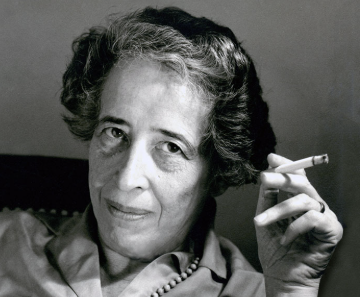
The ideal subject of totalitarian rule is not the convinced Nazi or the convinced Communist, but people for whom the distinction between fact and fiction (i.e., the reality of experience) and the distinction between true and false (i.e., the standards of thought) no longer exist.
▼
Source
source
Part 3, Ch. 13, § 3
1 month 4 weeks ago
Art is not the possession of the few who are recognized writers, painters, musicians; it is the authentic expression of any and all individuality. Those who have the gift of creative expression in unusually large measure disclose the meaning of the individuality of others to those others. In participating in the work of art, they become artists in their activity. They learn to know and honor individuality in whatever form it appears. The fountains of creative activity are discovered and released. The free individuality which is the source of art is also the final source of creative development in time.
3 months 3 weeks ago
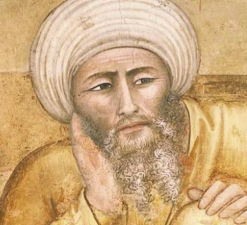
If we admit the existence of the prophetic mission, by putting the idea of possibility, which is in fact ignorance, in place of certainty, and make miracles a proof of the truth of man who claims to be a prophet it becomes necessary that they should not be used by a person, who says that they can be performed by others than prophets, as the Mutakallimun do.

1 month 1 week ago
The compassionate are not rich; therefore, the rich are not compassionate.
▼
Source
source
p. 89

3 months 6 days ago
We live, in fact, in a world starved for solitude, silence, and privacy: and therefore starved for meditation and true friendship.
3 months 1 week ago
Mark what 'tis his mind aims at in the question, and not what words he expresses it in: and when you have informed and satisfied him in that, you shall see how his thoughts will enlarge themselves, and how by fit answers he may be led on farther than perhaps you could have imagine. For knowledge is grateful to the understanding, as light to the eyes.
▼
Source
source
Sec. 118

1 month 2 weeks ago
For me [fiction] is a manner of philosophizing ... Philosophy may be only a shadow of the reality it tries to grasp, but the novel is altogether more satisfactory. I am almost tempted to say that no philosopher is qualified to do his job unless he is also a novelist ... I would certainly exchange any of the works of Whitehead or Wittgenstein for the novels they ought to have written.
▼
Source
source
p. 160-1

3 months 1 week ago
For the world to become philosophic amounts to philosophy's becoming world-order reality; and it means that philosophy, at the same time that it is realized, disappears.
2 months 1 week ago
All abstract sciences are nothing but the study of relations between signs.
▼
Source
source
Dr. Théophile de Bordeu, in "Conversation Between D'Alembert and Diderot"

2 months 3 days ago
Speech and silence. We feel safer with a madman who talks than with one who cannot open his mouth.

3 months 3 weeks ago
The institutions of the Ruler are rooted in his own character and conduct, and sufficient attestation of them is given by the masses of the people. He examines them by comparison with those of the three kings, and finds them without mistake. He sets them up before Heaven and Earth, and finds nothing in them contrary to their mode of operation. He presents himself with them before spiritual beings, and no doubts about them arise. He is prepared to wait for the rise of a sage a hundred ages after, and has no misgivings. His presenting himself with his institutions before spiritual beings, without any doubts arising about them, shows that he knows Heaven. His being prepared, without any misgivings, to wait for the rise of a sage a hundred ages after, shows that he knows men.
3 weeks 5 days ago
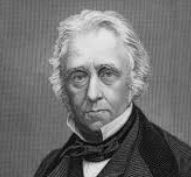
If it is the moral right we are to look at, I say, that on every principle of moral obligation, I hold that the Jew has a right to political power.
▼
Source
source
Speech in the House of Commons (5 April 1830) in favour of Robert Grant's Jewish Disabilities Bill
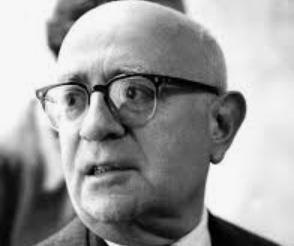
1 month 3 weeks ago
Philosophy ... should not imagine that specialized work in epistemological theory, or whatever else prides itself on being research, is actually philosophy. Yet a philosophy forswearing all of that must in the end be irreconcilably at odds with the dominant consciousness. Nothing else raises it above the suspicion of apologetics. Philosophy that satisfies its own intention, and does not childishly skip behind its own history and the real one, has its lifeblood in the resistance against the common practices of today and what they serve, against the justification of what happens to be the case.
▼
Source
source
p. 6

2 weeks 2 days ago
All urgent calls he shall hear at once, but never put off; for when postponed, they will prove too hard or impossible to accomplish.
▼
Source
source
Book I : "Concerning Discipline" Chapter 19
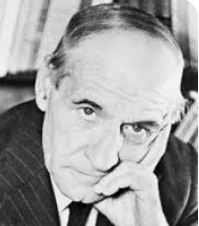
1 month 4 weeks ago
Meditation on any theme, if positive and honest, inevitably separates him who does the meditating from the opinion prevailing around him, from that which ... can be called "public" or "popular" opinion.
▼
Source
source
p. 15

3 months 1 week ago
Have no mean hours, but be grateful for every hour, and accept what it brings. The reality will make any sincere record respectable. No day will have been wholly misspent, if one sincere, thoughtful page has been written. Let the daily tide leave some deposit on these pages, as it leaves sand and shells on the shore. So much increase of terra firma. this may be a calendar of the ebbs and flows of the soul; and on these sheets as a beach, the waves may cast up pearls and seaweed.
▼
Source
source
July 6, 1840
3 months 6 days ago
The wraith of Sigmund said. "You know what this is, I suppose. Religious melancholia. Stop while there is time. If you dive, you dive into insanity."
▼
Source
source
Pilgrim's Regress 168
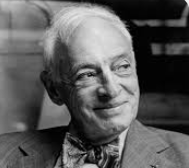
1 month ago
A great deal of intelligence can be invested in ignorance when the need for illusion is deep. To Jerusalem and Back: A Personal Account (1976), p. 127 Compare: It's a point so blindingly obvious that only an extraordinarily clever and sophisticated person could fail to grasp it.
▼
Source
source
John Bercow, 2016.
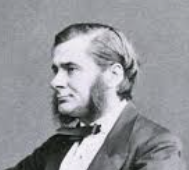
3 weeks 2 days ago
My convictions, positive and negative, on all the matters of which you speak, are of long and slow growth and are firmly rooted. But the great blow which fell on me seemed to stir them to their foundation, and had I lived a couple of centuries earlier I could have fancied a devil scoffing at me and them - and asking me what profit it was to have stripped myself of the hopes and consolations of the mass of mankind? To which my only reply was and is - Oh devil! Truth is better than much profit. I have searched over the grounds of my belief, and if wife and child and name and fame were all to be lost to me one after the other as the penalty, still I will not lie.

3 months 1 week ago
The most advanced nations are always those who navigate the most.
▼
Source
source
Civilization
1 month 4 weeks ago
Be it well understood, I am free by compulsion, whether I wish to be or not. Freedom is not an activity pursued by an entity that, apart from and previous to such pursuit, is already possessed of a fixed being. To be free means to be lacking in constitutive identity, not to have subscribed to a determined being, to be able to be other than what one was, to be unable to install oneself once and for all in any given being. The only attribute of the fixed, stable being in the free being is this constitutive instability.
▼
Source
source
"Man has no nature"
3 months 1 week ago
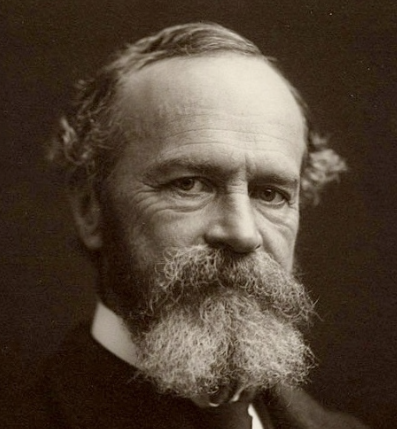
Let any one try, I will not say to arrest, but to notice or attend to, the present moment of time. One of the most baffling experiences occurs. Where is it, this present? It has melted in our grasp, fled ere we could touch it, gone in the instant of becoming.
▼
Source
source
Ch. 15
1 month 2 weeks ago
Since the war began, miles of paper and oceans of ink have been used to prove the barbarity, the cruelty, the oppression of Prussian militarism. Conservatives and radicals alike are giving their support to the Allies for no other reason than to help crush that militarism, in the presence of which, they say, there can be no peace or progress in Europe. But though America grows fat on the manufacture of munitions and war loans to the Allies to help crush Prussians the same cry is now being raised in America which, if carried into national action, would build up an American militarism far more terrible than German or Prussian militarism could ever be, and that because nowhere in the world has capitalism become so brazen in its greed and nowhere is the state so ready to kneel at the feet of capital.

3 months 2 weeks ago
At the very beginning of my fevers and sicknesses that cast me down, whilst still entire, and but little, disordered in health, I reconcile myself to Almighty God by the last Christian, offices, and find myself by so doing less oppressed and more easy, and have got, methinks, so much the better of my disease. And I have yet less need of a notary or counsellor than of a physician.
▼
Source
source
Ch. 9
3 months 3 weeks ago
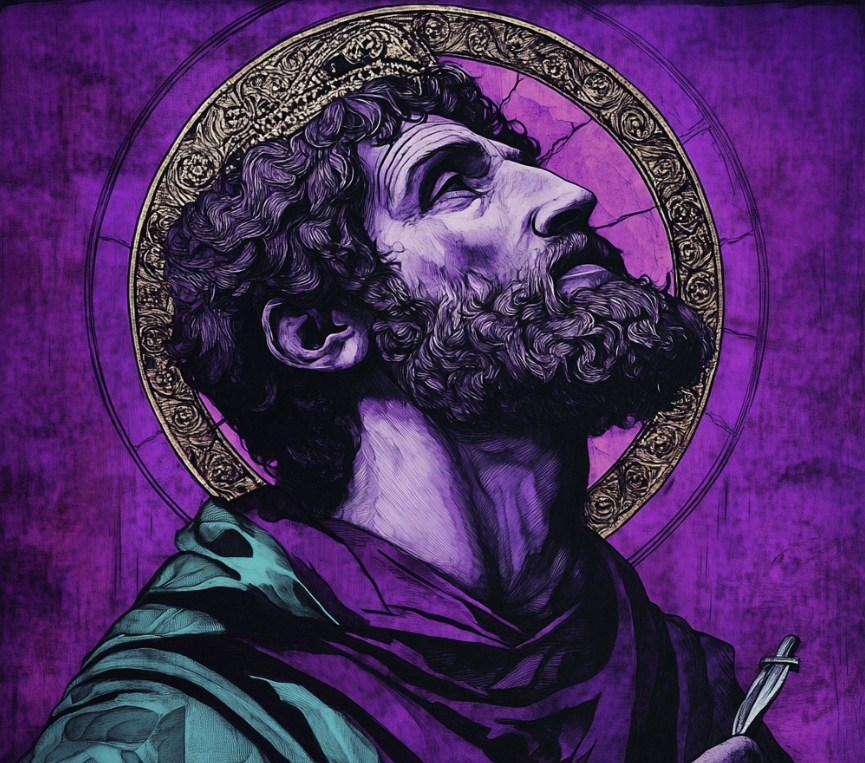
On Ps 60:3: To Thee have I cried from the ends of the earth.
3 months 1 week ago
Immortality. I notice that as soon as writers broach this question they begin to quote. I hate quotation. Tell me what you know.
▼
Source
source
May 1849
4 months 5 days ago
I shall have to test the theory of my father Parmenides, and contend forcibly that after a fashion not-being is and on the other hand in a sense being is not. For unless these statements are either disproved or accepted, no one who speaks about false words, or false opinion whether images or likenesses or imitations or appearances about the arts which have to do with them, can ever help being forced to contradict himself and make himself ridiculous.
1 month 2 weeks ago
Organizations and institutions permit stable expectations to be formed by each member of the group as to the behavior of the other members under specified conditions.
▼
Source
source
p. 100.
3 months 1 week ago
All the great speakers were bad speakers at first.
▼
Source
source
Power
3 months 1 week ago
It is easy to see that the existing generation are conspiring with a beneficence, which, in its working for coming generations, sacrifices the passing one, which infatuates the most selfish men to act against their private interest for the public welfare. We build railroads, we know not for what or for whom; but one thing is certain, that we who build will receive the very smallest share of benefit. Benefit will accrue; they are essential to the country, but that will be felt not until we are no longer countrymen. We do the like in all matters: - 'Man's heart the Almighty to the Future setBy secret and inviolable springs.'
3 months 6 days ago
You don't have a soul. You are a soul. You have a body.
▼
Source
source
Commonly attributed to Mere Christianity, where it is not found. Earliest reference seems to be an unsourced attribution to George MacDonald in an 1892 issue of the Quaker periodical The British Friend.

2 months 5 days ago
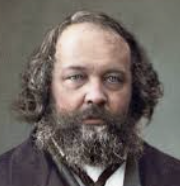
If there is a devil in human history, that devil is the principle of command. It alone, sustained by the ignorance and stupidity of the masses, without which it could not exist, is the source of all the catastrophes, all the crimes, and all the infamies of history.
▼
Source
source
On the Program of the Alliance (1871), in Bakunin on Anarchy (1971), translated and edited by Sam Dolgoff Variant translation: If there is a devil in history, it is the power principle.
3 months 1 week ago
The economic concept of value does not occur in antiquity.
▼
Source
source
Notebook VII, The Chapter on Capital, p. 696.
2 months 3 weeks ago
Self-taught poverty is a help toward philosophy, for the things which philosophy attempts to teach by reasoning, poverty forces us to practice.
▼
Source
source
Stobaeus, iv. 32a. 11
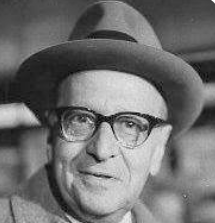
1 month 3 weeks ago
At present, when the prevailing forms of society have become hindrances to the free expression of human powers, it is precisely the abstract branches of science, mathematics and theoretical physics, which ... offer a less distorted form of knowledge than other branches of science which are interwoven with the pattern of daily life, and the practicality of which seemingly testifies to their realistic character.
▼
Source
source
p. 133.
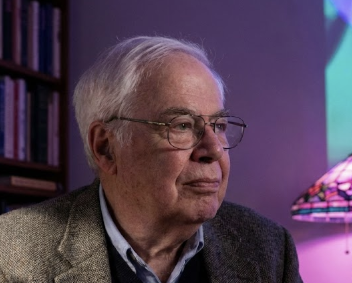
2 months 4 weeks ago
As long as we try to project from the relative and conditioned to the absolute and unconditioned, we shall keep the pendulum swinging between dogmatism and skepticism. The only way to stop this increasingly tiresome pendulum swing is to change our conception of what philosophy is good for. But that is not something which will be accomplished by a few neat arguments. It will be accomplished, if it ever is, by a long, slow process of cultural change - that is to say, of change in common sense, changes in the intuitions available for being pumped up by philosophical arguments.
▼
Source
source
Introduction to Truth and Progress: Philosophical Papers, Volume 3 (1998).
2 months 3 days ago
I thought that the only action a man could perform without shame was to take his life; that he had no right to diminish himself in the succession of days and the inertic of misery. No elect, I kept telling myself, but those who committed suicide.

3 months 3 days ago
I am my world.
▼
Source
source
(The microcosm.) (5.63) Original German: Ich bin meine welt (Der Mikrokosmos.)
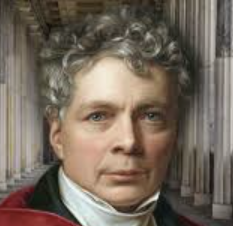
2 months 1 week ago
It is easy to see that this problem can be solved neither in theoretical nor in practical philosophy, but only in a higher discipline, which is the link that combines them, and neither theoretical nor practical, but both at once.
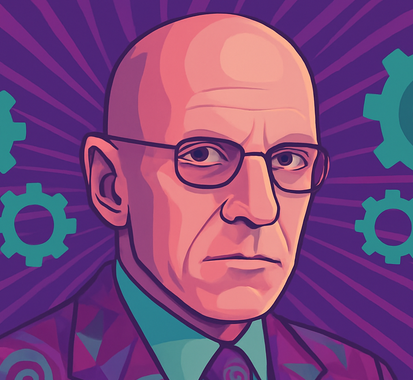
3 months 2 days ago
This book is intended as a correlative history of the modern soul and of a new power to judge; a genealogy of the present scientifico-legal complex from which the power to punish derives its bases, justifications and rules, from which it extends its effects and by which it extends its effects and by which it masks its exorbitant singularity.
▼
Source
source
Chapter One, The Spectacle of the Scaffold, pp.42
3 months 1 week ago
A mind does not receive truth as a chest receives jewels that are put into it, but as the stomach takes up food into the system. It is no longer food, but flesh, and is assimilated. The appetite and the power of digestion measure our right to knowledge. He has it who can use it. As soon as our accumulation overruns our invention or power to use, the evils of intellectual gluttony begin,- congestion of the brain, apoplexy, and strangulation.
▼
Source
source
"The Natural History of Intellect", p. 30

3 months 1 week ago
I now saw, that a science is either deductive or experimental, according as, in the province it deals with, the effects of causes when conjoined, are or are not the sums of the effects which the same causes produce when separate. It followed that politics must be a deductive science. It thus appeared, that both Macaulay and my father were wrong; the one in assimilating the method of philosophising in politics to the purely experimental method of chemistry; while the other, though right in adopting a deductive method, had made a wrong selection of one, having taken as the type of deduction, not the appropriate process, that of the deductive branches of natural philosophy, but the inappropriate one of pure geometry, which, not being a science of causation at all, does not require or admit of any summing-up of effects.
▼
Source
source
(pp. 160-161)
1 month 1 week ago
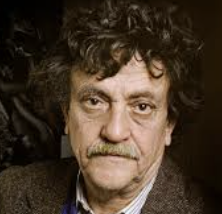
What television does is rent us friends and relatives who are quite satisfactory. The child watching TV loves these people, you know -- they're in color, and they're talking to the child. Why wouldn't a child relate to these people? And you know, if you can't sleep at 3 o'clock in the morning, you can turn on a switch, and there are your friends and relatives, and they obviously like you. And they're charming. Who wouldn't want Peter Jennings for a relative? This is quite something, to rent artificial friends and relatives right inside the house.
▼
Source
source
Interviewed by Frank Houston, "The Salon Interview: Kurt Vonnegut", Salon
3 months 1 week ago
The process is so complicated that it offers ever so many occasions for running abnormally.
▼
Source
source
Vol. II, Ch. XXI, p. 500.
4 months 4 days ago
Perhaps we cannot prevent this world from being a world in which children are tortured. But we can reduce the number of tortured children. And if you don't help us, who else in the world can help us do this?
CivilSimian.com created by AxiomaticPanic, CivilSimian, Kalokagathia