


3 months 4 days ago
Heroic love is the property of those superior natures who are called insane not because they do not know, but because they over-know.
▼
Source
source
As quoted in The Tragic Sense of Life (1913), by Miguel de Unamuno, as translated by J. E. Crawford

1 month 3 weeks ago
The discarnate TV user lives in a world between fantasy and dream, and is in a typically hypnotic state, which is the ultimate form and level of participation.
▼
Source
source
"A Last Look at the Tube." New York Magazine, 17 March 1978, p. 45-48
3 months 4 days ago
Since I have spread my wings to purpose high, The more beneath my feet the clouds I see, The more I give the winds my pinions free, Spurning the earth and soaring to the sky.
▼
Source
source
As quoted in "Giordano Bruno" by Thomas Davidson, in The Index Vol. VI. No. 36 (4 March 1886), p. 429

3 months 4 weeks ago
I have always thought the actions of men the best interpreters of their thoughts.
▼
Source
source
Book 1, Ch. 3, sec. 3 Variant: The actions of men are the best interpreters of their thoughts.

3 months 4 weeks ago
The observer, when he seems to himself to be observing a stone, is really, if physics is to be believed, observing the effects of the stone upon himself.
▼
Source
source
An Inquiry into Meaning and Truth (1940), Introduction, p. 15

2 months 1 week ago
Imagine a book of unexplained mysteries written by a contemporary of Shakespeare. It might include the mystery of the falling stars that sweep through the sky foretelling disaster; the mystery of the Kraken, the giant sea devil with 50-foot tentacles; the mystery of monster bones, sometimes found in caves or on beaches. Such a book would be a curious mixture of truth and absurdity, fact and legend. We would all feel superior as we turned its pages and murmured: "Of course, they didn't know about comets and giant squids and dinosaurs." If this book should happen to find its way into the hands of our remote descendants, they may smile pityingly and say: "It's incredible to think that they knew nothing about epsilon fields or multiple psychic feedback or cross gravitational energies. They didn't even know about the ineluctability of time." But let us hope that such a descendant is in a charitable mood, and might add: "And yet they managed to ask a few of the right questions."
▼
Source
source
p. 142
2 months 1 week ago
People with healthy self-esteem do not need to create pretend identities.
2 months 1 week ago
I was aggressively nonpolitical. I believed that people who make a fuss about politics do so because their heads are too empty to think about more important things. So I felt nothing but impatient contempt for Osborne's Jimmy Porter and the rest of the heroes of social protest.
▼
Source
source
p. 2
3 months 3 weeks ago
Clearly when the liberties are left unrestricted they collide with one another.
▼
Source
source
Chapter IV, Section 32, p. 203
1 week 1 day ago
We have learned to tolerate the facts of war: that men are killed en masse - some twenty million in the Second World War - that whole cities and their inhabitants are annihilated by the atomic bomb, that men are turned into living torches by incendiary bombs. We learn of these things from the radio or newspapers and we judge them according to whether they signify success for the group of peoples to which we belong, or for our enemies. When we do admit to ourselves that such acts are the results of inhuman conduct, our admission is accompanied by the thought that the very fact of war itself leaves us no option but to accept them. In resigning ourselves to our fate without a struggle, we are guilty of inhumanity.
2 months 1 week ago
If the individual realizes his self by spontaneous activity and thus relates himself to the world, he ceases to be an isolated atom; he and the world become part of one structuralized whole; he has his rightful place, and thereby his doubt concerning himself and the meaning of life disappears. This doubt sprang from his separateness and from the thwarting of life; when he can live, neither compulsively nor automatically but spontaneously, the doubt disappears. He is aware of himself as an active and creative individual and recognizes that there is only one meaning of life: the act of living itself.
▼
Source
source
Ch. 7, p. 262-3

2 months 3 weeks ago
To repeat to yourself a thousand times a day: 'Nothing on Earth has any worth,' to keep finding yourself at the same point, to circle stupidly as a top, eternally...

3 months 4 weeks ago
The composer reveals the innermost nature of the world, and expresses the profoundest wisdom in a language that his reasoning faculty does not understand, just as a magnetic somnambulist gives information about things of which she has no conception when she is awake. Therefore in the composer, more than in any other artist, the man is entirely separate and distinct from the artist.
▼
Source
source
Vol. I, Ch. III, The World As Representation

3 weeks 1 day ago
Therefore tolerance of diversity, of people that don't believe the same thing that you do, has always been at the core of this pragmatic project to enable diverse populations to live with one another.
▼
Source
source
9:00
2 months 2 weeks ago
The new order contradicts reason so fundamentally that reason does not dare to doubt it. Even the consciousness of oppression fades. The more incommensurate become the concentration of power and the helplessness of the individual, the more difficult for him to penetrate the human origin of his misery.
▼
Source
source
p. 44.
1 month 3 weeks ago
One touch of nature makes the whole world tin.

2 months 3 weeks ago
The study of Ethics would, no doubt, be far more simple, and its results far more "systematic," if, for instance, pain were an evil of exactly the same magnitude as pleasure is a good; but we have no reason whatever to assume that the Universe is such that ethical truths must display this kind of symmetry ... .
▼
Source
source
Principia Ethica (1903), ch. VI.
2 months 2 weeks ago
One must always maintain one's connection to the past and yet ceaselessly pull away from it. To remain in touch with the past requires a love of memory. To remain in touch with the past requires a constant imaginative effort.
▼
Source
source
A Retrospective Glance at the Lifework of a Master of Books

3 months 4 weeks ago
I die adoring God, loving my friends, not hating my enemies, and detesting superstition.
▼
Source
source
Déclaration de Voltaire, note to his secretary, Jean-Louis Wagnière, 28 February 1778

2 months 2 weeks ago
Sociology does not 'negate' philosophy, in the sense of taking over the hidden content of philosophy and carrying it into social theory and practice, but sets itself up as a realm apart from philosophy, with a province and truth of its own. Comte is rightly held to be the inaugurator of this separation between philosophy and sociology.
▼
Source
source
P. 375

4 months 4 weeks ago
That which distinguishes the Christian narrow way from the common human narrow way is the voluntary. Christ was not someone who coveted earthly things but had to be satisfied with poverty, no, he chose poverty.

3 months 3 weeks ago
The belief in a political Utopia is especially dangerous. This is possibly connected with the fact that the search for a better world, like the investigation of our environment, is (if I am correct) one of the oldest and most important of all the instincts.

4 months 5 days ago
There is no passion so contagious as that of fear.
3 months 2 weeks ago
The ethical commonplaces of any period include ideas that may have been radical discoveries in a previous age. This is true of modern conceptions of liberty, equality, and democracy, and we are in the midst of ethical debates which will probably result two hundred years hence in a disseminated moral sensibility that people of our time would find very unfamiliar.
▼
Source
source
"Ethics without Biology" (1978), p. 143.

3 months 3 weeks ago
Human beings have a physical need to tell themselves when at work: "Let's have done with it now," and it's having constantly to go on thinking in the face of this need when philosophizing that makes this work so strenuous.
▼
Source
source
p. 86e
3 months 3 weeks ago
In a head-on clash between violence and power, the outcome is hardly in doubt. Nowhere is the self-defeating factor in the victory of violence over power more evident than in the use of terror to maintain domination, about whose weird successes and eventual failures we know perhaps more than any generation before us. Violence can destroy power; it is utterly incapable of creating it.
▼
Source
source
On Violence

3 months 3 weeks ago
In the vaunted works of Art The master stroke is Nature's part.
▼
Source
source
Art
4 months 5 days ago
Amongst so many borrowed things, I am glad if I can steal one, disguising and altering it for some new service.
▼
Source
source
Book III, Ch. 12. Of Physiognomy

2 weeks 4 days ago
If we read History with any degree of thoughtfulness, we shall find that checks and balances of Profit and Loss have never been the grand agents with men, that they have never been roused into deep, thorough, all-pervading efforts by any computable prospect of Profit and Loss, for any visible, finite object; but always for some invisible and infinite one.

1 week 5 days ago
The wise man will live as long as he ought, not as long as he can.
▼
Source
source
Line 4.
1 month 2 weeks ago
What is imposed on us by birth and environment is what we are called upon to overcome.
▼
Source
source
Part I, p. 28
8 months 3 days ago
The general reference of the philosophical discussion is usually the triangle world: world-language-subject, the relation of the subject to the world of objects, mediated through language.

2 months 1 week ago
There is no greater impediment to progress in the sciences than the desire to see it take place too quickly.
▼
Source
source
K 72
2 months 1 week ago
The Hebrews took for their idol, not something made of metal or wood, but a race, a nation, something just as earthly. Their religion is essentially inseparable from such idolatry, because of the notion of the "chosen people".
▼
Source
source
Section 2
2 months 2 weeks ago
In which the technical apparatus of production and distribution (with an increasing sector of automation) functions, not as the sum-total of mere instruments which can be isolated from their social and political effects, but rather as a system which determines a priori the product of the apparatus as well as the operations of servicing and extending it. In this society, the productive apparatus tends to become totalitarian to the extent to which it determines not only the socially needed occupations, skills, and attitudes, but also individual needs and aspirations. It thus obliterates the Opposition between the private and public existence, between individual and social needs.
▼
Source
source
p. xlvii

3 months 4 days ago
Solicitation and effort or conation belong properly to animate beings alone. When they are attributed to other things, they must be taken in a metaphorical sense; but a philosopher should abstain from metaphor.
▼
Source
source
Paragraph 3
3 months 3 weeks ago
What is a weed? A plant whose virtues have yet to be discovered.
▼
Source
source
Fortune of the Republic, 1878
5 days ago
One of the commonplaces of modern historiography is the polemical exaltation of the civilization of the Renaissance over and against medieval civilization. This is not just the expression of a typical misunderstanding, since this mentality is the effect of one among the innumerable deceptions purposely spread in modern culture by the leaders of global subversion. The truth is that after the collapse of the ancient world, if there ever was a civilization that deserves the name of Renaissance, this was the civilization of the Middle Ages. In its objectivity, its virile spirit, its hierarchical structure, its proud antihumanistic simplicity so often permeated by the sense of the sacred, the Middle Ages represented a return to the origins.
▼
Source
source
p.309
2 weeks 4 days ago
It lies deep in our habits, confirmed by all manner of educational and other arrangements for several centuries back, to consider human talent as best of all evincing itself by the faculty of eloquent speech. Our earliest schoolmasters teach us, as the one gift of culture they have, the art of spelling and pronouncing, the rules of correct speech; rhetorics, logics follow, sublime mysteries of grammar, whereby we may not only speak but write. And onward to the last of our schoolmasters in the highest university, it is still intrinsically grammar, under various figures grammar. To speak in various languages, on various things, but on all of them to speak, and appropriately deliver ourselves by tongue or pen,-this is the sublime goal towards which all manner of beneficent preceptors and learned professors, from the lowest hornbook upwards, are continually urging and guiding us.
5 days ago
One can learn such a lot and enjoy such a lot in seventy years, and three generations is a long, long time to see human follies and acquire human wisdom. Anyone who is wise and has lived long enough to witness the changes of fashion and morals and politics through the rise and fall of three generations should be perfectly satisfied to rise from his seat and go away saying, "It was a good show," when the curtain falls.
▼
Source
source
p. 23-24
3 months 3 weeks ago
Scientists try to eliminate their false theories, they try to let them die in their stead. The believer-whether animal or man-perishes with his false beliefs.
▼
Source
source
Epistemology Without A Knowing Subject
2 months 2 weeks ago
There can be no movement toward a consummating close unless there is a progressive massing of values, a cumulative effect. This result cannot exist without conservation of the import of what has gone before. Moreover, to secure the needed continuity, the accumulated experience must be such as to create suspense and anticipation of resolution. Accumulation is at the same time preparation, as with each phase of the growth of a living embryo. Only that is carried on which is led to; otherwise there is arrest and a break. For this reason consummation is relative; instead of occurring once for all at a given point, it is recurrent. The final end is anticipated by rhythmic pauses, while that end is final only in an external way. For as we turn from reading a poem or novel or seeing a picture the effect presses forward in further experiences, even if only subconsciously.
▼
Source
source
p. 143

3 months 3 weeks ago
Our aim is precisely to establish the human kingdom as a pattern of values in distinction from the material world. But the subjectivity which we thus postulate as the standard of truth is no narrowly individual subjectivism, for as we have demonstrated, it is not only one's own self that one discovers in the cogito, but those of others too. Contrary to the philosophy of Descartes, contrary to that of Kant, when we say "I think" we are attaining to ourselves in the presence of the other, and we are just as certain of the other as we are of ourselves. Thus the man who discovers himself directly in the cogito also discovers all the others, and discovers them as the condition of his own existence. He realizes that he can't be anything unless others recognize him as such. I cannot obtain any truth whatsoever about myself, except through the mediation of another. The other is indispensable to my existence, and equally so to any knowledge I can have of myself.
▼
Source
source
p. 45
1 month 3 weeks ago
The ordinary person senses the greatness of the odds against him even without thought or analysis, and he adapts his attitudes unconsciously. A huge passivity has settled on industrial society. For people carried about in mechanical vehicles, earning their living by waiting on machines, listening much of the waking day to canned music, watching packaged movie entertainment and capsulated news, for such people it would require an exceptional degree of awareness and an especial heroism of effort to be anything but supine consumers of processed goods.
▼
Source
source
p. 21
2 months 1 week ago
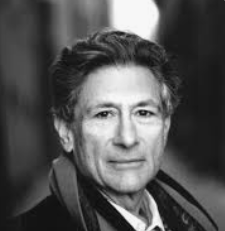
When one learns something one first performs an act of will, because only by willing to learn can one learn.
▼
Source
source
"Vico: Autodidact and Humanist," The Centennial Review, Vol. 11, No. 3 (Summer 1967), p. 340
3 months 3 weeks ago
I am not virtuous. Our sons will be if we shed enough blood to give them the right to be.
▼
Source
source
Act 3, sc. 5
2 months 3 weeks ago
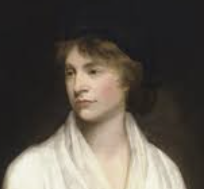
Virtue can only flourish amongst equals.
▼
Source
source
A Vindication of the Rights of Men
2 months 2 weeks ago
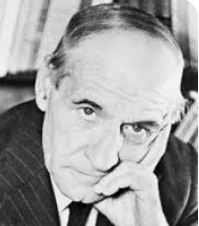
When all these things are lacking there is no culture; there is in the strictest sense of the word, barbarism. And let us not deceive ourselves, this is what is beginning to appear in Europe under the progressive rebellion of the masses. The traveller who arrives in a barbarous country knows that in that territory there are no ruling principles to which it is possible to appeal. Properly speaking, there are no barbarian standards. Barbarism is the absence of standards to which appeal can be made.
▼
Source
source
Chap. VIII: The Masses Intervene In Everything, And Why Their Intervention Is Solely By Violence
1 month 1 week ago
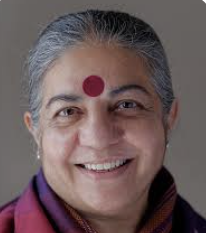
We are either going to have a future where women lead the way to make peace with the Earth or we are not going to have a future at all.
▼
Source
source
Quoted in "Woman power to the fore," by R.S. Binuraj, The Hindu
CivilSimian.com created by AxiomaticPanic, CivilSimian, Kalokagathia