


2 months 1 week ago
It cannot but happen that those individuals whose functions are most out of equilibrium with the modified aggregate of external forces, will be those to die; and that those will survive whose functions happen to be most nearly in equilibrium with the modified aggregate of external forces. But this survival of the fittest, implies multiplication of the fittest. Out of the fittest thus multiplied, there will, as before, be an overthrowing of the moving equilibrium wherever it presents the least opposing force to the new incident force.
▼
Source
source
The Principles of Biology, Vol. I (1864), Part III: The Evolution of Life, Ch. 7: Indirect Equilibration

2 months 1 week ago
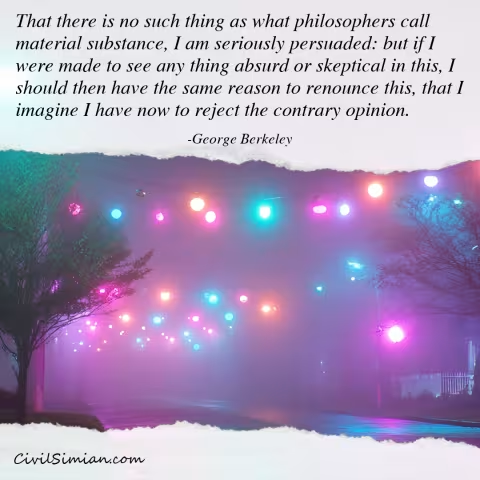
There are few with whom I can communicate so freely as with Pope. But Pope cannot bear every truth. He has a timidity which hinders the full exertion of his faculties, almost as effectually as bigotry cramps those of the general herd of mankind. But whoever is a genuine follower of truth keeps his eye steady upon his guide, indifferent whither he is led, provided that she is the leader. And, my Lord, if it may be properly considered, it were infinitely better to remain possessed by the whole legion of vulgar mistakes, than to reject some, and, at the same time, to retain a fondness for others altogether as absurd and irrational. The first has at least a consistency, that makes a man, however erroneously, uniform at least; but the latter way of proceeding is such an inconsistent chimera and jumble of philosophy and vulgar prejudice, that hardly anything more ridiculous can be conceived.

3 months 1 week ago
I am not virtuous. Our sons will be if we shed enough blood to give them the right to be.
▼
Source
source
Act 3, sc. 5
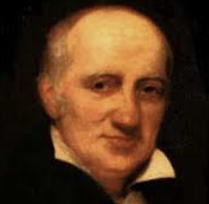
2 months 1 week ago
No man must encroach upon my province nor I upon his. He may advise me, moderately and without perniciousness, but he must not expect to dictate to me. He may censure me freely and without reserve but he should remember that I am to act by my deliberation and not his. He may exercise a republican boldness in judging, but he must not be peremptory and imperious in prescribing. Force may never be resorted to but, in the most extraordinary and imperious emergency.
▼
Source
source
Book II, "Of Rights"
1 day ago
Somehow, the practice of astronomy, physics, chemistry or biology normally fails to evoke the controversies over fundamentals that today seem endemic among, say, psychologists or sociologists. Attempting to discover the source of that difference led me to recognize the role in scientific research of what I have since called "paradigms." These I take to be universally recognized scientific achievements that for a time provide model problems and solutions for a community of practitioners.
▼
Source
source
p. xiii

3 months 1 week ago
A purely disembodied human emotion is a nonentity.
▼
Source
source
Ch. 25

3 months 1 week ago
This is the terrible fix we are in. If the universe is not governed by an absolute goodness, then all our efforts are in the long run hopeless. But if it is, then we are making ourselves enemies to that goodness every day, and are not in the least likely to do any better tomorrow, and so our case is hopeless again....God is the only comfort, He is also the supreme terror: the thing we most need and the thing we most want to hide from.
▼
Source
source
Book I, Chapter 5, "We Have Cause to Be Uneasy"
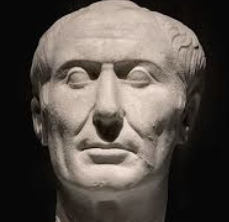
1 month 1 week ago
Treat your friend as if he might become an enemy.
▼
Source
source
Maxim 401
1 month 3 weeks ago
In the dominant Western religious system, the love of God is essentially the same as the belief in God, in God's existence, God's justice, God's love. The love of God is essentially a thought experience. In the Eastern religions and in mysticism, the love of God is an intense feeling experience of oneness, inseparably linked with the expression of this love in every act of living.
▼
Source
source
Ch. 2

1 day ago
No nobler feeling than this of admiration for one higher than himself dwells in the breast of man. It is to this hour, and at all hours, the vivifying influence in man's life.

3 months 4 days ago
Between the fine point of the brush and the steely gaze, the scene is about to yield up its volume.
▼
Source
source
Las Meninas

3 months 2 weeks ago
It is the natural effect of improvement, however, to diminish gradually the real price of almost all manufactures.
▼
Source
source
Chapter XI, Part III, (Conclusion..) p. 282.
2 months 2 days ago
The same, without such opinion, DESPAIRE.
▼
Source
source
The First Part, Chapter 6, p. 25

2 months 2 weeks ago
The first promise exchanged by two beings of flesh was at the foot of a rock that was crumbling into dust; they took as witness for their constancy a sky that is not the same for a single instant; everything changed in them and around them, and they believed their hearts free of vicissitudes. O children! always children!

2 months 2 weeks ago
By and large the literature of a democracy will never exhibit the order, regularity, skill, and art characteristic of aristocratic literature; formal qualities will be neglected or actually despised. The style will often be strange, incorrect, overburdened, and loose, and almost always strong and bold. Writers will be more anxious to work quickly than to perfect details. Short works will be commoner than long books, wit than erudition, imagination than depth. There will be a rude and untutored vigor of thought with great variety and singular fecundity. Authors will strive to astonish more than to please, and to stir passions rather than to charm taste.
▼
Source
source
Book One, Chapter XIII.
2 weeks 5 days ago
I think television has betrayed the meaning of democratic speech, adding visual chaos to the confusion of voices. What role does silence have in all this noise?
▼
Source
source
"Television"
2 months 3 weeks ago
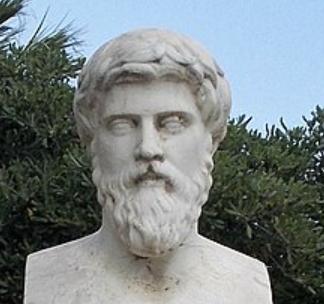
As Athenodorus was taking his leave of Cæsar, "Remember," said he, "Cæsar, whenever you are angry, to say or do nothing before you have repeated the four-and-twenty letters to yourself."
▼
Source
source
Cæsar Augustus

2 months 6 days ago
Self-pity is not as sterile as we suppose. Once we feel its mere onset, we assume a thinker's attitude, and come to think of it, we come to think!

3 months 2 weeks ago
I say that man without the grace of God nonetheless remains the general omnipotence of God who effects, and moves and impels all things in a necessary, infallible course; but the effect of man's being carried along is nothing--that is, avails nothing in God's sight, nor is reckoned to be anything but sin.
▼
Source
source
p. 265

7 months 2 weeks ago
Canned laughter: After some supposedly funny or witty remark you can hear the laughter and applause included in the soundtrack of the show itself - here we have the exact counterpart of the Chorus in classical tragedy; it is here that we have to look for 'living Antiquity.' That is to say, why this laughter? The first possible answer - that it serves to remind us when to laugh - is interesting enough, because it implies the paradox that laughter is a matter of duty and not of some spontaneous feeling; but this answer is not sufficient because we do not usually laugh. The only correct answer would be that the Other - embodied in the television set - is relieving us even of our duty to laugh - is instead laughing for us. So even if, tired from a hard days stupid work, all evening we did nothing but gaze drowsily into the television screen, we can say afterwards that objectively, through the medium of the other, we had a really good time.
3 months ago
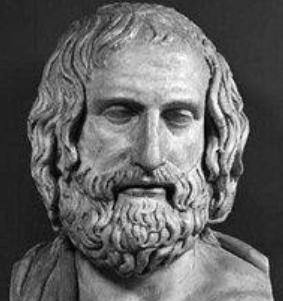
The Greeks follow a wrong usage in speaking of coming into being and passing away; for nothing comes into being or passes away, but there is mingling and separation of things that are. So they would be right to call coming into being mixture, and passing away separation.
▼
Source
source
Frag. B 17, quoted in John Burnet's Early Greek Philosophy, (1920), Chapter 6.
3 months 2 weeks ago
The administration of the great system of the universe, however, the care of the universal happiness of all rational and sensible beings, is the business of God and not of man. To man is allotted a much humbler department, but one much more suitable to the weakness of his powers, and to the narrowness of his comprehension; the care of his own happiness, of that of his family, his friends, his country: that he is occupied in contemplating the more sublime, can never be an excuse for his neglecting the more humble department.
▼
Source
source
Section II, Chap. III.

3 months 1 week ago
I remembered the way out suggested by a great princess when told that the peasants had no bread: "Well, let them eat cake".
▼
Source
source
This passage contains a statement Qu'ils mangent de la brioche that has usually come to be attributed to Marie Antoinette; this was written in 1766, when Marie Antoinette was 10

3 months 1 week ago
Most shocking of all is alledging the Sacred Scriptures to favour this wicked practice. One would have thought none but infidel cavillers would endeavour to make them appear contrary to the plain dictates of natural light, and Conscience, in a matter of common Justice and Humanity; which they cannot be. Such worthy men, as referred to before, judged otherways; Mr. Baxter declared, the Slave-Traders should be called Devils, rather than Christians; and that it is a heinous crime to buy them.

4 months 1 week ago
The tyrant dies and his rule is over; the martyr dies and his rule begins.

3 months 1 week ago
If you feel irritated by the absurd remarks of two people whose conversation you happen to overhear, you should imagine that you are listening to a dialogue of two fools in a comedy.
▼
Source
source
T. B. Saunders, trans., § 38
4 months 1 week ago
The next thing you can learn from the woman who was a sinner, something she herself understood, is that with regard to finding forgiveness she is able to do nothing at all.
2 months 1 week ago
Abstract liberty, like other mere abstractions, is not to be found.
1 day ago
Religion in most countries, more or less in every country, is no longer what it was, and should be,-a thousand-voiced psalm from the heart of Man to his invisible Father, the fountain of all Goodness, Beauty, Truth, and revealed in every revelation of these; but for the most part, a wise prudential feeling grounded on mere calculation; a matter, as all others now are, of Expediency and Utility; whereby some smaller quantum of earthly enjoyment may be exchanged for a far larger quantum of celestial enjoyment. Thus Religion too is Profit, a working for wages; not Reverence, but vulgar Hope or Fear.
2 months 1 week ago
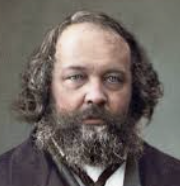
Freedom is the absolute right of every human being to seek no other sanction for his actions but his own conscience, to determine these actions solely by his own will, and consequently to owe his first responsibility to himself alone.
▼
Source
source
As quoted in Anarchism: From Theory to Practice, Daniel Guérin, New York: NY, Monthly Review Press (1970) p. 31

2 months 2 weeks ago
Be charitable before Wealth makes thee covetous.

3 months 1 week ago
The highest compact we can make with our fellow, is, - "Let there be truth between us two forevermore".
▼
Source
source
Behavior
2 months 5 days ago
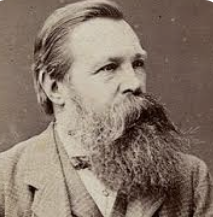
The introduction of free competition is thus public declaration that from now on the members of society are unequal only to the extent that their capitals are unequal, that capital is the decisive power, and that therefore the capitalists, the bourgeoisie, have become the first class in society. Free competition is necessary for the establishment of big industry, because it is the only condition of society in which big industry can make its way.
2 months 1 week ago
It is reconciled in policy; and politics ought to be adjusted, not to human reasonings, but to human nature; of which the reason is but a part; and by no means the greatest part.
▼
Source
source
Observations on a Late Publication on the Present State of the Nation (1769), page 78
3 months 1 week ago
When nature removes a great man, people explore the horizon for a successor; but none comes, and none will. His class is extinguished with him. In some other and quite different field the next man will appear.
▼
Source
source
Uses of Great Men
2 months 6 days ago
The refutation of suicide: is it not inelegant to abandon a world which has so willingly put itself at the service of our melancholy?
2 months 6 days ago
Sadness makes you God's prisoner.
3 months 1 week ago
We have ...as M. Ribot says, not memory so much as memories. The visual... tactile... muscular... auditory memory may all vary independently... and different individuals may have them developed in different degrees. As a rule, a man's memory is good in the departments in which his interest is strong; but those departments are apt to be those in which his discriminative sensibility is high. ...[D]ifferences in men's imagining power... the machinery of memory must be largely determined thereby.
▼
Source
source
Ch. 16

3 months 3 weeks ago
So it is more useful to watch a man in times of peril, and in adversity to discern what kind of man he is; for then at last words of truth are drawn from the depths of his heart, and the mask is torn off, reality remains.
▼
Source
source
Book III, lines 55-58 (reported in Bartlett's Familiar Quotations)
2 months 6 days ago
I thought that the only action a man could perform without shame was to take his life; that he had no right to diminish himself in the succession of days and the inertic of misery. No elect, I kept telling myself, but those who committed suicide.
3 months 4 days ago
The circle of day and night is the law of the classical world: the most restricted but most demanding of the necessities of the world, the most inevitable but the simplest of the legislations of nature.This was a law that excluded all dialectics and all reconciliation, consequently laying the foundations for the smooth unity of knowledge as well as the uncompromising division of tragic existence. It reigns on a world without darkness, which knows neither effusiveness nor the gentle charms of lyricism. All is waking or dreams, truth or error, the light of being or the nothingness of shadow.
▼
Source
source
Part Two: 2. The Transcendence of Delirium

1 month 1 week ago
Radio comes to us ostensibly with person to person directness that is private and intimate, while in more urgent fact, it is really a subliminal echo chamber of magic power to touch remote and forgotten chords.
▼
Source
source
(p. 302).
3 months 1 week ago
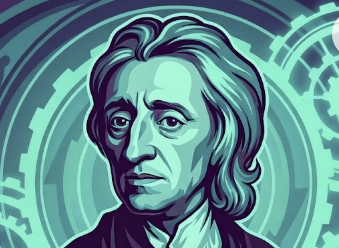
The good King of France desires only that you would take his word and let him be quiet till he has got the West Indies into his hands and his grandson well established in Spain, and then you may be sure you shall be as safe as he will let you be in your religion, property and trade, to all which who can be such an infidel as not to believe him a great friend?
▼
Source
source
Letter to Peter King (5 April 1701), quoted in Maurice Cranston, John Locke: A Biography (1957; 1985), p. 452

2 months 2 days ago
Jesus answered: "Believe me, Barnabas that I cannot weep as much as I ought. For if men had not called me God, I should have seen God here as he will be seen in paradise, and should have been safe not to fear the day of judgment. But God knows that I am innocent, because never have I harboured thought to be held more than a poor slave. No, I tell you that if I had not been called God I should have been carried into paradise when I shall depart from the world, whereas now I shall not go thither until the judgment. Now you see if I have cause to weep."
▼
Source
source
Ch. 112

3 months 1 week ago
In a constantly revolving circle every point is simultaneously a point of departure and a point of return. If we interrupt the rotation, not every point of departure is a point of return.
▼
Source
source
Vol. II, Ch. IV, p. 104.
3 months 4 days ago
The judges of normality are present everywhere. We are in the society of the teacher-judge, the doctor-judge, the educator-judge, the social worker-judge; it is on them that the universal reign of the normative is based; and each individual, wherever he may find himself, subjects to it his body, his gestures, his behavior, his aptitudes, his achievements.
1 week ago
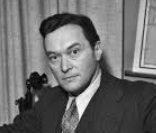
With exceptions so rare they are regarded as miracles of nature, successful democratic politicians are insecure and intimidated men. They advance politically only as they placate, appease, bribe, seduce, bamboozle, or otherwise manage to manipulate the demanding and threatening elements in their constituencies. The decisive consideration is not whether the proposition is good but whether it is popular-not whether it will work well and prove itself but whether the active talking constituents like it immediately. Politicians rationalize this servitude by saying that in a democracy public men are the servants of the people.
▼
Source
source
p. 27
3 months 1 week ago
"Everything is both a trap and a display; the secret reality of the object is what the Other makes of it."
CivilSimian.com created by AxiomaticPanic, CivilSimian, Kalokagathia