

1 month 3 weeks ago
No particular experiences are linked with any particular statements in the interior of the field, except indirectly through considerations of equilibrium affecting the field as a whole.
▼
Source
source
"Two Dogmas of Empiricism"
3 months 2 weeks ago
For I find that even those that have sought knowledge for itself and not for benefit, or ostentation, or any practical enablement in the course of their life, have nevertheless propounded to themselves a wrong mark, namely, satisfaction, which men call truth, and not operation. For as in the courts and services of princes and states, it is a much easier matter to give satisfaction than to do the business; so in the inquiring of causes and reasons it is much easier to find out such causes as will satisfy the mind of man, and quiet objections, than such causes as will direct him and give him light to new experiences and inventions.
▼
Source
source
Valerius Terminus: Of the Interpretation of Nature (ca. 1603), in Works, Vol. 1; The Works of Francis Bacon (1857), Vol. 3, p. 232
2 months 3 days ago
I define a Sign as anything which is so determined by something else, called its Object, and so determines an effect upon a person, which effect I call its Interpretant, that the latter is thereby mediately determined by the former.
▼
Source
source
Letter to Victoria, Lady Welby (1908) SS 80-81
1 month 4 weeks ago
Injustice, poverty, slavery, ignorance - these may be cured by reform or revolution. But men do not live only by fighting evils. They live by positive goals, individual and collective, a vast variety of them, seldom predictable, at times incompatible.
2 months 6 days ago
The secret of Hegel's dialectic lies ultimately in this alone, that it negates theology through philosophy in order then to negate philosophy through theology. Both the beginning and the end are constituted by theology; philosophy stands in the middle as the negation of the first positedness, but the negation of the negation is again theology. At first everything is overthrown, but then everything is reinstated in its old place, as in Descartes. The Hegelian philosophy is the last grand attempt to restore a lost and defunct Christianity through philosophy, and, of course, as is characteristic of the modern era, by identifying the negation of Christianity with Christianity itself.
▼
Source
source
Part II, Section 21
1 month 3 weeks ago
Our life is a hope which is continually converting itself into memory and memory in its turn begets hope. Give us leave to live! The eternity that is like an eternal present, without memory and without hope, is death. Thus do ideas exist in the God-Idea, but not thus do men live in the living God, in the God-Man.
1 month 2 weeks ago
If by motivation we mean whatever it is that causes someone to follow a particular course of action, then every action is motivated - by definition. But in most human behavior the relation between motives and action is not simple; it is mediated by a whole chain of events and surrounding conditions. We observe a man scratching his arm. His motive (or goal)? To relieve an itch.
▼
Source
source
p. 265.
1 month 2 days ago
Alas! in the clothes of the greatest potentate, what is there but a man?
▼
Source
source
The Suicide Club, Story of the Young Man with the Cream Tarts.

2 months 1 week ago
You had that action and counteraction which, in the natural and in the political world, from the reciprocal struggle of discordant powers draws out the harmony of the universe.
▼
Source
source
Volume iii, p. 277
3 months 1 week ago
The brain may be regarded as a kind of parasite of the organism, a pensioner, as it were, who dwells with the body.
3 months 1 week ago
A whole from necessary substances is impossible. The whole, therefore, of substances is a whole of contingent things, and the world consists essentially of only contingent things.
1 month 3 weeks ago
We must needs believe with faith, whatever counsels reason may give us, that in the depths of our own bodies, in animals, in plants, in rocks, in everything that lives, in all the Universe, there is a spirit that strives to know itself, to acquire consciousness of itself, to be itself - for to be oneself is to know oneself - to be pure spirit; and since it can only achieve this by means of the body, by means of matter, it creates and makes use of matter at the same time that it remains a prisoner of it.

1 month 3 weeks ago
Humility consists of knowing that in this world the whole soul, not only what we term the ego in its totality, but also the supernatural part of the soul, which is God present in it, is subject to time and to the vicissitudes of change. There must be absolutely acceptance of the possibility that everything material in us should be destroyed. But we must simultaneously accept and repudiate the possibility that the supernatural part of the soul should disappear.
▼
Source
source
"Concerning the Our Father" in Waiting on God (1972), Routledge & Kegan Paul edition, p. 153

1 month 4 days ago
War has become the environment of our time if only because it is an accelerated form of innovation and education.
▼
Source
source
(p. 381)
1 month 3 weeks ago
The bastard form of mass culture is humiliated repetition: content, ideological schema, the blurring of contradictions-these are repeated, but the superficial forms are varied: always new books, new programs, new films, news items, but always the same meaning.
▼
Source
source
Modern, in The Pleasure of the Text
3 days ago
The present crisis of Western democracy is a crisis in journalism.
▼
Source
source
Journalism and the Higher Law, p. 5

2 months 1 week ago
For nature is not merely present, but is implanted within things, distant from none; naught is distant from her except the false, and that which existed never and nowhere-nullity. And while the outer face of things changeth so greatly, there flourisheth the origin of being more intimately within all things than they themselves. The fount of all kinds, Mind, God, Being, One, Truth, Destiny, Reason, Order.
▼
Source
source
VIII 10 as translated by Dorothea Waley Singer
3 months 3 weeks ago
Know, first, who you are, and then adorn yourself accordingly.
▼
Source
source
Book III, ch. 1, 25.
1 month 3 weeks ago
The art of progress is to preserve order amid change, and to preserve change amid order.
1 month 4 weeks ago
Dialectical thought understands the critical tension between "is" and "ought" first as an ontological condition, pertaining to the structure of Being itself. However, the recognition of this state of Being - its theory - intends from the beginning a concrete practice. Seen in the light of a truth which appears in them falsified or denied, the given facts themselves appear false and negative.
▼
Source
source
p. 133
3 months 3 weeks ago
What should a philosopher say, then, in the face of each of the hardships of life? "It was for this that I've been training myself, it was for this that I was practising."
▼
Source
source
Book III, ch. 10,7.
3 months 1 week ago
The universal and lasting establishment of peace constitutes not merely a part, but the whole final purpose and end of the science of right as viewed within the limits of reason.

3 months 1 week ago
It is so rare to meet with a man out-doors who cherishes a worthy thought in his mind, which is independent of the labor of his hands.
1 week 3 days ago
You can't satisfy everybody; especially if there are those who will be dissatisfied unless not everybody is satisfied.
▼
Source
source
Ch. 10 : A Framework for Utopia; The Framework as Utopian Common Ground, p. 320
2 months 1 week ago
Before either of us knew it, we belonged to each other.

2 weeks ago
For those who live inside a myth, it seems a self-evident fact. Human progress is a fact of this kind. If you accept it you have a place in the grand march of humanity. Humankind is, of course, not marching anywhere. 'Humanity' is a fiction composed from billions of individuals for each of whom life is singular and final. But the myth of progress is extremely potent. When it loses its power those who have lived by it are - as Conrad put it, describing Kayerts and Carlier - 'like those lifelong prisoners who, liberated after many years, do not know what use to make of their freedoms'. When faith in the future is taken from them, so is the image they have of themselves. If they then opt for death, it is because without that faith they can no longer make sense of living.
▼
Source
source
An Old Chaos: The Call of Progress (pp. 6-7)
1 month 3 weeks ago
You do not attain to knowledge by remaining on the shore and watching the foaming waves, you must make the venture and cast yourself in, you must swim, alert and with all your force, even if a moment comes when you think you are losing consciousness; in this way, and in no other, do you reach anthropological insight.
▼
Source
source
p. 148
1 month 3 weeks ago
The soul was not made to dwell in a thing; and when forced to it, there is no part of that soul but suffers violence.
▼
Source
source
in The Simone Weil Reader, p. 155
1 month 4 weeks ago
We can only learn to love by loving.
▼
Source
source
The Bell (1958), ch. 19; 2001, p. 219.


1 month 2 weeks ago
The basic paradox about sex is that it always seems to be offering more than it can deliver. A glimpse of a girl undressing through a lighted bedroom window induces a vision of ecstatic delight, but in the actual process of persuading the girl into bed, the vision somehow evaporates.
▼
Source
source
p. 16
1 month 3 weeks ago
The Hebrews took for their idol, not something made of metal or wood, but a race, a nation, something just as earthly. Their religion is essentially inseparable from such idolatry, because of the notion of the "chosen people".
▼
Source
source
Section 2

2 days ago
Putin told the Financial Times that liberalism has become an "obsolete" doctrine. While it may be under attack from many quarters today, it is in fact more necessary than ever. It is more necessary because it is fundamentally a means of governing over diversity, and the world is more diverse than it ever has been. Democracy disconnected from liberalism will not protect diversity, because majorities will use their power to repress minorities.
▼
Source
source
Emphasis in original.

3 months 6 days ago
Of all tyrannies, a tyranny sincerely exercised for the good of its victims may be the most oppressive. It would be better to live under robber barons than under omnipotent moral busybodies. The robber baron's cruelty may sometimes sleep, his cupidity may at some point be satiated; but those who torment us for our own good will torment us without end for they do so with the approval of their own conscience. They may be more likely to go to Heaven yet at the same time likelier to make a Hell of earth. This very kindness stings with intolerable insult. To be "cured" against one's will and cured of states which we may not regard as disease is to be put on a level of those who have not yet reached the age of reason or those who never will; to be classed with infants, imbeciles, and domestic animals.
▼
Source
source
God in the Dock: Essays on Theology (Making of Modern Theology)

2 months 3 weeks ago
If you are well-to-do and can maintain your household, love your wife in your home according to good custom...Make her happy while you are alive, for she is land profitable to her lord.
▼
Source
source
Maxim no. 21.
2 months 2 days ago
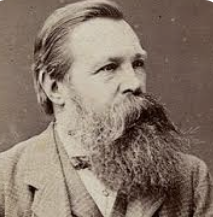
Just as Marx used to say about the French Marxists of the late 'seventies: All I know is that I am not a Marxist.
▼
Source
source
Letter to Conrad Schmidt

1 month 6 days ago
The only thing that we know is that we know nothing - and that is the highest flight of human wisdom.
▼
Source
source
Book V, Ch. I

3 months 6 days ago
Do you think that I count the days? There is only one day left, always starting over: it is given to us at dawn and taken away from us at dusk.
▼
Source
source
Act 10, sc. 2
1 month 2 weeks ago
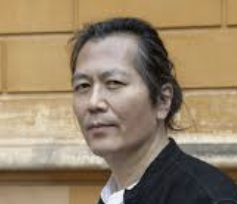
Capitalism lacks narrativity.
1 month 4 days ago
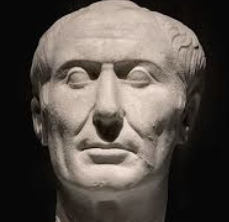
While we stop to think, we often miss our opportunity.
▼
Source
source
Maxim 185

3 months 1 week ago
The good life, as I conceive it, is a happy life. I do not mean that if you are good you will be happy; I mean that if you are happy you will be good.
▼
Source
source
Part I: Man and Nature, Ch. 1: Current Perplexities, p. 10

2 months 1 week ago
People talk sometimes of bestial cruelty, but that's a great injustice and insult to the beasts; a beast can never be so cruel as a man, so artistically cruel.

3 months 1 week ago
The interest of the dealers, however, in any particular branch of trade or manufactures, is always in some respects different from, and even opposite to, that of the public. To widen the market and to narrow the competition, is always the interest of the dealers.
▼
Source
source
Chapter XI, Part III, Conclusion of the Chapter, p. 292.
1 month 3 weeks ago
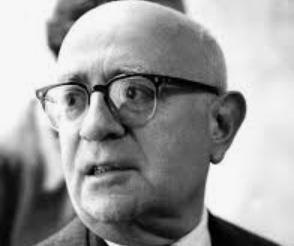
Jazz is the false liquidation of art - instead of utopia becoming reality it disappears from the picture.
▼
Source
source
Perennial fashion - Jazz, as quoted in The Sociology of Rock (1978) by Simon Frith
3 months 2 weeks ago
We must calm the mind of the common man, and tell him to abstain from the words and even the passions which lead to insurrection.
▼
Source
source
p. 62

2 days ago
When the general population no longer constitutes the armed forces, when the army is no longer the people in arms, then empires fall. Today all armies are again tending to become mercenary armies.
▼
Source
source
49

3 months 2 weeks ago
There is a plague on Man, the opinion that he knows something.

2 months 3 days ago
A distant enemy is always preferable to one at the gate.
1 month 2 weeks ago
Food probably has a very great influence on the condition of men. Wine exercises a more visible influence, food does it more slowly but perhaps just as surely. Who knows if a well-prepared soup was not responsible for the pneumatic pump or a poor one for a war?
▼
Source
source
A 14
3 months 2 weeks ago
T is one and the same Nature that rolls on her course, and whoever has sufficiently considered the present state of things might certainly conclude as to both the future and the past.
▼
Source
source
Book II, Ch. 12. Apology for Raimond Sebond
CivilSimian.com created by AxiomaticPanic, CivilSimian, Kalokagathia