


1 month 3 weeks ago
The materialists say, it is by means of a series of straight lines more or less perfect that one imagines the perfect straight line as an ideal limit. That is right, but the progression in itself necessarily contains what is infinite; it is in relation to the perfect straight line that one can say that such and such a straight line is less twisted than some other. ... Either one conceives the infinite or one does not conceive at all.
▼
Source
source
p. 87

1 month 2 weeks ago
The student of the history of progressive thought is well aware that every idea in its early stages has been misrepresented, and the adherents of such ideas have been maligned and persecuted...The history of progress is written in the blood of men and women who have dared to espouse an unpopular cause, as, for instance, the black man's right to his body, or woman's right to her soul. If, then, from time immemorial, the New has met with opposition and condemnation, why should my beliefs be exempt from a crown of thorns?


3 months 2 weeks ago
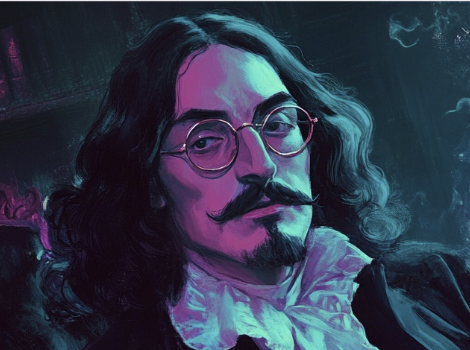
What I have given in the second book on the nature and properties of curved lines, and the method of examining them, is, it seems to me, as far beyond the treatment in the ordinary geometry, as the rhetoric of Cicero is beyond the a, b, c of children.
▼
Source
source
Letter to Marin Mersenne (1637) as quoted by D. E. Smith & M. L. Latham Tr. The Geometry of René Descartes

3 months 6 days ago
Can a mortal ask questions which God finds unanswerable? Quite easily, I should think. All nonsense questions are unanswerable. How many hours are there in a mile? Is yellow square or round? Probably half the questions we ask - half our great theological and metaphysical problems - are like that.

3 months 1 week ago
What we principally thought of, was to alter people's opinions; to make them believe according to evidence, and know what was their real interest, which when they once knew, they would, we thought, by the instrument of opinion, enforce a regard to it upon one another. While fully recognizing the superior excellence of unselfish benevolence and love of justice, we did not expect the regeneration of mankind from any direct action on those sentiments, but from the effect of educated intellect, enlightening the selfish feelings. Although this last is prodigiously important as a means of improvement in the hands of those who are themselves impelled by nobler principles of action, I do not believe that any one of the survivors of the Benthamites or Utilitarians of that day, now relies mainly upon it for the general amendment of human conduct.
▼
Source
source
(pp. 111-112)
3 months 6 days ago
"Their own strength has betrayed them. They have [...] pulled down Deep Heaven on their heads."
▼
Source
source
Ch. 13 : They Have Pulled Down Deep Heaven on Their Heads

3 months 1 week ago
Men go to a fire for entertainment. When I see how eagerly men will run to a fire, whether in warm or in cold weather, by day or by night, dragging an engine at their heels, I'm astonished to perceive how good a purpose the level of excitement is made to serve.
▼
Source
source
June, 1850

2 weeks 5 days ago
People don't want to be understood - I mean not completely. It's too destructive. Then they haven't anything left.

3 months 1 week ago
Man exists for his own sake and not to add a laborer to the state.
▼
Source
source
November 15, 1839

3 months 1 week ago
A habit of basing convictions upon evidence, and of giving to them only that degree of certainty which the evidence warrants, would, if it became general, cure most of the ills from which the world is suffering. But at present, in most countries, education aims at preventing the growth of such a habit, and men who refuse to profess belief in some system of unfounded dogmas are not considered suitable as teachers of the young.
▼
Source
source
preface xxiii-xxiv

3 months 1 week ago
The question here is not, "How conscience ought to be guided? For Conscience is its own General and Leader; it is therefore enough that each man have one. What we want to know is, how conscience can be her own Ariadne, and disentangle herself from the mazes even of the most raveled and complicated casuistical theology. Here is an ethical proposition that stands in need of no proof: No Action May At Any Time Be Hazarded On The Uncertainty That Perchance It May Not Be Wrong (Quod dubitas, ne feceris! Pliny - which you doubt, then neither do) Hence the Consciousness, that Any Action I am about to perform is Right, is in itself a most immediate and imperative duty. What actions are right, - what wrong - is a matter for the understanding, not for conscience.
▼
Source
source
p. 251 Book IV, Part 2, Section 4
1 month 2 weeks ago
Organizations are systems of coordinated action among individuals and groups whose preferences, information, interests, or knowledge differ. Organization theories describe the delicate conversion of conflict into cooperation, the mobilization of resources, and the coordination of effort that facilitate the joint survival of an organization and its members.
▼
Source
source
Simon (1993. p. 2); Cited in Mario Catalani, Giuseppe F. Clerico (1996) Decision making structures. p. 1.

3 months 1 week ago
As much in vain, perhaps, will they search ancient history for examples of the modern Slave-Trade. Too many nations enslaved the prisoners they took in war. But to go to nations with whom there is no war, who have no way provoked, without farther design of conquest, purely to catch inoffensive people, like wild beasts, for slaves, is an hight of outrage against Humanity and Justice, that seems left by Heathen nations to be practised by pretended Christians. How shameful are all attempts to colour and excuse it!

2 months 1 week ago
The God of the Christians is a father who makes much of his apples, and very little of his children.
▼
Source
source
No. 16
1 month 4 weeks ago
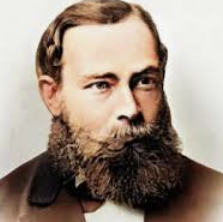
If I compare arithmetic with a tree that unfolds upward into a multitude of techniques and theorems while its root drives into the depths, then it seems to me that the impetus of the root.
▼
Source
source
Gottlob Frege, Montgomery Furth (1964). The Basic Laws of Arithmetic: Exposition of the System. p. 10
2 weeks 2 days ago
If we already lived in a cruelty-free world, the notion of re-introducing suffering, exploitation and creatures eating each other would seem not so much frightful as unimaginable - no more seriously conceivable than reverting to surgery without anaesthesia today.
▼
Source
source
Reprogramming Predators, BLTC Research, 2009
1 month 3 days ago
Time passes quickly with lovers.
▼
Source
source
The Pavilion on the Links, ch. V.
3 months 1 week ago
I should like to believe my people's religion, which was just what I could wish, but alas, it is impossible. I have really no religion, for my God, being a spirit shown merely by reason to exist, his properties utterly unknown, is no help to my life. I have not the parson's comfortable doctrine that every good action has its reward, and every sin is forgiven. My whole religion is this: do every duty, and expect no reward for it, either here or hereafter.
▼
Source
source
Greek Exercises (1888), written two days after his sixteenth birthday.

2 months 1 week ago
People will not look forward to posterity, who never look backward to their ancestors.
▼
Source
source
Volume iii, p. 274

3 months 1 week ago
We are all a sort of camelions, that still take a tincture from things near us; nor is it to be wonder'd at in children, who better understand what they see than what they hear.
▼
Source
source
Sec. 67
1 month 3 weeks ago
Nobody is bound to have an optimistic outlook on the future: that is not a precept of the Christian religion. ... It is a matter of immense importance that illusions should be dispelled and man come face to face with positive realities.
▼
Source
source
p. 131
1 month 3 days ago
We do not go to cowards for tender dealing; there is nothing so cruel as panic; the man who has least fear for his own carcase, has most time to consider others.
▼
Source
source
314

2 months 3 days ago
Far from diminishing the appetite for power, suffering exasperates it; hence the mind feels more comfortable in the society of a braggart than in that of a martyr; and nothing is more repugnant to it than the spectacle of dying for an idea.

3 months 1 week ago
It is difficult to free fools from the chains they revere.
▼
Source
source
Le dîner du comte de Boulainvilliers (1767): Troisième Entretien
3 months 2 weeks ago
These five rules [above] form all that is necessary to render proofs convincing, immutable, and to say all, geometrical; and the eight rules together render them even more perfect.

2 months 3 weeks ago
As money grows, care follows it and the hunger for more.
▼
Source
source
Book III, ode xvi, line 17

2 months 2 days ago
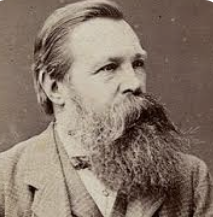
Abolish competition and replace it with association.

3 months 1 day ago
To sum up all these steps, each of which is very lengthy and complex, we will have put the game of truth back in the network of constraints and dominations. Truth, I should say rather, the system of truth and falsity, will have revealed the face it turned away from us for so long and which is that of its violence.
▼
Source
source
p. 4
3 months 1 week ago
It is strange that men will talk of miracles, revelations, inspiration, and the like, as things past, while love remains.
▼
Source
source
Pearls of Thought (1881) p. 163
3 months 6 days ago
If anyone would like to acquire humility, I can, I think, tell him the first step. The first step is to realise that one is proud. And a biggish step, too. At least, nothing whatever can be done before it. If you think you are not conceited, it means you are very conceited indeed.
▼
Source
source
Book III, Chapter 8, "The Great Sin"
2 months 3 days ago
Progress is the injustice each generation commits with regard to its predecessor.

4 months 4 days ago
Consider the most famous pure dystopian tale of modern times, 1984, by George Orwell (1903-1950), published in 1948 (the same year in which Walden Two was published). I consider it an abominably poor book. It made a big hit (in my opinion) only because it rode the tidal wave of cold war sentiment in the United States.
1 day ago
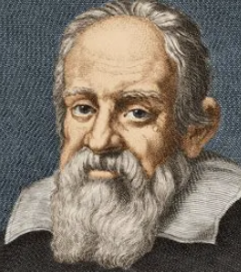
Some years ago, as Your Serene Highness well knows, I discovered in the heavens many things that had not been seen before our own age. The novelty of these things, as well as some consequences which followed from them in contradiction to the physical notions commonly held among academic philosophers, stirred up against me no small number of professors - as if I had placed these things in the sky with my own hands in order to upset nature and overturn the sciences. They seemed to forget that the increase of known truths stimulates the investigation, establishment, and growth of the arts; not their diminution or destruction.

3 days ago
One whose intentions and thoughts are cultivated will disregard wealth and nobility. One whose greatest concern is for the Way and righteousness will take lightly kings and dukes. It is simply that when one examines oneself on the inside, external goods carry little weight. A saying goes, "The gentleman makes things his servants. The petty man is servant to things.
▼
Source
source
Readings in Classical Chinese Philosophy (2001), p. 263
3 months 6 days ago
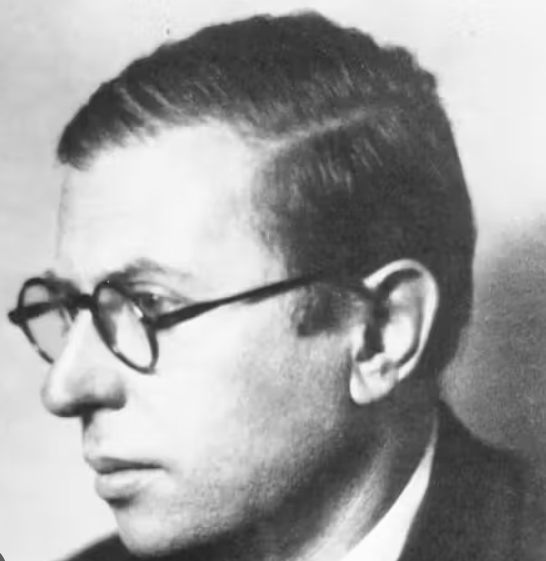
In doing Good, I lose myself in Being, I abandon my particularity, I become a universal subject.
▼
Source
source
p. 77
1 month 3 weeks ago
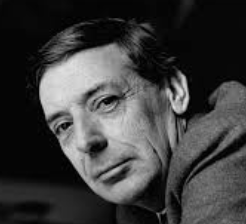
Deniers do not get their views just from simple mistakes about language and truth. Rather, they believe that there is something to worry about in important areas of our thought and in traditional interpretations of those areas; they sense that it has something to do with truth; and (no doubt driven by the familiar desire to say something at once hugely general, deeply important, and reassuringly simple) they extend their worry to the notion of truth itself.
▼
Source
source
p. 6
2 months 3 days ago
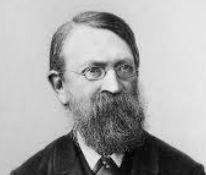
Scientists believe there is a hierarchy of facts and that among them may be made a judicious choice. They are right, since otherwise there would be no science... One need only open the eyes to see that the conquests of industry which have enriched so many practical men would never have seen the light, if these practical men alone had existed and if they had not been preceded by unselfish devotees who died poor, who never thought of utility, and yet had a guide far other than caprice.As Mach says, these devotees have spared their successors the trouble of thinking.
▼
Source
source
Henri Poincaré, The Value of Science (1907) Author's Essay Prefatory to the Translation: "The Choice of Facts," p.4, Tr. George Bruce Halsted

3 months 1 week ago
I look forward to a future when acts of war shall be formally outlawed as between civilized peoples. All these beliefs of mine put me firmly into the anti-military party. But I do not believe that peace either ought to be or will be permanent on this globe, unless the states, pacifically organized, preserve some of the old elements of army-discipline. A permanently successful peace-economy cannot be a simple pleasure-economy. In the more or less socialistic future toward which mankind seems drifting we must still subject ourselves collectively to those severities which answer to our real position upon this only partly hospitable globe. We must make new energies and hardihoods continue the manliness to which the military mind so faithfully clings.
1 month 3 weeks ago
Berdyaev has been categorized as a Christian existentialist and a mystical philosopher. He never avoided the label of "mystic" since he felt it was the mystics of the world who came closest to understanding the role of spirit. Many of the philosophers he quoted were mystics - Meister Eckhart, Angelus Silesius and especially Jacob Boehme. The influence of Dostoevsky was central to his thought. Nevertheless, Berdyaev is not a naively irrational thinker; he brings an enormous fund of philosophical knowledge combined with the profundity of his own thought to support his view of existence. There are no dogmas in his writings to offend one's intellectual conscience.
▼
Source
source
Richard Schain, in In Love with Eternity : Philosophical Essays and Fragments (2005), Ch. 7 : Nikolai Alexandrovich Berdyaev - A Champion of the Spirit, p. 47
3 months 1 week ago
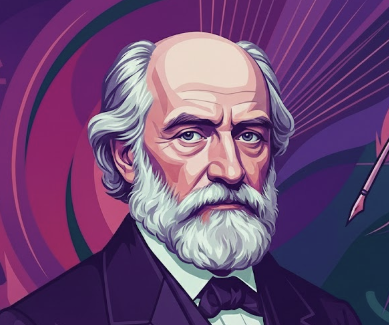
The cheapest sort of pride is national pride; for if a man is proud of his own nation, it argues that he has no qualities of his own of which he can be proud; otherwise he would not have recourse to those which he shares with so many millions of his fellowmen. The man who is endowed with important personal qualities will be only too ready to see clearly in what respects his own nation falls short, since their failings will be constantly before his eyes. But every miserable fool who has nothing at all of which he can be proud adopts, as a last resource, pride in the nation to which he belongs; he is ready and glad to defend all its faults and follies tooth and nail, thus reimbursing himself for his own inferiority.
▼
Source
source
Vol. 1, Ch. 3, Section 2: Pride

4 months 1 week ago
This opinion... appears to be ancient... that the one, excess and defect, are the principles of things... It is not... probable that there are more than three principles... [E]ssence is one certain genus of being: so that principles will differ from each other in prior and posterior alone, but not in genus, for in one genus there is always one contrariety, and all contrarieties appear to be referred to one. That there is neither one element, therefore, nor more than two or three, is evident.

1 month 2 weeks ago
Nietzsche's great concept of Yea-saying gave him a notion of purpose that is seen as positive.
▼
Source
source
Nietzsche, in short, was a religious mystic. p. 275

4 months 3 days ago
Nothing can discourage the appetite for divinity in the heart of man.
3 months 1 week ago
Mark what 'tis his mind aims at in the question, and not what words he expresses it in: and when you have informed and satisfied him in that, you shall see how his thoughts will enlarge themselves, and how by fit answers he may be led on farther than perhaps you could have imagine. For knowledge is grateful to the understanding, as light to the eyes.
▼
Source
source
Sec. 118
2 months 1 week ago
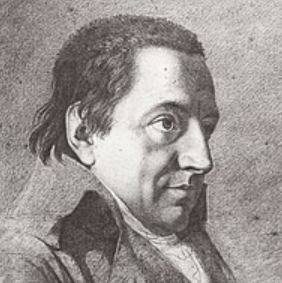
The original thinking force of the universe progresses and develops itself in all possible determinations of which it is capable, just as the other original natural forces progress and assume all possible configurations. I am a particular determination of the formative force, like the plant; a particular determination of the peculiar motive force, like the animal; and in addition to this a determination of the thinking force: and the union of these three basic forces into one force, into one harmonious development, is the distinguishing characteristic of my species.
▼
Source
source
P. Preuss, trans. (1987), p. 12

3 months 3 weeks ago
Let the superior man never fail reverentially to order his own conduct, and let him be respectful to others and observant of propriety: then all within the four seas, all men are brothers. What has the superior man to do with being distressed because he has no brothers?

4 months 5 days ago
It is difficult to set forth any of the greater ideas, except by the use of examples; for it would seem that each of us knows everything that he knows as if in a dream and then again, when he is as it were awake, knows nothing of it all.
CivilSimian.com created by AxiomaticPanic, CivilSimian, Kalokagathia