


3 months 1 week ago
For it is extremely absurd to expect to be enlightened by reason, and yet to prescribe to her beforehand on which side she must incline.
▼
Source
source
A 747, B 775; as translated by F. Max Mueller

1 month 5 days ago
The user of the electric light -- or a hammer, or a language, or a book -- is the content. As such, there is a total metamorphosis of the user by the interface. It is the metamorphosis that I consider the message.
▼
Source
source
Letter to Edward T. Hall, 1971, Letters of Marshall McLuhan, p. 397

3 months 2 weeks ago
Death, they say, acquits us of all obligations.
▼
Source
source
Book I, Ch. 7

3 months 6 days ago
Kant stated defensively that he had "found it necessary to deny knowledge. . . to make room for faith," but he had not made room for faith; he had made room for thought, and he had not "denied knowledge" but separated knowledge from thinking.
▼
Source
source
p. 14

1 month 1 week ago
Nonviolence does not make sense without a commitment to equality. The reason why nonviolence requires a commitment to equality can best be understood by considering that in this world some lives are more clearly valued than others, and that this inequality implies that certain lives will be more tenaciously defended than others. If one opposes the violence done to human lives-or, indeed, to other living beings-this presumes that it is because those lives are valuable. Our opposition affirms those lives as valuable. If they were to be lost as a result of violence, that loss would be registered as a loss only because those lives were affirmed as having a living value, and that, in turn, means we regard those lives as worthy of grief.
▼
Source
source
p. 28

2 months 1 week ago
France had endeavoured under the specious pretext of an enlarged benevolence, to sow the seeds of enmity among nations, and destroy all local attachments, calling them narrow and illiberal-thereby to dissever the people from their governors.
▼
Source
source
Speech in the House of Commons on the Traitorous Correspondence Bill (9 April 1793)
3 months 1 week ago
Life is a task to be done. It is a fine thing to say defunctus est; it means that the man has done his task.
▼
Source
source
"On the Sufferings of the World"
1 month 5 days ago
A moral point of view too often serves as a substitute for understanding in technological matters.
▼
Source
source
(p. 245)
2 months 2 days ago
Since the management of industry by individuals necessarily implies private property, and since competition is in reality merely the manner and form in which the control of industry by private property owners expresses itself, it follows that private property cannot be separated from competition and the individual management of industry. Private property must, therefore, be abolished and in its place must come the common utilization of all instruments of production and the distribution of all products according to common agreement - in a word, what is called the communal ownership of goods.

3 months 6 days ago
What would really satisfy us would be a God who said of anything we happened to like, "What does it matter so long as they are contented?" We want, in fact, not so much a Father in Heaven as a grandfather in heaven - a senile benevolence who, as they say, "liked to see young people enjoying themselves" and whose plan for the universe was simply that it might be truly said at the end of each day, "a good time was had by all".

1 month 2 weeks ago
Our institutions and conditions rest upon deep-seated ideas. To change those conditions and at the same time leave the underlying ideas and values intact means only a superficial transformation, one that cannot be permanent or bring real betterment. It is a change of form only, not of substance, as so tragically proven by Russia.
1 month 3 weeks ago
The sensate body possesses an art of interrogating the sensible according to its own wishes, an inspired exegesis The Visible and the Invisible, trans.
▼
Source
source
A. Lingis (Evanston: 1968), p. 135
1 month 3 weeks ago
It is a profoundly erroneous truism, repeated by all copy-books and by eminent people when they are making speeches, that we should cultivate the habit of thinking of what we are doing. The precise opposite is the case. Civilization advances by extending the number of important operations which we can perform without thinking about them. Operations of thought are like cavalry charges in a battle - they are strictly limited in number, they require fresh horses, and must only be made at decisive moments.
▼
Source
source
ch. 5.

4 months 1 week ago
A line by Thomas à Kempis which perhaps could be used as a motto sometime. He says of Paul: Therefore he turned everything over to God, who knows all, and defended himself solely by means of patience and humility . . . . He did defend himself now and then so that the weak would not be offended by his silence.
3 weeks 5 days ago
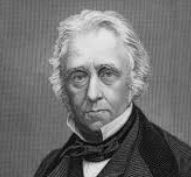
If we consider merely the subtlety of disquisition, the force of imagination, the perfect energy and elegance of expression, which characterise the great works of Athenian genius, we must pronounce them intrinsically most valuable; but what shall we say when we reflect that from hence have sprung, directly or indirectly, all the noblest creations of the human intellect; that from hence were the vast accomplishments, and the brilliant fancy of Cicero; the withering fire of Juvenal; the plastic imagination of Dante; the humour of Cervantes; the comprehension of Bacon; the wit of Butler; the supreme and universal excellence of Shakspeare? All the triumphs of truth and genius over prejudice and power, in every country and in every age, have been the triumphs of Athens. Wherever a few great minds have made a stand against violence and fraud, in the cause of liberty and reason, there has been her spirit in the midst of them; inspiring, encouraging, consoling.
▼
Source
source
p. 178

3 months 6 days ago
Jehovah, Allah, the Trinity, Jesus, Buddha, are names for a great variety of human virtues, human mystical experiences, human remorses, human compensatory fantasies, human terrors, human cruelties. If all men were alike, all the world would worship the same God.
▼
Source
source
"One and Many," p. 3
2 months 1 week ago
The most obvious division of society is into rich and poor; and it is no less obvious, that the number of the former bear a great disproportion to those of the latter. The whole business of the poor is to administer to the idleness, folly, and luxury of the rich; and that of the rich, in return, is to find the best methods of confirming the slavery and increasing the burdens of the poor. In a state of nature, it is an invariable law, that a man's acquisitions are in proportion to his labours. In a state of artificial society, it is a law as constant and as invariable, that those who labour most enjoy the fewest things; and that those who labour not at all have the greatest number of enjoyments. A constitution of things this, strange and ridiculous beyond expression! We scarce believe a thing when we are told it, which we actually see before our eyes every day without being in the least surprised.

3 months 2 weeks ago
There is no more lovely, friendly and charming relationship, communion or company than a good marriage.
▼
Source
source
292
2 months 3 weeks ago
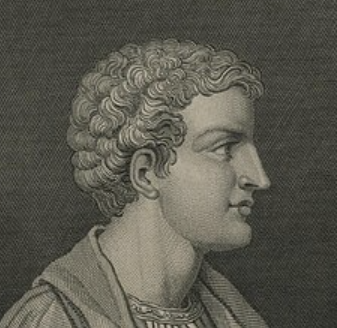
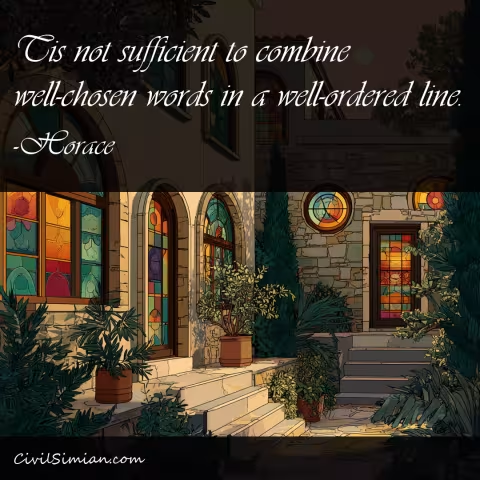
Tis not sufficient to combine well-chosen words in a well-ordered line.
▼
Source
source
Book I, satire iv, line 54 (translated by John Conington)

3 months 1 week ago
I did not know that mankind were suffering for want of gold. I have seen a little of it. I know that it is very malleable, but not so malleable as wit. A grain of gold will gild a great surface, but not so much as a grain of wisdom.
▼
Source
source
p. 488
3 weeks 2 days ago
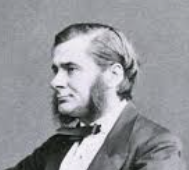
The language of the chalk is not hard to learn, not nearly so hard as Latin, if you only want to get at the broad features of the story it has to tell; and I propose that we now set to work to spell that story out together.
1 month 2 weeks ago
"Why do you not say how things will be operated under Anarchism?" is a question I have had to meet thousands of times. Because I believe that Anarchism can not consistently impose an iron-clad program or method on the future. The things every new generation has to fight, and which it can least overcome, are the burdens of the past, which holds us all as in a net. Anarchism, at least as I understand it, leaves posterity free to develop its own particular systems, in harmony with its needs. Our most vivid imagination can not foresee the potentialities of a race set free from external restraints. How, then, can any one assume to map out a line of conduct for those to come? We, who pay dearly for every breath of pure, fresh air, must guard against the tendency to fetter the future. If we succeed in clearing the soil from the rubbish of the past and present, we will leave to posterity the greatest and safest heritage of all ages.
1 month 3 days ago
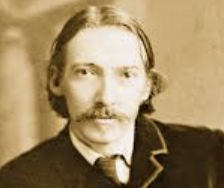
Perpetual devotion to what a man calls his business, is only to be sustained by perpetual neglect of many other things.
▼
Source
source
An Apology for Idlers.
3 months 6 days ago
If we are going to be destroyed by an atomic bomb, let that bomb when it comes find us doing sensible and human things - praying, working, teaching, reading, listening to music, bathing the children, playing tennis, chatting to our friends over a pint and a game of darts - not huddled together like frightened sheep and thinking about bombs. They might break our bodies (a microbe can do that) but they need not dominate our minds.
3 months 1 week ago
The imagination is always restless and suggests a variety of thoughts, and the will, reason being laid aside, is ready for every extravagant project; and in this State, he that goes farthest out of the way, is thought fittest to lead, and is sure of most followers: And when Fashion hath once Established, what Folly or craft began, Custom makes it Sacred, and 'twill be thought impudence or madness, to contradict or question it. He that will impartially survey the Nations of the World, will find so much of the Governments, Religion, and Manners brought in and continued amongst them by these means, that they will have but little Reverence for the Practices which are in use and credit amongst Men.
▼
Source
source
First Treatise of Government

4 months 4 days ago
The job of science will never be done, it will just sink deeper and deeper into never-ending complexity.

3 months 1 week ago
In all affairs - love, religion, politics, or business - it's a healthy idea, now and then, to hang a question mark on the things you have long taken for granted.
▼
Source
source
As quoted in The Reader's Digest, Vol. 37 (1940), p. 90; no specific source given.
1 week 3 days ago
Individuals have rights and there are things no person or group may do to them (without violating their rights). So strong and far-reaching are these rights that they raise the question of what, if anything, the state and its officials may do. How much room do individual rights leave for the state?
▼
Source
source
Preface, p. ix
3 months 1 week ago
The hidden significance of these fables which is sometimes thought to have been detected, the ethics running parallel to the poetry and history, are not so remarkable as the readiness with which they may be made to express a variety of truths. As if they were the skeletons of still older and more universal truths than any whose flesh and blood they are for the time made to wear. It is like striving to make the sun, or the wind, or the sea symbols to signify exclusively the particular thoughts of our day. But what signifies it? In the mythus a superhuman intelligence uses the unconscious thoughts and dreams of men as its hieroglyphics to address men unborn. In the history of the human mind, these glowing and ruddy fables precede the noonday thoughts of men, as Aurora the sun's rays. The matutine intellect of the poet, keeping in advance of the glare of philosophy, always dwells in this auroral atmosphere.

2 months 3 days ago
The state of health is a state of nonsensation, even of nonreality. As soon as we cease to suffer, we cease to exist.
3 months 3 weeks ago
The Apostle says: I make up in my flesh what is lacking to the sufferings of Christ (Col. 1:24). I make up, he tells us, not what is lacking to my sufferings, but what is lacking to the sufferings of Christ; not in Christ flesh, but in mine. not in Christ's flesh, but in mine. Christ is still suffering, not in His own flesh which He took with Him into heaven, but in my flesh, which is still suffering on earth.
▼
Source
source
p.423
3 months 1 week ago
At the age of five years to enter a spinning-cotton or other factory, and from that time forth to sit there daily, first ten, then twelve, and ultimately fourteen hours, performing the same mechanical labour, is to purchase dearly the satisfaction of drawing breath. But this is the fate of millions, and that of millions more is analogous to it.
▼
Source
source
Vol II: "On the Vanity and Suffering of Life", as translated by R. B. Haldane, and J. Kemp in The World as Will and Idea (1886), p. 389
1 month 2 weeks ago
Organizations and institutions provide the general stimuli and attention-directors that channelize the behaviors of the members of the group, and that provide those members with the intermediate objectives that stimulate action.
▼
Source
source
p. 100.

1 month 3 weeks ago
I have sometimes told myself that if only there were a notice on church doors forbidding entry to anyone with an income above a certain figure, and a low one, I would be converted at once.
▼
Source
source
Letter to Georges Bernanos (1938), in Seventy Letters, as translated by Richard Rees (Wipf and Stock: 1965), p. 105

3 months 1 week ago
The position of the revolutionary party in Germany is certainly difficult at the moment, but, with some critical analysis of the circumstances, clear nevertheless. As to the "governments," it is obvious from every point of view, if only for the sake of Germany's existence, that the demand must be put to them not to remain neutral, but, as you rightly say, to be patriotic. But the revolutionary point is to be given to the affair simply by emphasising the antagonism to Russia more strongly than the antagonism against Boustrapa.
▼
Source
source
Letter to Friedrich Engels (18 May 1859), quoted in Karl Marx and Friedrich Engels, Selected Correspondence, 1846-1895 (1943), p. 122
3 months 2 weeks ago
Here I stand; I can do no otherwise. God help me. Amen!
▼
Source
source
As reported in Dictionary of Burning Words of Brilliant Writers (1895) by Josiah Hotchkiss Gilbert, p. 186; and in Bartlett's Familiar Quotations, 10th ed.
4 months 1 week ago
How could one speak properly about love if you were forgotten, you God of love, source of all love in heaven and on earth; you who spared nothing but in love gave everything; you who are love, so that one who loves is what he is only by being in you.
1 month 5 days ago
Attention spans get very weak at the speed of light, and that goes along with a very weak identity.

3 months 6 days ago
The extreme nature of dominant-end views is often concealed by the vagueness and ambiguity of the end proposed.
▼
Source
source
Chapter IX, Section 83, p. 554

1 month 4 weeks ago
What is exalted among men is an abomination in the sight of God.
▼
Source
source
16:15 ESV

1 month 2 weeks ago
Popular presentation today is all too often that which puts the mob in a position to talk about something without understanding it.
▼
Source
source
G 32
3 months 6 days ago
Die before you Die. There is no chance after.

2 months 1 week ago
Russia was a slave in Europe but would be a master in Asia.
▼
Source
source
As quoted in "Dilemmas of Empire 1850-1918: Power, Territory, Identity" by Dominic Livien in Journal of Contemporary History, Vol. 34, No.2 (April 1999), pp. 180

3 months 1 week ago
Shall I tell you the secret of the true scholar? It is this: Every man I meet is my master at some point, and in that, I learn of him.
▼
Source
source
Greatness

3 months 1 week ago
Keep the faculty of effort alive in you by a little gratuitous exercise every day. That is, be systematically ascetic or heroic in little unnecessary points, do every day or two something for no other reason than that you would rather not do it, so that when the hour of dire need draws nigh, it may find you not unnerved and untrained to stand the test. So with the man who has daily inured himself to habits of concentrated attention, energetic volition, and self-denial in unnecessary things. He will stand like a tower when everything rocks around him, and when his softer fellow-mortals are winnowed like chaff in the blast.
▼
Source
source
Ch. 4

3 months 6 days ago
I am responsible for everything ... except for my very responsibility, for I am not the foundation of my being. Therefore everything takes place as if I were compelled to be responsible. I am abandoned in the world ... in the sense that I find myself suddenly alone and without help, engaged in a world for which I bear the whole responsibility without being able, whatever I do, to tear myself away from this responsibility for an instant.
▼
Source
source
Part 4, Chapter 1, III
1 month 2 weeks ago
That man is the noblest creature may also be inferred from the fact that no other creature has yet contested this claim.
▼
Source
source
D 58 The proof that man is the noblest of all creatures is that no other creature has ever denied it.
3 months 1 week ago
You can take better care of your secret than another can.
▼
Source
source
1863
1 month 1 day ago
Where are these rational practices to be taught and acquired? Not within the four walls of a bare building, in which formality predominates... But in the nursery, play-ground, fields, gardens, workshops, manufactures, museums and class-rooms. ...The facts collected from all these sources will be concentrated, explained, discussed, made obvious to all, and shown in their direct application to practice in all the business of life.
▼
Source
source
3rd Part
CivilSimian.com created by AxiomaticPanic, CivilSimian, Kalokagathia