


1 month 4 weeks ago
Mass man is a phenomenon of electric speed, not of physical quantity.
▼
Source
source
Access, Issues 165-176, National Citizens Committee for Broadcasting, 1984, p. xxiii

4 months 4 days ago
The prejudices of the second species, since they impose upon the intellect by the sensual conditions restricting the mind if it wishes in certain cases to attain to what is intellectual, lurk more deeply. One of them is that which affects knowledge of quantity, the other that affecting knowledge of qualities generally. The former is: every actual multiplicity can be given numerically, and hence, every infinite quantity; the latter, whatever is impossible contradicts itself. In either of them the concept of time, it is true, does not enter into the very notion of the predicate, nor is it attributed as a qualification to the subject. But yet it serves as a means for forming an idea of the predicate, and thus, being a condition, affects the intellectual concept of the subject to the extent that the latter is only attained by its aid.
4 months 4 days ago
All true metaphysics is taken from the essential nature of the thinking faculty itself, and therefore in nowise invented, since it is not borrowed from experience, but contains the pure operations of thought, that is, conceptions and principles à priori, which the manifold of empirical presentations first of all brings into legitimate connection, by which it can become empirical knowledge, i.e. experience. ...mathematical physicists were thus quite unable to dispense with such metaphysical principles...
▼
Source
source
Preface, Tr. Bax, 1883
2 months 2 weeks ago
Ninety percent of our lives is governed by emotion. Our brains merely register and act upon what is telegraphed to them by our bodily experience. Intellect is to emotion as our clothes are to our bodies; we could not very well have civilized life without clothes, but we would be in a poor way if we had only clothes without bodies.
▼
Source
source
Ch. 29, June 10, 1943.

2 months 2 weeks ago
For what is specific in the Catholic religion is immortalization and not justification, in the Protestant sense. Rather is this latter ethical. It is from Kant, in spite of what orthodox Protestants may think of him, that Protestantism derived its penultimate conclusions - namely, that religion rests upon morality, and not morality upon religion, as in Catholicism.
4 months 1 week ago
We have now completed both the spiritual and the temporal government, that is, the divine and the paternal authority and obedience. But here now we go forth from our house among our neighbors to learn how we should live with one another, every one himself toward his neighbor. Therefore God and government are not included in this commandment nor is the power to kill, which they have taken away. For God has delegated His authority to punish evil-doers to the government instead of parents, who aforetime (as we read in Moses) were required to bring their own children to judgment and sentence them to death. Therefore, what is here forbidden is forbidden to the individual in his relation to any one else, and not to the government.
▼
Source
source
[The Large Catechism] by Martin Luther, Translated by F. Bente and W.H.T. Dau Published in: Triglot Concordia: The Symbolical Books of the Ev. Lutheran Church (St. Louis: Concordia Publishing House, 1921) pp. 565-773,

4 months 2 days ago
Knowledge is not so precise a concept as is commonly thought. Instead of saying "I know this," we ought to say "I more or less know something more or less like this." It is true that this proviso is hardly necessary as regards the multiplication table, but knowledge in practical affairs has not the certainty or the precision of arithmetic. Suppose I say "democracy is a good thing": I must admit, first, that I am less sure of this than I am that two and two are four, and secondly, that "democracy" is a somewhat vague term which I cannot define precisely. We ought to say, therefore: "I am fairly certain that it is a good thing if a government has something of the characteristics that are common to the British and American Constitutions," or something of this sort. And one of the aims of education ought to be to make such a statement more effective from a platform than the usual type of political slogan.

3 months 2 days ago
I have never in my life met a man like him for noble simplicity, and boundless truthfulness. I understood from the way he talked that anyone who chose could deceive him, and that he would forgive anyone afterwards who had deceived him, and that was why I grew to love him.
▼
Source
source
Part 4, Chapter 8

1 day ago
Botany is the school for patience, and it's amateurs learn resignation from daily disappointments.
▼
Source
source
Thomas Jefferson, in letter to Madame de Tessé (25 Apr 1788). In Thomas Jefferson Correspondence: Printed from the Originals (1916), 7.
2 months 2 weeks ago
Marriage as a community of interests unfailingly means the degradation of the interested parties, and it is the perfidy of the world's arrangements that no one, even if aware of it, can escape such degradation. The idea might therefore be entertained that marriage without ignominy is a possibility reserved for those spared the pursuit of interests, for the rich. But the possibility is purely formal, for the privileged are precisely those in whom the pursuit of interests has become second-nature-they would not otherwise uphold privilege.
▼
Source
source
E. Jephcott, trans. (1974), § 10
1 month 4 weeks ago
Let your life be pleasing to the multitude, and it can not be so to yourself.
▼
Source
source
Maxim 1075
1 day ago
For the most trifling reasons, and sometimes for no conceivable reason at all, his majesty has rejected laws of the most salutary tendency. The abolition of domestic slavery is the great object of desire in those colonies where it was unhappily introduced in their infant state. But previous to the infranchisement of the slaves we have, it is necessary to exclude all further importations from Africa. Yet our repeated attempts to effect this by prohibitions, and by imposing duties which might amount to a prohibition, have been hitherto defeated by his majesty's negative: thus preferring the immediate advantages of a few British corsairs to the lasting interests of the American states, and to the rights of human nature deeply wounded by this infamous practice.
▼
Source
source
A Summary View of the Rights of British America
2 months 3 weeks ago
Those, no doubt, are in some way fortunate who have brought themselves, or have been brought by others, to obey some ultimate principle before the bar of which all problems can be brought. Single-minded monists, ruthless fanatics, men possessed by an all-embracing coherent vision do not know the doubts and agonies of those who cannot wholly blind themselves to reality.

1 month 4 days ago
Universality is the foundation for law. Individuals are treated as ends in themselves, symmetry is applied and justice emerges. Ideologically, we don't have to try to be "good". This kind of kills freedom. We just have to avoid the worst of the bad, like killing, to preserve universality and justice.

3 weeks 1 day ago
Our English careers to born genius are twofold. There is the silent or unlearned career of the Industrialisms, which are very many among us; and there is the articulate or learned career of the three professions, Medicine, Law (under which we may include Politics), and the Church. Your born genius, therefore, will first have to ask himself, Whether he can hold his tongue or cannot? True, all human talent, especially all deep talent, is a talent to do, and is intrinsically of silent nature; inaudible, like the Sphere Harmonies and Eternal Melodies, of which it is an incarnated fraction.
1 month 2 weeks ago
The saying that a little knowledge is a dangerous thing is, to my mind, a very dangerous adage. If knowledge is real and genuine, I do not believe that it is other than a very valuable possession, however infinitesimal its quantity may be. Indeed, if a little knowledge is dangerous, where is the man who has so much as to be out of danger?
▼
Source
source
"On Elementary Instruction in Physiology"

3 months 3 weeks ago
How can one be late to the end of history? A question for today. It is serious because it obliges one to reflect again, as we have been doing since Hegel, on what happens and deserves the name of event, after history; it obliges one to wonder if the end of history is but the end of a certain concept of history.
▼
Source
source
Injunctions of Marx

3 months 1 day ago
"No human laws are of any validity if contrary to the law of nature; and such of them as are valid derive all their force and all their authority mediately or immediately from this original." Thus writes Blackstone, to whom let all honour be given for having so far outseen the ideas of his time; and, indeed, we may say of our time. A good antidote, this, for those political superstitions which so widely prevail. A good check upon that sentiment of power-worship which still misleads us by magnifying the prerogatives of constitutional governments as it once did those of monarchs. Let men learn that a legislature is not "our God upon earth," though, by the authority they ascribe to it, and the things they expect from it, they would seem to think it is. Let them learn rather that it is an institution serving a purely temporary purpose, whose power, when not stolen, is at the best borrowed.
▼
Source
source
Pt. III, Ch. 19 : The Right to Ignore the State, § 2
4 months 4 days ago
The greatest problem for the human race, to the solution of which Nature drives man, is the achievement of a universal civic society which administers law among men.
▼
Source
source
Fifth Thesis

2 months 1 day ago
Error is the force that welds men together; truth is communicated to men only by deeds of truth. Only deeds of truth, by introducing light into the conscience of each individual, can dissolve the cohesion of error, and detach men one by one from the mass united together by the cohesion of error.
▼
Source
source
My Religion (1884), Ch. 12

2 months 3 weeks ago
A distant enemy is always preferable to one at the gate.

2 months 3 weeks ago
The ideal being? An angel ravaged by humor.
4 months 1 week ago
In judging policies we should consider the results that have been achieved through them rather than the means by which they have been executed.
▼
Source
source
From an undated letter to Piero Soderini (translated here by Dr. Arthur Livingston), in The Living Thoughts of Machiavelli, by Count Carlo Sforza, published by Cassell, London (1942), p. 85

1 month 1 week ago
For Leopardi evil is integral to the way the world works; but when he talks of evil he does not mean any kind of malign agency of the sort that Gnostics imagined. Evil is the suffering that is built into the scheme of things. 'What hope is there when evil is ordinary?' he asks. 'I mean, in an order where evil is necessary?' These rhetorical questions show why Leopardi had no interest in projects of revolution and reform. No type of human action - least of all the harlequinade of politics - could fundamentally alter a world in which evil was ordinary.
▼
Source
source
The Faith of Puppets: Leopardi and the Souls of Machines (p.35-6)
3 weeks 3 days ago
Communism was not the crazy fantasy of a few fanatics, nor the result of human stupidity and baseness; it was a real, very real part of the history of the twentieth century, and we cannot understand this history of ours without understanding communism. We cannot get rid of this specter by saying it was just "human stupidity," or "human corruptibility." The specter is stronger than the spells we cast on it. It might come back to life.
▼
Source
source
Introduction to My Correct Views on Everything
1 day ago
From the nature and purpose of civil institutions, all the lands within the limits which any particular society has circumscribed around itself are assumed by that society, and subject to their allotment only. This may be done by themselves, assembled collectively, or by their legislature, to whom they may have delegated sovereign authority; and if they are alloted in neither of these ways, each individual of the society may appropriate to himself such lands as he finds vacant, and occupancy will give him title.
5 months 2 days ago
Misfortune shows those who are not really friends.
1 day ago
The Plan of the System, may aim at a Natural or an Artificial System. But no classes can be absolutely artificial, for if they were, no assertions could be made concerning them.
1 month 4 weeks ago
While we stop to think, we often miss our opportunity.
▼
Source
source
Maxim 185
2 months 3 weeks ago
The highest form of vanity is love of fame.
2 months 3 weeks ago
Without God, everything is nothingness; and with God? Supreme nothingness.
2 weeks 2 days ago
Dean Swift's rule is as good for women as for men - never to talk above a half minute without pausing, and giving others an opportunity to strike in.
▼
Source
source
Parisian Morals and Manners, published in The Edinburgh Review (1843)
2 months 3 weeks ago
True, the law is sacred to the bourgeois, for it is his own composition, enacted with his consent, and for his benefit and protection. He knows that, even if an individual law should injure him, the whole fabric protects his interests; and more than all, the sanctity of the law, the sacredness of order as established by the active will of one part of society, and the passive acceptance of the other, is the strongest support of his social position. Because the English bourgeois finds himself reproduced in his law, as he does in his God, the policeman's truncheon which, in a certain measure, is his own club, has for him a wonderfully soothing power. But for the working-man quite otherwise! The working-man knows too well, has learned from too oft-repeated experience, that the law is a rod which the bourgeois has prepared for him; and when he is not compelled to do so, he never appeals to the law.

4 months 3 days ago
Use, do not abuse; as the wise man commands. I flee Epictetus and Petronius alike. Neither abstinence nor excess ever renders man happy.
▼
Source
source
"Cinquième discours: sur la nature de plaisir," Sept Discours en Vers sur l'Homme, 1738

4 months ago
The simple-minded positivism that believes it has found a firm ground of certainty if it only excludes all mental phenomena from consideration and holds fast to observable facts.
▼
Source
source
p. 39
2 months 3 weeks ago
The human race, in its intellectual life, is organized like the bees: the masculine soul is a worker, sexually atrophied, and essentially dedicated to impersonal and universal arts; the feminine is a queen, infinitely fertile, omnipresent in its brooding industry, but passive and abounding in intuitions without method and passions without justice.

3 months 2 weeks ago
The Platonic doctrine of Ideas has been, in all ages, the derision of the vulgar, and the admiration of the wife. Indeed, if we consider that ideas are the most sublime objects of speculation, and that their nature is no less bright in itself, than difficult to investigate, this opposition in the conduct of mankind will be natural and necessary; for, from our connection with a material nature, our intellectual eye, previous to the irradiations of science, is as ill adapted to objects the most splendid of all, "as the eyes of bats to the light of day.
▼
Source
source
A Dissertation on the Doctrine of Ideas, &c." Footnote: see second book of Aristotle's Metaphysics.
4 months 2 days ago
Though they may think the proof incomplete that the universe is a work of design, and though they assuredly disbelieve that it can have an Author and Governor who is absolute in power as well as perfect in goodness, they have that which constitutes the principal worth of all religions whatever, an ideal conception of a Perfect Being, to which they habitually refer as the guide of their conscience; and this ideal of Good is usually far nearer to perfection than the objective Deity of those, who think themselves obliged to find absolute goodness in the author of a world so crowded with suffering and so deformed by injustice as ours.
▼
Source
source
(p. 46)
2 months 3 weeks ago
The anarchists put the thing upside down. They declare that the proletarian revolution must begin by doing away with the political organisation of the state. But after its victory the sole organisation which the proletariat finds already in existence is precisely the state. This state may require very considerable alterations before it can fulfil its new functions. But to destroy it at such a moment would be to destroy the only organism by means of which the victorious proletariat can assert its newly-conquered power, hold down its capitalist adversaries and carry out that economic revolution of society without which the whole victory must end in a new defeat and in a mass slaughter of the workers similar to those after the Paris Commune.
▼
Source
source
Letter to Philipp Van Patten
3 months 1 day ago
By means of the new education we want to mould the Germans into a corporate body, which shall be stimulated and animated in all its individual members by the same interest.
▼
Source
source
Introduction p. 15
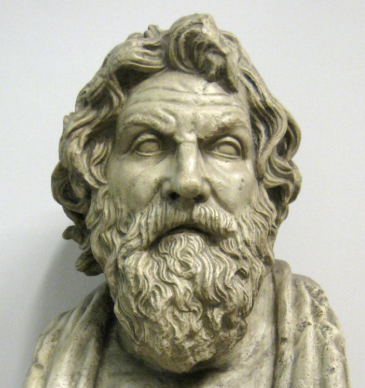
3 months 3 weeks ago
Being asked what learning is the most necessary, he replied, "How to get rid of having anything to unlearn.
▼
Source
source
" § 7

2 months 1 week ago
With a pen in my hand I have successfully stormed bulwarks from which others armed with sword and excommunication have been repulsed.
▼
Source
source
E 76

4 months ago
Then I dreamed that one day there was nothing but milk for them and the jailer said as he put down the pipkin:'Our relations with the cow are not delicate-as you can easily see if you imagine eating any of her other secretions.' ... John said, 'Thank heavens! Now at last I know that you are talking nonsense. You are trying to pretend that unlike things are like. You are trying to make us think that milk is the same sort of thing as sweat or dung.' 'And pray, what difference is there except by custom?''Are you a liar or only a fool, that you see no difference between that which Nature casts out as refuse and that which she stores up as food?'
▼
Source
source
Pilgrim's Regress 49
4 months 2 days ago
There are those who blame the Press, but in this I think they are mistaken. The Press is such as the public demands, and the public demands bad newspapers because it has been badly educated.
▼
Source
source
p. 133
4 months 2 days ago
A process which led from the amœba to man appeared to the philosophers to be obviously a progress - though whether the amœba would agree with this opinion is not known.
▼
Source
source
Ch. 1: Mysticism and Logic
4 months 2 days ago
The instinctive foundation of the intellectual life is curiosity, which is found among animals in its elementary forms. Intelligence demands an alert curiosity, but it must be of a certain kind. The sort that leads village neighbours to try to peer through curtains after dark has no very high value. The widespread interest in gossip is inspired, not by a love of knowledge but by malice: no one gossips about other people's secret virtues, but only about their secret vices. Accordingly most gossip is untrue, but care is taken not to verify it. Our neighbour's sins, like the consolations of religion, are so agreeable that we do not stop to scrutinise the evidence closely.
▼
Source
source
On Education, Especially in Early Childhood (1926), Ch. 2: The Aims of Education, p. 50
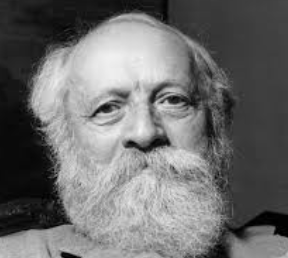
2 months 3 weeks ago
The Thou encounters me by grace - it cannot be found by seeking. But that I speak the basic word to it is a deed of my whole being, is my essential deed.

4 months ago
If in this book harsh words are spoken about some of the greatest among the intellectual leaders of mankind, my motive is not, I hope, the wish to belittle them. It springs rather from my conviction that, if our civilization is to survive, we must break with the habit of deference to great men. Great men may make great mistakes; and as the book tries to show, some of the greatest leaders of the past supported the perennial attack on freedom and reason. Their influence, too rarely challenged, continues to mislead those on whose defence civilization depends, and to divide them. The responsibility of this tragic and possibly fatal division becomes ours if we hesitate to be outspoken in our criticism of what admittedly is a part of our intellectual heritage. By reluctance to criticize some of it, we may help to destroy it all.
▼
Source
source
Preface to the First Edition
CivilSimian.com created by AxiomaticPanic, CivilSimian, Kalokagathia