

3 months 3 days ago
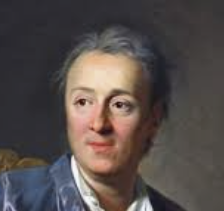
No man has received from nature the right to give orders to others. Freedom is a gift from heaven, and every individual of the same species has the right to enjoy it as soon as he is in enjoyment of his reason.
▼
Source
source
Article on Political Authority, Vol. 1, (1751) as quoted in Selected Writings (1966) edited by Lester G. Crocker

2 weeks ago
To animals not only human virtues but even human vices are forbidden: their whole constitution, mental and bodily, is unlike that of human beings...they possess intellect, the greatest attribute of all, but in a rough and inexact condition. It is, consequently, able to grasp those visions and semblances which rouse it to action, but only in a cloudy and indistinct fashion. Their impulses and outbreaks are violent, and that they do not feel fear, anxieties, grief, or anger, but some semblances of these feelings: wherefore they quickly drop them and adopt the converse of them: they graze after showing the most vehement rage and terror, and after frantic bellowing and plunging they straightaway sink into quiet sleep.

3 months 3 days ago
Men sometimes submit to shame, to tyranny, to conquest, but they never long suffer anarchy. There is no people so barbarous that they escape this general law of humanity.
▼
Source
source
Second letter on Algeria (1837), Travels in Algeria p. 38

3 weeks 3 days ago
The mob has always behaved in this way-eagerly open to bribes that cannot be honorably accepted, and dissolutely callous to degradation and insult that cannot be honorably endured.
▼
Source
source
Part 2

2 months 3 weeks ago
Virtue can only flourish amongst equals.
▼
Source
source
A Vindication of the Rights of Men
2 months 1 week ago
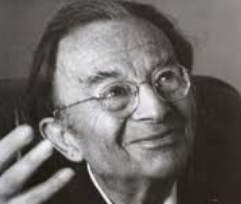
I believe that man is the product of natural evolution that is born from the conflict of being a prisoner and separated from nature, and from the need to find unity and harmony with it.

1 month 3 weeks ago
He doubly benefits the needy who gives quickly. Maxim 6

1 month 3 weeks ago
Every innovation scraps its immediate predecessor and retrieves still older figures - it causes floods of antiques or nostalgic art forms and stimulates the search for museum pieces.

4 months 2 weeks ago
But the inner part is the better part; for to it, as both ruler and judge, all these messengers of the senses report the answers of heaven and earth and all the things therein, who said, "We are not God, but he made us." My inner man knew these things through the ministry of the outer man, and I, the inner man, knew all this, I, the soul, through the senses of my body. I asked the whole frame of earth about my God, and it answered, "I am not he, but he made me."
▼
Source
source
X, 6

2 months 1 week ago
My life - I had lived in its heights and its depths, in bitter sorrow and ecstatic joy, in black despair and fervent hope. I had drunk the cup to the last drop. I had lived my life. Would I had the gift to paint the life I had lived!
▼
Source
source
chapter 56
2 months 3 weeks ago
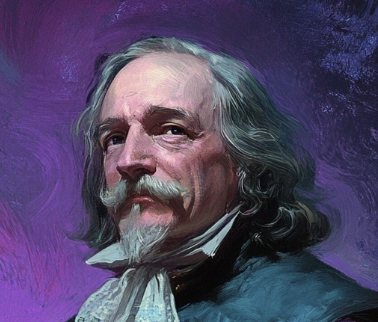
But this priviledge, is allayed by another; and that is, by the priviledge of Absurdity; to which no living creature is subject, but man only.
▼
Source
source
The First Part, Chapter 5, p. 20

2 months 3 weeks ago
The source of an emotion is very difficult to grasp, but it comes to just that. That holds for all phenomena, for faith, etc. Why did it begin, how did it develop? and so forth-only he who has the gift of divination can perceive where it really comes from. But it is not accessible to reflection.

4 months 6 days ago
A true prayer and religious reconciling of ourselves to Almighty God cannot enter into an impure soul, subject at the very time to the dominion of Satan. He who calls God to his assistance whilst in a course of vice, does as if a cut-purse should call a magistrate to help him, or like those who introduce the name of God to the attestation of a lie.
▼
Source
source
Ch. 56, tr. Cotton, rev. W. Carew Hazlitt, 1877
1 week 3 days ago
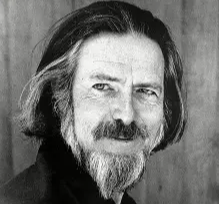
If I first see a tree in the winter, I might assume that it is not a fruit-tree. But when I return in the summer to find it covered with plums, I must exclaim, 'Excuse me! You were a fruit-tree after all.' Imagine, then, that a billion years ago some beings from another part of the galaxy made a tour through the solar system in their flying saucer and found no life. They would dismiss it as 'Just a bunch of old rocks!' But if they returned today, they would have to apologize: 'Well - you were peopling rocks after all!' You may, of course, argue that there is no analogy between the two situations. The fruit-tree was at one time a seed inside a plum, but the earth - much less the solar system or the galaxy - was never a seed inside a person. But, oddly enough, you would be wrong.
▼
Source
source
p. 74

3 months 3 weeks ago
So we do sometimes think because it has been found to pay.
▼
Source
source
§ 470
3 weeks 2 days ago
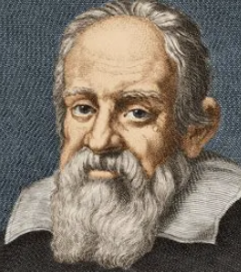
Among all the great men who have philosophized about this remarkable effect, I am more astonished at Kepler than at any other. Despite his open and acute mind, and though he has at his fingertips the motions attributed to the earth, he nevertheless lent his ear and his assent to the moon's dominion over the waters, to occult properties, and to such puerilities.
▼
Source
source
In regard to Kepler's belief of the moon affecting the tides of the Earth, p. 328
2 months 3 weeks ago
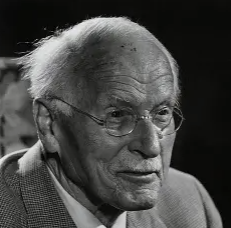
When one is not understood one should as a rule lower one's voice, because when one really speaks loudly enough and is not heard, it is because people do not want to hear. One had better begin to mutter to oneself, then they get curious.
▼
Source
source
Nietzsche's Zarathustra (1988), p. 30
4 months 2 days ago
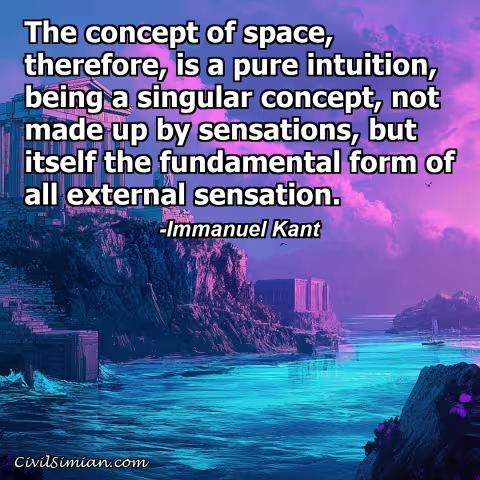
Phenomena of the external sense are examined and set forth in physics; those of the internal sense in empirical psychology. Pure mathematics considers space in geometry and time in pure mechanics. To these is to be added a certain concept, intellectual to be sure in itself, but whose becoming actual in the concrete requires the auxiliary notions of time and space in the successive addition and simultaneous juxtaposition of separate units, which is the concept of number treated in arithmetic.
1 month 3 weeks ago
Man works when he is partially involved. When he is totally involved he is at play or leisure.

5 months 1 day ago
The pride connected with knowing and sensing lies like a blinding fog over the eyes and senses of men, thus deceiving them concerning the value of existence. For this pride contains within itself the most flattering estimation of the value of knowing. Deception is the most general effect of such pride, but even its most particular effects contain within themselves something of the same deceitful character.
2 weeks ago
Prove your words by your deeds.
3 weeks ago
A certain degree of blindness as to the absoluteness of one's own values may be indispensable to extract the valuable qualities from the world, the qualities whose value is believed to be the highest. It is possible that in order to realize one's values one must have faith in their exclusive character.
▼
Source
source
Chapter Eight, Logical Empiricism, p. 202-203

1 month 1 week ago
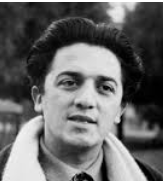
There is no end. There is no beginning. There is only the infinite passion of life.
▼
Source
source
Fellini on Fellini (1976) edited by Anna Keel and Christian Strich; translated by Isabel Quigly.
3 months 3 weeks ago
Certainly it is correct to say: Conscience is the voice of God.
▼
Source
source
p. 75
2 months 2 weeks ago
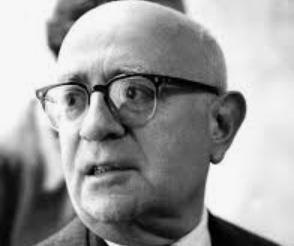
Hegel ... destroyed the illusion of the subject's being-in-itself and showed that the subject is itself an aspect of social objectivity. ... However, ... we must ask this question: is this objectivity which we have shown to be a necessary condition and which subsumes abstract subjectivity in fact the higher factor? Does it not rather remain precisely what Hegel reproached it with being in his youth, namely pure externality, the coercive collective? Does not the retreat to this supposedly higher authority signify the regression of the subject, which had earlier won its freedom only with the greatest efforts, with infinite pains?
▼
Source
source
p. 16
2 months 3 weeks ago
To found a family. I think it would have been easier for me to found an empire.

3 months 4 weeks ago
The most dangerous thing you can do is to take any one impulse of your own nature and set it up as the thing you ought to follow at all costs. There is not one of them which will not make us into devils if we set it up as an absolute guide. You might think love of humanity in general was safe, but it is not. If you leave out justice you will find yourself breaking agreements and faking evidence in trials "for the sake of humanity", and become in the end a cruel and treacherous man.
▼
Source
source
Book I, Chapter 2, "Some Objections"
2 months 2 weeks ago
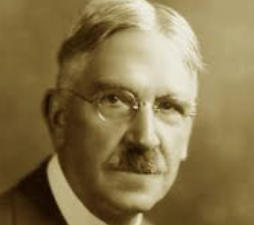
To regiment artists, to make them servants of some particular cause does violence to the very springs of artistic creation. But it does more than that. It betrays the very cause of a better future it would serve, for in its subjugation of the individuality of the artist it annihilates the source of that which is genuinely new. Where the regimentation is successful, it would cause the future to be but a rearrangement of the past.
2 months 3 weeks ago
From the cradle to the grave, each individual pays for the sin of not being God. That's why life is an uninterrupted religious crisis, superficial for believers, shattering for doubters.
4 months 2 weeks ago
Certainly He says this for me, for thee, for this other man, since He bears His body, the Church. Unless you imagine, brethren, that when He said: My Father, if it be possible, let this cup pass away from (Matt. 26:39), it was the Lord that feared to die. . . . But Paul longed to die, that he might be with Christ. What? The Apostle desires to die, and Christ Himself should fear death? What can this mean, except that He bore our infirmity in Himself, and uttered these words for those who are in His body and still fear death? It is from these that the voice came; it was the voice of His members, not of the Head. When He said, My soul is sorrowful unto death (Matt. 26:38), He manifested Himself in thee, and thee in Himself. And when He said, My God, my God, why has Thou forsaken Me? (Matt. 27:46), the words He uttered on the cross were not His own, but ours.

4 months 1 week ago
We ought neither to fasten our ship to one small anchor nor our life to a single hope.
▼
Source
source
Fragment 30 (Oldfather translation)

1 week 2 days ago
We witness a strange inversion: on the one hand, the endeavor to turn the social contract into a less calculating and more feeling connection among its members; on the other hand, the endeavor to turn the erotic relationship into a contractual one.
▼
Source
source
p. 15.
2 weeks ago
Therefore, my dear Lucilius, begin at once to live, and count each separate day as a separate life.
2 months 3 weeks ago
The truth is cruel, but it can be loved, and it makes free those who have loved it.
▼
Source
source
p. 107
2 months 4 weeks ago
The history of philosophical system is the picture gallery of reason.
▼
Source
source
Z. Hanfi, trans., in The Fiery Brook (1972), p. 68

2 months 3 weeks ago
Get thee behind me, Satan: thou art an offence unto me: for thou savourest not the things that be of God, but those that be of men.
▼
Source
source
16:23 (KJV)
2 months 3 weeks ago
That history just unfolds, independently of a specified direction, of a goal, no one is willing to admit.
2 months 3 weeks ago
Dialectical logic undoes the abstractions of formal logic and of transcendental philosophy, but it also denies the concreteness of immediate experience. To the extent to which this experience comes to rest with the things as they appear and happen to be, it is a limited and even false experience. It attains its truth if it has freed itself from the deceptive objectivity which conceals the factors behind the facts - that is, if it understands its world as a historical universe, in which the established facts are the work of the historical practice of man.
▼
Source
source
p. 141
3 months 3 days ago
We swallow greedily any lie that flatters us, but we sip only little by little at a truth we find bitter.

4 months 2 days ago
The most perfect philosophy of the natural kind only staves off our ignorance a little longer: as perhaps the most perfect philosophy of the moral or metaphysical kind serves only to discover larger portions of it. Thus the observation of human blindness and weakness is the result of all philosophy, and meets us at every turn, in spite of our endeavours to elude or avoid it.
▼
Source
source
Section 4 : Sceptical Doubts Concerning The Operations of The Understanding

3 months 5 days ago
If he is not Nature herself, he is certainly the nature of Nature, and is the soul of the Soul of the world, if he is not the soul herself.
▼
Source
source
As translated by Arthur Imerti
2 months 3 weeks ago
Losing love is so rich a philosophical ordeal that it makes a hairdresser into a rival of Socrates.

1 month 1 week ago
What right have humans to impose our values on members of another race or species? The charge is seductive but misplaced. There is no anthropomorphism here, no imposition of human values on alien minds. Human and nonhuman animals are alike in an ethically critical respect. The pleasure-pain axis is universal to sentient life. No sentient being wants to be harmed - to be asphyxiated, dismembered, or eaten alive. The wishes of a terrified toddler or a fleeing zebra to flourish unmolested are not open to doubt even in the absence of the verbal capacity to say so.
▼
Source
source
"The Radical Plan to Phase out Earth's Predatory Species", io9, 30 Jul. 2014
2 months 3 weeks ago
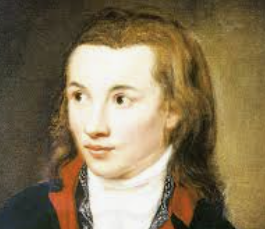
Sleep is for the inhabitants of Planets only. In another time, Man will sleep and wake continually at once. The greater part of our Body, of our Humanity itself, yet sleeps a deep sleep.
4 months 1 day ago
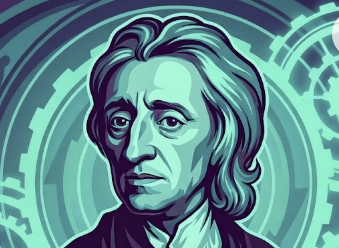
Children have as much mind to shew that they are free, that their own good actions come from themselves, that they are absolute and independent, as any of the proudest of you grown men, think of them as you please.
▼
Source
source
Sec. 73
3 months 4 weeks ago
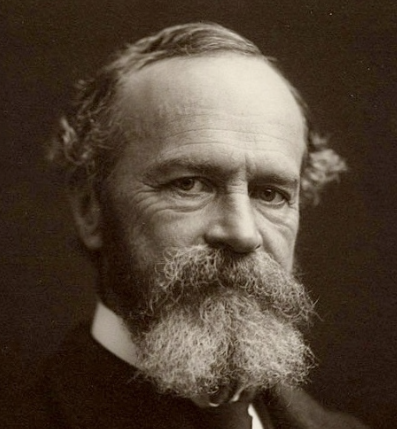
Act as if what you do makes a difference. It does.
▼
Source
source
Correspondence with Helen Keller, 1908, in The Correspondence of William James: April 1908-August 1910, Vol. 12
2 months 3 weeks ago
There is no false sensation.
CivilSimian.com created by AxiomaticPanic, CivilSimian, Kalokagathia