


3 months 5 days ago
Everything that makes diversity of kinds, of species, differences, properties... everything that consists in generation, decay, alteration and change is not an entity, but a condition and circumstance of entity and being, which is one, infinite, immobile, subject, matter, life, death, truth, lies, good and evil.

3 months 3 weeks ago
You won't - I really believe - get too much out of reading it. Because you won't understand it; the content will seem strange to you. In reality, it isn't strange to you, for the point is ethical. I once wanted to give a few words in the foreword which now actually are not in it, which, however, I'll write to you now because they might be a key for you: I wanted to write that my work consists of two parts: of the one which is here, and of everything which I have not written. And precisely this second part is the important one.
▼
Source
source
On his Tractatus Logico-Philosophicus, in a letter to Ludwig von Ficker (1919), published in Wittgenstein : Sources and Perspectives (1979) by C. Grant Luckhard
3 months 3 weeks ago
We are observing ourselves being observed by the painter, and made visible to his eyes by the same light that enables us to see him. And just as we are about to apprehend ourselves, transcribed by his hand as though in a mirror, we find that we can in fact apprehend nothing of that mirror but its lusterless back. The other side of a psyche.
▼
Source
source
Las Menias

3 months 4 weeks ago
Do not be too timid and squeamish about your actions. All life is an experiment. The more experiments you make the better.
▼
Source
source
November 11, 1842

4 months 2 weeks ago
The end of living, or the ultimate good, which is to be sought for its own sake, according to the universal opinion of mankind, is happiness; yet men, for the most part, fail in the pursuit of this end, either because they do not form a right idea of the nature of happiness, or because they do not make use of proper means to attain it.

2 months 2 weeks ago
He felt neither guilt nor distress at the pleasure with which he was now filled by the proximity of this young creature, and when he discovered in himself even physical symptoms of his inclination he did not take fright, but continued cheerfully and serenely to see Nick whenever the ordinary run of his duties suggested it, congratulating himself upon the newly achieved solidity and rational calm of his spiritual life.
▼
Source
source
The Bell (1958) p. 91
2 months 2 weeks ago
The miser deprives himself of his treasure because of his desire for it.
▼
Source
source
p. 260

2 weeks 6 days ago
The force that had been lent my father he honorably expended in manful well-doing. A portion of this planet bears beneficent traces of his strong hand and strong head. Nothing that he undertook to do but he did it faithfully and like a true man. I shall look on the houses he built with a certain proud interest. They stand firm and sound to the heart all over his little district.

4 months 6 days ago
There is nothing more notable in Socrates than that he found time, when he was an old man, to learn music and dancing, and thought it time well spent.
▼
Source
source
Book III, Ch. 13
4 months 2 weeks ago
Pleasure and distress, fear and courage, desire and aversion, where have these affections and experiences their seat? Clearly, either in the Soul alone, or in the Soul as employing the body, or in some third entity deriving from both. And for this third entity, again, there are two possible modes: it might be either a blend or a distinct form due to the blending.

2 months 3 weeks ago
The harvest truly is plenteous, but the labourers are few; Pray ye therefore the Lord of the harvest, that he will send forth labourers into his harvest.
▼
Source
source
9:37-38 (KJV)
4 months 3 weeks ago
The absurd ... is an experience to be lived through, a point of departure, the equivalent, in existence of Descartes' methodical doubt. Absurdism, like methodical doubt, has wiped the slate clean. It leaves us in a blind alley. But, like methodical doubt, it can, by returning upon itself, open up a new field of investigation, and in the process of reasoning then pursues the same course. I proclaim that I believe in nothing and that everything is absurd, but I cannot doubt the validity of my proclamation and I must at least believe in my protest. The first and only evidence that is supplied me, within the terms of the absurdist experience, is rebellion ... Rebellion is born of the spectacle of irrationality, confronted with an unjust and incomprehensible condition.

4 months 2 days ago
Though the profusion of Government must undoubtedly have retarded the natural progress of England to wealth and improvement, it has not been able to stop it.
▼
Source
source
Chapter III.
1 week ago
For a long time there have been no true sovereigns, monarchs by divine right capable of wielding sword and scepter, and symbols of a higher human ideal. More than a century ago, Juan Donoso Cortés stated that no kings existed capable of proclaiming themselves as such except "by the will of the nation," adding that, even if any had existed, they would not have been recognized. The few monarchies still surviving are notoriously impotent and empty, while the traditional nobility has lost its essential character as a political class and any existential prestige and rank along with it. Its current representatives may still interest our contemporaries when put on the same plane as film actors and actresses, sport heroes and opera stars, and when through some private, sentimental, or scandalous chance, they serve as fodder for magazine articles.
▼
Source
source
p. 172

4 months ago
Go into the London Stock Exchange - a more respectable place than many a court - and you will see representatives from all nations gathered together for the utility of men. Here Jew, Mohammedan and Christian deal with each other as though they were all of the same faith, and only apply the word infidel to people who go bankrupt. Here the Presbyterian trusts the Anabaptist and the Anglican accepts a promise from the Quaker.
▼
Source
source
Letters on England, letter 6, "On the Presbyterians" as quoted in Trust and Tolerance, Richard H. Dees, Routledge, London and New York, (2004) p. 92, published first in English in 1733.
4 months 1 week ago
I bequeath my soul to God (...). My body to be buried obscurely. For my name and memory, I leave it to men's charitable speeches, and to foreign nations, and the next age.
▼
Source
source
His Will, 1626

2 months 2 weeks ago
The truth is sum, ergo cogito - I am, therefore I think, although not everything that is thinks. Is not consciousness of thinking above all consciousness of being? Is pure thought possible, without consciousness of self, without personality? Can there exist pure knowledge without feeling, without that species of materiality which feelings lends to it? Do we not perhaps feel thought, and do we not feel ourselves in the act of knowing and willing? Could not the man in the stove [Descartes] have said: "I feel, therefore I am"? or "I will, therefore I am"? And to feel oneself, is it not perhaps to feel oneself imperishable?

4 months 4 weeks ago
Married people pledge love for each other throughout eternity. Well, now, that is easy enough but does not mean very much, for if one is finished with time one is probably finished with eternity. If, instead of saying "throughout eternity," the couple would say, "until Easter, until next May Day," then what they say would make some sense, for then they would be saying something and also something they perhaps could carry out.

4 months 2 days ago
At present they [philosophers] seem to be in a very lamentable condition, and such as the poets have given us but a faint notion of in their descriptions of the punishment of Sisyphus and Tantalus. For what can be imagin'd more tormenting, than to seek with eagerness, what for ever flies us; and seek for it in a place, where 'tis impossible it can ever exist?
▼
Source
source
Part 4, Section 3

3 months 4 weeks ago
The first intellectual operation in which I arrived at any proficiency, was dissecting a bad argument, and finding in what part the fallacy lay: and though whatever capacity of this sort I attained was due to the fact that it was an intellectual exercise in which I was most perseveringly drilled by my father, yet it is also true that the school logic, and the mental habits acquired in studying it, were among the principal instruments of this drilling. I am persuaded that nothing, in modern education, tends so much, when properly used, to form exact thinkers, who attach a precise meaning to words and propositions, and are not imposed on by vague, loose, or ambiguous terms. The boasted influence of mathematical studies is nothing to it; for in mathematical processes, none of the real difficulties of correct ratiocination occur.
▼
Source
source
(p. 19)

3 months 3 days ago
The people reign over the American political world as God rules over the universe. It is the cause and the end of all things; everything rises out of it and is absorbed back into it.
▼
Source
source
Chapter IV, Part I.

2 months 4 weeks ago
People talk sometimes of bestial cruelty, but that's a great injustice and insult to the beasts; a beast can never be so cruel as a man, so artistically cruel.
2 months 6 days ago
Statistics began as the systematic study of quantitative facts about the state.
▼
Source
source
Chapter 12, Political Arithmetic, p. 102.

3 months 4 weeks ago
In a constantly revolving circle every point is simultaneously a point of departure and a point of return. If we interrupt the rotation, not every point of departure is a point of return.
▼
Source
source
Vol. II, Ch. IV, p. 104.
1 week 1 day ago
I consider myself especially indebted to all the gods together, and more than all to the Great Mother in this particular instance (as in all others) that she did not suffer me to wander about, as it were in the dark, but firstly commanded me to cut away, not as regards my body, but as regards the irrational appetites and motions of the soul, all that was superfluous and empty, by the aid of the Cause, the object of intellect, and which presides over souls, whilst she herself enabled me to conceive certain notions perhaps not discordant with a true, and at the same time, reverential understanding of divine matters.
3 months 4 weeks ago
As the brain-changes are continuous, so do all these consciousnesses melt into each other like dissolving views. Properly they are but one protracted consciousness, one unbroken stream.
▼
Source
source
Ch. 9
2 months 3 weeks ago
Liberal philosophy, at this point, ceases to be empirical and British in order to become German and transcendental. Moral life, it now believes, is not the pursuit of liberty and happiness of all sorts by all sorts of different creatures; it is the development of a single spirit in all life through a series of necessary phases, each higher than the preceding one. No man, accordingly, can really or ultimately desire anything but what the best people desire. This is the principle of the higher snobbery; and in fact, all earnest liberals are higher snobs.
▼
Source
source
"The Irony of Liberalism"

1 month 3 weeks ago
To spare the guilty is to injure the innocent.
▼
Source
source
Maxim 113

2 months 3 weeks ago
"Neither this world, nor the next, nor happiness are for the being abandoned to doubt." - This point in the Gita is my death sentence.

3 months 3 weeks ago
Man is condemned to be free; because once thrown into the world, he is responsible for everything he does.
2 weeks 6 days ago
The suffering man ought really 'to consume his own smoke'; there is no good in emitting smoke till you have made it into fire, - which, in the metaphorical sense too, all smoke is capable of becoming!
1 week 1 day ago
Unfortunately... the philosophy of Aristotle laid it down as a principle, that the celestial motions were regulated by laws proper to themselves, and bearing no affinity to those which prevail on earth. By thus drawing a broad and impassable line of separation between celestial and terrestrial mechanics, it placed the former altogether out of the pale of experimental research, while it at the same time impeded the progress of the latter by the assumption of principles respecting natural and unnatural motions, hastily adopted from the most superficial and cursory and remark, undeserving even the name of observation. Astronomy therefore continued for ages a science of mere record, in which theory had no part, except in so far as it attempted to conciliate the inequalities of the celestial motions with that assumed law of uniform circular revolution which was alone considered consistent with the perfection of the heavenly mechanism.
▼
Source
source
Ch.3 Of Cosmical Phenomena
3 months 4 weeks ago
Beauty without grace is the hook without the bait.
▼
Source
source
Beauty
2 months 3 weeks ago
For you who no longer possess it, freedom is everything, for us who do, it is merely an illusion.
2 months 4 weeks ago
I could never stand more than three months of dreaming at a time without feeling an irresistible desire to plunge into society. To plunge into society meant to visit my superior, Anton Antonich Syetochkin. He was the only permanent acquaintance I have had in my life, and I even wonder at the fact myself now. But I even went to see him only when that phase came over me, and when my dreams had reached such a point of bliss that it became essential to embrace my fellows and all mankind immediately. And for that purpose I needed at least one human being at hand who actually existed. I had to call on Anton Antonich, however, on Tuesday - his at-home day; so I always had to adjust my passionate desire to embrace humanity so that it might fall on a Tuesday.
▼
Source
source
Part 2, Chapter 2
4 months 1 day ago
The boundaries of the species, whereby men sort them, are made by men.
▼
Source
source
Book III, Ch. 6, sec. 37

3 months 2 weeks ago
The enmity of one's kindred is far more bitter than the enmity of strangers.
3 months 4 weeks ago
It strikes everyone in beginning to form an acquaintance with the treasures of Indian literature, that a land so rich in intellectual products and those of the profoundest order of thought..."
▼
Source
source
quoted in De Riencourt, Amaury The Soul of India Harper & Brothers Publishers New York 1960 p. 301
3 months 4 weeks ago
That what we seek we shall find; what we flee from flees from us.
▼
Source
source
Fate
2 months 2 weeks ago
At present, when the prevailing forms of society have become hindrances to the free expression of human powers, it is precisely the abstract branches of science, mathematics and theoretical physics, which ... offer a less distorted form of knowledge than other branches of science which are interwoven with the pattern of daily life, and the practicality of which seemingly testifies to their realistic character.
▼
Source
source
p. 133.
2 weeks 6 days ago
What is all Knowledge too but recorded Experience, and a product of History; of which, therefore, Reasoning and Belief, no less than Action and Passion, are essential materials?
▼
Source
source
Carlyle, Essays, On History. Quote reported in Hoyt's New Cyclopedia Of Practical Quotations (1922), p. 419-23.
3 months 3 weeks ago
The chief reason warfare is still with us is neither a secret death-wish of the human species, nor an irrepressible instinct of aggression, nor, finally and more plausibly, the serious economic and social dangers inherent in disarmament, but the simple fact that no substitute for this final arbiter in international affairs has yet appeared on the political scene.
▼
Source
source
"On Violence"
2 months 1 week ago
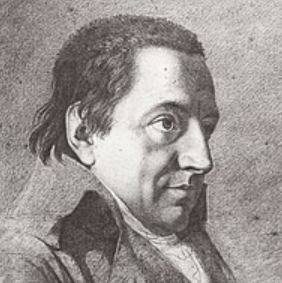
Is the child to be considered as an individuality, or as an object to be moulded according to the whims and fancies of those about it? This seems to me to be the most important question to be answered by parents and educators. And whether the child is to grow from within, whether all that craves expression will be permitted to come forth toward the light of day; or whether it is to be kneaded like dough through external forces, depends upon the proper answer to this vital question.
2 months 4 weeks ago
A living language can stand on a higher level of culture in comparison with another, but it can never in itself attain that perfection of development which a dead language quite easily attains. In the latter the connotation of words is fixed, and the possibilities of suitable combinations will also gradually become exhausted. Hence, he who wishes to speak this language must speak it just as it is; but, after he has once learnt to do this, the language speaks itself in his mouth and thinks and imagines for him.
▼
Source
source
Consequences of the Difference p. 85
2 weeks 6 days ago
For this also we will honour the poor Manchester Insurrection, and augur well of it. A deep unspoken sense lies in these strong men,- inconsiderable, almost stupid, as all they can articulate of it is. Amid all violent stupidity of speech, a right noble instinct of what is doable and what is not doable never forsakes them: the strong inarticulate men and workers, whom Fact patronises; of whom, in all difficulty and work whatsoever, there is good augury!
2 weeks ago
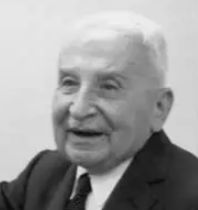
All rational action is economic. All economic activity is rational action. All rational action is in the first place individual action. Only the individual thinks. Only the individual reasons. Only the individual acts.
▼
Source
source
Part II : The Economics of a Socialist Community, § I : The Economics of an Isolated Socialist Community, Ch. 5 : The Nature of Economic Activity, p. 97

3 weeks 2 days ago
The Republican party has really gone off the rails and has become... in many ways a quasi-authoritarian party because many Republicans are not willing to accept the results of a... free and fair election. ...We've learned a lot from the... House committee that's studying the January 6th insurrection... What that committee has revealed was that this wasn't just a demonstration that spontaneously got out of hand. It was planned very deliberately by the White House as a way of pressuring former vice president Pence to overturn the election and keep Donald Trump in office, and right now a lot of state level Republican legislatures are trying to modify their rules for counting votes in the next election so that they would be in a better position to do what they tried to do in 2020, but didn't get away with... So this is probably the most severe threat to American democracy... since the Civil War... and I'm quite worried about that.
▼
Source
source
43:51:00
CivilSimian.com created by AxiomaticPanic, CivilSimian, Kalokagathia