


3 months 4 weeks ago
Apart from logical cogency, there is to me something a little odd about the ethical valuations of those who think that an omnipotent, omniscient, and benevolent Deity, after preparing the ground by many millions of years of lifeless nebulae, would consider Himself adequately rewarded by the final emergence of Hitler and Stalin and the H-bomb.
▼
Source
source
Preface

3 months 3 weeks ago
Homosexuality appears as one of the forms of sexuality when it was transposed from the practice of sodomy onto a kind of interior androgyny, a hermaphroditism of the soul. The sodomite had been a temporary aberration; the homosexual was now a species.
▼
Source
source
Vol I: La volonté de savoir

3 months 4 weeks ago
I think that there is nothing, not even crime, more opposed to poetry, to philosophy, ay, to life itself, than this incessant business.
▼
Source
source
p. 485
4 months 6 days ago
A faithful and good servant is a real godsend; but truly 'tis a rare bird in the land.
▼
Source
source
156

2 months 1 week ago
No epoch is homogeneous; whatever you may have assigned as the dominant note of a considerable period, it will always be possible to produce men, and great men, belonging to the same time, who exhibit themselves as antagonistic to the tone of their age.
▼
Source
source
Ch. 4: "The Eighteenth Century", p. 93
3 months 3 weeks ago
Kant's philosophy shifts for the first time the whole of modern thought and being (Desein) into the clarity and transparency of the foundation (Begrundung). This determines every attitude toward knowledge since then, as well as the bounds (Abgrenzungen) and appraisals of the sciences in the nineteenth century up to the present time. Therein Kant towers so far above all who precede and follow that even those who reject him or go beyond him still remain entirely dependent upon him.
▼
Source
source
p. 55-56

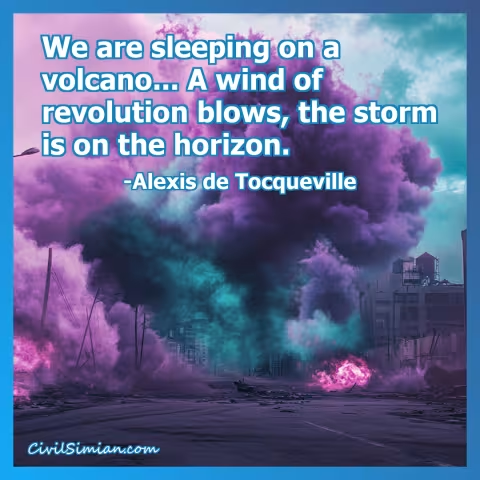

4 months 1 week ago
He that defers his charity 'till he is dead, is (if a man weighs it rightly) rather liberal of another man's, than of his own.
▼
Source
source
Ornamenta Rationalia, [§55]
4 months 4 weeks ago
For legislators make the citizens good by forming habits in them, and this is the wish of every legislator, and those who do not effect it miss their mark, and it is in this that a good constitution differs from a bad one.
1 week 1 day ago
Modern mind has become more and more calculating. The calculative exactness of practical life which the money economy has brought about corresponds to the ideal of natural science: to transform the world into an arithmetic problem, to fix every part of the world by mathematical formulas. Only money economy has filled the days of so many people with weighing, calculating, with numerical determinations, with a reduction of qualitative values to quantitative ones.
▼
Source
source
p. 414
3 months 2 days ago
Genius is present in every age, but the men carrying it within them remain benumbed unless extraordinary events occur to heat up and melt the mass so that it flows forth.

3 months 4 weeks ago
Nothing is rich but the inexhaustible wealth of Nature. She shows us only surfaces, but she is million fathoms deep.
▼
Source
source
p. 183
1 month 3 weeks ago
Have courage, or cunning, when you deal with an enemy.
▼
Source
source
Maxim 156

2 months 1 week ago
The reward in heaven is the perpetual bait, a bait that has caught man in an iron net, a strait-jacket which does not let him expand or grow. All pioneers of truth have been, and still are, reviled; they have been, and still are, persecuted. But did they ask humanity to pay the price? Did they seek to bribe mankind to accept their ideas? They knew too well that he who accepts a truth because of the bribe, will soon barter it away to a higher bidder...Proud and self-reliant characters prefer hatred to such sickening artificial love. Not because of any reward does a free spirit take his stand for a great truth, nor has such a one ever been deterred because of fear of punishment.

3 months 2 weeks ago
With a greedy man thou shouldst not be a partner, and do not trust him with the leadership.
3 weeks 4 days ago
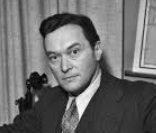
There is nothing disastrous in the temporary nature of our ideas. They are always that. But there may very easily be a train of evil in the self-deception which regards them as final. I think God will forgive us our skepticism sooner than our Inquisitions.
▼
Source
source
Ch. VII: "The Making of Creeds", p. 236
1 month 3 weeks ago
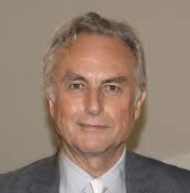
Ignorance, to a scientist, is an itch that begs to be pleasurably scratched. Ignorance, if you are a theologian, is something to be washed away by shamelessly making something up.
▼
Source
source
The Intellectual and Moral Courage of Atheism
3 months 2 weeks ago
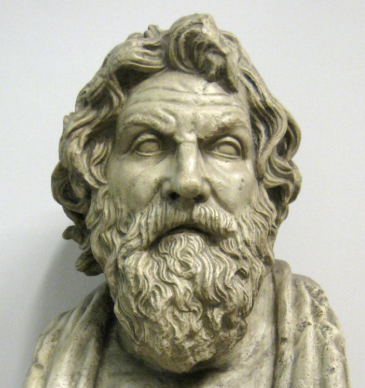
States are doomed when they are unable to distinguish good men from bad.
▼
Source
source
§ 5

4 months ago
There ought to be some regulation with respect to the spirit of denunciation that now prevails. If every individual is to indulge his private malignancy or his private ambition, to denounce at random and without any kind of proof, all confidence will be undermined and all authority be destroyed. Calumny is a species of treachery that ought to be punished as well as any other kind of treachery. It is a private vice productive of public evils; because it is possible to irritate men into disaffection by continual calumny who never intended to be disaffected. It is therefore equally as necessary to guard against the evils of unfounded or malignant suspicion as against the evils of blind confidence. It is equally as necessary to protect the characters of public officers from calumny as it is to punish them for treachery or misconduct.
▼
Source
source
Letter to George Jacques Danton
1 month 2 weeks ago
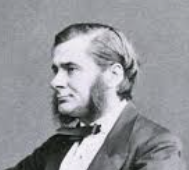
Most of us, shrinking from the difficulties and dangers which beset the seeker after original answers to these riddles, are contented to ignore them altogether, or to smother the investigating spirit under the featherbed of respected and respectable tradition. But, in every age, one or two restless spirits, blessed with that constructive genius, which can only build on a secure foundation, or cursed with the mere spirit of scepticism, are unable to follow in the well-worn and comfortable track of their forefathers and contemporaries, and unmindful of thorns and stumbling-blocks, strike out into paths of their own.
▼
Source
source
Ch.2, p. 71

2 months 4 weeks ago
No sound ought to be heard in the church but the healing voice of Christian charity.
2 months 3 weeks ago
To become properly acquainted with a truth, we must first have disbelieved it, and disputed against it.

4 months 2 days ago
During such calm sunshine of the mind, these spectres of false divinity never make their appearance.
▼
Source
source
Part XIV - Bad influence of popular religions on morality
2 months ago
I have only one real message in this lecture, and that is: consciousness is a biological phenomenon, like photosynthesis, digestion, mitosis-you know all the biological phenomena-and once you accept that, most, if not all about the hard problems of consciousness simply evaporate.

3 months 3 weeks ago
It is for the sake of order that I seduced Clytemnestra, for the sake of order that I killed my king. I wanted for order to rule and that it rule through me. I have lived without desire, without love, without hope: I made order. Oh! terrible and divine passion!
▼
Source
source
Aegistheus, Act 2

2 months 1 week ago
One of the major problems of our society is that so many people are too intelligent to accept religion, but not intelligent or strong-minded enough to look for acceptable alternatives; in the same way, many people are strong-minded enough not to want to be 'organization men', but incapable of seeing beyond an act of protest. These situations produce a sense of being 'between two stools', lacking real motive; a sense of mental strain is produced that may find its outlet in violence, or in organised anti-social behaviour.
▼
Source
source
p. 224, Crimes of Freedom -- and their cure
3 months 3 weeks ago
It is ugly to be punishable, but there is no glory in punishing. Hence the double system of protection that justice has set up between itself and the punishment it imposes.
▼
Source
source
pp. 10
1 week ago
The one absolutely, the Intelligible, the ever Preexisting, comprehending all the universe together within the One - nay, more, is not the whole world One living thing - all and everywhere full of life and soul, perfect and made up out of parts likewise perfect? Now of this double unity the most perfect part (I mean of the Unity in the Intelligible World that comprehends all things in One, and of the Unity encompassing the Sensible World, that brings together all things into a single and perfect nature) is the perfection of the sovereign Sun, which is central and single, and placed in the middle of the intermediate Powers.
3 months 4 weeks ago
The principal source of the harm done by the State is the fact that power is its chief end.
▼
Source
source
Principles of Social Reconstruction (1917), Ch. II: The State
2 months 1 day ago
For nothing can be greater than seduction itself, not even the order that destroys it.
▼
Source
source
Seduction

2 months 3 weeks ago
I do not forgive myself for being born. It is as if, creeping into this world, I had profaned a mystery, betrayed some momentous pledge, committed a fault of nameless gravity. Yet in a less assured mood, birth seems a calamity I would be miserable not having known.
1 week 5 days ago
Preaching has become a byword for long and dull conversation of any kind; and whoever wishes to imply, in any piece of writing, the absence of everything agreeable and inviting, calls it a sermon.
▼
Source
source
Vol. I, ch. 3, p. 81
2 months 4 weeks ago
The will is the living principle of the rational soul, is indeed itself reason, when purely and simply apprehended. That reason is itself active, means, that the pure will, as such, rules and is effectual. The infinite reason alone lies immediately and entirely in the purely spiritual order. The finite being lives necessarily at the same time in a sensuous order; that is to say, in one which presents to him other objects than those of pure reason; a material object, to be advanced by instruments and powers, standing indeed under the immediate command of the will, but whose efficacy is conditional also on its own natural laws.
▼
Source
source
Jane Sinnett, trans 1846 p.104

2 months 4 weeks ago
The ideal form for a poem, essay, or fiction, is that which the ideal writer would evolve spontaneously. One in whom the powers of expression fully responded to the state of feeling, would unconsciously use that variety in the mode of presenting his thoughts, which Art demands.
▼
Source
source
Pt. II, sec. 4, "The Ideal Writer"

1 month 4 weeks ago
People continued - regardless of all that leads man forward - to try to unite the incompatibles : the virtue of love, and what is opposed to love, namely, the restraining of evil by violence. And such a teaching, despite its inner contradiction, was so firmly established that the very people who recognize love as a virtue accept as lawful at the same time an order of life based on violence and allowing men not merely to torture but even to kill one another.
▼
Source
source
III
3 months 4 weeks ago
The world is his, who has money to go over it.
▼
Source
source
Wealth
2 months 3 weeks ago
To claim you are more detached, more alien to everything than anyone, and to be merely a fanatic of indifference!
3 months 2 weeks ago
To look for a single general theory of how to decide the right thing to do is like looking for a single theory of how to decide what to believe.
▼
Source
source
"The Fragmentation of Value" (1977), p. 135.

4 months 6 days ago
Saturninus said, "Comrades, you have lost a good captain to make him an ill general."
▼
Source
source
Book III, Ch. 9. Of Vanity

1 week 6 days ago
You are doing an excellent thing, one which will be wholesome for you, if, as you write me, you are persisting in your effort to attain sound understanding; it is foolish to pray for this when you can acquire it from yourself. We do not need to uplift our hands towards heaven, or to beg the keeper of a temple to let us approach his idol's ear, as if in this way our prayers were more likely to be heard. A god is near you, with you, and in you. This is what I mean, Lucilius: there sits a holy spirit within us, one who marks our good and bad deeds, and is our a guardian.
3 months 4 weeks ago
That Man is the product of causes that had no prevision of the end they were achieving; that his origin, his growth, his hopes and fears, his loves and his beliefs, are but the outcome of accidental collocations of atoms; that no fire, no heroism, no intensity of thought and feeling, can preserve individual life beyond the grave; that all the labors of the ages, all the devotion, all the inspiration, all the noonday brightness of human genius, are destined to extinction in the vast death of the solar system, and that the whole temple of Man's achievement must inevitably be buried beneath the debris of a universe in ruins - all these things, if not quite beyond dispute, are yet so nearly certain that no philosophy which rejects them can hope to stand. Only within the scaffolding of these truths, only on the firm foundation of unyielding despair, can the soul's habitation henceforth be safely built.
1 month 1 week ago
Instead of water belonging to millions of local communities, water too is to be controlled by five or six global water giants. These are recipes that use economic systems to appropriate for the few the base of survival of the majority.
1 week 6 days ago
For we are mistaken when we look forward to death; the major portion of death has already passed. Whatever years be behind us are in death's hands.

5 months 1 day ago
We have seen how it is originally language which works on the construction of concepts, a labor taken over in later ages by science. Just as the bee simultaneously constructs cells and fills them with honey, so science works unceasingly on this great columbarium of concepts, the graveyard of perceptions.
2 months 4 weeks ago
Each citizen of a state promises, in the original compact, that he will promote, as far as lies in his power, all the conditions of the possibility of the state ; hence, also, the condition just mentioned. This he can best do by educating children who may grow up to realize various ends of reason. The state has the right to make this education of children a condition of the state-compact, and thus education becomes an external, legal obligation, which the parents owe to the state.
▼
Source
source
P. 459
4 months 4 weeks ago
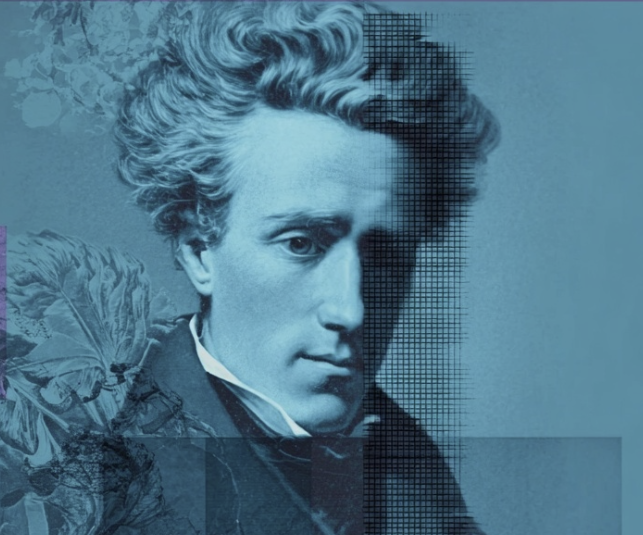
If it were so, as conceited sagacity, proud of not being deceived, thinks, that we should believe nothing that we cannot see with our physical eyes, then we first and foremost ought to give up believing in love. ... We can be deceived by believing what is untrue, but we certainly are also deceived by not believing what is true. ... Which deception is more dangerous?

4 months 2 weeks ago
Moderation, in the pursuit of honors or riches, is the only security against disappointment and vexation. A wise man, therefore, will prefer the simplicity of rustic life to the magnificence of courts.
2 months 1 week ago
Immature love says: "I love you because I need you." Mature love says: "I need you because I love you."
▼
Source
source
Ch. 2
2 months 1 week ago
Disciplinary society is still governed by no. Its negativity produces madmen and criminals. In contrast, achievement society creates depressives and losers.
▼
Source
source
Source: Page 8
CivilSimian.com created by AxiomaticPanic, CivilSimian, Kalokagathia