


1 week 4 days ago
The manner of men's Hero-worship, verily it is the innermost fact of their existence, and determines all the rest,-at public hustings, in private drawing-rooms, in church, in market, and wherever else. Have true reverence, and what indeed is inseparable therefrom, reverence the right man, all is well; have sham-reverence, and what also follows, greet with it the wrong man, then all is ill, and there is nothing.

2 months 2 weeks ago
All that is Life in me urges me to give up God.

3 months 3 weeks ago
People who invented the word charity, and used it in a good sense, inculcated more clearly, and much more efficaciously, the precept, Be charitable, than any pretended legislator or prophet, who should insert such a maxim in his writings.
▼
Source
source
Part I, Essay 22: Of the Standard of Taste

3 months 2 weeks ago
Good bye, proud world! I'm going home; Thou art not my friend; I am not thine.
▼
Source
source
Good-bye, st. 1

3 months 2 weeks ago
As the variable capital always stays in the hands of the capitalist in some form or other, it cannot be claimed in any way that it converts itself into revenue for anyone.
▼
Source
source
Vol. II, Ch. XX, p. 452.



2 weeks 1 day ago
You may take great comfort from the fact that suffering inwardly for the sake of truth proves abundantly that one loves it and marks one out as being of the elect.
▼
Source
source
Saint Sulpice and the Hidden God.
2 weeks 2 days ago
Nowhere is there more constancy and more unanimity than among the French to subordinate that sex which they pretend to honor so highly.
▼
Source
source
The Theory of Social Organization
2 months 1 week ago
The range of socially permissible and desirable satisfaction is greatly enlarged, but through this satisfaction, the Pleasure Principle is reduced-deprived of the claims which are irreconcilable with the established society. Pleasure, thus adjusted, generates submission.
▼
Source
source
p. 75
3 months 2 weeks ago
Lincoln is not the product of a popular revolution. This plebeian, who worked his way up from stone-breaker to Senator in Illinois, without intellectual brilliance, without a particularly outstanding character, without exceptional importance-an average person of good will, was placed at the top by the interplay of the forces of universal suffrage unaware of the great issues at stake. The new world has never achieved a greater triumph than by this demonstration that, given its political and social organisation, ordinary people of good will can accomplish feats which only heroes could accomplish in the old world!
2 months 1 week ago
For such is the nature of men, that howsoever they may acknowledge many others to be more witty, or more eloquent, or more learned; Yet they will hardly believe there be many so wise as themselves: For they see their own wit at hand, and other men's at a distance.
▼
Source
source
The First Part, Chapter 13, p. 61
3 months 3 weeks ago
In the sphere of thought, absurdity and perversity remain the masters of the world, and their dominion is suspended only for brief periods.
▼
Source
source
"The Art of Controversy" as translated by T. Bailey Saunders
1 week 4 days ago
Behold therefore, this England of the Year 1200 was no chimerical vacuity or dreamland, peopled with mere vaporous Fantasms, Rymer's Foedera, and Doctrines of the Constitution, but a green solid place, that grew corn and several other things. The Sun shone on it; the vicissitude of seasons and human fortunes. Cloth was woven and worn; ditches were dug, furrowfields ploughed, and houses built. Day by day all men and cattle rose to labour, and night by night returned home weary to their several lairs. In wondrous Dualism, then as now, lived nations of breathing men; alternating, in all ways, between Light and Dark; between joy and sorrow, between rest and toil, between hope, hope reaching high as Heaven, and fear deep as very Hell. Not vapour Fantasms, Rymer's Foedera at all!
1 month 2 weeks ago
Art is anything you can get away with.
2 months 1 week ago
The world is not divine sport, it is divine destiny. There is divine meaning in the life of the world, of man, of human persons, of you and of me. Creation happens to us, burns itself into us, recasts us in burning - we tremble and are faint, we submit. We take part in creation, meet the Creator, reach out to Him, helpers and companions.

2 months 2 weeks ago
All is in a man's hands and he lets it all slip from cowardice, that's an axiom. It would be interesting to know what it is men are most afraid of. Taking a new step, uttering a new word is what they fear most. Variant translation: "Taking a new step, uttering a new word, is what people fear most."
2 weeks ago
This [experimentation] is the custom-and properly so-in those sciences where mathematical demonstrations are applied to natural phenomena, as is seen in the case of perspective, astronomy, mechanics, music, and others where the principles, once established by well-chosen experiments, become the foundations of the entire superstructure.
▼
Source
source
Salviati, Third Day. Change of Position
4 months 3 weeks ago
A son is a mirror in which the father sees himself reflected, and the father is a mirror in which the son sees himself as he will be in the future.
3 months 2 weeks ago
The louder he talked of his honor, the faster we counted our spoons.
▼
Source
source
Worship
1 month 1 week ago
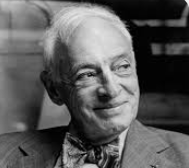
The late philosopher Morris R. Cohen of CCNY was asked by a student in the metaphysics course, "Professor Cohen, how do I know that I exist?" The keen old prof replied, "And who is asking?"
▼
Source
source
Humboldt's Gift (1996), p. 163

1 month 2 weeks ago
At the approach of danger there are always two voices that speak with equal force in the heart of man: one very reasonably tells the man to consider the nature of the danger and the means of avoiding it; the other even more reasonable says that it is too painful and harassing to think of the danger, since it is not a man's power to provide for everything and escape from the general march of events; and that it is therefore better to turn aside from the painful subject till it has come, and to think of what is pleasant. In solitude a man generally yields to the first voice; in society to the second.
▼
Source
source
Bk. X, ch. 17
3 months 3 weeks ago
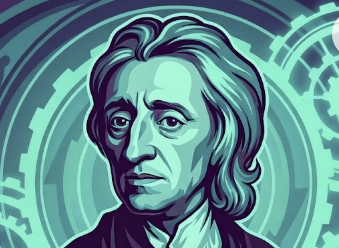
Of all the ways whereby children are to be instructed, and their manners formed, the plainest, easiest, and most efficacious, is, to set before their eyes the examples of those things you would have them do, or avoid; which, when they are pointed out to them, in the practice of persons within their knowledge, with some reflections on their beauty and unbecomingness, are of more force to draw or deter their imitation, than any discourses which can be made to them.
▼
Source
source
Sec. 82
2 months 3 weeks ago
Language forms a kind of wealth, which all can make use of at once without causing any diminution of the store, and which thus admits a complete community of enjoyment; for all, freely participating in the general treasure, unconsciously aid in its preservation.
▼
Source
source
Volume II, p. 213
2 months 2 weeks ago
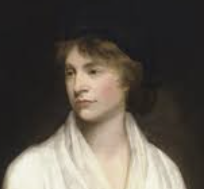
It is of great importance to observe that the character of every man is, in some degree, formed by his profession. A man of sense may only have a cast of countenance that wears off as you trace his individuality, whist the weak, common man has scarcely ever any character, but what belongs to the body; at least, all his opinions have been so steeped in the vat consecrated by authority, that the faint spirit which the grape of his own vine yields, cannot be distinguished.
▼
Source
source
Ch. 1

3 months 3 weeks ago
Where there is a lull of truth, an institution springs up. But the truth blows right on over it, nevertheless, and at length blows it down.
▼
Source
source
p. 494
2 months 2 weeks ago
Am I a free agent, or am I merely the manifestation of a foreign power? Neither appear sufficiently well founded.By the most courageous resolve of my life am I reduced to this! what Power can save me from it, from myself?
▼
Source
source
Jane Sinnett, trans 1846 p. 24
3 months 1 week ago
It is no more evident that democratic institutions are to be measured by the sort of person they create than that they are to be measured against divine commands. ... Even if the typical character types of liberal democracies are bland, calculating, petty, and unheroic, the prevalence of such people may be a reasonable price to pay for political freedom.

3 months 2 weeks ago
The rule of Big Money and its attendant culture of cupidity and mendacity has so poisoned our hearts, minds and souls that a dominant self-righteous neoliberal soulcraft of smartness, dollars and bombs thrives with little opposition.
▼
Source
source
America is spiritually bankrupt. We must fight back together. The Guardian,
2 months 1 week ago
A philosophy has no private store of knowledge or methods for attaining truth, so it has no private access to good. As it accepts knowledge and principles from those competent in science and inquiry, it accepts the goods that are diffused in human experience. It has no Mosaic or Pauline authority of revelation entrusted to it. But it has the authority of intelligence, of criticism of these common and natural goods.
3 months 2 weeks ago
A spider conducts operations that resemble those of a weaver, and a bee puts to shame many an architect in the construction of her cells. But what distinguishes the worst of architects from the best of bees is this, that the architect raises his structure in imagination before he erects it in reality.
▼
Source
source
Vol. I, Ch. 7, pg. 198.
2 months 2 weeks ago
By an object, I mean anything that we can think, i.e. anything we can talk about.
▼
Source
source
"Reflections on Real and Unreal Objects", Undated, MS 966
1 month 6 days ago
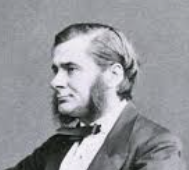
The improver of natural knowledge absolutely refuses to acknowledge authority, as such. For him, scepticism is the highest of duties; blind faith the one unpardonable sin. And it cannot be otherwise, for every great advance in natural knowledge has involved the absolute rejection of authority, the cherishing of the keenest scepticism, the annihilation of the spirit of blind faith; and the most ardent votary of science holds his firmest convictions, not because the men he most venerates hold them; not because their verity is testified by portents and wonders; but because his experience teaches him that whenever he chooses to bring these convictions into contact with their primary source, Nature - whenever he thinks fit to test them by appealing to experiment and to observation - Nature will confirm them. The man of science has learned to believe in justification, not by faith, but by verification. On the advisableness of improving natural knowledge
▼
Source
source
1866
4 months 2 weeks ago
It's funny the respectable names you can give to superstition.

3 months 3 weeks ago
Those who have been inspired to action by the doctrine of the class war will have acquired the habit of hatred, and will instinctively seek new enemies when the old ones have been vanquished. But in actual fact the psychology of the working man in any of the Western democracies is totally unlike that which is assumed in the Communist Manifesto. He does not by any means feel that he has nothing to lose but his chains, nor indeed is this true. The chains which bind Asia and Africa in subjection to Europe are partly riveted by him. He is himself part of a great system of tyranny and exploitation. Universal freedom would remove, not only his own chains, which are comparatively light, but the far heavier chains which he has helped to fasten upon the subject races of the world.
▼
Source
source
Ch. VI: International Relations
1 month 3 weeks ago
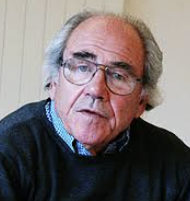
Watergate was thus nothing but a lure held out by the system to catch its adversaries-a simulation of scandal for regenerative ends.
▼
Source
source
"The Precession of Simulacra," p. 16
4 months 1 week ago
The superior man is satisfied and composed; the mean man is always full of distress. The virtuous is frank and open; the non-virtuous is secretive and worrying.
1 month 2 weeks ago
We have become like the most primitive Palaeolithic man, once more global wanderers, but information gatherers rather than food gatherers. From now on the source of food, wealth and life itself will be information.
2 months 1 week ago
Horace and Aristotle told us of the virtues of their fathers, and the vices of their own time, and authors down through the centuries have told us the same. If they were right, men would now be bears.
3 months 2 weeks ago
I, for my part, do not conceive an act as having causes, and I consider myself satisfied when I have found in it not its 'factors' but the general themes which it organizes: for our decisions gather into new syntheses and on new occasions the leitmotif that governs our life
▼
Source
source
p. 461

3 months 3 weeks ago
In every part of the universe we observe means adjusted with the nicest artifice to the ends which they are intended to produce; and in the mechanism of a plant, or animal body, admire how every thing is contrived for advancing the two great purposes of nature, the support of the individual, and the propagation of the species.
▼
Source
source
Section II, Chap. III.
3 months 3 weeks ago
It ought to be remembered that there is nothing more difficult to take in hand, more perilous to conduct, or more uncertain in its success, than to take the lead in the introduction of a new order of things. Because the innovator has for enemies all those who have done well under the old conditions, and lukewarm defenders in those who may do well under the new. This coolness arises partly from fear of the opponents, who have the laws on their side, and partly from the incredulity of men, who do not readily believe in new things until they have had a long experience of them.
▼
Source
source
The Prince (1513), Ch. 6; translated by W. K. Marriott
3 months 2 weeks ago
We reduce things to mere Nature in order that we may 'conquer' them.
3 months 2 weeks ago
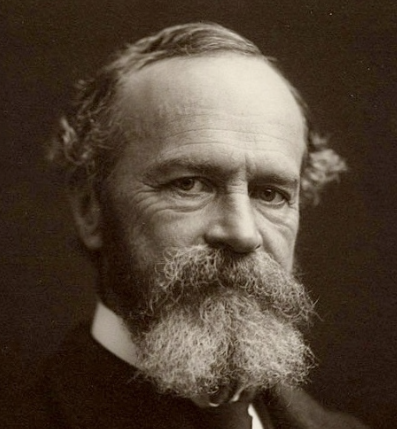
Truth lives, in fact, for the most part on a credit system. Our thoughts and beliefs 'pass,' so long as nothing challenges them, just as bank-notes pass so long as nobody refuses them.
▼
Source
source
Lecture VI, Pragmatism's Conception of Truth

2 months 1 week ago
To say that everything is idea or that everything is spirit, is the same as saying that everything is matter or that everything is energy, for if everything is idea or spirit, just as my consciousness is, it is not plain why the diamond should not endure for ever, if my consciousness, because it is idea or spirit, endures forever.
5 days ago
Destruction perfects that which is good; for the good cannot appear on account of that which conceals it. The good is least good whilst it is thus concealed. The concealment must be removed so that the good may be able freely to appear in its own brightness. For example, the mountain, the sand, the earth, or the stone in which a metal has grown is such a concealment. Each one of the visible metals is a concealment of the other six metals.
▼
Source
source
Hermetic and Alchemical Writings (1894), edited by Arthur Edward Waite; Coelum Philosophorum or Book of Vexations, originally 1543
1 month 2 weeks ago
Giving alms is only a virtuous deed when you give money that you yourself worked to get.
▼
Source
source
p. 83
1 month 1 week ago
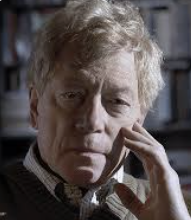
Faith exalts the human heart, by removing it from the market-place, making it sacred and unexchangeable. Under the jurisdiction of religion our deeper feelings are sacralized, so as to become raw material for the ethical life: the life lived in judgement.
▼
Source
source
"Avant-garde and Kitsch" (p. 91)
2 months 1 week ago
Liberating tolerance, then, would mean intolerance against movements from the Right, and toleration of movements from the Left.
▼
Source
source
An Essay on Liberation Beacon Press, 1969, p. 109
1 week 5 days ago
Marx sees Epicurus as a destroyer of the Greek myths and as a philosopher bringing to light the break-up of a tribal community. His system destroyed the visible heaven of the ancients as a keystone of political and religious life. Marx allies himself, so to speak, with Epicurean atheism, which he regards at this stage as a challenge by the intellectual élite to the cohorts of common sense. 'As long as a single drop of blood pulses in her world-conquering and totally free heart, philosophy will continually shout at her opponents the cry of Epicurus: "Impiety does not consist in destroying the gods of the crowd but rather in ascribing to the gods the ideas of the crowd."'
▼
Source
source
(pp. 102-3)
3 months 2 weeks ago
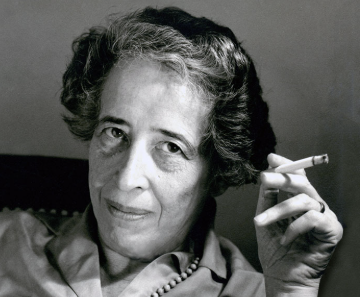
The essence of totalitarian government, and perhaps the nature of every bureaucracy, is to make functionaries and mere cogs in the administrative machinery out of men, and thus to dehumanise them.
▼
Source
source
As quoted in Ideas in literature: Ten things Hannah Arendt said that are eerily relevant in today's political times
CivilSimian.com created by AxiomaticPanic, CivilSimian, Kalokagathia