

3 months 2 weeks ago
This is a long book, not only in pages.
▼
Source
source
Preface, pg. viii

2 months 2 weeks ago
Three in the morning. I realize this second, then this one, then the next: I draw up the balance sheet for each minute. And why all this? Because I was born. It is a special type of sleeplessness that produces the indictment of birth.

2 months 3 weeks ago
In America a woman loses her independence for ever in the bonds of matrimony. While there is less constraint on girls there than anywhere else, a wife submits to stricter obligations. For the former, her father's house is a home of freedom and pleasure; for the latter, her husband's is almost a cloister.
▼
Source
source
Book Three, Chapter X.

1 week 4 days ago
For the Able Man, meet him where you may, is definable as the born enemy of Falsity and Anarchy, and the born soldier of Truth and Order: into what absurdest element soever you put him, he is there to make it a little less absurd, to fight continually with it till it become a little sane and human again. Peace on other terms he, for his part, cannot make with it; not he, while he continues able, or possessed of real intellect and not imaginary. There is but one man fraught with blessings for this world, fated to diminish and successively abolish the curses of the world; and it is he. For him make search, him reverence and follow; know that to find him or miss him, means victory or defeat for you, in all Downing Streets, and establishments and enterprises here below.

4 months 3 weeks ago
If, then, in the sphere of action there is some one end which we desire for its own sake, and for the sake of which we desire every thing else; and if we do not choose every thing for the sake of something else, for this would go on without limit, and our desire would be idle and futile, it is clear that this must be the supreme good, and the best thing of all.

3 months 2 weeks ago
If you tried to doubt everything you would not get as far as doubting anything. The game of doubting itself presupposes certainty.

5 days ago
Virtue alone affords everlasting and peace-giving joy; even if some obstacle arise, it is but like an intervening cloud, which floats beneath the sun but never prevails against it.
2 months 1 week ago
The guiding question of Marx's analysis was, How does capitalist society supply its members with the necessary use-values? And the answer disclosed a process of blind necessity, chance, anarchy and frustration. The introduction of the category of use-value was the introduction of a forgotten factor, forgotten, that is, by the classical political economy which was occupied only with the phenomenon of exchange value. In the Marxian theory, this factor becomes an instrument that cuts through the mystifying reification of the commodity world.
▼
Source
source
P. 304

3 months 2 weeks ago
What the rest of us see only under the influence of mescalin, the artist is congenitally equipped to see all the time. His perception is not limited to what is biologically or socially useful.
▼
Source
source
Page 168
5 days ago
Imagine that nature is saying to us: "Those things of which you complain are the same for all. I cannot give anything easier to any man, but whoever wishes will make things easier for himself." In what way? By equanimity. You must suffer pain, and thirst, and hunger, and old age too, if a longer stay among men shall be granted you; you must be sick, and you must suffer loss and death.
2 months 2 weeks ago
Now, to say that a lot of objects is finite, is the same as to say that if we pass through the class from one to another we shall necessarily come round to one of those individuals already passed; that is, if every one of the lot is in any one-to-one relation to one of the lot, then to every one of the lot some one is in this same relation.
3 months 2 weeks ago
What we are destroying is nothing but houses of cards and we are clearing up the ground of language on which they stood.
▼
Source
source
§ 118

3 months 3 weeks ago
The same good sense, that directs men in the ordinary occurrences of life, is not hearkened to in religious matters, which are supposed to be placed altogether above the cognizance of human reason.

1 month 2 weeks ago
Violence, whether spiritual or physical, is a quest for identity and the meaningful.
▼
Source
source
The less identity, the more violence. "Violence in the media." Canadian Forum. Volume 56, 1976, p. 9
1 week 4 days ago
He that works and does some Poem, not he that merely says one, is worthy of the name of Poet.
▼
Source
source
Introduction to Cromwell's Letters and Speeches (1845).
5 days ago
Live among men as if God beheld you; speak with God as if men were listening.
▼
Source
source
Line 5.

3 months 1 week ago
With an ill-famed man form no connection.

3 months 2 weeks ago
There is something which unites magic and applied science while separating both from the wisdom of earlier ages. For the wise men of old the cardinal problem had been how to conform the soul to reality, and the solution had been knowledge, self-discipline, and virtue. For magic and applied science alike the problem is how to subdue reality to the wishes of men.

2 months 3 days ago
Every daring attempt to make a great change in existing conditions, every lofty vision of new possibilities for the human race, has been labelled Utopian.
▼
Source
source
"Socialism: Caught in the Political Trap", a lecture (c. 1912), published in Red Emma Speaks, Part 1 (1972) edited by Alix Kates Shulman

3 months 2 weeks ago
There is a freemasonry among the dull by which they recognize and are sociable with the dull, as surely as a correspondent tact in men of genius.
▼
Source
source
1827
5 days ago
For no man is free who is a slave to his body.

2 months 6 days ago
The prestige which constitutes three-fourths of might is first of all made up of that superb indifference which the powerful have for the weak, an indifference so contagious that it is communicated even to those who are its object.
▼
Source
source
in The Simone Weil Reader, p. 168
1 month 2 weeks ago
I am not a "culture critic" because I am not in any way interested in classifying cultural forms. I am a metaphysician, interested in the life of the forms and their surprising modalities. That is why I have no interest in the academic world.
▼
Source
source
Letters of Marshall McLuhan (1987), p. 413
3 months 3 weeks ago
Very similar were the views expressed by Raymundus of Sabunde or Sabeyde, a Spaniard of the fifteenth century, and professor at Toulouse about the year 1437. In his theologia natural is, which he handled in a speculative spirit, he dealt with the Nature of things, and with the revelation of God in Nature and in the history of the God-man. He sought to prove to unbelievers the Being, the trinity, the incarnation, the life, and the revelation of God in Nature, and in the history of the God-man, basing his arguments on Reason. From the contemplation of Nature he rises to God; and in the same way he reaches morality from; observation of man's inner nature. This purer and simpler style must be set off against the other, if we are to do justice to the Scholastic theologians in their turn.
▼
Source
source
Georg Wilhelm Friedrich Hegel, Lectures on the Philosophy of History Vol 3 1837 translated by ES Haldane and Francis H. Simson) first translated 1896 P. 91-92



3 months 2 weeks ago
...inversion...is an outlet that a child discovers when he is suffocating.
▼
Source
source
p. 91
2 months 1 week ago
In the face of the idea that truth might afford the opposite of satisfaction and turn out to be completely shocking to humanity at any given historical moment, ... the fathers of pragmatism made the satisfaction of the subject the criterion of truth. For such a doctrine there is no possibility of rejecting or even criticizing any species of belief that is enjoyed by its adherents.
▼
Source
source
p. 52.
3 months 4 weeks ago
Writing does not cause misery. It is born of misery.
1 week 6 days ago
In 1903 there appeared Problems of Idealism, a collection of essays many of whose authors had recently been Marxists, but which condemned Marxism and materialism for their moral nihilism, contempt of personality, determinism, and fanatical pursuit of social values regardless of the individuals who made up society; they also attacked Marxism for its uncritical worship of progress and sacrifice of the present to the future.
▼
Source
source
(pp. 420-1)
1 month 2 weeks ago
Audacity augments courage; hesitation, fear.
▼
Source
source
Maxim 63 Variant translation: "Valour grows by daring, fear by holding back."

1 week 5 days ago
The sense of mercy is found in all men; the sense of shame is found in all men; the sense of respect is found in all men; the sense of right and wrong is found in all men.
▼
Source
source
6A:6
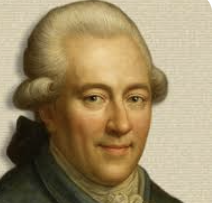
2 months ago
First we have to believe, and then we believe.
▼
Source
source
K 55

2 months 1 week ago
Whoever believes and is baptized will be saved, but whoever does not believe will be condemned. And these signs will accompany those who believe: In my name they will drive out demons; they will speak in new tongues; they will pick up snakes with their hands; and when they drink deadly poison, it will not hurt them at all; they will place their hands on sick people, and they will get well.
▼
Source
source
Jesus, Mark 16:16-18
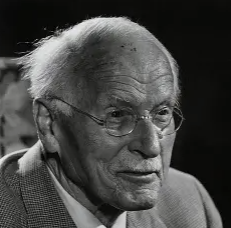
2 months 2 weeks ago
I find that all my thoughts circle around God like the planets around the sun, and are as irresistibly attracted by Him. I would feel it to be the grossest sin if I were to oppose any resistance to this force.
▼
Source
source
Sources: David John Tacey (2007)
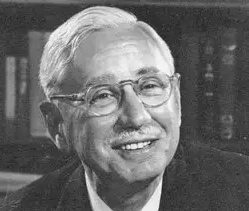
1 week 3 days ago
Science tells us how to heal and how to kill; it reduces the death rate in retail and then kills us wholesale in war; but only wisdom - desire coordinated in the light of all experience - can tell us when to heal and when to kill. To observe processes and to construct means is science; to criticize and coordinate ends is philosophy: and because in these days our means and instruments have multiplied beyond our interpretation and synthesis of ideals and ends, our life is full of sound and fury, signifying nothing. For a fact is nothing except in relation to desire; it is not complete except in relation to a purpose and a whole. Science without philosophy, facts without perspective and valuation, cannot save us from havoc and despair. Science gives us knowledge, but only philosophy can give us wisdom.
▼
Source
source
Introduction : On the Uses of Philosophy

3 months 4 weeks ago
We may search long to find where God is, but we shall find Him in those who keep the words of Christ. For the Lord Christ saith, " If any man love me, he will keep my words; and we will make our abode with him."
▼
Source
source
p. 278

3 months 3 weeks ago
It is from the Bible that man has learned cruelty, rapine, and murder; for the belief of a cruel God makes a cruel man.
▼
Source
source
A Letter: Being an Answer to a Friend, on the publication of The Age of Reason" (12 May 1797), published in an 1852 edition of The Age of Reason, p. 205

3 months 3 weeks ago
In the Catholic Church, especially, they go into chancery, make a clean confession, give up all, and think to start again. Thus men will lie on their backs, talking about the fall of man, and never make an effort to get up.
▼
Source
source
p. 487
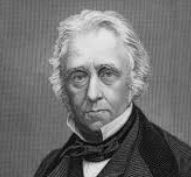
1 month 1 week ago
It seems that the creative faculty, and the critical faculty, cannot exist together in their highest perfection.
▼
Source
source
p. 186
3 months 2 weeks ago
There is always a certain meanness in the argument of conservatism, joined with a certain superiority in its fact.

3 months 2 weeks ago
Free-market fundamentalism trivializes the concern for public interest. It puts fear and insecurity in the hearts of anxiety-ridden workers. It also makes money-driven, poll-obsessed elected officials deferential to corporate goals of profit - often at the cost of the common good. ... The free-market fundamentalism that prevails in the United States today promotes the pervasive sleepwalking of the populace. People see that the false prophets are handsomely rewarded - with money, status and access to more power. ... We are experiencing the sad gangsterization of America - an unbridled grasp at power, wealth and status.
▼
Source
source
Cornel West: Democracy Matters in The Globalist
1 week 4 days ago
A million blockheads looking authoritatively into one man of what you call genius, or noble sense, will make nothing but nonsense out of him and his qualities, and his virtues and defects, if they look till the end of time. He understands them, sees what they are; but that they should understand him, and see with rounded outline what his limits are,-this, which would mean that they are bigger than he, is forever denied them. Their one good understanding of him is that they at last should loyally say, "We do not quite understand thee; we perceive thee to be nobler and wiser and bigger than we, and will loyally follow thee."
3 months 2 weeks ago
Death is the only thing we haven't succeeded in completely vulgarizing.
▼
Source
source
Eyeless in Gaza, 1936

3 months 2 days ago
Envy has been, is, and shall be, the destruction of many. What is there, that Envy hath not defamed, or Malice left undefiled? Truly, no good thing.
3 months 1 week ago
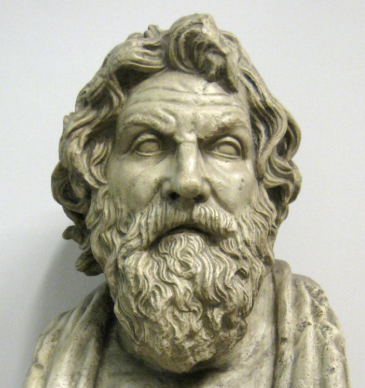
When he was asked what advantage had accrued to him from philosophy, his answer was, "The ability to hold converse with myself."
▼
Source
source
§ 4
2 months 2 weeks ago
How many disappointments are conducive to bitterness? One or a thousand, depending on the subject.

3 months 3 weeks ago
As to the Approbation or Esteem of those Blockheads who call themselves the Public, & whom a Bookseller, a Lord, a Priest, or a Party can guide, I do most heartily despise it.
▼
Source
source
Letter 138, To Gilbert Elliot of Minto; August 9, 1757
2 months 4 days ago
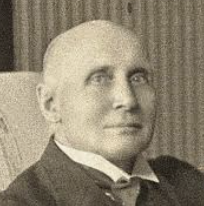
A philosopher of imposing stature doesn't think in a vacuum. Even his most abstract ideas are, to some extent, conditioned by what is or is not known in the time when he lives.
▼
Source
source
Ch. 29, June 10, 1943.
3 months 3 weeks ago
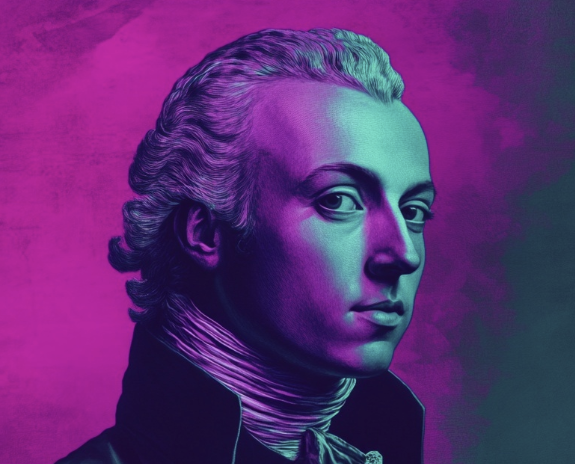
Thus our duties to animals are indirectly duties to humanity.
▼
Source
source
Part II, p. 213
CivilSimian.com created by AxiomaticPanic, CivilSimian, Kalokagathia