




10 months 1 week ago
You won't - I really believe - get too much out of reading it. Because you won't understand it; the content will seem strange to you. In reality, it isn't strange to you, for the point is ethical. I once wanted to give a few words in the foreword which now actually are not in it, which, however, I'll write to you now because they might be a key for you: I wanted to write that my work consists of two parts: of the one which is here, and of everything which I have not written. And precisely this second part is the important one.
▼
Source
source
On his Tractatus Logico-Philosophicus, in a letter to Ludwig von Ficker (1919), published in Wittgenstein : Sources and Perspectives (1979) by C. Grant Luckhard
10 months 2 weeks ago
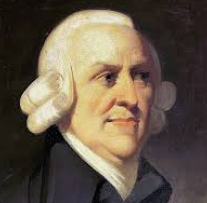
By the removal of the unnecessary mouths, and by extracting from the farmer the full value of the farm, a greater surplus, or what is the same thing, the price of a greater surplus, was obtained for the proprietor...
▼
Source
source
Chapter IV, p. 450 (On Highland Clearances).

9 months 2 weeks ago
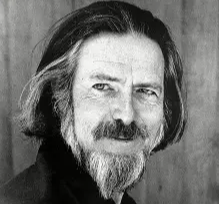
Freedom and not servitude is the cure of anarchy; as religion, and not atheism, is the true remedy for superstition.
6 months 3 weeks ago
If you get the message, hang up the phone. For psychedelic drugs are simply instruments, like microscopes, telescopes, and telephones. The biologist does not sit with eye permanently glued to the microscope, he goes away and works on what he has seen.
▼
Source
source
p. 26 (This statement was redacted from later editions.)

6 months 3 weeks ago
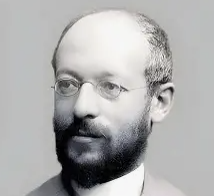
The individual is reduced to a negligible quantity, perhaps less in his consciousness than in his practice and in the totality of his obscure emotional states that are derived from this practice. The individual has become a mere cog in an enormous organization of things and powers which tear from his hands all progress, spirituality, and value in order to transform them from their subjective form into the form of a purely objective life. It needs merely to be pointed out that the metropolis is the genuine arena of this culture which outgrows all personal life. Here in buildings and educational institutions, in the wonders and comforts of space-conquering technology, in the formations of community life, and in the visible institutions of the state, is offered such an overwhelming fullness of crystallized and impersonalized spirit that the personality, so to speak, cannot maintain itself under its impact.
▼
Source
source
p. 422

11 months 4 days ago
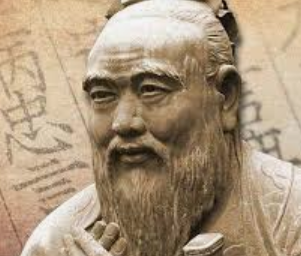
By extensively studying all learning, and keeping himself under the restraint of the rules of propriety, one may thus likewise not err from what is right.
6 months 2 weeks ago
Look upon men and pity them. Look at yourself amid all men and pity yourself. In the obscure dusk of life we touch and fumble at each other, we ask questions, we listen, we shout for help.

10 months 2 weeks ago
Thus, because Christian morals leave animals out of consideration ... therefore in philosophical morals they are of course at once outlawed; they are merely "things," simply means to ends of any sort; and so they are good for vivisection, for deer-stalking, bull-fights, horse-races, etc., and they may be whipped to death as they struggle along with heavy quarry carts. Shame on such a morality ... which fails to recognize the Eternal Reality immanent in everything that has life, and shining forth with inscrutable significance from all eyes that see the sun!
▼
Source
source
Part II, Ch. VI, pp. 94-95

7 months 5 days ago
May not this religious reticence, in these devout good souls, be perhaps a merit, and sign of health in them? Jocelin, Eadmer, and such religious men, have as yet nothing of 'Methodism;' no Doubt or even root of Doubt. Religion is not a diseased self-introspection, an agonising inquiry: their duties are clear to them, the way of supreme good plain, indisputable, and they are traveling on it. Religion lies over them like an all-embracing heavenly canopy, like an atmosphere and life-element, which is not spoken of, which in all things is presupposed without speech. Is not serene or complete Religion the highest aspect of human nature.

10 months 2 weeks ago
Truth never turns to rebuke falsehood; her own straightforwardness is the severest correction.
▼
Source
source
Pearls of Thought (1881) p. 264


6 months 4 weeks ago
The customs of that most criminal nation have gained such strength that they have now been received in all lands. The conquered have given laws to the conquerors.
▼
Source
source
Apostle Paul: A Polite Bribe by Robert Orlando; p. 108
8 months 2 weeks ago
The simulacrum now hides, not the truth, but the fact that there is none, that is to say, the continuation of Nothingness.

10 months 1 week ago
What do we mean by saying that existence precedes essence? We mean that man first of all exists, encounters himself, surges up in the world-and defines himself afterwards. If man as the existentialist see him is not definable, it is because to begin with he is nothing. He will not be anything until later, and then he will be what he makes of himself. Thus, there is no human nature, because there is no God to have a conception of it. Man simply is. Not that he is simply what he conceives himself to be, but he is what he wills, and as he conceives himself after already existing - as he wills to be after that leap towards existence. Man is nothing else but that which he makes of himself. That is the first principle of existentialism.
▼
Source
source
p. 28
11 months 4 days ago
No matter how busy you may think you are, you must find time for reading, or surrender yourself to self-chosen ignorance.
7 months 4 weeks ago
Economic reforms based on the idea of limitless growth in a limited world, can only be maintained by the powerful grabbing the resources of the vulnerable. The resource grab that is essential for "growth" creates a culture of rape-the rape of the earth, of local self-reliant economies, and of women.
▼
Source
source
On economic reforms in India and rape in India, from "Vandana Shiva: Our Violent Economy is Hurting Women " article in Yes Magazine
9 months 2 weeks ago
The purpose of the State is, as we have already shown in our last lecture, no other than that of the Human Race itself:-to order all its relations according to the Laws of Reason. It is only after the Age of Reason as Science shall have been traversed, and we shall have arrived at the Age of Reason as Art, that the State can reflect upon this purpose with clear consciousness. Till then it constantly promotes this purpose, but without its own knowledge, or free pre meditated design; prompted thereto by the natural law of the development of our Race, even while it has a totally different purpose in view;-with which purpose of its own, Nature has indissolubly bound up the purpose of the whole Race.
▼
Source
source
p. 168
10 months 3 weeks ago
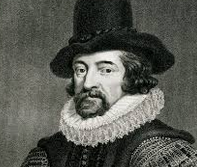
But by far the greatest obstacle to the progress of science and to the undertaking of new tasks and provinces therein is found in this - that men despair and think things impossible.
▼
Source
source
Aphorism 92

6 months 2 weeks ago
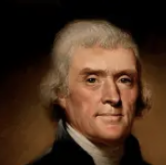
The incorporation of a bank and the powers assumed by legislation doing so have not, in my opinion, been delegated to the United States by the Constitution. They are not among the powers specially enumerated.
▼
Source
source
Opinion on the Constitutionality of the Bill for Establishing a National Bank., 1791. ME 3:146

11 months ago
Though absent from our eyes, Christ our Head is bound to us by love. Since the whole Christ is Head and body, let us so listen to the voice of the Head that we may also hear the body speak.He no more wished to speak alone than He wished to exist alone, since He says: Behold, I am with you all days, unto the consummation of the world (Matt. 28:20). If He is with us, then He speaks in us, He speaks of us, and He speaks through us; and we too speak in Him.
▼
Source
source
pp. 420-421
8 months 1 week ago
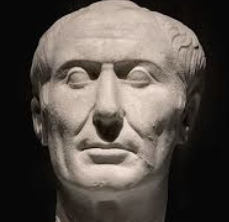
They pass peaceful lives who ignore mine and thine.
▼
Source
source
Maxim 790


10 months 3 weeks ago
I believe that it is possible for one to praise, without concern, any man after he is dead since every reason and supervision for adulation is lacking.
▼
Source
source
Book 1
11 months 2 weeks ago
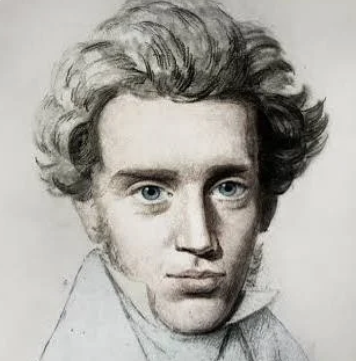
If self-knowledge does not lead to knowing oneself before God - well, then there is something to what purely human self-observation says, namely, this self-knowledge leads to a certain emptiness that produces dizziness. Only by being before God can one totally come to oneself in the transparency of soberness.

10 months 4 weeks ago
A thing therefore never returns to nothing.
▼
Source
source
Book I, line 248 (tr. Munro)

10 months 2 weeks ago
Some part of life - perhaps the most important part - must be left to the spontaneous action of individual impulse, for where all is system there will be mental and spiritual death.

10 months 2 weeks ago
The last peculiarity of consciousness to which attention is to be drawn in this first rough description of its stream is that it is always interested more in one part of its object than in another, and welcomes and rejects, or chooses, all the while it thinks.
▼
Source
source
Ch. 9

8 months 1 week ago
Cartoons drove the photo back to myth and dream screen.

10 months 3 weeks ago
I feel that the entire spiritual life consists in this: That we gradually turn from those things whose appearance is deceptive to those things that are real.
▼
Source
source
p. 63
10 months 3 weeks ago
The greatest error of all the rest is the mistaking or misplacing of the last or farthest end of knowledge: for men have entered into a desire of learning and knowledge, sometimes upon a natural curiosity and inquisitive appetite; sometimes to entertain their minds with variety and delight; sometimes for ornament and reputation; and sometimes to enable them to victory of wit and contradiction; and most times for lucre and profession; and seldom sincerely to give a true account of their gift of reason, to the benefit and use of men: as if there were sought in knowledge a couch whereupon to rest a searching and restless spirit; or a tarrasse, for a wandering and variable mind to walk up and down with a fair prospect; or a tower of state, for a proud mind to raise itself upon; or a fort or commanding ground, for strife and contention; or a shop, for profit or sale; and not a rich storehouse, for the glory of the Creator and the relief of man's estate.
▼
Source
source
Book I, v, 11
10 months 1 week ago
I believe it might interest a philosopher, one who can think himself, to read my notes. For even if I have hit the mark only rarely, he would recognize what targets I had been ceaselessly aiming at.
10 months 2 weeks ago
Do we call this the land of the free? What is it to be free from King George and continue the slaves of King Prejudice? What is it to be born free and not to live free? What is the value of any political freedom, but as a means to moral freedom? Is it a freedom to be slaves, or a freedom to be free, of which we boast? We are a nation of politicians, concerned about the outmost defences only of freedom. It is our children's children who may perchance be really free.
▼
Source
source
p. 493
10 months 2 weeks ago
Poetry is the mysticism of mankind.

8 months 2 weeks ago
And therefore just as a brigand caught in broad daylight in the act cannot persuade us that he did not lift his knife in order to rob his victim of his purse, and had no thought of killing him, we too, it would seem, cannot persuade ourselves or others that the soldiers and policemen around us are not to guard us, but only for defense against foreign foes, and to regulate traffic and fetes and reviews; we cannot persuade ourselves and others that we do not know that the men do not like dying of hunger, bereft of the right to gain their subsistence from the earth on which they live; that they do not like working underground, in the water, or in the stifling heat, for ten to fourteen hours a day, at night in factories to manufacture objects for our pleasure. One would imagine it impossible to deny what is so obvious. Yet it is denied.
▼
Source
source
Chapter XII, Conclusion-Repent Ye, for the Kingdom of Heaven is at Hand
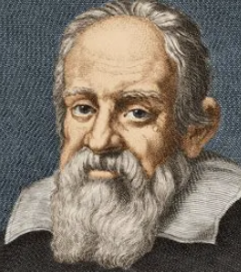
7 months 1 week ago
I esteem myself happy to have as great an ally as you in my search for truth. I will read your work ... all the more willingly because I have for many years been a partisan of the Copernican view because it reveals to me the causes of many natural phenomena that are entirely incomprehensible in the light of the generally accepted hypothesis. To refute the latter I have collected many proofs, but I do not publish them, because I am deterred by the fate of our teacher Copernicus who, although he had won immortal fame with a few, was ridiculed and condemned by countless people (for very great is the number of the stupid).
▼
Source
source
Letter to Johannes Kepler (1596), as quoted in The Story of Civilization : The Age of Reason Begins, 1558-1648 (1935) by Will Durant, p. 603
6 months 2 weeks ago
I congratulate you, my dear friend, on the law of your state for suspending the importation of slaves, and for the glory you have justly acquired by endeavoring to prevent it forever. This abomination must have an end, and there is a superior bench reserved in heaven for those who hasten it.
6 months 4 weeks ago
Nothing lasts forever, few things even last for long: all are susceptible of decay in one way or another; moreover all that begins also ends.
▼
Source
source
From Ad Polybium De Consolatione (Of Consolation, To Polybius), chap. I; translation based on work of Aubrey Stewart
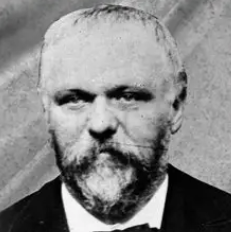
6 months 3 weeks ago
Everyone explains that discussions about Socialism are exceedingly obscure; this obscurity is due, to a large extent, to the fact that contemporary socialists use a terminology which no longer corresponds to their ideas.
▼
Source
source
p. 47
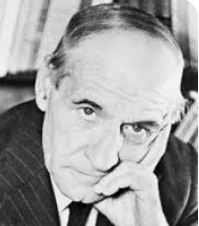
9 months 5 days ago
He [the "specialist"] is one who, out of all that has to be known in order to be a man of judgment, is only acquainted with one science, and even of that one only knows the small corner in which he is an active investigator. He even proclaims it as a virtue that he takes no cognisance of what lies outside the narrow territory specially cultivated by himself, and gives the name of "dilettantism" to any curiosity for the general scheme of knowledge.
▼
Source
source
Chapter XII: The Barbarism Of "Specialisation"

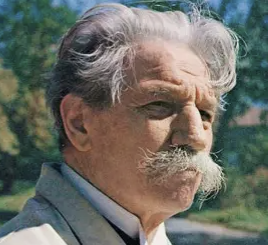
6 months 3 weeks ago
We cannot understand what happens in the universe. What is glorious in it is united with what is full of horror. What is full of meaning is united to what is senseless. The spirit of the universe is at once creative and destructive - it creates while it destroys and destroys while it creates, and therefore it remains to us a riddle. And we must inevitably resign ourselves to this.
▼
Source
source
p. 5
10 months 3 weeks ago
Jews hate the name of Christ and have a secret and innate rancor against the people among whom they live.
▼
Source
source
See Silent Truth by Mark Edwards


8 months 3 weeks ago
The supreme effort of the avant-guard is onward, ever onward.
▼
Source
source
Light and Shadows in the Life of an Avant-Guard
10 months 1 week ago
A religious symbol does not rest on any opinion. And error belongs only with opinion. One would like to say: This is what took place here; laugh, if you can.
▼
Source
source
Ch. 7 : Remarks on Frazer's Golden Bough, p. 123
7 months 3 weeks ago
One might naively suppose that a negative utilitarian would welcome human extinction. But only (trans)humans - or our potential superintelligent successors - are technically capable of phasing out the cruelties of the rest of the living world on Earth. And only (trans)humans - or rather our potential superintelligent successors - are technically capable of assuming stewardship of our entire Hubble volume.
▼
Source
source
"Unsorted Postings", Facebook, pre-2014
CivilSimian.com created by AxiomaticPanic, CivilSimian, Kalokagathia