


6 months 1 day ago
Today we have arrived at a point when the three principles [of modern resistance: 1. measure of efficacy, 2. the form of political and military organization correspond to the current forms of economic and social production, 3. democracy and freedom] coincide. The distributed network structure provides the model for an absolutely democratic organization that corresponds to the dominant forms of economic and social production and is also the most powerful weapon against the ruling power structure.
▼
Source
source
88


9 months 5 days ago
If I could put my hand on the north star, would it be as beautiful? The sea is lovely, but when we bathe in it, the beauty forsakes all the near water. For the imagination and senses cannot be gratified at the same time.
▼
Source
source
Beauty
5 months 5 days ago
New terms and changes of terms, which are not needed in order to express truth, are to be avoided.

9 months 4 days ago
There is no spiritual sustenance in flat equality. It is a dim recognition of this fact which makes much of our political propaganda sound so thin. We are trying to be enraptured by something which is merely the negative condition of the good life. That is why the imagination of people is so easily captured by appeals to the craving for inequality, whether in a romantic form of films about loyal courtiers or in the brutal form of Nazi ideology. The tempter always works on some real weakness in our own system of values - offers food to some need which we have starved.

9 months 6 days ago
Many agnostics (including myself) are quite as doubtful of the body as they are of the soul, but this is a long story taking one into difficult metaphysics. Mind and matter alike, I should say, are only convenient symbol in discourse, not actually existing things.
▼
Source
source
What is an Agnostic?, 1953
6 months 2 weeks ago
No collection of facts is ever complete, because the Universe is without bounds. And no synthesis or interpretation is ever final, because there are always fresh facts to be found after the first collection has been provisionally arranged.
▼
Source
source
Vol. 1
9 months 3 weeks ago
Chance seldom interferes with the wise man; his greatest and highest interests have been, are, and will be, directed by reason throughout his whole life.

9 months 4 days ago
The dreamer must contaminate the others by his dream, he must make them fall into it.
▼
Source
source
p. 399
6 months 5 days ago
The most obvious failure of organized religions is surely that almost all of them have made a mockery of what their founders taught.
▼
Source
source
p. 267

8 months 2 days ago
Aging people should know that their lives are not mounting and unfolding but that an inexorable inner process forces the contraction of life. For a young person it is almost a sin - and certainly a danger - to be too much occupied with himself; but for the aging person it is a duty and a necessity to give serious attention to himself.
▼
Source
source
p. 125

9 months 1 week ago
If you try to imagine, as nearly as you can, what an amount of misery, pain and suffering of every kind the sun shines upon in its course, you will admit that it would be much better if, on the earth as little as on the moon, the sun were able to call forth the phenomena of life; and if, here as there, the surface were still in a crystalline state.
▼
Source
source
"On the Sufferings of the World"

5 months 2 days ago
Whenever you suffer pain, keep in mind that it's nothing to be ashamed of and that it can't degrade your guiding intelligence, nor keep it from acting rationally and for the common good. And in most cases you should be helped by the saying of Epicurus, that pain is never unbearable or unending, so you can remember these limits and not add to them in your imagination. Remember too that many common annoyances are pain in disguise, such as sleepiness, fever and loss of appetite. When they start to get you down, tell yourself you are giving in to pain.
▼
Source
source
VII. 64:280
9 months 1 week ago
All men would then be necessarily equal, if they were without needs. It is the poverty connected with our species which subordinates one man to another. It is not inequality which is the real misfortune, it is dependence.
▼
Source
source
"Equality", 1764

7 months 3 days ago
The "message" of any medium or technology is the change of scale or pace or pattern that it introduces into human affairs.
▼
Source
source
(p. 8)
9 months 4 days ago
A man who belongs to some communist or revolutionary society wills certain concrete ends, which imply the will to freedom, and that freedom is willed in community. We will freedom for freedom's sake, and in and through the particular circumstances. And in thus willing freedom, we discover that it depends entirely upon the freedom of others and that the freedom of others depends upon our own.
▼
Source
source
pp. 51-52
7 months 3 weeks ago
The great man, whether we comprehend him in the most intense activity of his work or in the restful equipoise of his forces, is powerful, involuntarily and composedly powerful, but he is not avid for power. What he is avid for is the realization of what he has in mind, the incarnation of the spirit.
▼
Source
source
p. 151

7 months 3 weeks ago
An imaginary perfection is automatically at the same level as I who imagine it - neither higher nor lower.
▼
Source
source
p. 240
7 months 3 weeks ago
The complexity of the connection between the world of perception and the world of physics does not preclude that such a connection can be shown to exist at any time.
▼
Source
source
p. 133.
7 months 3 weeks ago
The miser deprives himself of his treasure because of his desire for it.
▼
Source
source
p. 260
5 months 2 weeks ago
The truth is, that most men want knowledge, not for itself, but for the superiority which knowledge confers; and the means they employ to secure this superiority, are as wrong as the ultimate object, for no man can ever end with being superior, who will not begin with being inferior.
▼
Source
source
Lecture IX : On the Conduct of the Understanding

8 months 1 week ago
Around us knowledge has been extinguished, and recruitment of men of religion and men of law has ceased; that is to say, we have made Muslim society much more miserable, more disordered, more ignorant, and more barbarous than it had been before knowing us.
▼
Source
source
Travail sur l'Algerie, Travels in Algeria p. 185
7 months 1 week ago
One day, we shall stand up and our backsides will remain attached to our seats.
10 months 3 days ago
Once you've dissected a joke, you're about where you are when you've dissected a frog. It's dead.
▼
Source
source
Banquets of the Black Widowers (1984), p. 49; comparable to "Humor can be dissected, as a frog can, but the thing dies in the process and the innards are discouraging to any but the pure scientific mind."

7 months 5 days ago
The recognition that love represents the highest morality was nowhere denied or contradicted, but this truth was so interwoven everywhere with all kinds of falsehoods which distorted it, that finally nothing of it remained but words. It was taught that this highest morality was only applicable to private life - for home use, as it were - but that in public life all forms of violence - such as imprisonment, executions, and wars - might be used for the protection of the majority against a minority of evildoers, though such means were diametrically opposed to any vestige of love.
▼
Source
source
III
9 months 1 week ago
The superfluous, a very necessary thing.
▼
Source
source
Variant translation: The superfluous is very necessary, Le Mondain, 1736
7 months 2 weeks ago
I believe that the nature of man is a contradiction rooted in the conditions of human existence that requires a search for solutions, which in their turn create new contradictions and now the need for answers. I believe that every answer to these contradictions can really satisfy the condition of helping man to overcome the sense of separation and to achieve a sense of agreement, of unity, and of belonging. I believe that in every answer to these contradictions, man has the possibility of choosing only between going forward or going back; these choices, which are translated into specific actions, are means toward the regressing or toward the progressing of the humanity that is in us.

8 months 6 days ago
Faith is not in power but in truth.
9 months 4 days ago
It is the same thing: killing, dying, it is the same thing: one is just as alone in each. He is lucky, he will only die once. As for me, for ten days I have been killing him at every minute. Hugo to Jessica, on his plans to kill.
▼
Source
source
Hoederer, Act 5, sc. 2

7 months 1 week ago
It is indeed a matter of great difficulty to discover, and effectually to distinguish, the true motions of particular bodies from the apparent; because the parts of that immovable space, in which those motions are performed, do by no means come under the observation of our senses. Yet the thing is not altogether desperate; for we have some arguments to guide us, partly from the apparent motions, which are the differences of the true motions; partly from the forces, which are the causes and effects of the true motions.
▼
Source
source
Definitions - Scholium

7 months 3 weeks ago
Not only are we unable to conceive of the full and living God as masculine simply, but we are unable to conceive of Him as individual simply, as the projection of a solitary I, an unsocial I, an I that is in reality an abstract I. My living I is an I that is really a We; my living personal I lives only in other, of other, and by other I's; I am sprung from a multitude of ancestors. I carry them within me in extract, and at the same time I carry within me, potentially, a multitude of descendants, and God, the projection of my I to the infinite - or rather I, the projection of God to the finite - must also be a multitude. Hence, in order to save the personality of God - that is to say, in order to save the living God - faith's need - the need of the feeling and the imagination - of conceiving Him and feeling Him as possessed of a certain internal multiplicity.

5 months 3 days ago
The vices are very justly man's executioners.
▼
Source
source
Chapter X, p. 85
9 months 6 days ago
Philosophy, from the earliest times, has made greater claims, and achieved fewer results, than any other branch of learning.
▼
Source
source
Lecture I, Current Tendencies, p. 11, New American Library edition, 1960

6 months ago
The other big issue is an emotional one. We tend to feel the greatest bonds of solidarity with people that are close to us. There are very few true citizens of the world. We're citizens of individual countries and we really feel the closest bonds to people that live within our nation, and therefore... the nation becomes a kind of social glue. But if you're going to make a national identity compatible with liberalism, it has to be the right kind of national identity. It has to be one that is open to all of the citizens that actually live in the territory of the nation. It can't exclude certain groups by race, by ethnicity, by religious belief and the like, and therefore it needs to be an open identity that is based on essentially liberal ideas.
▼
Source
source
24:46:00
8 months 1 week ago
I am far from denying that newspapers in democratic countries lead citizens to do very ill-considered things in common; but without newspapers there would be hardly any common action at all. So they mend many more ills than they cause.
▼
Source
source
Book Two, Chapter VI.

9 months 2 weeks ago
What is food to one, is to others bitter poison.
▼
Source
source
Book IV, line 637 (reported in Bartlett's Familiar Quotations) Compare: "What's one man's poison, signor, / Is another's meat or drink", Beaumont and Fletcher, Love's Cure (1647), Act III, scene 2
8 months 3 days ago
Nothing can be of more importance than to separate prejudice and mistake on the one hand from reason and demonstration on the other.
▼
Source
source
Book III, Ch.1

7 months 2 weeks ago
Power turns pure being into a having.
7 months 5 days ago
The vocation of every man and woman is to serve other people.
▼
Source
source
What Is To Be Done? (1886) Chap. XL
7 months 3 weeks ago
The devil is an angel too.
▼
Source
source
[Three Exemplary Novels and a Prologue] (1920); Two Mothers
5 months 2 days ago
Give thyself time to learn something new and good, and cease to be whirled around.
▼
Source
source
II, 7
6 months 4 weeks ago
There are evils, as someone has pointed out, that have the ability to survive identification and go on for ever - money, for instance, or war.
▼
Source
source
The Dean's December (1982) [Penguin Classics, 1998, ISBN 0-140-18913-0], ch. 13, p. 140
5 months 2 weeks ago
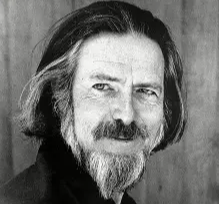
This is the real secret of life-to be completely engaged with what you are doing in the here and now. And instead of calling it work, realize it is play.
▼
Source
source
The Essence of Alan Watts

8 months 6 days ago
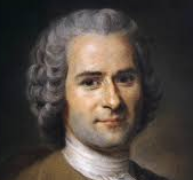
Government is a contrivance of human wisdom to provide for human wants. Men have a right that these wants should be provided for by this wisdom.
9 months 1 week ago
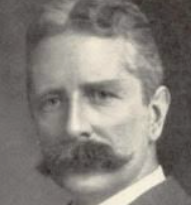
It is a mistake to classify the passions as lawful and unlawful, so as to yield to the one and refuse the other. All alike are good if we are their masters; all alike are bad if we abandon ourselves to them. Nature forbids us to extend our relations beyond the limits of our strength; reason forbids us to want what we cannot get, conscience forbids us, not to be tempted, but to yield to temptation. To feel or not to feel a passion is beyond our control, but we can control ourselves. Every sentiment under our own control is lawful; those which control us are criminal. A man is not guilty if he loves his neighbour's wife, provided he keeps this unhappy passion under the control of the law of duty; he is guilty if he loves his own wife so greatly as to sacrifice everything to that love.
5 months 2 days ago
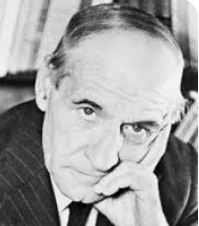
Among the arts of expression one is suited to this purpose, another to that. It is hard to express movement in stone or rest in music. It is harder still to express permanence in speech.
7 months 3 weeks ago
I think that the philosopher must, for his own purposes, carry methodological strictness to an extreme when he is investigating and pursuing his truths, but when he is ready to enunciate them and give them out, he ought to avoid the cynical skill with which some scientists, like a Hercules at the fair, amuse themselves by displaying to the public the biceps of their technique.
▼
Source
source
pp. 19-20
7 months 3 weeks ago
It is questionable whether there does not exist in man an obscure and blind will to make war; an impulse towards change, towards emergence from the familiarities of everyday life and from the stabilities of well-known conditions - something like a will to death as a will to annihilation and self-sacrifice, a vague enthusiasm for the upbuilding of a new world.
CivilSimian.com created by AxiomaticPanic, CivilSimian, Kalokagathia