


1 month 3 days ago
The pre-atomist multisensory void was an animate, pulsating, and moving vibrant interval, neither container nor contained, acoustic space penetrated by tactility.
▼
Source
source
p. 34

3 months 6 days ago
The finest workers in stone are not copper or steel tools, but the gentle touches of air and water working at their leisure with a liberal allowance of time.
2 months 3 weeks ago
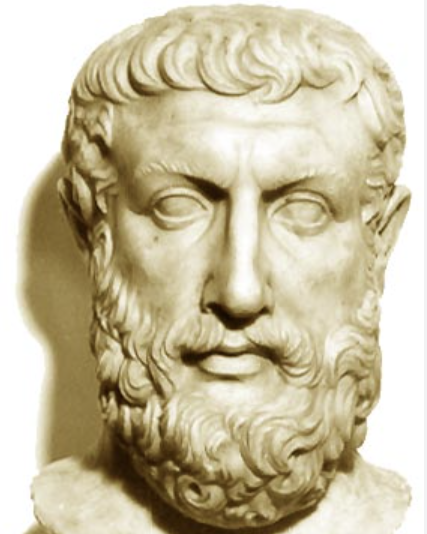
There is one story left, one road: that it is. And on this road there are very many signs that, being, is uncreated and imperishable, whole, unique, unwavering, and complete.
▼
Source
source
Frag. B 8.1-4, quoted by Simplicius, Commentary on the Physics, 144

1 month 2 weeks ago
On the whole, the scientist is better off if he collects his facts by accident, little by little, so he can study them before he tries to fit them into a jigsaw puzzle, This is how the late Tom Lethbridge came to arrive at his theories about other dimensions of reality. It is also how Guy Lyon Playfair came to develop his own theories about the nature of the poltergeist.
▼
Source
source
p. 196
1 month 1 week ago
Take provocation, for instance, which is the opposite and the caricature of seduction. It says: "I know that you want to be seduced, and I will seduce you." Nothing could be worse than betraying this secret rule. Nothing could be less seductive than a provocative smile or inciteful behaviour, since both presuppose that one cannot be seduced naturally and that one needs to be blackmailed into it, or through a declaration of intent: "Let me seduce you"
▼
Source
source
(p. 67)

3 months 5 days ago
Beauty without grace is the hook without the bait.
▼
Source
source
Beauty

4 months 6 days ago
Seek first God's Kingdom, that is, become like the lilies and the birds, become perfectly silent - then shall the rest be added unto you.

3 months 1 week ago
I doubt not, but from self-evident Propositions, by necessary Consequences, as incontestable as those in Mathematics, the measures of right and wrong might be made out.
▼
Source
source
Book IV, Ch. 3, sec. 18

3 months 4 days ago
God whispers to us in our pleasures, speaks in our conscience, but shouts in our pains: it is His megaphone to rouse a deaf world.
3 months 2 weeks ago
I make no doubt... that these rules are simple, artless, and natural.

3 months 4 days ago
Don't you feel the same way? When I cannot see myself, even though I touch myself, I wonder if I really exist.
▼
Source
source
Estelle, discovering that there are no mirrors in Hell, Act 1, sc. 5
2 weeks 5 days ago
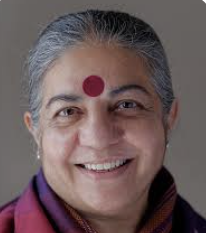
Just like Chief Seattle talked about being in the web of life, in India we talk about vasudhaiva kutumbkam, which means the earth family. Indian cosmology has never separated the human from the non-human-we are a continuum.

3 months 1 week ago
I perfectly agree with your Lordship too, that to crush the Industry of so great and so fine a province of the empire, in order to favour the monopoly of some particular towns in Scotland or England, is equally unjust and impolitic. The general opulence and improvement of Ireland might certainly, under proper management, afford much greater resources to the Government, than can ever be drawn from a few mercantile or manufacturing towns.
▼
Source
source
Letter to Henry Dundas (1 November 1779), quoted in Adam Smith, The Correspondence of Adam Smith, eds. E. C. Mossner and I. S. Ross (1987), p. 241

1 month 4 weeks ago
The transition from philosophy to the domain of state and society had been an intrinsic part of Hegel's system.
▼
Source
source
P. 251
3 months 4 days ago
The defiance of established authority, religious and secular, social and political, as a world-wide phenomenon may well one day be accounted the outstanding event of the last decade.
▼
Source
source
"Civil Disobedience"
1 month 2 weeks ago
Architecture is a way for power to achieve eloquence through form.
1 month 3 weeks ago
When we desire to lead men to God, we must not simply overthrow their idols. In each of these images we must seek to discover what divine quality he who carved it sought.
▼
Source
source
p. 117


3 months 4 days ago
Put in a nut-shell, my thesis amounts to this. The repeated attempts made by Rudolf Carnap to show that the demarcation between science and metaphysics coincides with that between sense and nonsense have failed. The reason is that the positivistic concept of 'meaning' or 'sense' (or of verifiability, or of inductive confirmability, etc.) is inappropriate for achieving this demarcation - simply because metaphysics need not be meaningless even though it is not science. In all its variations demarcation by meaninglessness has tended to be at the same time too narrow and too wide: as against all intentions and all claims, it has tended to exclude scientific theories as meaningless, while failing to exclude even that part of metaphysics which is known as 'rational theology'.
▼
Source
source
Ch 11. "The Demarcation between Science and Metaphysics." (Summary, p. 253)

3 months 1 week ago
Fame and tranquility can never be bedfellows.
▼
Source
source
Book I, Ch. 39

2 months 1 day ago
Who does not believe in Fate proves that he has not lived.

2 months 3 weeks ago
Men have made an idol of luck as an excuse for their own thoughtlessness. Luck seldom measures swords with wisdom. Most things in life quick wit and sharp vision can set right.
1 month 3 weeks ago
I do not accept any absolute formulas for living. No preconceived code can see ahead to everything that can happen in a man's life. As we live, we grow and our beliefs change. They must change. So I think we should live with this constant discovery. We should be open to this adventure in heightened awareness of living. We should stake our whole existence on our willingness to explore and experience.
▼
Source
source
As quoted in Martin Buber : An Intimate Portrait (1971), p. 56
2 weeks ago
No critic writing about a film could say more than the film itself, although they do their best to make us think the opposite.
▼
Source
source
"Film Critics"

1 month 3 days ago
A good reputation is more valuable than money.
▼
Source
source
Maxim 108
2 months 3 weeks ago
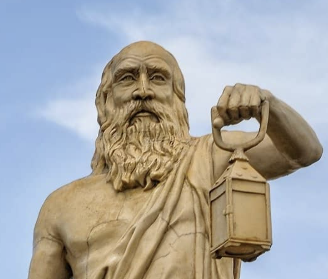
Virtue cannot dwell with wealth either in a city or in a house.
▼
Source
source
Stobaeus, iv. 31c. 88

2 months 3 weeks ago
Phocion compared the speeches of Leosthenes to cypress-trees. "They are tall," said he, "and comely, but bear no fruit."
▼
Source
source
56 Phocion
4 months 6 days ago
Most men pursue pleasure with such breathless haste that they hurry past it.
1 month 4 weeks ago
Fact be vertuous, or vicious, as Fortune pleaseth.
▼
Source
source
The Second Part, Chapter 27, p. 153

3 months 3 weeks ago
Sincerity becomes apparent. From being apparent, it becomes manifest. From being manifest, it becomes brilliant. Brilliant, it affects others. Affecting others, they are changed by it. Changed by it, they are transformed. It is only he who is possessed of the most complete sincerity that can exist under heaven, who can transform.

3 months 6 days ago
The opinions that are held with passion are always those for which no good ground exists; indeed the passion is the measure of the holder's lack of rational conviction.
▼
Source
source
Opinions in politics and religion are almost always held passionately. Introduction to 1961 edition of Sceptical Essays, 1961
3 months 1 week ago
My life has been full of terrible misfortunes most of which never happened.
3 months 1 week ago
All registers which, it is acknowledged, ought to be kept secret, ought certainly never to exist.
▼
Source
source
Chapter II, Part II, Appendix to Articles I and II, p. 935.

2 months 3 weeks ago
Choose a wife who is of character, because that one is good who in the end is more respected.
▼
Source
source
(p. 60)

3 months 1 week ago
I care not how affluent some may be, provided that none be miserable in consequence of it. But it is impossible to enjoy affluence with the felicity it is capable of being enjoyed, while so much misery is mingled in the scene.
▼
Source
source
Means by Which the Fund Is to Be Created
3 months 1 week ago
China has been long one of the richest, that is, one of the most fertile, best cultivated, most industrious, and most populous countries in the world. It seems, however, to have been long stationary. Marco Polo, who visited it more than five hundred years ago, describes its cultivation, industry, and populousness, almost in the same terms in which they are described by travellers in the present times.
▼
Source
source
Chapter VIII, p. 86.
3 months 6 days ago
The mass of men lead lives of quiet desperation. What is called resignation is confirmed desperation.
▼
Source
source
p. 10
3 months 4 days ago
I am almost inclined to set it up as a canon that a children's story which is enjoyed only by children is a bad children's story. The good ones last. A waltz which you can like only when you are waltzing is a bad waltz.
▼
Source
source
"On Three Ways of Writing for Children" (1952) - in Of Other Worlds: Essays and Stories (1967), p. 24

1 month 4 weeks ago
Woe unto you, lawyers! for ye have taken away the key of knowledge: ye entered not in yourselves, and them that were entering in ye hindered. And as he said these things unto them, the scribes and the Pharisees began to urge him vehemently, and to provoke him to speak of many things: Laying wait for him, and seeking to catch something out of his mouth, that they might accuse him.
▼
Source
source
11:52
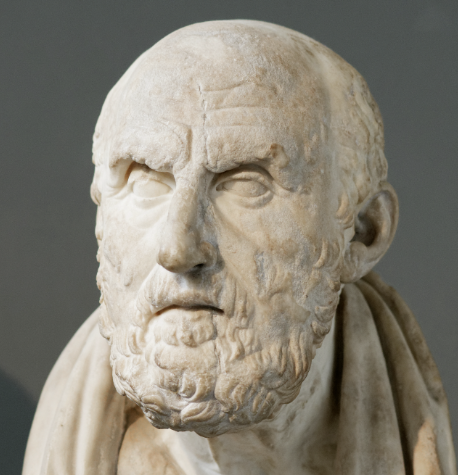
2 months 3 weeks ago
He who is running a race ought to endeavor and strive to the utmost of his ability to come off victor; but it is utterly wrong for him to trip up his competitor, or to push him aside. So in life it is not unfair for one to seek for himself what may accrue to his benefit; but it is not right to take it from another.
▼
Source
source
As quoted in De Officiis by Cicero, iii. 10.
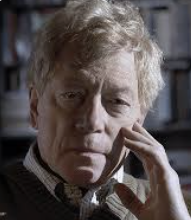
4 weeks ago
Faith exalts the human heart, by removing it from the market-place, making it sacred and unexchangeable. Under the jurisdiction of religion our deeper feelings are sacralized, so as to become raw material for the ethical life: the life lived in judgement.
▼
Source
source
"Avant-garde and Kitsch" (p. 91)
1 month 1 week ago
We are not yet speaking about equality if we have not yet spoken about equal grievability, or the equal attribution of grievability. Grievability is a defining feature of equality. Those whose grievability is not assumed are those who suffer inequality-unequal value.
▼
Source
source
p. 108

1 month 3 weeks ago
The demagogues, impresarios of alteracion, who have already caused the death of several civilizations, harass men so that they shall not reflect, see to it that they are kept herded together in crowds so that they cannot reconstruct their individuality in the one place where it can be reconstructed, which is in solitude.
▼
Source
source
p. 33
4 months 6 days ago
Every art, and every system, and in like manner every action and purpose aims, it is thought, at some good; for which reason a common and by no means a bad description of the good is, that at which all things aim.
3 months 6 days ago
The Hindoos are most serenely and thoughtfully religious than the Hebrews. They have perhaps a purer, more independent and impersonal knowledge of God. Their religious books describe the first inquisitive and contemplative access to God; the Hebrew bible a conscientious return, a grosser and more personal repentance. Repentance is not a free and fair highway to God. A wise man will dispense with repentance. It is shocking and passionate. God prefers that you approach him thoughtful, not penitent, though you are chief of sinners. It is only by forgetting yourself that you draw near to him. The calmness and gentleness with which the Hindoo philosophers approach and discourse on forbidden themes is admirable. In 1853.
▼
Source
source
A Tribute to Hinduism, 2008

2 months 1 week ago
Truth is the cry of all, but the game of the few.
▼
Source
source
Paragraph 368
2 months 1 day ago
In every man sleeps a prophet, and when he wakes there is a little more evil in the world.

1 week 5 days ago
Like other human freedoms, the freedoms embodied in market institutions are justified inasmuch as they meet human needs. Insofar as they fail to do this they can reasonably be altered. This is true not only of the rights that are involved in market institutions. It is true of all human rights.
▼
Source
source
'Modus Vivendi' (p.36)
2 months 1 day ago
The notion of nothingness is not characteristic of laboring humanity: those who toil have neither time nor inclination to weigh their dust; they resign themselves to the difficulties or the doltishness of fate; they hope: hope is a slave's virtue.
CivilSimian.com created by AxiomaticPanic, CivilSimian, Kalokagathia