

4 months 1 week ago
The ancient philosophers... all of them assert that the elements, and those things which are called by them principles, are contraries, though they establish them without reason, as if they were compelled to assert this by truth itself. They differ, however... that some of them assume prior, and others posterior principles; and some of them things more known according to reason, but others such as are more known according to sense: for some establish the hot and the cold, others the moist and the dry, others the odd and the even, and others strife and friendship, as the causes of generation. ...in a certain respect they assert the same things, and speak differently from each other. They assert different things... but the same things, so far as they speak analogously. For they assume principles from the same co-ordination; since, of contraries, some contain, and others are contained.

1 month 3 weeks ago
Society triumphs over many. They wish to regenerate the world with their institutions, with their moral philosophy, with their love. Then they sink to living from breakfast till dinner, from dinner till tea, with a little worsted work, and to looking forward to nothing but bed. When shall we see a life full of steady enthusiasm, walking straight to its aim, flying home, as that bird is now, against the wind - with the calmness and the confidence of one who knows the laws of God and can apply them?
3 months 2 weeks ago
It is because the method of physics does not satisfy the comprehension that we have to go on further.
1 month 1 week ago
Let your life be pleasing to the multitude, and it can not be so to yourself.
▼
Source
source
Maxim 1075
1 month 3 weeks ago
Some philosophers fail to distinguish propositions from judgments; ... But in the real world it is more important that a proposition be interesting than that it be true. The importance of truth is that it adds to interest.
▼
Source
source
p. 259.

2 months 5 days ago
The Spirit of the Lord is on me, because he has anointed me to proclaim good news to the poor. He has sent me to proclaim freedom for the prisoners and recovery of sight for the blind, to set the oppressed free, to proclaim the year of the Lord's favor.
▼
Source
source
Luke 4:18-19 NIV
2 months 1 week ago
A pair of statements may be taken conjunctively or disjunctively; for example, "It lightens and it thunders," is conjunctive, "It lightens or it thunders" is disjunctive. Each such individual act of connecting a pair of statements is a new monad for the mathematician.
▼
Source
source
p. 268

3 months 2 weeks ago
Civil government, so far as it is instituted for the security of property, is in reality instituted for the defence of the rich against the poor, or of those who have some property against those who have none at all.
▼
Source
source
Chapter I, Part II, 775.

4 months 2 weeks ago
God creates out of nothing. Wonderful you say. Yes, to be sure, but He does what is still more wonderful: He makes saints out of sinners.
3 months 1 week ago
How can great minds be produced in a country where the test of a great mind is agreeing in the opinions of small minds?
▼
Source
source
As quoted in Egoists: A Book of Supermen (1909) by James Huneker, p. 367

4 days ago
This poor amphibious Pope too gives loaves to the Poor; has in him more good latent than he is himself aware of. His poor Jesuits, in the late Italian Cholera, were, with a few German Doctors, the only creatures whom dastard terror had not driven mad: they descended fearless into all gulfs and bedlams; watched over the pillow of the dying, with help, with counsel and hope; shone as luminous fixed stars, when all else had gone out in chaotic night: honour to them!
4 days ago
The young generations of the world, who had in them the freshness of young children, and yet the depth of earnest men, who did not think that they had finished off all things in Heaven and Earth by merely giving them scientific names, but had to gaze direct at them there, with awe and wonder: they felt better what of divinity is in man and Nature; they, without being mad, could worship Nature, and man more than anything else in Nature.
3 months 2 weeks ago
There never was in the world two opinions alike, no more than two hairs or two grains; the most universal quality is diversity.
▼
Source
source
Book II, Ch. 37. Of the Resemblance of Children to their Fathers
1 month 1 week ago
It is the poets and painters who react instantly to a new medium like radio or TV.
▼
Source
source
(p. 53)
3 months 1 week ago
We are told that a utilitarian will be apt to make his own particular case an exception to moral rules, and, when under temptation, will see a utility in the breach of a rule, greater than he will see in its observance. But is utility the only creed which is able to furnish us with excuses for evil doing, and means of cheating our own conscience? They are afforded in abundance by all doctrines which recognise as a fact in morals the existence of conflicting considerations; which all doctrines do, that have been believed by sane persons. It is not the fault of any creed, but of the complicated nature of human affairs, that rules of conduct cannot be so framed as to require no exceptions, and that hardly any kind of action can safely be laid down as either always obligatory or always condemnable.
▼
Source
source
Ch. 2
3 months 2 weeks ago
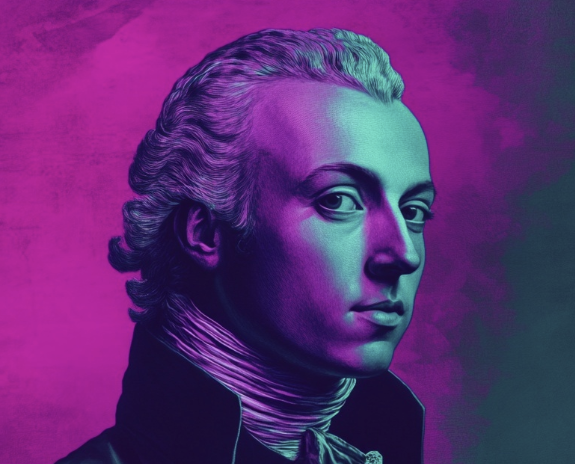
This proof can at most, therefore, demonstrate the existence of an architect of the world, whose efforts are limited by the capabilities of the material with which he works, but not of a creator of the world, to whom all things are subject.
▼
Source
source
A 627, B 655 (Physico-Theological Proof Impossible)
2 months 1 week ago
Since the communists cannot enter upon the decisive struggle between themselves and the bourgeoisie until the bourgeoisie is in power, it follows that it is in the interest of the communists to help the bourgeoisie to power as soon as possible in order the sooner to be able to overthrow it.

4 months 2 weeks ago
One has attained to mastery when one neither goes wrong nor hesitates in the performance.
2 months ago
Not to be loved is a misfortune, but it is an insult to be loved no longer.
▼
Source
source
No. 3. (Zachi writing to Usbek)



2 months 1 week ago
Only thoughts that are randomly born die. The other thoughts we carry with us without knowing them. They have abandoned themselves to forgetfulness so that they can be with us all the time.
2 months 1 week ago
In the torments of the intellect, there is a certain bearing which is to be sought in vain among those of the heart. Skepticism is the elegance of anxiety.
2 months 5 days ago
Sleep on now, and take your rest: behold, the hour is at hand, and the Son of man is betrayed into the hands of sinners. Rise, let us be going: behold, he is at hand that doth betray me.
▼
Source
source
26:45-46 (KJV)
1 week ago
The principal aim of mathematical education is to develop certain faculties of the mind, and among these intuition is not the least precious. It is through it that the mathematical world remains in touch with the real world, and even if pure mathematics could do without it, we should still have to have recourse to it to fill up the gulf that separates the symbol from reality.
▼
Source
source
Part II. Ch. 2 : Mathematical Definitions and Education, p. 128
2 months 1 week ago
When we know what words are worth, the amazing thing is that we try to say anything at all, and that we manage to do so. This requires, it is true, a supernatural nerve.

3 months 3 weeks ago
For what is life but a play in which everyone acts a part until the curtain comes down?

3 months 2 weeks ago
... no testimony is sufficient to establish a miracle, unless the testimony be of such a kind, that its falsehood would be more miraculous, than the fact, which it endeavors to establish.
▼
Source
source
Section 10 : Of Miracles Pt. 1

4 months 1 week ago
Self-preservation has frequently knuckled under to that tremendous yearning to get even.
2 months 2 weeks ago
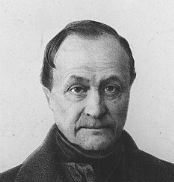
Every attempt to refer chemical questions to mathematical doctrines must be considered, now and always, profoundly irrational, as being contrary to the nature of the phenomena. . . . but if the employment of mathematical analysis should ever become so preponderant in chemistry (an aberration which is happily almost impossible) it would occasion vast and rapid retrogradation....
2 months 1 week ago
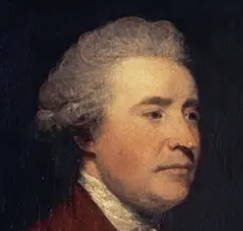
So to be patriots as not to forget we are gentlemen.

3 months 2 weeks ago
I think all the great religions of the world - Buddhism, Hinduism, Christianity, Islam, and Communism - both untrue and harmful. It is evident as a matter of logic that, since they disagree, not more than one of them can be true. With very few exception, the religions which a man accepts is that of the community in which he lives, which makes it obvious that the influence of environment is what has led him to accept the religion in question.
▼
Source
source
Preface, 1957
3 months 2 weeks ago
The external embodiment of an act is composed of many parts, and may be regarded as capable of being divided into an infinite number of particulars. An act may be looked on as in the first instance coming into contact with only one of these particulars. But the truth of the particular is the universal. A definite act is not confined in its content to one isolated point of the varied external world, but is universal, including these varied relations within itself. The purpose, which is the product of thought and embraces not the particular only but also the universal side, is intention.
▼
Source
source
Georg Wilhelm Friedrich Hegel, Philosophy of Right translated by SW Dyde Queen's University Canada 1896 p. 114-115
1 month 2 weeks ago
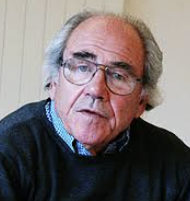
If every strategy today is that of mental terror and of deterrence tied to the suspension and the eternal simulation of catastrophe, then the only means of mitigating this scenario would be to make the catastrophe arrive, to produce or to reproduce a real catastrophe. To which Nature is at times given: in its inspired moments, it is God who through his cataclysms unknots the equilibrium of terror in which humans are imprisoned. Closer to us, this is what terrorism is occupied with as well: making real, palpable violence surface in opposition to the invisible violence of security. Besides, therein lies terrorism's ambiguity.
▼
Source
source
"The China Syndrome," p. 58
4 months 1 week ago
No one is so modest as not to believe himself a competent amateur sleuth.
1 month 3 weeks ago
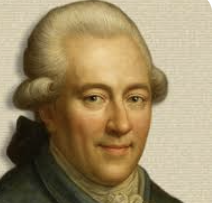
People nowadays have such high hopes of America and the political conditions obtaining there that one might say the desires, at least the secret desires, of all enlightened Europeans are deflected to the west, like our magnetic needles.
▼
Source
source
G 2
1 week 2 days ago
The seeds of heavenly bodies are deposited and cared for in the Milky Way, from which they emanate in swarms of comets that travel a ;long time and ordinarily gravitate towards various suns before becoming fixed in orbit.
▼
Source
source
L'attraction passioneé
3 months 4 weeks ago
And these were the dishes wherein to me, hunger-starven for thee, they served up the sun and the moon.
▼
Source
source
III, 6

2 months 1 week ago
In most cases, people, even the most vicious, are much more naive and simple-minded than we assume them to be. And this is true of ourselves too.

2 months 2 weeks ago
Seeing therefore they are both [heat and pain] immediately perceived at the same time, and the fire affects you only with one simple, or uncompounded idea, it follows that this same simple idea is both the intense heat immediately perceived, and the pain; and consequently, that the intense heat immediately perceived, is nothing distinct from a particular sort of pain.
▼
Source
source
Philonous to Hylas
2 months ago
But Don Quixote was converted. Yes - and died, poor soul. But the other, the real Don Quixote, he who remained on earth and lives among us with his spirit - this Don Quixote was not converted, this Don Quixote continues to incite us to make ourselves ridiculous, this Don Quixote must never die.
2 months 1 week ago
Let me now try to gather up all these odds and ends of commentary and restate the law of mind, in a unitary way.
3 months 2 days ago
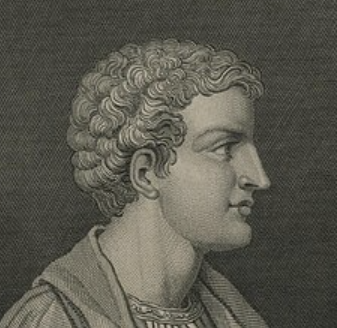
Whoever cultivates the golden mean avoids both the poverty of a hovel and the envy of a palace.
▼
Source
source
Book II, ode x, line 5
3 months 2 weeks ago
The sensuous may be exceedingly distinct, while intellectual concepts are extremely confused. The former we observe in the prototype of sensuous knowledge geometry; the latter, in the organon of all intellectual concepts, metaphysics. It is evident how much toil the latter is expending to dispel the fogs of confusion darkening the common intellect, though not always with the happy success of the former science.
1 week ago
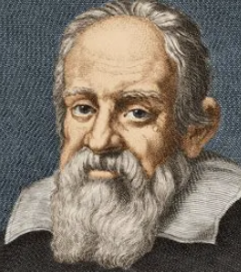
Whence do you have it that the terrestrial globe is so heavy? For my part, either I do not know what heaviness is, or the terrestrial globe is neither heavy nor light, as likewise all other globes of the universe. Heaviness to me (and I believe to Nature) is that innate tendency by which a body resists being moved from its natural place and by which, when forcibly removed therefrom, it spontaneously returns there. Thus a bucketful of water raised on high and set free, returns to the sea; but who will say that the same water remains heavy in the sea, when being set free there, does not move?
3 months 2 weeks ago
He who would teach men to die would teach them to live.
▼
Source
source
Ch. 20. Of the Force of Imagination (tr. Donald M. Frame)
3 months 1 week ago
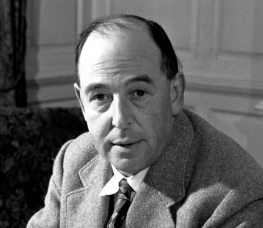
All that is not eternal is eternally out of date.
▼
Source
source
"Charity"
3 months 1 week ago
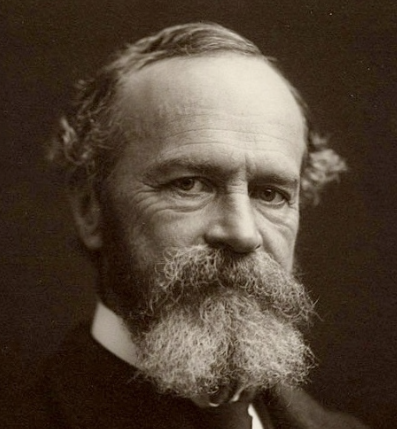
The moral flabbiness born of the exclusive worship of the bitch-goddess SUCCESS. That - with the squalid cash interpretation put on the word success - is our national disease.
▼
Source
source
To H. G. Wells, 9/11/1906

4 months 1 week ago
Such was the vast power which the god settled in the lost island of Atlantis; and this he afterwards directed against our land for the following reasons, as tradition tells: For many generations, as long as the divine nature lasted in them, they were obedient to the laws, and well-affectioned towards the god, whose seed they were; for they possessed true and in every way great spirits, uniting gentleness with wisdom in the various chances of life, and in their intercourse with one another.

3 months 1 week ago
Whatever limits us we call Fate.
▼
Source
source
Fate
CivilSimian.com created by AxiomaticPanic, CivilSimian, Kalokagathia