


2 months 3 days ago
Criticism is a misconception: we must read not to understand others but to understand ourselves.
3 months 2 days ago
The will to the "true world" in the sense of Plato and Christianity ... is in truth a no-saying to our present world, precisely the one in which art is at home.
▼
Source
source
p. 74

1 month 4 weeks ago
Hegel's philosophy was an integral part of the culture which authoritarianism had to overcome. It is therefore no accident that the National Socialist assault on Hegel begins with the repudiation of his political theory.
▼
Source
source
P. 411

3 months 6 days ago
At least two thirds of our miseries spring from human stupidity, human malice, and those great motivators and justifiers of malice and stupidity, idealism, dogmatism and proselytizing zeal on behalf of religious or political idols.
▼
Source
source
Tomorrow and Tomorrow and Tomorrow, 1952

3 months 1 week ago
For nature beats in perfect tune, And rounds with rhyme her every rune, Whether she work in land or sea, Or hide underground her alchemy. Thou canst not wave thy staff in air, Or dip thy paddle in the lake, But it carves the bow of beauty there, And the ripples in rhymes the oar forsake.
▼
Source
source
Wood-notes, no. II, st. 7

3 months 2 weeks ago
I have ever loved to repose myself, whether sitting or lying, with my heels as high or higher than my head.
▼
Source
source
Book III, Ch. 13. Of Experience
3 months 1 day ago
A sovereign shows himself to be a tyrant if he disregards his honest advisors, or punishes them for what they have said.
2 months 3 days ago
Long before physics or psychology were born, pain disintegrated matter, and affliction the soul.
1 month 2 weeks ago
When land and its tillage are the basis of taxation, one need not care exactly how many people there are.
▼
Source
source
Chapter 12, Political Arithmetic, p. 103.
2 months 3 weeks ago
For already, sometime, I have been a boy and a girl, a shrub, a bird, and a silent fish in the sea.
▼
Source
source
fr. 117
3 weeks 1 day ago
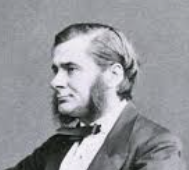
I adopt Mr. Darwin's hypothesis, therefore, subject to the production of proof that physiological species may be produced by selective breeding; just as a physical philosopher may accept the undulatory theory of light, subject to the proof of the existence of the hypothetical ether; or as the chemist adopts the atomic theory, subject to the proof of the existence of atoms; and for exactly the same reasons, namely, that it has an immense amount of primâ facie probability: that it is the only means at present within reach of reducing the chaos of observed facts to order; and lastly, that it is the most powerful instrument of investigation which has been presented to naturalists since the invention of the natural system of classification and the commencement of the systematic study of embryology.
▼
Source
source
Ch.2, p. 128

4 months 4 days ago
Books ... hold within them the gathered wisdom of humanity, the collected knowledge of the world's thinkers, the amusement and excitement built up by the imaginations of brilliant people. Books contain humor, beauty, wit, emotion, thought, and, indeed, all of life. Life without books is empty.
2 months 2 days ago
When ethics thus moves into the domain of politics and becomes morality, the possibility of violence appears because of the threat of the application of such absolutist forms of thought. Further, although the moral agent must remain free in order to avoid the totalizing domination of the state, morality must still be grounded in the ethical relation of the face-to-face.
▼
Source
source
Steven Bindeman, Levinas: The Face of Otherness and the Ethics of Therapy

3 months 1 week ago
Faith consists in believing what reason cannot.
▼
Source
source
"The Flood", 1764

1 month 2 weeks ago
Thinking men and women the world over are beginning to realize that patriotism is too narrow and limited a conception to meet the necessities of our time.
2 months 1 week ago
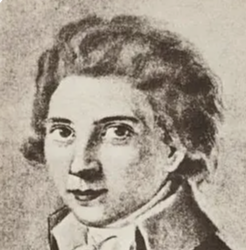
One can only become a philosopher, but not be one. As one believes he is a philosopher, he stops being one.
▼
Source
source
"Selected Aphorisms from the Athenaeum (1798)", Dialogue on Poetry and Literary Aphorisms, Ernst Behler and Roman Struc, trans. (Pennsylvania University Press:1968) #54
3 months 1 week ago
Great men are they who see that spiritual is stronger than any material force, that thoughts rule the world. No hope so bright but is the beginning of its own fulfillment.
▼
Source
source
July 18, 1867, Progress of Culture Phi Beta Kappa Address
1 month 2 weeks ago
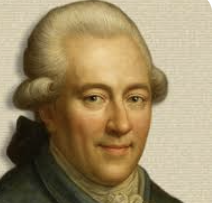
I believe that man is in the last resort so free a being that his right to be what he believes himself to be cannot be contested.
▼
Source
source
L 98
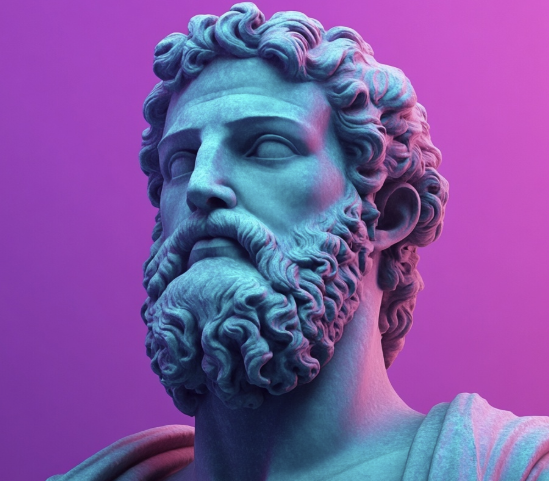
3 months 3 weeks ago
Reason is not measured by size or height, but by principle.
▼
Source
source
Book I, ch. 12, 26.
1 month 2 weeks ago
There were honest people long before there were Christians and there are, God be praised, still honest people where there are no Christians. It could therefore easily be possible that people are Christians because true Christianity corresponds to what they would have been even if Christianity did not exist.
▼
Source
source
L 16

2 months 1 week ago
A definition may be very exact, and yet go but a very little way towards informing us of the nature of the thing defined.
▼
Source
source
Introduction On Taste
2 months 1 week ago
So to be patriots as not to forget we are gentlemen.

1 month 4 weeks ago
Unto whomsoever much is given, of him shall be much required: and to whom men have committed much, of him they will ask the more.
▼
Source
source
12:48
1 month 4 weeks ago
A philosophy has no private store of knowledge or methods for attaining truth, so it has no private access to good. As it accepts knowledge and principles from those competent in science and inquiry, it accepts the goods that are diffused in human experience. It has no Mosaic or Pauline authority of revelation entrusted to it. But it has the authority of intelligence, of criticism of these common and natural goods.

1 month 6 days ago
One can only live while one is intoxicated with life; as soon as one is sober it is impossible not to see that it is all a mere fraud and a stupid fraud! Ch. 4 Variant: It is possible to live only as long as life intoxicates us; once we are sober we cannot help seeing that it is all a delusion, a stupid delusion.

1 month 3 weeks ago
The state of conformity is an imitation of grace. By a strange mystery - which is connected with the power of the social element - a profession can confer on quite ordinary men in their exercise of it, virtues which, if they were extended to all circumstances of life, would make of them heroes or saints. But the power of the social element makes these virtues natural.
▼
Source
source
Accordingly they need a compensation. p. 124
3 months 2 weeks ago
That which is good for the enemy harms you, and that which is good for you harms the enemy.
▼
Source
source
Rule 1 from Machiavelli's Lord Fabrizio Colonna: libro settimo (Book 7) (Modern Italian uses nemico instead of nimico.)
1 month 4 days ago
Patience is a remedy for every sorrow.
▼
Source
source
Maxim 170

3 months 2 days ago
Freud's fanciful pseudo-explanations (precisely because they are brilliant) perform a disservice. (Now any ass has these pictures available to use in "explaining" symptoms of an illness).
▼
Source
source
p. 55e

4 months 3 days ago
To two men living the same number of years, the world always provides the same sum of experiences. It is up to us to be conscious of them.
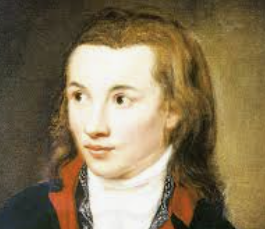
2 months 4 days ago
Fate and temperament are the names of a concept.
▼
Source
source
As quoted in Demian (1972) by Hermann Hesse, trans. W.J. Strachan
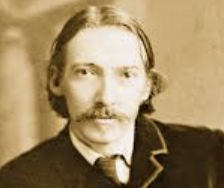
1 month 2 days ago
It is as natural and as right for a young man to be imprudent and exaggerated, to live in swoops and circles, and beat about his cage like any other wild thing newly captured, as it is for old men to turn gray, or mothers to love their offspring, or heroes to die for something worthier than their lives.
▼
Source
source
Crabbed Age and Youth.
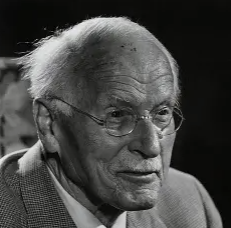
2 months 3 days ago
Seldom, or perhaps never, does a marriage develop into an individual relationship smoothly and without crises; there is no coming to consciousness without pain.
▼
Source
source
p. 193
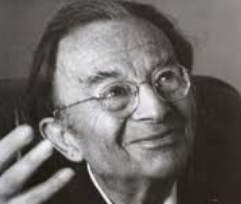
1 month 2 weeks ago
The application of psychoanalysis to sociology must definitely guard against the mistake of wanting to give psychoanalytic answers where economic, technical, or political facts provide the real and sufficient explanation of sociological questions. On the other hand, the psychoanalyst must emphasize that the subject of sociology, society, in reality consists of individuals, and that it is these human beings, rather than abstract society as such, whose actions, thoughts, and feelings are the object of sociological research.
▼
Source
source
"Psychoanalyse und Soziologie" (1929); published as "Psychoanalysis and Sociology" as translated by Mark Ritter, in Critical Theory and Society : A Reader (1989) edited by S. E. Bronner and D. M. Kellner

3 months 3 weeks ago
When your father is alive, observe his will. When your father is dead observe his former actions. If, for three years after the death of your father you do not change from the ways of your father, you can be called a 'real son'.
3 months 3 weeks ago
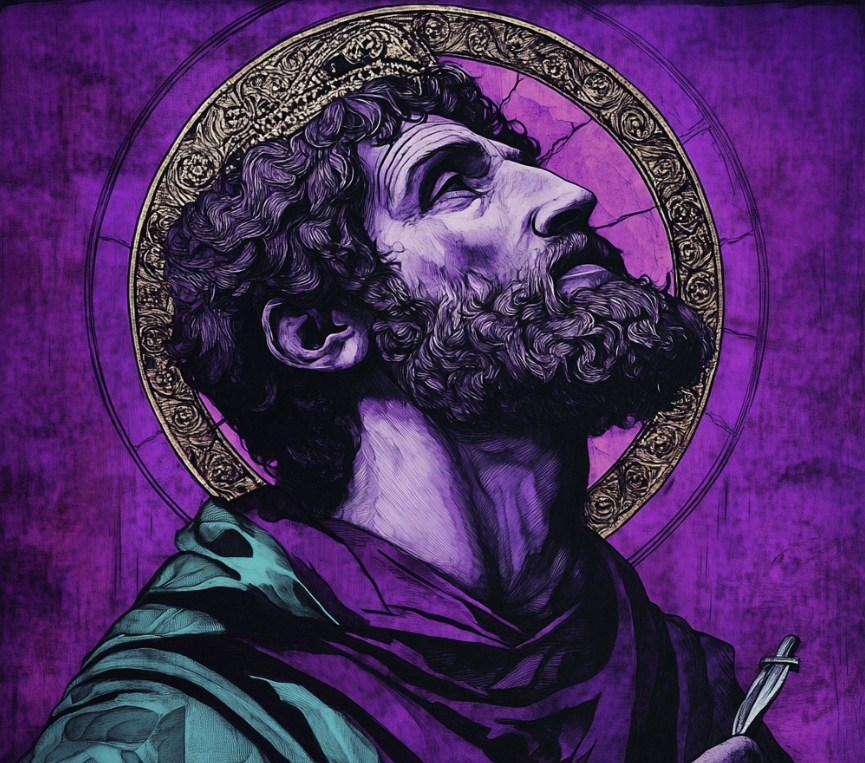
You called and cried out loud and shattered my deafness. You were radiant and resplendent, you put to flight my blindness. You were fragrant, and I drew in my breath and now pant after you. I tasted you, and I feel but hunger and thirst for you. You touched me, and I am set on fire to attain the peace which is yours.
2 months 3 days ago
At different degrees, everything is pathology, except for indifference.
1 month 3 weeks ago
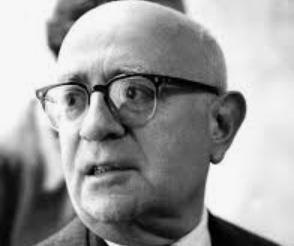
It suffices to remember how many sorrows he is spared who no longer thinks too many thoughts, how much more "in accordance with reality" a person behaves when he affirms that the real is the right, how much more capacity to use the machinery falls to the person who integrates himself with it uncomplainingly.
▼
Source
source
p. 286
2 months 2 days ago
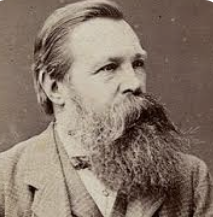
The proletarian works with the instruments of production of another, for the account of this other, in exchange for a part of the product. ... The proletarian liberates himself by abolishing competition, private property, and all class differences.

3 months 1 week ago
The poet presents the imagination with images from life and human characters and situations, sets them all in motion and leaves it to the beholder to let these images take his thoughts as far as his mental powers will permit. This is why he is able to engage men of the most differing capabilities, indeed fools and sages together. The philosopher, on the other hand, presents not life itself but the finished thoughts which he has abstracted from it and then demands that the reader should think precisely as, and precisely as far as, he himself thinks. That is why his public is so small.
▼
Source
source
Vol. 2 "On Philosophy and the Intellect" as translated in Essays and Aphorisms (1970), as translated by R. J. Hollingdale
3 months 2 weeks ago
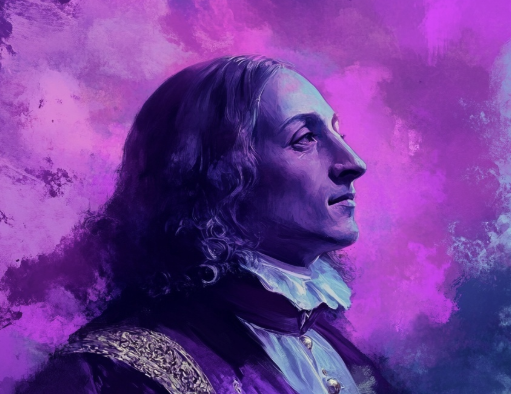
Rules for Axioms. I. Not to omit any necessary principle without asking whether it is admittied, however clear and evident it may be. II. Not to demand, in axioms, any but things that are perfectly evident in themselves.
3 months 1 day ago
What all these people are doing is not aggressive; they are inventing new possibilities of pleasure with strange parts of their body - through the eroticization of the body. I think it's ... a creative enterprise, which has as one of its main features what I call the desexualization of pleasure.
▼
Source
source
In reference to Sadism and Masochism, as quoted in Who's Who in Contemporary Gay & Lesbian History: From World War II to the Present Day (2001) by Robert Aldrich and Gary Wotherspoon

3 months 1 week ago
When at first thought we think of a creator our ideas appear to us undefined and confused; but if we reason philosophically, those ideas can be easily arranged and simplified. It is a Being, whose power is equal to his will.
▼
Source
source
A Discourse, &c. &c.
1 month 6 days ago
The universal hypocrisy has so entered into the flesh and blood of all classes of our modern society, it has reached such a pitch that nothing in that way can rouse indignation. Hypocrisy in the Greek means "acting," and acting-playing a part-is always possible. Chapter XII, Conclusion-Repent Ye, for the Kingdom of Heaven is at Hand Variant Translation: Hypocrisy with good reason means the same as acting, and anybody can pretend - act a part.
1 month 3 weeks ago
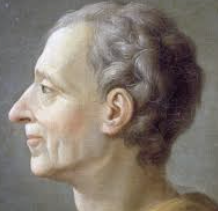
The Spirit of the Laws became the nobleman's Bible all over Europe.
▼
Source
source
Catherine Behrens, The Ancien Régime (1967), p. 78
1 month 4 weeks ago
If the flesh came into being because of spirit, it is a wonder. But if spirit came into being because of the body, it is a wonder of wonders. Indeed, I am amazed at how this great wealth has made its home in this poverty.

3 months 2 weeks ago
This misplacing hath caused a deficience, or at least a great improficience in the sciences themselves. For the handling of final causes, mixed with the rest in physical inquiries, hath intercepted the severe and diligent inquiry of all real and physical causes, and given men the occasion to stay upon these satisfactory and specious causes, to the great arrest and prejudice of further discovery. For this I find done not only by Plato, who ever anchoreth upon that shore, but by Aristotle, Galen, and others which do usually likewise fall upon these flats of discoursing causes.
▼
Source
source
Book VII, 7
3 months 1 week ago
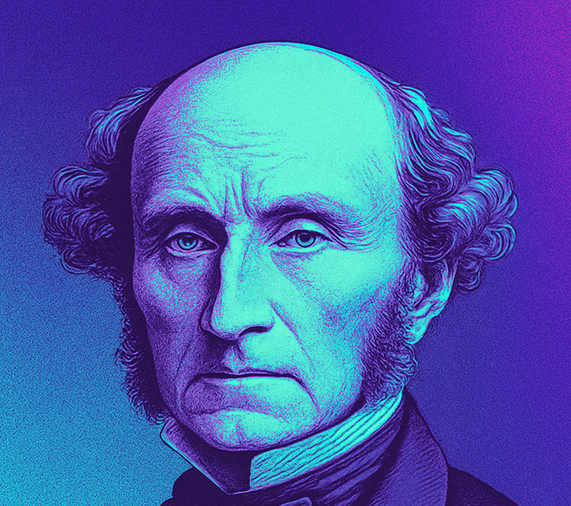
A pupil from whom nothing is ever demanded which he cannot do never does all he can.
▼
Source
source
(p. 32)
2 months 4 days ago
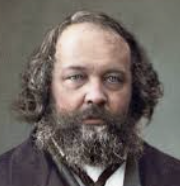
The first revolt is against the supreme tyranny of theology, of the phantom of God. As long as we have a master in heaven, we will be slaves on earth.
3 months 6 days ago
We do not count a man's years until he has nothing else to count.
▼
Source
source
Old Age
CivilSimian.com created by AxiomaticPanic, CivilSimian, Kalokagathia