

6 days ago
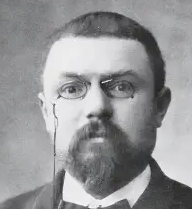
Astronomers... define duration in the following way: time... so defined that Newton's law and that of vis viva [or of the conservation of energy] may be verified. Newton's law is an experimental truth... only approximate... We still have only a definition by approximation.

4 months 1 week ago
Now any dogma, based primarily on faith and emotionalism, is a dangerous weapon to use on others, since it is almost impossible to guarantee that the weapon will never be turned on the user.
3 months 4 weeks ago
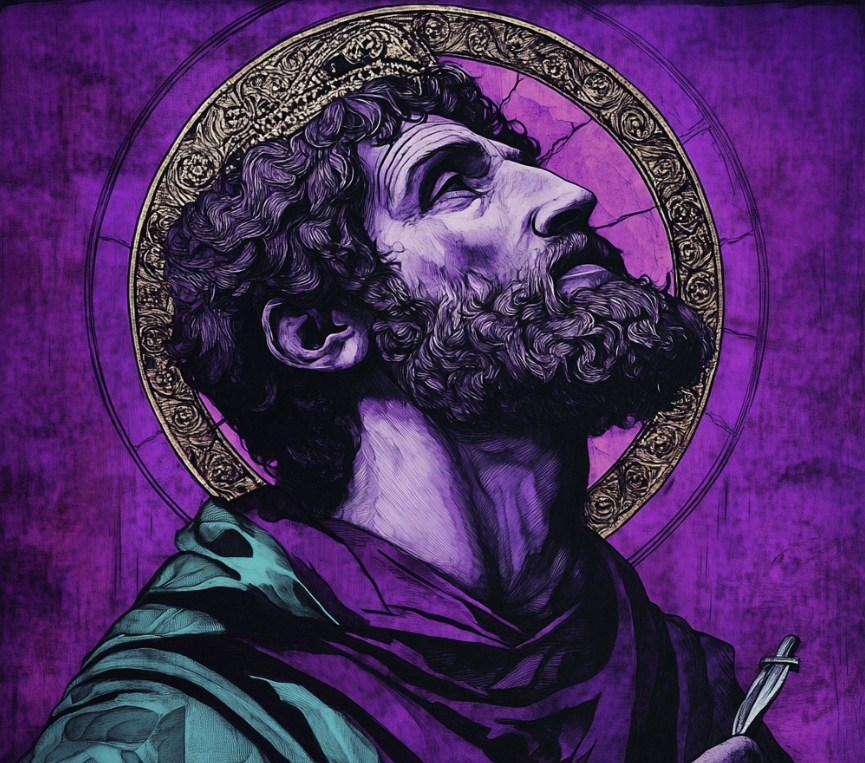
Anger is a weed; hate is the tree.
▼
Source
source
58 Alternate versions: Anger is a stem, hate is a trunk. Anger is the mote, hate is the beam.

2 months 1 week ago
I am a sick man... I am a wicked man. An unattractive man.
▼
Source
source
Part 1, Chapter 1

1 month 3 weeks ago
The haste of day rules over the night as empty form.

4 months ago
Man reaches the highest point of his knowledge about God when he knows that he knows him not, inasmuch as he knows that that which is God transcends whatsoever he conceives of him.
▼
Source
source
q. 7, art. 5, ad 14
2 months 1 week ago
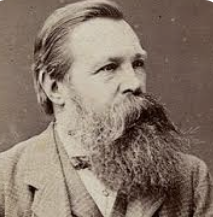
The anarchists put the thing upside down. They declare that the proletarian revolution must begin by doing away with the political organisation of the state. But after its victory the sole organisation which the proletariat finds already in existence is precisely the state. This state may require very considerable alterations before it can fulfil its new functions. But to destroy it at such a moment would be to destroy the only organism by means of which the victorious proletariat can assert its newly-conquered power, hold down its capitalist adversaries and carry out that economic revolution of society without which the whole victory must end in a new defeat and in a mass slaughter of the workers similar to those after the Paris Commune.
▼
Source
source
Letter to Philipp Van Patten
2 months 1 week ago
Even those who have renounced Christianity and attack it, in their inmost being still follow the Christian ideal, for hitherto neither their subtlety nor the ardor of their hearts has been able to create a higher ideal of man and of virtue than the ideal given by Christ.

4 months 1 week ago
The question is asked in ignorance, by one who does not even know what can have led him to ask it.
2 months 1 week ago
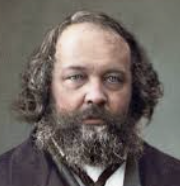
In order to touch the heart and gain the confidence, the assent, the adhesion, and the co-operation of the illiterate legions of the proletariat - and the vast majority of proletarians unfortunately still belong in this category - it is necessary to begin to speak to those workers not of the general sufferings of the international proletariat as a whole but of their particular, daily, altogether private misfortunes. It is necessary to speak to them of their own trade and the conditions of their work in the specific locality where they live; of the harsh conditions and long hours of their daily work, of the small pay, the meanness of their employer, the high cost of living, and how impossible it is for them properly to support and bring up a family.
▼
Source
source
Founding of the Workers' International
3 months 2 weeks ago
New opinions are always suspected, and usually opposed, without any other reason but because they are not already common.
▼
Source
source
Dedicatory epistle, as quoted in Fred R Shapiro (2006). The Yale Book of Quotations. Yale University Press. p. 468. ISBN 0-300-10798-6.
2 months 1 week ago
The formula 'two plus two equals five' is not without its attractions.
▼
Source
source
Part 1, Chapter 9 (tr. ?)

3 days ago
Man is not the creature and product of Mechanism; but, in a far truer sense, its creator and producer: it is the noble People that makes the noble Government; rather than conversely.

2 months 2 weeks ago
I cleave the heavens and soar to the infinite. And while I rise from my own globe to others And penetrate ever further through the eternal field, That which others saw from afar, I leave far behind me. Variant translation: While I venture out beyond this tiny globe Into reaches past the bounds of starry night I leave behind what others strain to see afar.

3 months 1 week ago
A stupid man's report of what a clever man says is never accurate, because he unconsciously translates what he hears into something that he can understand.

3 months 1 week ago
Manufacture was all the time sheltered by protective duties in the hoe market, by monopolies in the colonial market, and broad as much as possible by differential duties.
▼
Source
source
ibid, pp. 183
1 month 3 weeks ago
No member of a crew is praised for the rugged individuality of his rowing.
▼
Source
source
"Harvard: The Future," The Atlantic Monthly, September 1936

3 months 1 week ago
Obey the voice at eve obeyed at prime.
▼
Source
source
Terminus

4 months 2 weeks ago
What! the inventors of ancient civilisations, the first makers of tools and tape lines, the first builders of vehicles, ships, and houses, the first observers of the laws of the heavens and the multiplication tables is it contended that they were entirely different from the inventors and observers of our own time, and superior to them? And that the first slow steps forward were of a value which has not been equalled by the discoveries we have made with all our travels and circumnavigations of the earth?

1 month 1 week ago
In spite the mountains of books written about art, no precise definition of art has been constructed. And the reason for this is that the conception of art has been based on the conception of beauty.

3 months 3 days ago
For a thinking man is where Wisdom is at home.
▼
Source
source
Ahunuvaiti Gatha; Yasna 30, 9.
3 months 1 week ago
Politics is concerned with herds rather than with individuals, and the passions which are important in politics are, therefore, those in which the various members of a given herd can feel alike.



1 month 1 week ago
There are people in the world who desperately want not to have to believe in Darwinism.
▼
Source
source
Chapter 9 "Puncturing Punctuationism" (p. 250)
1 month 3 weeks ago
If there were no limits to human rationality administrative theory would be barren. It would consist of the single precept: Always select that alternative, among those available, which will lead to the most complete achievement of your goals.
▼
Source
source
Simon (1945, p. 240); As cited in:
1 month 1 week ago
Too much straightforwardness is foolish against a shameless person.
▼
Source
source
Maxim 123

3 months 1 week ago
Make sure that your religion is a matter between you and God only.
▼
Source
source
Comment to Maurice O'Connor Drury, as quoted in Wittgenstein Reads Freud : The Myth of the Unconscious (1996) by Jacques Bouveresse, as translated by Carol Cosman, p. 14
3 months 1 week ago
In obedience to the feeling of reality, we shall insist that, in the analysis of propositions, nothing "unreal" is to be admitted. But, after all, if there is nothing unreal, how, it may be asked, could we admit anything unreal? The reply is that, in dealing with propositions, we are dealing in the first instance with symbols, and if we attribute significance to groups of symbols which have no significance, we shall fall into the error of admitting unrealities, in the only sense in which this is possible, namely, as objects described.
▼
Source
source
Ch. 16: Descriptions
2 months 3 days ago
Man is always something more than what he knows of himself. He is not what he is simply once and for all, but is a process...

3 months 1 week ago
For in spite of language, in spite of intelligence and intuition and sympathy, one can never really communicate anything to anybody.
▼
Source
source
"Sermons in Cats"
1 month 1 week ago
It is better to lose health like a spendthrift than to waste it like a miser. It is better to live and be done with it, than to die daily in the sick-room.
▼
Source
source
315
4 months 2 weeks ago
We still do not yet know where the drive for truth comes from. For so far we have heard only of the duty which society imposes in order to exist: to be truthful means to employ the usual metaphors. Thus, to express it morally, this is the duty to lie according to a fixed convention, to lie with the herd and in a manner binding upon everyone. Now man of course forgets that this is the way things stand for him. Thus he lies in the manner indicated, unconsciously and in accordance with habits which are centuries' old; and precisely by means of this unconsciousness and forgetfulness he arrives at his sense of truth.
3 months 1 week ago
What I hold fast to is not one proposition but a nest of propositions.
7 months 2 weeks ago

3 months 3 weeks ago
But the best demonstration by far is experience, if it go not beyond the actual experiment.
▼
Source
source
Aphorism 70
1 month 2 weeks ago
The sense in which an automatic door "understands instructions" from its photoelectric cell is not at all the sense in which I understand English.
2 months 4 days ago
There is no substitute for the comfort supplied by the utterly taken-for-granted relationship.
▼
Source
source
A Severed Head (1961); 1976, p. 181.

1 month 4 weeks ago
The human soul has need of truth and of freedom of expression. The need for truth requires that intellectual culture should be universally accessible, and that it should be able to be acquired in an environment neither physically remote nor psychologically alien.

1 month 2 weeks ago
Lives matter in the sense that they assume physical form within the sphere of appearance; lives matter because they are to be valued equally.
▼
Source
source
p. 12
3 months 3 weeks ago
The cause and root of nearly all evils in the sciences is this - that while we falsely admire and extol the powers of the human mind we neglect to seek for its true helps.
▼
Source
source
Aphorism 9
3 months 2 weeks ago
What alone has value is the use to which life is put and the end to which it is directed. The value of life has to be created by man, it cannot be obtained through luck but only through wisdom. He who is anxiously concerned over losing his life will never enjoy life.
▼
Source
source
Kant, Immanuel (1996), pages 141

3 months 2 weeks ago
There is nothing in any object, consider'd in itself, which can afford us a reason for drawing a conclusion beyond it; [...] even after the observation of the frequent or constant conjunction of objects, we have no reason to draw any inference concerning any object beyond those of which we have had experience.
▼
Source
source
Part 3, Section 12

2 months 1 week ago
I feel effective, competent, likely to do something positive only when I lie down and abandon myself to an interrogation without object or end.
1 month 3 weeks ago
Whatever is merely positive is lifeless. Negativity is essential to vitality.
3 months 1 week ago
Thus, while the refugee serfs only wished to be free to develop and assert those conditions of existence which were already there, and hence, in the end, only arrived at free labour, the proletarians, if they are to assert themselves as individuals, will have to abolish the very condition of their existence hitherto (which has, moreover, been that of all society up to the present), namely, labour. Thus they find themselves directly opposed to the form in which, hitherto, the individuals, of which society consists, have given themselves collective expression, that is, the State. In order, therefore, to assert themselves as individuals, they must overthrow the State.
▼
Source
source
"Communism. The Production of the Form of Intercourse Itself", The Marx-Engels Reader

4 months 1 week ago
Opinions differ as to the reasons why he became the futile laborer of the underworld. To begin with, he is accused of a certain levity in regard to the gods. He stole their secrets.
1 month 1 week ago
Every person I met believes if there is any disagreement between the Koran and science, then the Koran wins. It's just utterly deplorable. These are now British children who are having their minds stuffed with alien rubbish. Occasionally, my colleagues lecturing in universities lament having undergraduate students walk out of their classes when they talk about evolution. This is almost entirely Muslims.
▼
Source
source
Dawkins attacks 'alien rubbish' taught in Muslim faith schools, Daily Mail
3 months 2 weeks ago
He [Jesus] not only forbids actual uncleanness, but all irregular desires, upon pain of hell-fire; causeless divorces; swearing in conversation, as well as forswearing in judgment; revenge; retaliation; ostentation of charity, of devotion, and of fasting; repetitions in prayer, covetousness, worldly care, censoriousness: and on the other side commands loving our enemies, doing good to those that hate us, blessing those that curse us, praying for those that despitefully use us; patience and meekness under injuries, forgiveness, liberality, compassion: and closes all; his particular injunctions, with this general golden rule, Matt. VII. 12, "All things whatsoever ye would that men should do to you, do you even so to them, for this is the law and the prophets." And to show how much He is in earnest, and expects obedience to these laws, He tells them, Luke VI. 35, That if they obey, " great shall be their reward".
▼
Source
source
§ 116
2 months 1 week ago
If truth were not boring, science would have done away with God long ago. But God as well as the saints is a means to escape the dull banality of truth.
4 days ago
In the past you rivalled the Achaians and the Macedonians, peoples of your own race, and Philip, their commander, for the hegemony and glory, but now that the freedom of the Hellenes is at stake at a war against an alien people (Romans), ...And does it worth to ally with the barbarians, to take the field with them against the Epeirotans, the Achaians, the Akarnanians, the Boiotians, the Thessalians, in fact with almost all the Hellenes with the exception of the Aitolians who are a wicked nation... ...So Lakedaimonians it is good to remember your ancestors,... be afraid of the Romans... and do ally yourselves with the Achaians and Macedonians. But if some the most powerful citizens are opposed to this policy at least stay neutral and do not side with the unjust.
▼
Source
source
Histories, IX, 37:7-39:7 (Loeb)
CivilSimian.com created by AxiomaticPanic, CivilSimian, Kalokagathia