

1 month 1 week ago
Faith is the great cop-out, the great excuse to evade the need to think and evaluate evidence. Faith is belief in spite of, even perhaps because of, the lack of evidence.
▼
Source
source
From speech at the Edinburgh International Science Festival, 1992-04-15.
1 week ago
Before a man can do things there must be things he will not do.
▼
Source
source
Eugene H. Peterson, A Long Obedience in the Same Direction (IVP, 1980), Ch 2
1 week 1 day ago
The destructive work of totalitarian machinery, whether or not this word is used, is usually supported by a special kind of primitive social philosophy. It proclaims not only that the common good of 'society' has priority over the interests of individuals, but that the very existence of individuals as persons is reducible to the existence of the social 'whole'; in other words, personal existence is, in a strange sense, unreal. This is a convenient foundation for any ideology of slavery.
▼
Source
source
"Totalitarianism and the Virtue of the Lie", as quoted in Is God Happy? Selected Essays (2013), Basic Books, p. 57


1 day ago
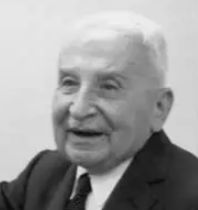
The characteristic mark of this age of dictators, wars and revolutions is its anti-capitalistic bias. Most governments and political parties are eager to restrict the sphere of private initiative and free enterprise. It is an almost unchallenged dogma that capitalism is done for and that the coming of all-round regimentation of economic activities is both inescapable and highly desirable.

3 months 2 weeks ago
Thought depends largely on the stomach. In spite of this, those with the best stomachs are not always the best thinkers.
▼
Source
source
Letter to Jean le Rond d'Alembert, 20 August 1770

2 months 1 week ago
The kingdom of heaven is like to a grain of mustard seed, which a man took, and sowed in his field: Which indeed is the least of all seeds: but when it is grown, it is the greatest among herbs, and becometh a tree, so that the birds of the air come and lodge in the branches thereof.
▼
Source
source
13:31-32 (KJV)

3 months 2 weeks ago
Every intrusion of the spirit that says, "I'm as good as you" into our personal and spiritual life is to be resisted just as jealously as every intrusion of bureaucracy or privilege into our politics. Hierarchy within can alone preserve egalitarianism without. Romantic attacks on democracy will come again. We shall never be safe unless we already understand in our hearts all that the anti-democrats can say, and have provided for it better than they. Human nature will not permanently endure flat equality if it is extended from its proper political field into the more real, more concrete fields within. Let us wear equality; but let us undress every night.
1 month 4 weeks ago
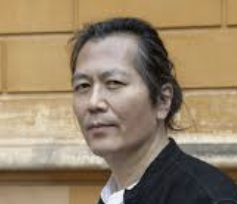
The eros-driven soul produces beautiful things, and, above all, beautiful actions, which have a universal value.

1 month 2 weeks ago
I know that my unity with all people cannot be destroyed by national boundaries and government orders.
▼
Source
source
My Religion (1884)
3 months 1 week ago
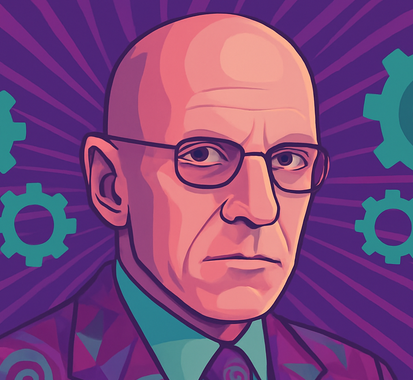
The public execution is to be understood not only as a judicial, but also as a political ritual. It belongs, even in minor cases, to the ceremonies by which power is manifested.
▼
Source
source
Chapter One, The body of the condemned
3 weeks 1 day ago
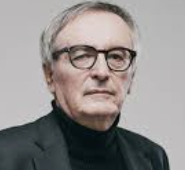
No doubt markets transmit information in the way that Hayek claimed. But what reason is there to believe that - unlike any other social institution - they have a built-in capacity to correct their mistakes? History hardly supports the supposition. Moods of irrational exuberance and panic can, and often do, swamp the price-discovery functions of markets.

3 months 2 weeks ago
Skepticism is slow suicide.
▼
Source
source
p. 240
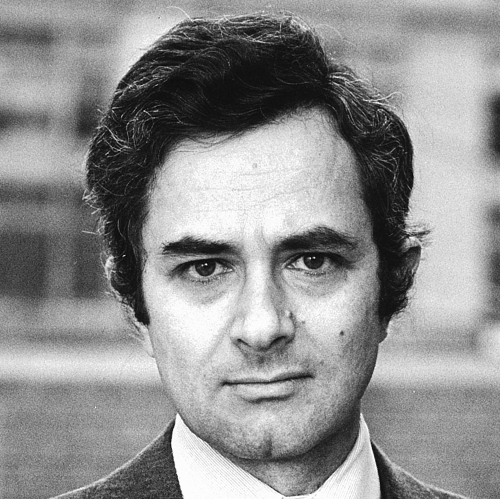
3 months 6 days ago
To look for a single general theory of how to decide the right thing to do is like looking for a single theory of how to decide what to believe.
▼
Source
source
"The Fragmentation of Value" (1977), p. 135.
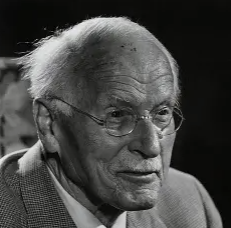
2 months 1 week ago
When animus and anima meet, the animus draws his sword of power and the anima ejects her poison of illusion and seduction. The outcome need not always be negative, since the two are equally likely to fall in love (a special instance of love at first sight).
▼
Source
source
Aion (1951). CW 9, Part II: P.338.30
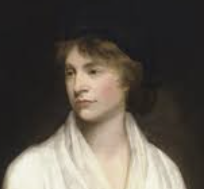
2 months 1 week ago
Nothing, I am sure, calls forth the faculties so much as the being obliged to struggle with the world; and this is not a woman's province in a married state. Her sphere of action is not large, and if she is not taught to look into her own heart, how trivial are her occupations and pursuits! What little arts engross and narrow her mind!
▼
Source
source
Thoughts on the Education of Daughters (1787), "Matrimony", p. 100

2 months 2 days ago
The philosophical thought of Kant, the supreme flower of the Germanic people, has its roots in the religious feeling of Luther, and it is not possible for Kantism, especially the practical part of it, to take root and bring forth flower and fruit in peoples who have not undergone the experience of the Reformation and who perhaps were incapable of experiencing it. Kantism is Protestant, and we Spaniards are fundamentally Catholic. And if Krause struck some roots here - more numerous and more permanent than is commonly supposed - it is because Krause has roots in pietism, and pietism, as Ritschl has demonstrated in his Geschichte des Pietismus, has specifically Catholic roots and may be described as the irruption, or rather the persistence of Catholic mysticism in the heart of Protestant rationalism. And this explains why not a few Catholic thinkers in Spain became followers of Krause.

3 months 2 weeks ago
I am sorry to say that at the moment I am so busy as to be convinced that life has no meaning whatever... I do not see that we can judge what would be the result of the discovery of truth, since none has hitherto been discovered.
▼
Source
source
Letter to Will Durant, 20 June, 1931
2 months 1 day ago
It is within science itself, and not in some prior philosophy, that reality is to be identified and described.
▼
Source
source
Theories and Things, Cambridge, MA: Harvard University Press. 1981
1 month 2 weeks ago
The ascription of an unconscious intentional phenomenon to a system implies that the phenomenon is in principle accessible to consciousness. A statement of the author's "connection principle."
▼
Source
source
"Consciousness, Explanatory Inversion, and Cognitive Science," The Behavioral and Brain Sciences 13, 4 (December 1990): 585-696.
3 months 2 weeks ago
A man builds a fine house; and now he has a master, and a task for life: he is to furnish, watch, show it, and keep it in repair, the rest of his days.
▼
Source
source
Works and Days
1 month 3 weeks ago
Just as modern mass production requires the standardization of commodities, so the social process requires standardization of man, and this standardization is called equality.
▼
Source
source
Ch. 2
3 months 2 weeks ago
If the Russians still adhered to the Greek Orthodox religion, if they had instituted parliamentary government, and if they had a completely free press which daily vituperated us, then - provided they still had armed forces as powerful as they have now - we should still hate them if they gave us ground for thinking them hostile.

3 months 2 weeks ago
Who could believe in prophecies of Daniel or of Miller that the world would end this summer, while one milkweed with faith matured its seeds?
2 months 6 days ago
Today war seems to have undergone a change of meaning, insofar as it is not a war of religion but a war of interests, not a war of conflicting cultures or civilizations but a war of national areas, not a war of human beings but a technical struggle of machines one against another and all against the non-combatant population.

1 month 4 weeks ago
Our institutions and conditions rest upon deep-seated ideas. To change those conditions and at the same time leave the underlying ideas and values intact means only a superficial transformation, one that cannot be permanent or bring real betterment. It is a change of form only, not of substance, as so tragically proven by Russia.
2 months 1 day ago
The collective is the object of all idolatry, this it is which chains us to the earth. In the case of avarice: gold is of the social order. In the case of ambition: power is of the social order. Science and art are full of the social element also. And love? Love is more or less of an exception: that is why we can go to God through love, not through avarice and ambition.
▼
Source
source
p. 121

3 months 3 weeks ago
Since the law is good, the will, which is hostile to it, cannot be good.
▼
Source
source
Thesis 87
3 months 2 weeks ago
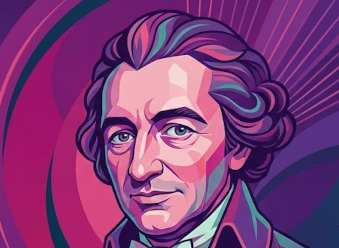
Contemplating the universe, the whole system of creation, in this point of light, we shall discover, that all that which is called natural philosophy is properly a divine study- It is the study of God through his works - It is the best study, by which we can arrive at a knowledge of the existence, and the only one by which we can gain a glimpse of his perfection. Do we want to contemplate his power? We see it in the immensity of the Creation. Do we want to contemplate his wisdom? We see it in the unchangeable order by which the incomprehensible Whole is governed. Do we want to contemplate his munificence? We see it in the abundance with which he fills the earth. Do we want to contemplate his mercy? We see it in his not withholding that abundance even from the unthankful. In fine, do we want to know what God is?
▼
Source
source
Search not written or printed books, but the Scripture called the Creation. A Discourse, &c. &c.
1 month 1 week ago
Death is the dark backing that a mirror needs if we are to see anything.
▼
Source
source
Humboldt's Gift (1975), p. 265
3 months 2 weeks ago
The conception of the necessary unit of all that is resolves itself into the poverty of the imagination, and a freer logic emancipates us from the straitwaistcoated benevolent institution which idealism palms off as the totality of being.
▼
Source
source
p. 9
3 months 2 weeks ago
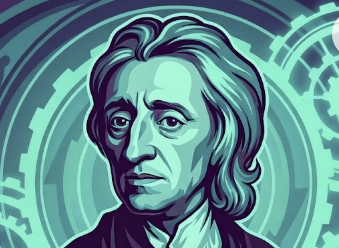
Where danger shews it self, apprehension cannot, without stupidity, be wanting; where danger is, sense of danger should be; and so much fear as should keep us awake, and excite our attention, industry, and vigour; but not to disturb the calm use of our reason, nor hinder the execution of what that dictates.
▼
Source
source
Sec. 115
2 months 1 week ago
Eros is a superhuman power which, like nature herself, allows itself to be conquered and exploited as though it were impotent. But triumph over nature is dearly paid for. Nature requires no explanations of principle, but asks only for tolerance and wise measure. "Eros is a mighty daemon," as the wise Diotima said to Socrates. We shall never get the better of him, or only to our own hurt. He is not the whole of our inward nature, though he is at least one of its essential aspects.
▼
Source
source
Two Essays on Analytical Psychology, CW 7 (1957). "On the Psychology of the Unconscious" P.32f
2 months 1 week ago
It is only natural that I should constantly have revolved in my mind the question of the relationship of the symbolism of the unconscious to Christianity as well as to other religions. Not only do I leave the door open for the Christian message, but I consider it of central importance for Western man. It needs, however, to be seen in a new light, in accordance with the changes wrought by the contemporary spirit.

2 months 1 week ago
We are so lonely in life that we must ask ourselves if the loneliness of dying is not a symbol of our human existence.
2 months 1 day ago
Philosophy ... must not bargain away anything of the emphatic concept of truth.
▼
Source
source
p. 7
3 months 2 weeks ago
It seems to me that the god that is commonly worshipped in civilized countries is not at all divine, though he bears a divine name, but is the overwhelming authority and respectability of mankind combined. Men reverence one another, not yet God. If I thought that I could speak with discrimination and impartiality of the nations of Christendom, I should praise them, but it tasks me too much. They seem to be the most civil and humane, but I may be mistaken.

1 week 5 days ago
A person who is shallow aspires to depth; one who is ugly aspires to beauty; one who is narrow aspires to breadth; one who is poor aspires to wealth; one who is humble aspires to esteem. Whatever one lacks in oneself he must seek outside.
▼
Source
source
Sources of Chinese Tradition (1999), vol. 1, p. 181
1 month 1 week ago
Living organisms had existed on earth, without ever knowing why, for over three thousand million years before the truth finally dawned on one of them. His name was Charles Darwin. To be fair, others had had inklings of the truth, but it was Darwin who first put together a coherent and tenable account of why we exist.
▼
Source
source
Ch. 1. Why Are People?
3 months 6 days ago
We do not have to make self- sacrifice a necessary element of altruism. We can regard people as altruists because of the kind of interests they have rather than because they are sacrificing their interests.
▼
Source
source
Chapter 9: Altruism and Happiness (p. 103)
4 months 1 week ago
A robot must obey the orders given it by human beings except where such orders would conflict with the First Law.
4 months 1 day ago
Nobody should ever doubt that in the washing of rebirth (Titus 3:5) absolutely all sins, from the least to the greatest, are altogether forgiven.
▼
Source
source
229E:2
2 months 1 week ago
To have grazed every form of failure, including success.
1 month 4 days ago
As free constitutions are the strongest supports of governments, social order is the best safeguard of freedom. Liberty has no enemies so pernicious as those misguided friends whose ardour in her cause leads them to outrage the moral sense of mankind, and to arm against her the interests and feelings which are her natural allies. Even the prejudices of nations should be respected.
▼
Source
source
'Essay on the Life and Character of King William III' (1822), written for the Greaves Historical Prize at Cambridge, quoted in The Times Literary Supplement (1 May 1969), p. 469

4 months 2 weeks ago
Everything which distinguishes man from the animals depends upon this ability to volatilize perceptual metaphors in a schema, and thus to dissolve an image into a concept. For something is possible in the realm of these schemata which could never be achieved with the vivid first impressions: the construction of a pyramidal order according to castes and degrees, the creation of a new world of laws, privileges, subordinations, and clearly marked boundaries, a new world, one which now confronts that other vivid world of first impressions as more solid, more universal, better known, and more human than the immediately perceived world, and thus as the regulative and imperative world.

6 days ago
The most remarkable piece of reading that you may be recommended to take and try if you can study is a book by Goethe-one of his last books, which he wrote when he was an old man, about seventy years of age-I think one of the most beautiful he ever wrote, full of mild wisdom, and which is found to be very touching by those who have eyes to discern and hearts to feel it. It is one of the pieces in "Wilhelm Meister's Travels." I read it through many years ago; and, of course, I had to read into it very hard when I was translating it (applause), and it has always dwelt in my mind as about the most remarkable bit of writing that I have known to be executed in these late centuries. I have often said, there are ten pages of that which, if ambition had been my only rule, I would rather have written than have written all the books that have appeared since I came into the world.
1 week 4 days ago
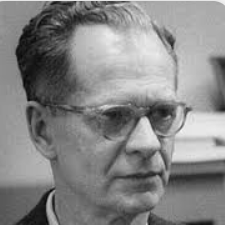
I did not direct my life. I didn't design it. I never made decisions. Things always came up and made them for me. That's what life is.
▼
Source
source
As quoted in "Unpacking the Skinner Box : Revisiting B. F. Skinner through a Postformal Lens" by Dana Salter in The Praeger Handbook of Education and Psychology Vol. 4 (2008) edited by Joe L. Kincheloe and Raymond A. Horn, Ch. 99, p. 872
1 month 2 weeks ago
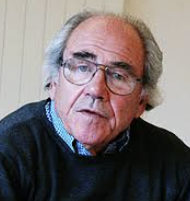
Yet there is a certain solitude like no other - that of the man preparing his meal in public on a wall, or on the hood of his car, or along a fence, alone. You see that all the time here. It is the saddest sight in the world. Sadder than destitution, sadder than the beggar is the man who eats alone in public. Nothing more contradicts the laws of man or beast, for animals always do each other the honour of sharing or disputing each other's food. He who eats alone is dead (but not he who drinks alone. Why is this?).
▼
Source
source
New York (p. 15)

3 months 2 weeks ago
I'm afraid of losing my obscurity. Genuineness only thrives in the dark. Like celery.
▼
Source
source
Those Barren Leaves, 1925
CivilSimian.com created by AxiomaticPanic, CivilSimian, Kalokagathia