


2 months 1 day ago
Only he who has measured the dominion of force, and knows how not to respect it, is capable of love and justice.
▼
Source
source
p. 192

2 months 2 weeks ago
They all attributed the peaceful dominion of religion in their country mainly to the separation of church and state. I do not hesitate to affirm that during my stay in America I did not meet a single individual, of the clergy or the laity, who was not of the same opinion on this point.
▼
Source
source
Chapter XVII.
Just now
As the French say, there are three sexes - men, women, and clergymen.
▼
Source
source
Vol. I, ch. 9, p. 313

3 months 2 weeks ago
Belief in God and a future life makes it possible to go through life with less of stoic courage than is needed by skeptics. A great many young people lose faith in these dogmas at an age at which despair is easy, and thus have to face a much more intense unhappiness than that which falls to the lot of those who have never had a religious upbringing. Christianity offers reasons for not fearing death or the universe, and in so doing it fails to teach adequately the virtue of courage. The craving for religious faith being largely an outcome of fear, the advocates of faith tend to think that certain kinds of fear are not to be deprecated. In this, to my mind, they are gravely mistaken. To allow oneself to entertain pleasant beliefs as a means of avoiding fear is not to live in the best way. In so far as religion makes its appeal to fear, it is lowering to human dignity.
▼
Source
source
p. 107
3 months 2 weeks ago
In politics, love is a stranger, and when it intrudes upon it nothing is being achieved except hypocrisy. All the characteristics you stress in the Negro people: their beauty, their capacity for joy, their warmth, and their humanity, are well-known characteristics of all oppressed people. They grow out of suffering and they are the proudest possession of all pariahs. Unfortunately, they have never survived the hour of liberation by even five minutes. Hatred and love belong together, and they are both destructive; you can afford them only in private and, as a people, only so long as you are not free.
▼
Source
source
Letter to James Baldwin
3 months 2 weeks ago
Some modern philosophers have gone so far as to say that words should never be confronted with facts but should live in a pure, autonomous world where they are compared only with other words. When you say, 'the cat is a carnivorous animal,' you do not mean that actual cats eat actual meat, but only that in zoology books the cat is classified among carnivora. These authors tell us that the attempt to confront language with fact is 'metaphysics' and is on this ground to be condemned. This is one of those views which are so absurd that only very learned men could possibly adopt them.
▼
Source
source
p. 110
2 months 1 week ago
Nothing can be of more importance than to separate prejudice and mistake on the one hand from reason and demonstration on the other.
▼
Source
source
Book III, Ch.1

6 days ago
Not the external and physical alone is now managed by machinery, but the internal and spiritual also. Here too nothing follows its spontaneous course, nothing is left to be accomplished by old natural methods. Everything has its cunningly devised implements, its preestablished apparatus; it is not done by hand, but by machinery.
2 months 6 days ago
As the oil is in the olive, so is the teshuvah, repentance, hidden within sin.
▼
Source
source
p. 44

4 months ago
Be not swept off your feet by the vividness of the impression, but say, "Impression, wait for me a little. Let me see what you are and what you represent. Let me try you."
▼
Source
source
Book II, ch. 18, § 24, Reported in Bartlett's Quotations (1919) as "Be not hurried away by excitement, but say, "Semblance, wait for me a little".
1 month 4 days ago
Time, and reflection, and discussion, have produced their natural effect on minds eminently intelligent and candid. No intermediate shades of opinion are now left. There is no twilight. The light has been divided from the darkness. Two parties are ranged in battle array against each other. There is the standard of monopoly. Here is the standard of free trade; and by the standard of free trade I pledge myself to stand firmly.
▼
Source
source
Speech in Edinburgh (2 December 1845), quoted in Speeches of the Right Honourable T. B. Macaulay, M.P. (1854), p. 423

3 weeks 1 day ago
The evil of totalitarianism is not only that it fails to protect specific liberties but that it extinguishes the very possibility of freedom.
▼
Source
source
'Isaiah Berlin: The Value of Decency' (p.104)

3 months 2 weeks ago
The two parties which divide the State, the party of Conservatism and that of Innovation are very old, and have disputed the possession of the world ever since it was made ... Now one, now the other gets the day, and still the fight renews itself as if for the first time, under new names and hot personalities ... Innovation is the salient energy; Conservatism the pause on the last movement.
▼
Source
source
Via Arthur M. Schlesinger, Jr., The Cycles of American History (Houghton Mifflin, 1986) p. 23
1 month 1 day ago
Each such answer to the great question, invariably asserted by the followers of its propounder, if not by himself, to be complete and final, remains in high authority and esteem, it may be for one century, or it may be for twenty: but, as invariably, Time proves each reply to have been a mere approximation to the truth-tolerable chiefly on account of the ignorance of those by whom it was accepted, and wholly intolerable when tested by the larger knowledge of their successors.
▼
Source
source
Ch.2, p. 72

1 week 2 days ago
We see that experience plays an indispensable role in the genesis of geometry; but it would be an error thence to conclude that geometry is, even in part, an experimental science. If it were experimental it would be only approximative and provisional. And what rough approximation!...The object of geometry is the study of a particular 'group'; but the general group concept pre-exists... in our minds. It is imposed on us, not as form of our sense, but as form of our understanding. Only, from among all the possible groups, that must be chosen... will be... the standard to which we shall refer natural phenomena.Experience guides us in this choice without forcing it upon us; it tells us not which is the truest geometry, but which is the most convenient.Notice that I have been able to describe the fantastic worlds... imagined without ceasing to employ the language of ordinary geometry.
▼
Source
source
Ch. IV: Space and Geometry, Conclusions (1905) Tr. George Bruce Halstead

3 months 2 weeks ago
At the present day, civilized opinion is a curious mental mixture. The military instincts and ideals are as strong as ever, but they are confronted by reflective criticisms which sorely curb their ancient freedom. Innumerable writers are showing up the bestial side of military service. Pure loot and mastery seem no longer morally allowable motives, and pretexts must be found for attributing them solely to the enemy.
1 month 1 week ago
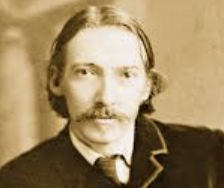
It is the mark of a good action that it appears inevitable in the retrospect. We should have been cut-throats to do otherwise. And there's an end. We ought to know distinctly that we are damned for what we do wrong; but when we have done right, we have only been gentlemen, after all. There is nothing to make a work about.
▼
Source
source
"Reflections and Remarks on Human Life", VI: Right and Wrong, published in Works: Letters and Miscellanies of Robert Louis Stevenson -- Sketches, Criticisms, Etc. (1895), p. 628.

3 months 2 weeks ago
What is called politics is comparatively something so superficial and inhuman, that, practically, I have never fairly recognized that it concerns me at all. The newspapers, I perceive, devote some of their columns specially to politics or government without charge; and this, one would say, is all that saves it; but, as I love literature, and, to some extent, the truth also, I never read those columns at any rate. I do not wish to blunt my sense of right so much.
▼
Source
source
p. 494

3 months 2 weeks ago
The most perfect philosophy of the natural kind only staves off our ignorance a little longer: as perhaps the most perfect philosophy of the moral or metaphysical kind serves only to discover larger portions of it. Thus the observation of human blindness and weakness is the result of all philosophy, and meets us at every turn, in spite of our endeavours to elude or avoid it.
▼
Source
source
Section 4 : Sceptical Doubts Concerning The Operations of The Understanding

3 months 2 weeks ago
The speaker with whom I was most struck, though I dissented from nearly every word he said, was Thirlwall, the historian, since Bishop of St. David's, then a Chancery barrister, unknown except by a high reputation for eloquence acquired at the Cambridge Union before the era of Austin and Macaulay. His speech was in answer to one of mine. Before he had uttered ten sentences, I set him down as the best speaker I had ever heard, and I have never since heard any one whom I placed above him.
▼
Source
source
(p. 125)
4 months ago
But tell me this: did you never love any person... were you never commanded by the person beloved to do something which you did not wish to do? Have you never flattered your little slave? Have you never kissed her feet? And yet if any man compelled you to kiss Caesar's feet, you would think it an insult and excessive tyranny. What else then is slavery?
▼
Source
source
Book IV, ch. 1, 17.
3 months 2 weeks ago
Only that day dawns to which we are awake. There is more day to dawn. The sun is but a morning star.
▼
Source
source
p. 375

3 months 2 weeks ago
The worker's existence is thus brought under the same condition as the existence of every other commodity. The worker has become a commodity, and it is a bit of luck for him if he can find a buyer, And the demand on which the life of the worker depends, depends on the whim of the rich and the capitalists.
▼
Source
source
Wages of Labor, p. 20.
6 days ago
"Normal science" means research firmly based upon one or more past scientific achievements, achievements that some particular scientific community acknowledges for a time as supplying the foundation for its further practice.
▼
Source
source
p. 10

2 months 2 weeks ago
In dreams you sometimes fall from a height, or are stabbed, or beaten, but you never feel pain unless, perhaps, you really bruise yourself against the bedstead, then you feel pain and almost always wake up from it. It was the same in my dream. I did not feel any pain, but it seemed as though with my shot everything within me was shaken and everything was suddenly dimmed, and it grew horribly black around me. I seemed to be blinded, and it benumbed, and I was lying on something hard, stretched on my back; I saw nothing, and could not make the slightest movement.

4 months 2 weeks ago
It is not necessary to ask whether soul and body are one, just as it is not necessary to ask whether the wax and its shape are one, nor generally whether the matter of each thing and that of which it is the matter are one. For even if one and being are spoken of in several ways, what is properly so spoken of is the actuality.
6 days ago
Fire is the best of servents; but what a master!
▼
Source
source
Bk. II, ch. 9.
1 month 4 weeks ago
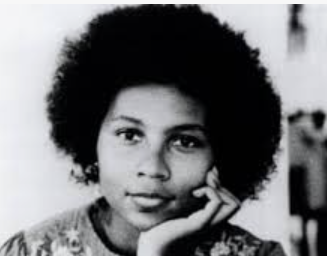
When I first read The Wretched of the Earth I heard a new history spoken-the voice of the decolonised subject raised in resistance. That voice . . . articulated a yearning for freedom that was so intense and a quality of emotional hunger that was so fierce that it was overwhelming. Dying into the text, I abandoned and forgot myself. The lust for freedom in those pages awakened and resurrected me.
▼
Source
source
Gender and Decolonization in the Congo (2010) ISBN 978-0-230-11040-3

3 months 3 weeks ago
I have gathered a posy of other men's flowers, and nothing but the thread that binds them is mine own.
▼
Source
source
Ch. 12: Of Physiognomy
1 month 4 days ago
It may be that the public mind of India may expand under our system till it has outgrown that system; that by good government we may educate our subjects into a capacity for better government, that, having become instructed in European knowledge, they may, in some future age, demand European institutions. Whether such a day will ever come I know not. But never will I attempt to avert or to retard it. Whenever it comes, it will be the proudest day in English history.
▼
Source
source
Speech in the House of Commons

4 months 1 week ago
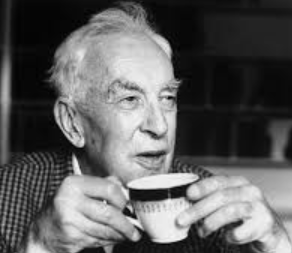
I make no secret about being Jewish ... I just think it's more important to be human and to have a human heritage; and I think it is wrong for anyone to feel that there is anything special about any one heritage of whatever kind. It is delightful to have the human heritage exist in a thousand varieties, for it makes for greater interest, but as soon as one variety is thought to be more important than another, the groundwork is laid for destroying them all.
4 weeks ago
Of the twenty-two civilizations that appear in history, nineteen of them collapsed when they reached the moral state the United States is in now. The average age of the world's great civilizations has been 200 years. All nations have progressed through this sequence:From bondage to spiritual faithFrom spiritual faith to great courageFrom courage to libertyFrom liberty to abundanceFrom abundance to selfishnessFrom selfishness to complacencyFrom complacency to apathyFrom apathy to dependencyFrom dependency back again into bondage.
▼
Source
source
In Joe D. Batten and Gail Batten, The Confidence Chasm (New York: American Management Association, 1972) p. 118

1 month 2 weeks ago
Quite often a man goes on for years imagining that the religious teaching that had been imparted to him since childhood is still intact, while all the time there is not a trace of it left in him.
▼
Source
source
Pt. I, ch. 1

4 months 1 week ago
Ironic philosophies produce passionate works. Any thought that abandons unity glorifies diversity! And diversity is the home of art. The only thought to liberate the mind is that which leaves it alone, certain of its limits and of its impending end. No doctrine tempts it. It awaits the ripening of the work and of life.

1 month 4 weeks ago
These men traveling down to the City in the morning, reading their newspapers or staring at advertisements above the opposite seats, they have no doubt of who they are. Inscribe on the placard in place of the advertisement for corn-plasters, Elliot's lines: We are the hollow men
3 months 2 weeks ago
Since the great foundation of fear is pain, the way to harden and fortify children against fear and danger is to accustom them to suffer pain. This 'tis possible will be thought, by kind parents, a very unnatural thing towards their children; and by most, unreasonable...
▼
Source
source
Sec. 115

4 months 5 days ago
This is the ideal world, a perfect world of equality, fraternity, harmony, welfare, and justice.
3 months 2 weeks ago
His heart was as great as the world, but there was no room in it to hold the memory of a wrong.
▼
Source
source
Greatness
1 month 3 weeks ago
The narcissistic, the domineering, the possessive woman can succeed in being a "loving" mother as long as the child is small. Only the really loving woman, the woman who is happier in giving than in taking, who is firmly rooted in her own existence, can be a loving mother when the child is in the process of separation.
▼
Source
source
Ch. 2
1 month 1 week ago
We no longer have to resort to superstition when faced with the deep problems: Is there a meaning to life? What are we for? What is man?
▼
Source
source
Ch. 1. Why Are People?

1 month 1 week ago
For tribal man, space was the uncontrollable mystery. For technological man it is time that occupies the same role.
▼
Source
source
p. 85; "Magic that Changes Mood")
2 months 1 week ago
Whenever government assumes to deliver us from the trouble of thinking for ourselves, the only consequences it produces are those of torpor and imbecility.
▼
Source
source
Vol. 2, bk. 6, ch. 1
3 months 6 days ago
A person may be greedy, envious, cowardly, cold, ungenerous, unkind, vain, or conceited, but behave perfectly by a monumental effort of will.
▼
Source
source
"Moral Luck" (1976), p. 32.

3 months 1 week ago
One might say: art shows us the miracles of nature. It is based on the concept of the miracles of nature.

3 months 2 weeks ago
But bounty and hospitality very seldom lead to extravagance; though vanity almost always does.
▼
Source
source
Chapter III, Part V, p. 987.

1 week 3 days ago
Progressives on the left have shown themselves willing to abandon liberal values in pursuit of social justice objectives. There has been a sustained intellectual attack on liberal principles over the past three decades coming out of academic pursuits like gender studies, critical race theory, postcolonial studies, and queer theory, that deny the universalistic premises underlying modern liberalism. The challenge is not simply one of intolerance of other views or "cancel culture" in the academy or the arts. Rather, the challenge is to basic principles that all human beings were born equal in a fundamental sense, or that a liberal society should strive to be color-blind.
4 months 5 days ago
When the Great Dao (Tao, perfect order) prevails, the world is like a Commonwealth State shared by all, not a dictatorship.

2 months 1 week ago
Can it really be that for us existence means exile, and nothingness, home?
3 months 2 weeks ago
So long as antimilitarists propose no substitute for war's disciplinary function, no moral equivalent of war, analogous, as one might say, to the mechanical equivalent of heat, so long they fail to realize the full inwardness of the situation.
▼
Source
source
The Moral Equivalent of War
CivilSimian.com created by AxiomaticPanic, CivilSimian, Kalokagathia