


3 months 3 weeks ago
Silence is the virtue of a fool.
▼
Source
source
Book VI, xxxi

3 months 1 week ago
You always hear people say that philosophy makes no progress and that the same philosophical problems which were already preoccupying the Greeks are still troubling us today. But people who say that do not understand the reason why it has to be so. The reason is that our language has remained the same and always introduces us to the same questions. ... I read: "philosophers are no nearer to the meaning of 'Reality' than Plato got,...". What a strange situation. How extraordinary that Plato could have got even as far as he did! Or that we could not get any further! Was it because Plato was so extremely clever?
▼
Source
source
p. 15e
3 months 2 weeks ago
In the natural state no concept of God can arise, and the false one which one makes for himself is harmful. Hence the theory of natural religion can be true only where there is no science; therefore it cannot bind all men together.
▼
Source
source
Part III : Selection on Education from Kant's other Writings, Ch. I Pedagogical Fragments, # 60

2 months 1 week ago
I do nothing, granted. But I see the hours pass - which is better than trying to fill them.
3 months 2 weeks ago
The utilitarian morality does recognise in human beings the power of sacrificing their own greatest good for the good of others. It only refuses to admit that the sacrifice is itself a good. A sacrifice which does not increase, or tend to increase, the sum total of happiness, it considers as wasted. The only self-renunciation which it applauds, is devotion to the happiness, or to some of the means of happiness, of others; either of mankind collectively, or of individuals within the limits imposed by the collective interests of mankind.
▼
Source
source
Ch. 2
2 months ago
A Pharisee is someone who is virtuous out of obedience to the Great Beast.
▼
Source
source
p. 125

3 months 2 weeks ago
Any fool can make a ruleAnd every fool will mind it.
▼
Source
source
February 3, 1860

3 months 2 weeks ago
Custom, then, is the great guide of human life. It is that principle alone which renders our experience useful to us, and makes us expect, for the future, a similar train of events with those which have appeared in the past. Without the influence of custom, we should be entirely ignorant of every matter of fact beyond what is immediately present to the memory and senses. We should never know how to adjust means to ends, or to employ our natural powers in the production of any effect. There would be an end at once of all action, as well as of the chief part of speculation. Variant (perhaps a paraphrase of this passage): It is not reason which is the guide of life, but custom.
1 month 3 weeks ago
Organizations and institutions permit stable expectations to be formed by each member of the group as to the behavior of the other members under specified conditions.
▼
Source
source
p. 100.
3 months 2 weeks ago
Men of learning are those who have read the contents of books. Thinkers, geniuses, and those who have enlightened the world and furthered the race of men, are those who have made direct use of the book of the world.
▼
Source
source
"Thinking for Oneself"

3 months 2 weeks ago
It is too difficult to think nobly when one thinks only of earning a living.
▼
Source
source
Variant translation: It is too difficult to think nobly when one only thinks to get a living.

2 months 2 weeks ago
Learning will be cast into the mire and trodden down under the hoofs of a swinish multitude.
▼
Source
source
Volume iii, p. 335
1 week ago
All things are subject to decay and change.
▼
Source
source
The General History of Polybius as translated by James Hampton' (1762), Vol. II, pp. 177-178

1 month 1 week ago
The reader is the content of any poem or of the language he employs, and in order to use any of these forms, he must put them on.
▼
Source
source
"Roles, Masks, and Performances", New Literary History, Vol. 2, No. 3, Performances in Drama, the Arts, and Society (Spring, 1971), p. 520
3 months 1 week ago
Those in the crossing must in the end know what is mistaken by all urging for intelligibility: that every thinking of being, all philosophy, can never be confirmed by "facts," ie, by beings. Making itself intelligible is suicide for philosophy. Those who idolize "facts" never notice that their idols only shine in a borrowed light. They are also meant not to notice this; for thereupon they would have to be at a loss and therefore useless. But idolizers and idols are used wherever gods are in flight and so announce their nearness.
▼
Source
source
Contributions to Philosophy (From Enowning) [Beitrage Zur Philosophie (Vom Ereignis)], notes of 1936-1938, as translated by Parvis Emad and Kenneth Maly
Just now
The young are of age when they twitter like the old; they are driven through school to learn the old song, and, when they have this by heart, they are declared of age.
▼
Source
source
Cambridge 1995, pp. 61-62

2 months 4 weeks ago
The Platonic doctrine of Ideas has been, in all ages, the derision of the vulgar, and the admiration of the wife. Indeed, if we consider that ideas are the most sublime objects of speculation, and that their nature is no less bright in itself, than difficult to investigate, this opposition in the conduct of mankind will be natural and necessary; for, from our connection with a material nature, our intellectual eye, previous to the irradiations of science, is as ill adapted to objects the most splendid of all, "as the eyes of bats to the light of day.
▼
Source
source
A Dissertation on the Doctrine of Ideas, &c." Footnote: see second book of Aristotle's Metaphysics.
3 months 1 week ago
"What is a thing?" is historical, because every report of the past, that is of the preliminaries to the question about the thing, is concerned with something static. This kind of historical reporting is an explicit shutting down of history, whereas it is, after all, a happening. We question historically if we ask what is still happening even if it seems to be past. We ask what is still happening and whether we remain equal to this happening so that it can really develop.
▼
Source
source
p. 43

3 months 2 weeks ago
There is no more miserable human being than one in whom nothing is habitual but indecision.
▼
Source
source
Ch. 4
3 months 1 week ago
So in the end when one is doing philosophy one gets to the point where one would like just to emit an inarticulate sound.
▼
Source
source
§ 261

3 months 2 weeks ago
Why has the Revolution of France been stained with crimes, which the Revolution of the United States of America was not? Men are physically the same in all countries; it is education that makes them different. Accustom a people to believe that priests or any other class of men can forgive sins, and you will have sins in abundance.
▼
Source
source
Worship and Church Bells, 1797
1 month 4 weeks ago
In contrast to festivals, events do not create community.
1 month 3 weeks ago
I might try to save the view that 'future contingents' have no truth value by saying that even present-tense statements have no truth value if they refer to the outcome of events that are so far away that a causal signal informing me of the outcome could not have reached me-now without traveling faster than light. In other words, I might attempt saying that statements about events that are in neither the upper half nor the lower half of my light-cone have no truth value. In addition, statements about events in the upper half of my light-cone have no truth value, since they are in my future according to every coordinate system. So only statements about events in the lower half of my light-cone have a truth value; only events that are in 'my past* according to all observers are determined.
▼
Source
source
Time and physical geometry

3 months 2 weeks ago
It seems clear to me that marriage ought to be constituted by children, and relations not involving children ought to be ignored by the law and treated as indifferent by public opinion. It is only through children that relations cease to be a purely private matter.
▼
Source
source
Letter to Ottoline Morrell, January 30, 1916
1 week ago
Karl Marx was born at Trier on 5 May 1818, the child of Jewish parents with a long rabbinical tradition on both sides. His grandfathers were rabbis; his father, a well-to-do lawyer, changed his first name from Herschel to Heinrich and adopted Protestantism, which in Prussia was a necessary condition of professional and cultural emancipation.
▼
Source
source
(pg. 96)

3 months 2 weeks ago
What strength belongs to every plant and animal in nature. The tree or the brook has no duplicity, no pretentiousness, no show. It is, with all its might and main, what it is, and makes one and the same impression and effect at all times. All the thoughts of a turtle are turtles, and of a rabbit, rabbits. But a man is broken and dissipated by the giddiness of his will; he does not throw himself into his judgments; his genius leads him one way but 't is likely his trade or politics in quite another.
▼
Source
source
"The Natural History of Intellect", p. 46
3 months 2 days ago
Socrates thought that if all our misfortunes were laid in one common heap, whence every one must take an equal portion, most persons would be contented to take their own and depart.

3 months 1 week ago
In a world, man must create his own essence: it is in throwing himself into the world, suffering there, struggling there, that he gradually defines himself.

3 months 2 weeks ago
It is the natural effect of improvement, however, to diminish gradually the real price of almost all manufactures.
▼
Source
source
Chapter XI, Part III, (Conclusion..) p. 282.

4 months 2 weeks ago
We believe that we know something about the things themselves when we speak of trees, colors, snow, and flowers; and yet we possess nothing but metaphors for things, metaphors which correspond in no way to the original entities.

4 months 1 week ago
To two men living the same number of years, the world always provides the same sum of experiences. It is up to us to be conscious of them.

6 days ago
Democracy is, by the nature of it, a self-canceling business; and it gives in the long run a net result of zero.
▼
Source
source
Ch. 6, Laissez-Faire.
2 months 2 weeks ago
To tax and to please, no more than to love and to be wise, is not given to men.

3 months 2 weeks ago
The South has conquered nothing - but a graveyard.
6 days ago
They understood in their heart that it was indispensable to be brave; that Odin would have no favor for them, but despise and thrust them out, if they were not brave. Consider too whether there is not something in this! It is an everlasting duty, valid in our day as in that, the duty of being brave. Valor is still value. The first duty for a man is still that of subduing Fear. We must get rid of Fear; we cannot act at all till then.
2 months 6 days ago
Stuart was not dismayed by his sexual feelings about the boy.
▼
Source
source
The Good Apprentice (1985), p. 247.
3 months 4 weeks ago
Materials are indifferent, but the use which we make of them is not a matter of indifference.
▼
Source
source
Book II, ch. 5, 1

2 months 2 weeks ago
Fathers and teachers, I ponder, "What is hell?" I maintain that it is the suffering of being unable to love.
▼
Source
source
Book VI, Chapter 3 (trans. Constance Garnett)
3 months 2 weeks ago
The concentration camps, by making death itself anonymous (making it impossible to find out whether a prisoner is dead or alive), robbed death of its meaning as the end of a fulfilled life. In a sense they took away the individual's own death, proving that henceforth nothing belonged to him and he belonged to no one. His death merely set a seal on the fact that he had never existed.
▼
Source
source
Part 3, Ch. 12, § 3
2 months 2 weeks ago
Manners are of more importance than laws. The law can touch us here and there, now and then. Manners are what vex or soothe, corrupt or purify, exalt or debase, barbarize or refine us, by a constant, steady, uniform, insensible operation like that of the air we breathe in.
▼
Source
source
No. 1, p. 172 in The Works of the Right Honourable Edmund Burke: A New Edition, v. VIII. London: F. C. and J. Rivington, 1815
3 months 2 weeks ago
The man of principles has character. Of him we know definitely what to expect. He does not act on the basis of his instinct, but on the basis of his will. Therefore, without being redundant one can classify characteristics according to a person's faculty of desire (what is practical), as a) his nature, or natural talent, b) his temperament, or disposition, and c) his general character, or mode of thinking.
▼
Source
source
Kant, Immanuel (1996), page 195
2 months 2 weeks ago
Every man has some reminiscences which he would not tell to everyone, but only to his friends. He has others which he would not reveal even to his friends, but only to himself, and that in secret. But finally there are still others which a man is even afraid to tell himself, and every decent man has a considerable number of such things stored away. That is, one can even say that the more decent he is, the greater the number of such things in his mind.
▼
Source
source
Part 1, Chapter 11
2 months 1 week ago
Nothing is a better proof of how far humanity has regressed than the impossibility of finding a single nation, a single tribe, among whom birth still provokes mourning and lamentations.
3 months 2 weeks ago
A criminal who, having renounced reason ... hath, by the unjust violence and slaughter he hath committed upon one, declared war against all mankind, and therefore may be destroyed as a lion or tyger, one of those wild savage beasts with whom men can have no society nor security. And upon this is grounded the great law of Nature, "Whoso sheddeth man's blood, by man shall his blood be shed."
▼
Source
source
Second Treatise of Civil Government, Ch. II, sec. 11
1 week ago
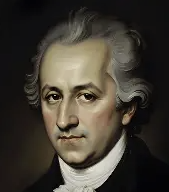
When young, one is confident to be able to build palaces for mankind, but when the time comes one has one's hands full just to be able to remove their trash.
▼
Source
source
Letter to Johann Kaspar Lavatar
4 months 4 days ago
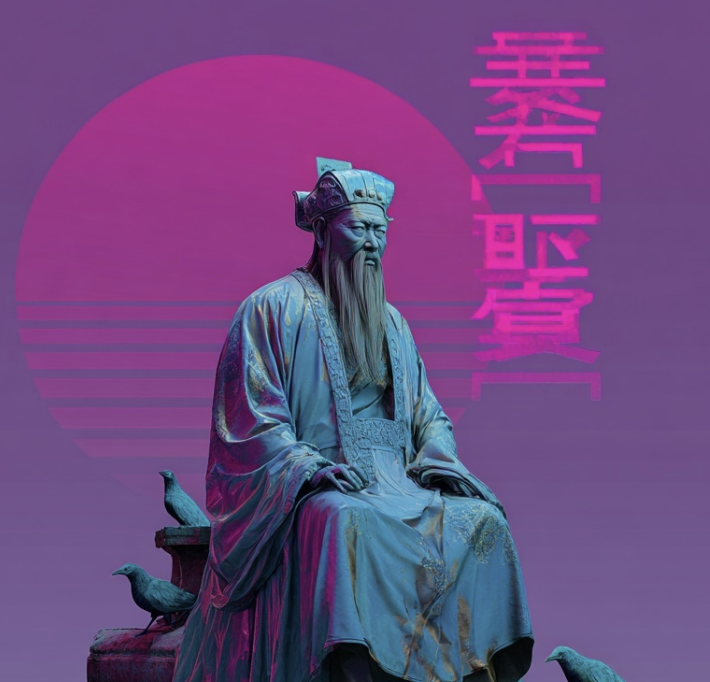
If you would govern a state of a thousand chariots (a small-to-middle-size state), you must pay strict attention to business, be true to your word, be economical in expenditure and love the people. You should use them according to the seasons.
3 months 1 week ago
I say a murder is abstract. You pull the trigger and after that you do not understand anything that happens.
▼
Source
source
Act 5, sc. 2
2 months 1 week ago
Nothing is so wearing as the possession or abuse of liberty.
3 months 5 days ago
Philosophers get attention only when they appear to be doing something sinister-corrupting the youth, undermining the foundations of civilization, sneering at all we hold dear. The rest of the time everybody assumes that they are hard at work somewhere down in the sub-basement, keeping those foundations in good repair. Nobody much cares what brand of intellectual duct tape is being used.
▼
Source
source
"Philosophical Convictions." The Nation, June 14, 2004.
3 months 2 weeks ago
We think it also necessary to express our astonishment that a government, desirous of being called free, should prefer connection with the most despotic and arbitrary powers in Europe.
▼
Source
source
Address and Declaration at a Select Meeting of the Friends of Universal Peace and Liberty (August 20, 1791) p. 5
CivilSimian.com created by AxiomaticPanic, CivilSimian, Kalokagathia