

3 months 3 weeks ago
Women . . . have . . . small and narrow chests, and broad hips, to the end they should remain at home, sit still, keep house, and bear and bring up children. . . . A woman is, or at least should be, a friendly, courteous, and a merry companion in life . . . the honor and ornament of the house, and inclined to tenderness, for thereunto are they chiefly created, to bear children, and to be the pleasure, joy and solace of their husbands.
▼
Source
source
-- Table Talk, quoted in Luther On "Woman"
1 month 2 weeks ago
In default of any other proof, the thumb would convince me of the existence of a God.
▼
Source
source
Stanislas (1856)
1 month 2 weeks ago
What! all of us, Christians, not only profess to love one another, but do actually live one common life; we whose social existence beats with one common pulse-we aid one another, learn from one another, draw ever closer to one another to our mutual happiness, and find in this closeness the whole meaning of life!-and to-morrow some crazy ruler will say some stupidity, and another will answer in the same spirit, and then I must go expose myself to being murdered, and murder men-who have done me no harm-and more than that, whom I love. And this is not a remote contingency, but the very thing we are all preparing for, which is not only probable, but an inevitable certainty.
▼
Source
source
Chapter V, Contradiction Between our Life and our Christian Conscience

3 months 4 days ago
The right-minded man, ever inclined to righteous and lawful deeds, is joyous day and night, and strong, and free from care. But if a man take no heed of the right, and leave undone the things he ought to do, then will the recollection of no one of all his transgressions bring him any joy, but only anxiety and self-reproaching.

2 months 1 week ago
Having destroyed all my connections, burned my bridges, I should feel a certain freedom, and in fact I do. One so intense I am afraid to rejoice in it.

2 months 2 weeks ago
Burden not the back of Aries, Leo, or Taurus, with thy faults, nor make Saturn, Mars, or Venus, guilty of thy Follies.
▼
Source
source
Part III, Section VII



3 months 2 weeks ago
Obey the voice at eve obeyed at prime.
▼
Source
source
Terminus

1 week 2 days ago
To conceive the good, in fact, is not sufficient; it must be made to succeed among men. To accomplish this less pure paths must be followed.
▼
Source
source
Ch. 5.
2 months 2 weeks ago
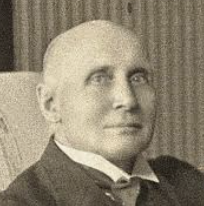
The Doctrine of Knowledge, apart from all special and definite knowing, proceeds immediately upon Knowledge itself, in the essential unity in which it recognises Knowledge as existing; and it raises this question in the first place - How this Knowledge can come into being, and what it is in its inward and essential Nature? The following must be apparent: - There is but One who is absolutely by and through himself, - namely, God; and God is not the mere dead conception to which we have thus given utterance, but he is in himself pure Life. He can neither change nor determine himself in aught within himself, nor become any other Being; for his Being contains within it all his Being and all possible Being, and neither within him nor out of him can any new Being arise.
1 month 4 weeks ago
In its solitariness the spirit asks, What, in the way of value, is the attainment of life? And it can find no such value till it has merged its individual claim with that of the objective universe.
▼
Source
source
Religion is world-loyalty. Religion in the Making (February 1926), Lecture II: "Religion and Dogma".
2 months 2 weeks ago
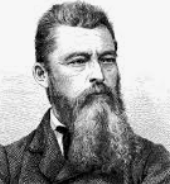
Feuerbach is saying: No, wait a minute - if you are going to be allowed to go on living as you are living, then you also have to admit that you are not Christians. Feuerbach has understood the requirements but cannot force himself to submit to them - ergo, he prefers to renounce being a Christian. And now, no matter how great a responsibility he must bear, he takes a position that is not unsound, that is, it is wrong of established Christendom to say that Feuerbach is attacking Christianity; it is not true, he is attacking the Christians by demonstrating that their lives do not correspond to the teachings of Christianity.
▼
Source
source
Soren Kierkegaard, Journals X2A 163
3 months 4 days ago
One should emulate works and deeds of virtue, not arguments about it.

3 months 2 weeks ago
The method of "postulating" what we want has many advantages; they are the same as the advantages of theft over honest toil.
▼
Source
source
Ch. 7: Rational, Real and Complex Numbers

3 months 2 weeks ago
You can hardly convince a man of an error in a lifetime, but must content yourself with the reflection that the progress of science is slow. If he is not convinced, his grandchildren may be.

2 months 1 week ago
This organization of functional discourse is of vital importance; it serves as a vehicle of coordination and subordination. The unified, functional language is an irreconcilably anti-critical and anti-dialectical language. In it, operational and behavioral rationality absorbs the transcendent, negative, oppositional elements of Reason.
▼
Source
source
p. 97

1 month 3 weeks ago
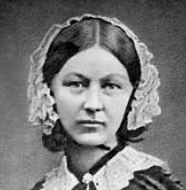
Asceticism is the trifling of an enthusiast with his power, a puerile coquetting with his selfishness or his vanity, in the absence of any sufficiently great object to employ the first or overcome the last.
▼
Source
source
Letter (5 September 1857), quoted in The Life of Florence Nightingale (1913) by Edward Tyas Cook, p. 369
6 days ago
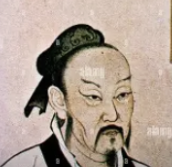
The sense of mercy is found in all men; the sense of shame is found in all men; the sense of respect is found in all men; the sense of right and wrong is found in all men.
▼
Source
source
6A:6
1 month 1 week ago
The bow too tensely strung is easily broken.
▼
Source
source
Maxim 388
3 months 2 weeks ago
Our moral virtues benefit mainly other people; intellectual virtues, on the other hand, benefit primarily ourselves; therefore the former make us universally popular, the latter unpopular.
3 months 2 weeks ago
The spurious axioms of the third kind from conditions proper to the subject whence they are transferred rashly to the object are plentiful, not, as in those of the Second Class, because the only way to the intellectual concept lies through the sensuous data, but because only by aid of the latter can the concept be applied to that which is given by experience, that is, can we know whether something is contained under a certain intellectual concept or not. To this class belongs the threadbare one of the schools: whatever exists contingently does at some time not exist. This spurious principle springs from the poverty of the intellect, having insight frequently into the nominal, rarely into the real, marks of contingency or necessity.
2 months 1 week ago
The world of immediate experience-the world in which we find ourselves living-must be comprehended, transformed, even subverted in order to become that which it really is.
▼
Source
source
p. 123
2 months 1 week ago
Even in childhood I watched the hours flow, independent of any reference, any action, any event, the disjunction of time from what was not itself, its autonomous existence, its special status, its empire, its tyranny. I remember quite clearly that afternoon when, for the first time, confronting the empty universe, I was no more than a passage of moments reluctant to go on playing their proper parts. Time was coming unstuck from being - at my expense.
3 months 3 weeks ago
All the world knows me in my book, and my book in me.
▼
Source
source
Book III, Ch. 5. Upon some Verses of Virgil
2 months 1 week ago
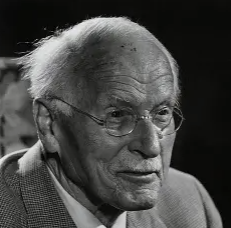
Because we cannot discover God's throne in the sky with a radiotelescope or establish (for certain) that a beloved father or mother is still about in a more or less corporeal form, people assume that such ideas are "not true." I would rather say that they are not "true" enough, for these are conceptions of a kind that have accompanied human life from prehistoric times, and that still break through into consciousness at any provocation.
2 months 5 days ago
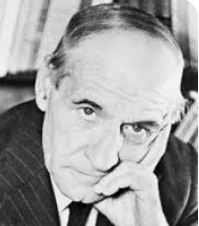
The metaphor is perhaps one of man's most fruitful potentialities. Its efficacy verges on magic, and it seems a tool for creation which God forgot inside one of His creatures when He made him. All our other faculties keep us within the realm of the real, of what is already there. The most we can do is to combine things or to break them up. The metaphor alone furnishes an escape; between the real things, it lets emerge imaginary reefs, a crop of floating islands. A strange thing, indeed, the existence in man of this mental activity which substitutes one thing for another - from an urge not so much to get at the first as to get rid of the second.
▼
Source
source
"Taboo and Metaphor"

2 months 3 weeks ago
Place is the greatest thing, as it contains all things.
▼
Source
source
As quoted in Diogenes Laërtius, The Lives and Opinions of Eminent Philosophers, I, 35
2 months 1 week ago
In the Platonic dialectic, ... the terms "Being" "Non-being" "Movement," "the One and the Many" "Identity" and "Contradiction" are methodically kept open, ambiguous, not fully defined. They have an open horizon, an entire universe of meaning which is gradually structured in the process of communication itself, but which is never closed. The propositions are submitted, developed, and tested in a dialogue, in which the partner is led to question the normally unquestioned universe of experience and speech, and to enter a new dimension of discourse - otherwise he is free and the discourse is addressed to his freedom. He is supposed to go beyond that which is given to him - as the speaker, in his proposition, goes beyond the initial setting of the terms. These terms have many meanings because the conditions to which they refer have many sides, implications, and effects which cannot be insulated and stabilized.
▼
Source
source
p. 131
5 days ago
We may, to be more precise, have to relinquish the notion, explicit or implicit, that changes of paradigm carry scientists and those who learn from them closer and closer to the truth.
▼
Source
source
p. 170
2 months 1 week ago
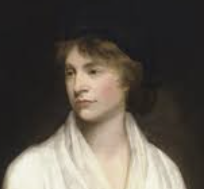
Situation seems to be the mould in which men's characters are formed.
▼
Source
source
Letter 23
4 months 1 week ago
Law could never, by determining exactly what is noblest and must just for one and all, enjoin upon them that which is best; for the differences of men and of actions and the fact that nothing, I may say, in human life is ever at rest, forbid any science whatsoever to promulgate any simple rule for everything and for all time. So, that which is persistently simple is inapplicable to things which are never simple.
3 months 2 weeks ago
Christianity taught only what the whole of Asia knew already long before and even better.
▼
Source
source
quoted in Londhe, S. (2008). A tribute to Hinduism: Thoughts and wisdom spanning continents and time about India and her culture. New Delhi: Pragun Publication.
3 months 3 weeks ago
It would be better to have no laws at all than to have them in such profusion as we do.
▼
Source
source
Ch. 13

4 months 4 days ago
A man's character is formed by the Odes, developed by the Rites and perfected by music.
2 months 1 week ago
When you love someone, you hope - the more closely to be attached - that a catastrophe will strike your beloved.
2 months 5 days ago
The demagogues, impresarios of alteracion, who have already caused the death of several civilizations, harass men so that they shall not reflect, see to it that they are kept herded together in crowds so that they cannot reconstruct their individuality in the one place where it can be reconstructed, which is in solitude.
▼
Source
source
p. 33
3 months 2 weeks ago
Apart from autograph hunters, I get... many letters from Hindus, beseeching me to adopt some form of mysticism, from young Americans, asking me where I think the line should be drawn in petting, and from Poles, urging me to admit that while all other nationalism may be bad that of Poland is wholly noble. I get letters from engineers who cannot understand Einstein, and from parsons who think that I cannot understand Genesis, from husbands whose wives have deserted them - not (they say) that that would matter, but the wives have taken the furniture with them, and what in these circumstances should an enlightened male do? ...I get letters (concerning whose genuineness I am suspicious) trying to get me to advocate abortion, and I get letters from young mothers asking my opinion of bottle-feeding.
▼
Source
source
Letter to Mr C. L. Aiken, March 19, 1930
2 months 2 weeks ago
One must love humanity in order to reach out into the unique essence of each individual: no one can be too low or too ugly.
▼
Source
source
Lenz (1835).
3 months 2 weeks ago
The war against war is going to be no holiday excursion or camping party. The military feelings are too deeply grounded to abdicate their place among our ideals until better substitutes are offered than the glory and shame that come to nations as well as to individuals from the ups and downs of politics and the vicissitudes of trade.
1 month 3 weeks ago
The original Golden Dawn was not always as serious as it should have been. Mathers was a clown, and Yeats was just a romantic trying to deceive himself. Most of them were interested in personal power, and it ended up by destroying them. The aim of our group is the scientific exploration of the hidden powers of the human mind.
▼
Source
source
p. 113

1 week 3 days ago
The political program of nation building in countries like Afghanistan and Iraq is one central example of the productive project of biopower and war. Nothing could be more postmodernist and antiessentialist than this notion of nation building.


2 months 2 weeks ago
Neither a person nor a nation can exist without some higher idea. And there is only one higher idea on earth, and it is the idea of the immortality of the human soul, for all other "higher" ideas of life by which humans might live derive from that idea alone.
▼
Source
source
A Writer's Diary, Vol. 1: 1873-1876, ed. Kenneth Lantz (1994), p. 734
1 month 3 weeks ago
Global rationality, the rationality of neoclassical theory, assumes that the decision maker has a comprehensive, consistent utility function, knows all the alternatives that are available for choice, can compute the expected value of utility associated with each alternative, and chooses the alternative that maximizes expected utility. Bounded rationality, a rationality that is consistent with our knowledge of actual human choice behavior, assumes that the decision maker must search for alternatives, has egregiously incomplete and inaccurate knowledge about the consequences of actions, and chooses actions that are expected to be satisfactory (attain targets while satisfying constraints).
▼
Source
source
Simon (1997, p. 17); As cited in: Gustavo Barros (2010, p. 460).
1 month 4 weeks ago
Education is the acquisition of the art of the utilisation of knowledge.
1 week 3 days ago
The way positive reinforcement is carried out is more important than the amount.
▼
Source
source
As quoted in Meditations for Parents Who Do Too Much (1993) by Jonathon Lazear and Wendy Lazear, p. 5
2 months 2 weeks ago
Yes, I dreamed a dream, my dream of the third of November. They tease me now, telling me it was only a dream. But does it matter whether it was a dream or reality, if the dream made known to me the truth? If once one has recognized the truth and seen it, you know that it is the truth and that there is no other and there cannot be, whether you are asleep or awake. Let it be a dream, so be it, but that real life of which you make so much I had meant to extinguish by suicide, and my dream, my dream - oh, it revealed to me a different life, renewed, grand and full of power!
3 months 2 weeks ago
What extracts from the Vedas I have read fall on me like the light of a higher and purer luminary, which describes a loftier course through purer stratum. It rises on me like the full moon after the stars have come out, wading through some far stratum in the sky.
▼
Source
source
1850
2 months 1 week ago
A naturall foole that could never learn by heart the order of numerall words, as one, two, and three, may observe every stroak of the Clock, and nod to it, or say one, one, one; but can never know what houre it strikes.
▼
Source
source
The First Part, Chapter 4, p. 14
CivilSimian.com created by AxiomaticPanic, CivilSimian, Kalokagathia