


3 months 3 weeks ago
The second doctrine of the Perennial Philosophy - that it is possible to know the Divine Ground by a direct intuition higher than discursive reasoning - is to be found in all the great religions of the world. A philosopher who is content merely to know about the ultimate Reality - theoretically and by hearsay - is compared by Buddha to a herdsman of other men's cows. Mohammed uses an even homelier barnyard metaphor. For him the philosopher who has not realized his metaphysics is just an ass bearing a load of books. Christian, Hindu, Taoist teachers wrote no less emphatically about the absurd pretensions of mere learning and analytic reasoning.

3 months 3 weeks ago
Music is a hidden arithmetic exercise of the soul, which does not know that it is counting.
▼
Source
source
Letter to Christian Goldbach, April 17, 1712.

4 months 2 weeks ago
We face eternity now. We have no universe left, no outside phenomena, no emotions, no passions. Nothing but ourselves and thought. We face an eternity of introspection, when all through history we have never known what to do with ourselves on a rainy Sunday.
2 months 3 weeks ago
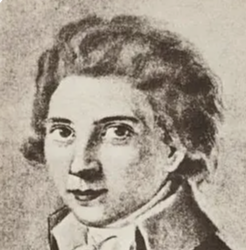
The romantic poetry is a progressive universal poetry.
▼
Source
source
Progressive Universalpoesie (1798)
3 months 3 weeks ago
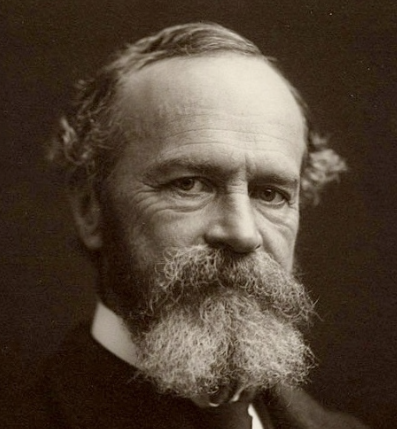
All our scientific and philosophic ideals are altars to unknown gods.
▼
Source
source
Lecture at the Harvard Divinity School (13 March 1884); published in the The Unitarian Review and Religious Magazine as The Dilemma of Determinism

3 months 3 weeks ago
If we take a survey of ages and of countries, we shall find the women, almost - without exception - at all times and in all places, adored and oppressed. Man, who has never neglected an opportunity of exerting his power, in paying homage to their beauty, has always availed himself of their weakness He has been at once their tyrant and their slave.

1 month 3 weeks ago
At the approach of danger there are always two voices that speak with equal force in the heart of man: one very reasonably tells the man to consider the nature of the danger and the means of avoiding it; the other even more reasonable says that it is too painful and harassing to think of the danger, since it is not a man's power to provide for everything and escape from the general march of events; and that it is therefore better to turn aside from the painful subject till it has come, and to think of what is pleasant. In solitude a man generally yields to the first voice; in society to the second.
▼
Source
source
Bk. X, ch. 17

2 months 3 weeks ago
You had that action and counteraction which, in the natural and in the political world, from the reciprocal struggle of discordant powers draws out the harmony of the universe.
▼
Source
source
Volume iii, p. 277

2 months 5 days ago
When I first read The Wretched of the Earth I heard a new history spoken-the voice of the decolonised subject raised in resistance. That voice . . . articulated a yearning for freedom that was so intense and a quality of emotional hunger that was so fierce that it was overwhelming. Dying into the text, I abandoned and forgot myself. The lust for freedom in those pages awakened and resurrected me.
▼
Source
source
Gender and Decolonization in the Congo (2010) ISBN 978-0-230-11040-3
1 month 2 weeks ago
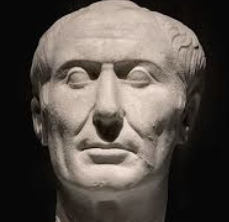
Fortune is not satisfied with inflicting one calamity.
▼
Source
source
Maxim 274
3 months 3 weeks ago
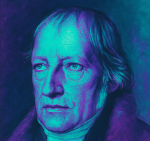
Among the Romans in Christian times Mithras-worship as very widely spread, and so late as the Middle Ages we meet with a secret Mithras-worship ostensibly connected with the order of the Knights-Templars. Mithras thrusting the knife into the neck of the ox is a figurative representation belonging essentially to the cult of Mithras, of which examples have been frequently found in Europe. Hegel, Georg Wilhelm Friedrich, Lectures on the philosophy of religion, together with a work on the proofs of the existence of God.
▼
Source
source
Vol 2 Translated from the 2d German ed. 1895 Ebenezer Brown Speirs 1854-1900, and J Burdon Sanderson p. 81-82
2 months 3 weeks ago
Think of something finite molded into the infinite, and you think of man.
▼
Source
source
"Selected Ideas (1799-1800)", Dialogue on Poetry and Literary Aphorisms, Ernst Behler and Roman Struc, trans. (1968) #98
4 months 6 days ago
In each separate thing that you do consider the matters which come first, and those which follow after, and only then approach the thing itself.
▼
Source
source
Book III, ch. 15, 1 (= Enchiridion 29, 1).

3 months 3 weeks ago
The difference between the most dissimilar characters, between a philosopher and a common street porter, for example, seems to arise not so much from nature, as from habit, custom, and education.
▼
Source
source
Chapter II, p. 17.
2 months 2 weeks ago
Liberalism has merely cleared a field in which every soul and every corporate interest may fight with every other for domination. Whoever is victorious in this struggle will make an end of liberalism; and the new order, which will deem itself saved, will have to defend itself in the following age against a new crop of rebels.
▼
Source
source
"The Irony of Liberalism"

4 months 3 weeks ago
If the ethical, that is, social morality is the highest ... then no categories are needed other than the Greek philosophical categories.
3 months 3 weeks ago
The possession of self-conscious reason, which belongs to us of the present world, did not arise suddenly, nor did it grow only from the soil of the present. This possession must be regarded as previously present, as an inheritance, and as the result of labour - the labour of all past generations of men.
▼
Source
source
Introduction p. 2 Ibid

2 months 4 days ago
(Gardner) writes about various kinds of cranks with the conscious superiority of the scientist, and in most cases one can share his sense of the victory of reason. But after half a dozen chapters this non-stop superiority begins to irritate; you begin to wonder about the standards that make him so certain he is always right. He asserts that the scientist, unlike the crank, does his best to remain open-minded. So how can he be so sure that no sane person has ever seen a flying saucer, or used a dowsing rod to locate water? And that all the people he disagrees with are unbalanced fanatics? A colleague of the positivist philosopher A. J. Ayer once remarked wryly "I wish I was as certain of anything as he seems to be about everything." Martin Gardner produces the same feeling.
▼
Source
source
pp. 2-3

3 months 3 weeks ago
It is easy to live for others; everybody does. I call on you to live for yourselves.
▼
Source
source
May 3, 1845
2 months 2 weeks ago
It is ...easy to be certain. One has only to be sufficiently vague.
▼
Source
source
Vol. IV, par. 237
2 months 2 weeks ago
Surely this voice meant our Teacher; for it is he that can collect the indications which lie scattered on all sides. A singular light kindles in his looks, when at length the high Rune lies before us, and he watches in our eyes whether the star has yet risen upon us, which is to make the Figure visible and intelligible.
4 months 3 weeks ago
There must have been many who had a relationship to Jesus similar to that of Barabbas (his name was Jesus Barrabas). The Danish "Barrabas" is about the same as "N.N." [Mr. X or John Doe], filius patris, his father's son. - It is too bad, however, that we do not know anything more about Barrabas; it seems to me that in many ways he could have become a counterpart to the Wandering Jew. The rest of his life must have taken a singular turn. God knows whether or not he became a Christian. - It would be a poetic motif to have him, gripped by Christ's divine power, step forward and witness for him.

1 week 5 days ago
This Burns appeared under every disadvantage: uninstructed, poor, born only to hard manual toil; and writing, when it came to that, in a rustic special dialect, known only to a small province of the country he lived in. Had he written, even what he did write, in the general language of England, I doubt not he had already become universally recognized as being, or capable to be, one of our greatest men.

2 months 2 weeks ago
Not to be born is undoubtedly the best plan of all. Unfortunately, it is within no one's reach.



3 months 4 weeks ago
And to bring in a new word by the head and shoulders, they leave out the old one.
▼
Source
source
Book III, Ch. 5. Upon some Verses of Virgil
1 month 1 week ago
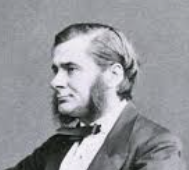
If a well were sunk at our feet in the midst of the city of Norwich, the diggers would very soon find themselves at work in that white substance almost too soft to be called rock, with which we are all familiar as "chalk".
2 months 2 weeks ago
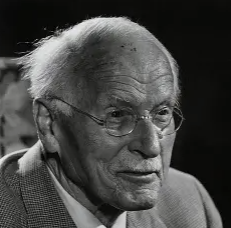
We are living in what the Greeks called the right time for a "metamorphosis of the gods," i.e. of the fundamental principles and symbols. This peculiarity of our time, which is certainly not of our conscious choosing, is the expression of the unconscious man within us who is changing. Coming generations will have to take account of this momentous transformation if humanity is not to destroy itself through the might of its own technology and science.
▼
Source
source
p 110
2 months 2 weeks ago
That higher and "complete" man is begotten by the "unknown" father and born from Wisdom, and it is he who, in the figure of the puer aeternus-"vultu mutabilis albus et ater"-represents our totality, which transcends consciousness. It was this boy into whom Faust had to change, abandoning his inflated onesidedness which saw the devil only outside. Christ's "Except ye become as little children" is a prefiguration of this, for in them the opposites lie close together; but what is meant is the boy who is born from the maturity of the adult man, and not the unconscious child we would like to remain.
▼
Source
source
Answer to Job, R. Hull, trans. (1984), pp. 157-158
3 months 3 weeks ago
Wealth is like sea-water; the more we drink, the thirstier we become.
▼
Source
source
E. Payne, trans. (1974) Vol. 1, p. 347

2 months 1 week ago
My conduct must be the best proof, the moral proof, of my supreme desire; and if I do not end by convincing myself, within the bounds of the ultimate and irremediable uncertainty of the truth of what I hope for, it is because my conduct is not sufficiently pure. Virtue, therefore, is not based upon dogma, but dogma upon virtue, and it is not faith that creates martyrs but martyrs who create faith. There is no security or repose - so far as security and repose are obtainable in this life, so essentially insecure and unreposeful - save in conduct that is passionately good.

3 months 2 weeks ago
My aim is not to provide excuses for black behavior or to absolve blacks of personal responsibility. But when the new black conservatives accent black behavior and responsibility in such a way that the cultural realities of black people are ignored, they are playing a deceptive and dangerous intellectual game with the lives and fortunes of disadvantaged people. We indeed must criticize and condemn immoral acts of black people, but we must do so cognizant of the circumstances into which people are born and under which they live. By overlooking these circumstances, the new black conservatives fall into the trap of blaming black poor people for their predicament. It is imperative to steer a course between the Scylla of environmental determinism and the Charybdis of a blaming-the-victims perspective.
▼
Source
source
(p56)
1 month 3 weeks ago
And so the arbitrary union of three incommensurate, mutually disconnected concepts became the basis of a bewildering theory... [by which] one of the lowest renderings of art, art for mere pleasure - against which all of the master teachers warned - was idealized as the ultimate in art.

3 months 2 weeks ago
It is not how things are in the world that is mystical, but that it exists.
▼
Source
source
(6.44) Variant translation: The mystical is not how the world is, but that it is. Original German: Nicht wie die Welt ist, ist das Mystische, sondern dass sie ist.
3 months 2 weeks ago
Absurdity destroys the and of the enumeration by making impossible the in where the things enumerated would be divided up.
▼
Source
source
Preface

3 months 4 weeks ago
The mad mob does not ask how it could be better, only that it be different. And when it then becomes worse, it must change again. Thus they get bees for flies, and at last hornets for bees. Whether Soldiers Can Also Be in a State of Grace
▼
Source
source
1526
1 month 2 weeks ago
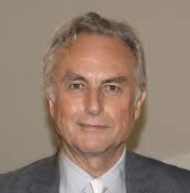
I don't believe you until you tell me, do you really believe, for example, if they say they are Catholic, "Do you really believe that when a priest blesses a wafer, it turns into the body of Christ? Are you seriously telling me you believe that? Are you seriously saying that wine turns into blood?" Mock them. Ridicule them. In public. Don't fall for the convention that we're all too polite to talk about religion. Religion is not off the table. Religion is not off limits. Religion makes specific claims about the universe which need to be substantiated and need to be challenged and, if necessary, need to be ridiculed with contempt.
▼
Source
source
Reason Rally, National Mall, Washington, DC, 2012-03-24 Richard Dawkins and his Foundation at the Reason Rally, YouTube, 7 April 2012

2 months 2 weeks ago
Ye know not what manner of spirit ye are of. For the Son of man is not come to destroy men's lives, but to save them. (KJV) 9:55-56 Rebuking James and John for asking if he would command fire to come down from heaven, to consume a village of Samaritans for not receiving them, because they seemed to be headed for Jerusalem.
▼
Source
source
Jesus on usury from the Sermon on the Mount, Luke 6:34-35
4 months 3 weeks ago
If it were so, as conceited sagacity, proud of not being deceived, thinks, that we should believe nothing that we cannot see with our physical eyes, then we first and foremost ought to give up believing in love. ... We can be deceived by believing what is untrue, but we certainly are also deceived by not believing what is true. ... Which deception is more dangerous?

3 months 2 weeks ago
If you read history you will find that the Christians who did most for the present world were just those who thought most of the next... It is since Christians have largely ceased to think of the other world that they have become so ineffective in this. Aim at Heaven and you will get earth "thrown in": aim at earth and you will get neither.
▼
Source
source
Book III, Chapter 10, "Hope"

3 months 3 weeks ago
We are thus led to a somewhat vague distinction between what we may call "hard" data and "soft" data. This distinction is a matter of degree, and must not be pressed; but if not taken too seriously it may help to make the situation clear. I mean by "hard" data those which resist the solvent influence of critical reflection, and by " soft " data those which, under the operation of this process, become to our minds more or less doubtful.
▼
Source
source
p. 70
2 months 1 week ago
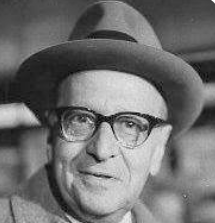
If by enlightenment and intellectual progress we mean the freeing of man from superstitious belief in evil forces, in demons and fairies, in blind fate-in short, emancipation of fear-then denunciation of what is currently called reason is the greatest service reason can render.
1 week ago
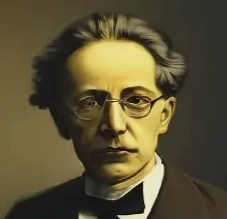
Do I write out of love to men? No, I write because I want to procure for my thoughts an existence in the world; and, even if I foresaw that these thoughts would deprive you of your rest and your peace, even if I saw the bloodiest wars and the fall of many generations springing up from this seed of thought - I would nevertheless scatter it. Do with it what you will and can, that is your affair and does not trouble me.
▼
Source
source
Cambridge 1995, p. 262, 263
2 months 3 weeks ago
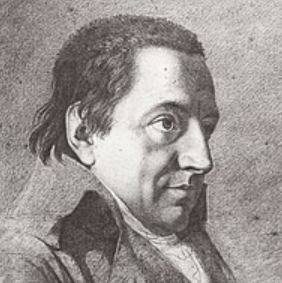
In the first place, the German is a branch of the Teutonic race. Of the latter it is sufficient to say here that its mission was to combine the social order established in ancient Europe with the true religion preserved in ancient Asia, and in this way to develop in and by itself a new and different age after the ancient world had perished.
▼
Source
source
The Chief Difference Between The Germans And The Other Peoples Of Teutonic Descent.
2 months 2 weeks ago
What a judgment upon the living, if it is true, as has been maintained, that what dies has never existed!
3 months 3 weeks ago
Wherever you are it is your own friends who make your world.
▼
Source
source
As quoted in The Thought and Character of William James (1935) by Ralph Barton Perry, Vol. II, ch. 91

4 months 3 weeks ago
The single harmony produced by all the heavenly bodies singing and dancing together springs from one source and ends by achieving one purpose, and has rightly bestowed the name not of "disordered" but of "ordered universe" upon the whole.
1 month 1 week ago
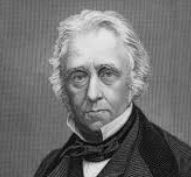
In one point I fully agree with the gentlemen to whose general views I am opposed. I feel with them, that it is impossible for us, with our limited means, to attempt to educate the body of the people. We must at present do our best to form a class who may be interpreters between us and the millions whom we govern; a class of persons, Indian in blood and colour, but English in taste, in opinions, in morals, and in intellect. To that class we may leave it to refine the vernacular dialects of the country, to enrich those dialects with terms of science borrowed from the Western nomenclature, and to render them by degrees fit vehicles for conveying knowledge to the great mass of the population.

4 months 2 weeks ago
The absurd does not liberate; it binds. It does not authorize all actions. "Everything is permitted" does not mean that nothing is forbidden.
CivilSimian.com created by AxiomaticPanic, CivilSimian, Kalokagathia