


3 months 1 week ago
Written words differ from spoken words in being material structures. A spoken word is a process in the physical world, having an essential time-order; a written word is a series of pieces of matter, having an essential space-order.
▼
Source
source
An Outline of Philosophy Ch.4 Language, 1927

2 months 1 week ago
I have never in my life met a man like him for noble simplicity, and boundless truthfulness. I understood from the way he talked that anyone who chose could deceive him, and that he would forgive anyone afterwards who had deceived him, and that was why I grew to love him.
▼
Source
source
Part 4, Chapter 8

3 months ago
False men and shams talk big and do nothing.
4 months 1 week ago
Philosophy is the science of truth.
2 months 2 days ago
The subconscious is ceaselessly murmuring, and it is by listening to these murmurs that one hears the truth.
▼
Source
source
Ch. 2, sect. 2

2 months 1 week ago
I am convinced that we have a degree of delight, and that no small one, in the real misfortunes and pains of others.
▼
Source
source
Part I Section XIV
2 months 6 days ago
In an article published in The Monist for January, 1891, I endeavored to show what ideas ought to form the warp of a system of philosophy, and particularly emphasized that of absolute chance. In the number of April, 1892, I argued further in favor of that way of thinking, which it will be convenient to christen tychism (from τύχη, chance). A serious student of philosophy will be in no haste to accept or reject this doctrine; but he will see in it one of the chief attitudes which speculative thought may take, feeling that it is not for an individual, nor for an age, to pronounce upon a fundamental question of philosophy. That is a task for a whole era to work out. I have begun by showing that tychism must give birth to an evolutionary cosmology, in which all the regularities of nature and of mind are regarded as products of growth, and to a Schelling-fashioned idealism which holds matter to be mere specialized and partially deadened mind.

4 months 1 week ago
We have seen how it is originally language which works on the construction of concepts, a labor taken over in later ages by science. Just as the bee simultaneously constructs cells and fills them with honey, so science works unceasingly on this great columbarium of concepts, the graveyard of perceptions.

3 months 1 week ago
Surplus value is exactly equal to surplus labour; the increase of the one [is] exactly measured by the diminution of necessary labour.
▼
Source
source
Notebook III, The Chapter on Capital, p. 259.
3 months 5 days ago
We ourselves are the entities to be analyzed.
▼
Source
source
Macquarrie & Robinson translation

2 months 6 days ago
Each of us is born with a share of purity, predestined to be corrupted by our commerce with mankind, by that sin against solitude.
2 months 1 day ago
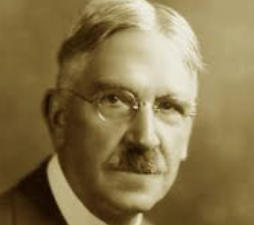
... classic philosophy maintained that change, and consequently time, are marks of inferior reality, holding that true and ultimate reality is immutable and eternal. Human reasons, all too human, have given birth to the idea that over and beyond the lower realm of things that shift like the sands on the seashore there is the kingdom of the unchanging, of the complete, the perfect. The grounds for the belief are couched in the technical language of philosophy, but the grounds for the cause is the heart's desire for surcease from change, struggle, and uncertainty. The eternal and immutable is the consummation of mortal man's quest for certainty.
6 days ago
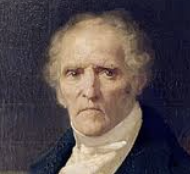
The seeds of heavenly bodies are deposited and cared for in the Milky Way, from which they emanate in swarms of comets that travel a ;long time and ordinarily gravitate towards various suns before becoming fixed in orbit.
▼
Source
source
L'attraction passioneé
2 months 1 week ago
We are taught to believe that a desire of domineering over our countrymen is love to our country; and those who hate civil war abet rebellion, and that the amiable and conciliatory virtues of lenity, moderation, and tenderness to the privileges of those who depend on this kingdom are a sort of treason to the state. It is impossible that we should remain long in a situation, which breeds such notions and dispositions, without some great alteration in the national character.

4 days ago
The final thing... the question of the nation, and the role of the nation in liberalism...There would seem to be a tension between liberalism's belief that all human beings enjoy... the same basic set of human rights, and the fact that we are divided up into nation states, in which the authority to enforce those rights is territorially limited. ...This contradiction can be bridged because... there is a liberal form of national identity which is not only possible, but... necessary if a liberal society is going to succeed.
▼
Source
source
23:22
3 months 1 week ago
It is our interest and our task to make the revolution permanent until all the more or less propertied classes have been driven from their ruling positions, until the proletariat has conquered state power and until the association of the proletarians has progressed sufficiently far - not only in one country but in all the leading countries of the world - that competition between the proletarians of these countries ceases and at least the decisive forces of production are concentrated in the hands of the workers. Our concern cannot simply be to modify private property, but to abolish it, not to hush up class antagonisms but to abolish classes, not to improve the existing society but to found a new one.
▼
Source
source
Address of the Central Committee to the Communist League in London, March 1850
2 months 6 days ago
If there is anyone who owes everything to Bach, it is certainly God.
1 month 3 weeks ago
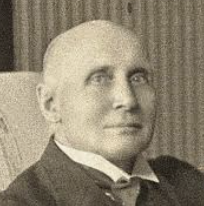
In formal logic, a contradiction is the signal of a defeat; but in the evolution of real knowledge it marks the first step in progress towards a victory.
▼
Source
source
Ch. 12: "Religion and Science", p. 260

3 months 1 week ago
Immortality. I notice that as soon as writers broach this question they begin to quote. I hate quotation. Tell me what you know.
▼
Source
source
May 1849
1 month 3 weeks ago
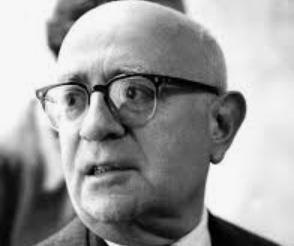
Underlying the concept of positivity is the conviction that the positive is intrinsically positive in itself, without anyone pausing to ask what is to be regarded as positive. ... It is significant and really quite interesting that the term 'positive' actually contains this ambivalence. On the one hand, 'positive' means what is given, is postulated, is there-as when we speak of positivism as the philosophy that sticks to the facts. But, equally, 'positive' also refers to the good, the approvable, in a certain sense, the ideal. And I imagine that this semantic constellation expresses with precision what countless people actually feel to be the case.
▼
Source
source
p. 18

4 months 1 week ago
When God chooses to let himself be born in lowliness, when he who holds all possibilities in his hand takes upon himself the form of a lowly servant, when he goes about defenseless and lets people do with him what they will, he surely must know well enough what he is doing and why he wills it; but for all that it is he who has people in his power and not they who have power over him-so history ought not play Mr. Malapert by this wanting to make manifest who he was.
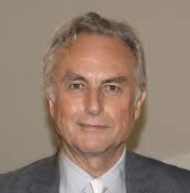
1 month 6 days ago
If it's really true, that the museum at Liberty University has dinosaur fossils which are labelled as being 3000 years old, then that is an educational disgrace. It is debauching the whole idea of a university, and I would strongly encourage any members of Liberty University who may be here...to leave and go to a proper university.
▼
Source
source
At Randolph-Macon Woman's College in Lynchburg, Virginia, (23 October 2006) Broadcasted by C-SPAN2
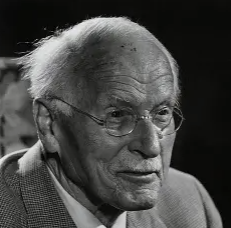
2 months 6 days ago
Every father is given the opportunity to corrupt his daughter's nature, and the educator, husband, or psychiatrist then has to face the music. For what has been spoiled by the father can only be made good by a father, just as what has been spoiled by the mother can only be repaired by a mother. The disastrous repetition of the family pattern could be described as the psychological original sin, or as the curse of the Atrides running through the generations.
▼
Source
source
Mysterium Coniunctionis (1955) CW 14: P. 232
2 months 1 day ago
The other conclusion is that art is the complement of science. Science as I have said is concerned wholly with relations, not with individuals. Art, on the other hand, is not only the disclosure of the individuality of the artist but also a manifestation of individuality as creative of the future, in an unprecedented response to conditions as they were in the past. Some artists in their vision of what might be, but is not, have been conscious rebels. But conscious protest and revolt is not the form which the labor of the artist in creation of the future must necessarily take. Discontent with things as they are is normally the expression of the vision of what may be and is not, art in being the manifestation of individuality is this prophetic vision.
2 months 6 days ago
A pair of statements may be taken conjunctively or disjunctively; for example, "It lightens and it thunders," is conjunctive, "It lightens or it thunders" is disjunctive. Each such individual act of connecting a pair of statements is a new monad for the mathematician.
▼
Source
source
p. 268
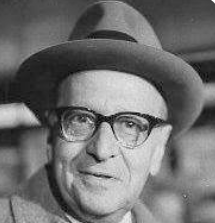
2 months ago
With the abolition of otium and of the ego no aloof thinking is left. ... Without otium philosophical thought is impossible, cannot be conceived or understood.
▼
Source
source
p. 39.

1 day ago
But the thing a man does practically believe (and this is often enough without asserting it even to himself, much less to others); the thing a man does practically lay to heart, and know for certain, concerning his vital relations to this mysterious Universe, and his duty and destiny there, that is in all cases the primary thing for him, and creatively determines all the rest. That is his religion; or, it may be, his mere scepticism and no-religion: the manner it is in which he feels himself to be spiritually related to the Unseen World or No-World; and I say, if you tell me what that is, you tell me to a very great extent what the man is, what the kind of things he will do is.

3 weeks 4 days ago
Science ... commits suicide when it adopts a creed.
▼
Source
source
"The Darwin Memorial"
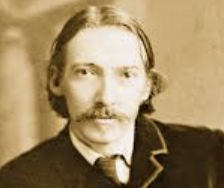
1 month 5 days ago
To be overwise is to ossify; and the scruple-monger ends by standing stockstill.
▼
Source
source
314
3 months 1 week ago
I do not, therefore, need any penetrating acuteness to see what I have to do in order that my volition be morally good. Inexperienced in the course of the world, incapable of being prepared for whatever might come to pass in it, I ask myself only: can you also will that your maxim become a universal law?
1 month 3 weeks ago
Fertilisation of the soul is the reason for the necessity of art.
▼
Source
source
Ch. 13: "Requisites for Social Progress", p. 283
4 weeks ago
Perhaps no person can be a poet, or even enjoy poetry, without a certain unsoundness of mind.
▼
Source
source
p. 7

3 months 1 week ago
As if there could be true stories: things happen in one way, and we retell them in the opposite way.
2 months 6 days ago
We are so captivated by and entangled in our subjective consciousness that we have forgotten the age-old fact that God speaks chiefly through dreams and visions.
▼
Source
source
The Symbolic Life (1953); also in Man and His Symbols

3 months 1 week ago
The evil that has resulted from the error of the schools in teaching natural philosophy as an accomplishment only has been that of generating in the pupils a species of atheism. Instead of looking through the works of creation to the Creator Himself, they stop short and employ the knowledge they acquire to create doubts of His existence. They labor with studied ingenuity to ascribe everything they behold to innate properties of matter and jump over all the rest by saying that matter is eternal.
▼
Source
source
A Discourse, &c. &c.
1 month 2 weeks ago
Sickness is mankind's greatest defect.
▼
Source
source
F 100

2 months 1 week ago
On its pass through finitude, the being-for-itself of the counter-image expresses itself most potently as ""I-ness", as self-identical individuality. Just as a planet in its orbit no sooner reaches its farthest distance from the center than it returns to its closest proximity, so the point of the farthest distance from God, the I-ness, is also the moment of its return to the Absolute, of the re-absorption into the ideal.
▼
Source
source
P. 30
3 months 1 week ago
I am not much an advocate for travelling, and I observe that men run away to other countries because they are not good in their own, and run back to their own because they pass for nothing in the new places. For the most part, only the light characters travel. Who are you that have no task to keep you at home? I have been quoted as saying captious things about travel; but I mean to do justice. .... He that does not fill a place at home, cannot abroad. He only goes there to hide his insignificance in a larger crowd. You do not think you will find anything there which you have not seen at home? The stuff of all countries is just the same. Do you suppose there is any country where they do not scald milk-pans, and swaddle the infants, and burn the brushwood, and broil the fish? What is true anywhere is true everywhere. And let him go where he will, he can only find so much beauty or worth as he carries.
▼
Source
source
Culture
3 months 1 week ago
There are two laws discrete Not reconciled, Law for man, and law for thing.
▼
Source
source
Ode: Inscribed to W. H. Channing, st. 9
3 months 1 week ago
For wherever violence is used, and injury done, though by hands appointed to administer Justice, it is still violence and injury, however colour'd with the Name, Pretences, or Forms of Law, the end whereof being to protect and redress the innocent, by an unbiassed application of it, to all who are under it; wherever that is not bona fide done, War is made upon the Sufferers, who having no appeal on Earth to right them, they are left to the only remedy in such Cases, an appeal to Heaven.
▼
Source
source
Two Treatises of Government. The Second Treatise. Chapter 3: The State of War, §20 p. 281 books.google

3 months 4 days ago
I remind young people everywhere I go, one of the worst things the older generation did was to tell them for twenty-five years "Be successful, be successful, be successful" as opposed to "Be great, be great, be great". There's a qualitative difference.
▼
Source
source
Speech in San Francisco: Democracy Matters

1 month 2 days ago
Propaganda:
Good = God (take a letter)
Evil = Devil (add a letter)
😁🚀📖
1 day ago
I called it a small light shining and shaping in the huge vortex of Norse darkness. Yet the darkness itself was alive; consider that. It was the eager inarticulate uninstructed Mind of the whole Norse People, longing only to become articulate, to go on articulating ever farther!
3 months 1 week ago
Rascals are always sociable - more's the pity! and the chief sign that a man has any nobility in his character is the little pleasure he takes in others' company.
▼
Source
source
Vol. 1, Ch. 5, § 9

4 months 6 days ago
Every revolutionary ends as an oppressor or a heretic.
3 months 1 week ago
Under no pretext should arms and ammunition be surrendered; any attempt to disarm the workers must be frustrated, by force if necessary.
▼
Source
source
Address of the Central Committee to the Communist League in London, March 1850
3 weeks 4 days ago
History warns us, however, that it is the customary fate of new truths to begin as heresies and to end as superstitions; and, as matters now stand, it is hardly rash to anticipate that, in another twenty years, the new generation, educated under the influences of the present day, will be in danger of accepting the main doctrines of the 'Origin of Species' with as little reflection, and it may be with as little justification, as so many of our contemporaries, twenty years ago, rejected them. Against any such a consummation let us all devoutly pray; for the scientific spirit is of more value than its products, and irrationally held truths may be more harmful than reasoned errors.
▼
Source
source
The Coming of Age of The Origin of Species (1880); Collected Essays, vol. 2
2 months 2 weeks ago
Your god is too small.
▼
Source
source
Attributed to Bruno in episode 1 of Cosmos: A Spacetime Odyssey (2014). Earliest use of this phrase appears to be in Your God is Too Small (1961) by English priest John Bertram Phillips.
3 months 1 week ago
Reading is merely a surrogate for thinking for yourself; it means letting someone else direct your thoughts. Many books, moreover, serve merely to show how many ways there are of being wrong, and how far astray you yourself would go if you followed their guidance. You should read only when your own thoughts dry up, which will of course happen frequently enough even to the best heads; but to banish your own thoughts so as to take up a book is a sin against the holy ghost; it is like deserting untrammeled nature to look at a herbarium or engravings of landscapes.
▼
Source
source
Vol. 2, Ch. 22, § 261
2 months 2 days ago
Time, and Industry, produce everyday new knowledge.
▼
Source
source
The Second Part, Chapter 30, p. 176
CivilSimian.com created by AxiomaticPanic, CivilSimian, Kalokagathia