

3 days ago
God, our Father, has given us the life and the art of healing to protect and maintain it.
2 months 4 days ago
The recognition of human wretchedness is difficult for whoever is rich and powerful because he is almost invincibly led to believe that he is something. It is equally difficult for the man in miserable circumstances because he is almost invincibly led to believe that the rich and powerful man is something.
▼
Source
source
p. 216

1 month 2 weeks ago
All words at every level of prose and poetry and all devices of language and speech derive their meaning from figure / ground relation.
▼
Source
source
quoted in McLuhan: A Guide for the Perplexed by W. Terrence Gordon, 2010, p. 167

2 months 2 weeks ago
Mind, even more deadly to empires than to individuals, erodes them, compromises their solidity.

3 months 2 weeks ago
The two parties which divide the State, the party of Conservatism and that of Innovation are very old, and have disputed the possession of the world ever since it was made ... Now one, now the other gets the day, and still the fight renews itself as if for the first time, under new names and hot personalities ... Innovation is the salient energy; Conservatism the pause on the last movement.
▼
Source
source
Via Arthur M. Schlesinger, Jr., The Cycles of American History (Houghton Mifflin, 1986) p. 23

3 months 2 weeks ago
Tout existant naît sans raison, se prolonge par faiblesse et meurt par rencontre. Every existing thing is born without reason, prolongs itself out of weakness and dies by chance.
2 months 1 week ago
The Interpretation of the Laws of Nature in a Common-wealth, dependeth not on the books of Moral Philosophy. The Authority of writers, without the Authority of the Commonwealth, maketh not their opinions Law, be they never so true.
▼
Source
source
The Second Part, Chapter 26, p. 143

3 months 1 week ago
Suffer no anxiety, for he who is a sufferer of anxiety becomes regardless of enjoyment of the world and the spirit, and contraction happens to his body and soul.
3 days ago
Correspondences are like small clothes before the invention of suspenders; it is impossible to keep them up.
▼
Source
source
Vol. II, letter to Catherine Crowe (31 January 1841), pp. 441-442
4 months 1 day ago
If you act externally with men in conformity with your rank, you should recognize, by a more secret but truer thought, that you have nothing naturally superior to them.
2 months 2 weeks ago
Instinct is blind;-a consciousness without insight. Freedom, as the opposite of Instinct, is thus seeing, and clearly conscious of the grounds of its activity.
▼
Source
source
p. 7

1 week 2 days ago
For this also we will honour the poor Manchester Insurrection, and augur well of it. A deep unspoken sense lies in these strong men,- inconsiderable, almost stupid, as all they can articulate of it is. Amid all violent stupidity of speech, a right noble instinct of what is doable and what is not doable never forsakes them: the strong inarticulate men and workers, whom Fact patronises; of whom, in all difficulty and work whatsoever, there is good augury!

3 months 1 week ago
The problem is not to discover in oneself the truth of one's sex, but, rather, to use one's sexuality henceforth to arrive at a multiplicity of relationships. And, no doubt, homosexuality is not a form of desire but something desirable. Therefore, we have to work at becoming homosexuals.
▼
Source
source
"Friendship as a Way of Life," interview in Gai pied, April 1981, as translated in Ethics, Subjectivity and Truth (1994), pp. 135-136

3 months 2 weeks ago
In obedience to the feeling of reality, we shall insist that, in the analysis of propositions, nothing "unreal" is to be admitted. But, after all, if there is nothing unreal, how, it may be asked, could we admit anything unreal? The reply is that, in dealing with propositions, we are dealing in the first instance with symbols, and if we attribute significance to groups of symbols which have no significance, we shall fall into the error of admitting unrealities, in the only sense in which this is possible, namely, as objects described.
▼
Source
source
Ch. 16: Descriptions
4 months 2 weeks ago
After these matters we ought perhaps next to discuss pleasure. For it is thought to be most intimately connected with our human nature, which is the reason why in educating the young we steer them by the rudders of pleasure and pain; it is thought, too, that to enjoy the things we ought and to hate the things we ought has the greatest bearing on virtue of character. For these things extend right through life, with a weight and power of their own in respect both to virtue and to the happy life, since men choose what is pleasant and avoid what is painful; and such things, it will be thought, we should least of all omit to discuss, especially since they admit of much dispute.
3 months 2 weeks ago
Beauty without grace is the hook without the bait.
▼
Source
source
Beauty
3 months 2 weeks ago
God is the solitude of men. There was only me: I alone decided to commit Evil; alone, I invented Good. I am the one who cheated, I am the one who performed miracles, I am the one accusing myself today, I alone can absolve myself; me, the man.
▼
Source
source
Act 10, sc. 4
1 week 2 days ago
Again, and again, we say, the great, the creative and enduring is ever a secret to itself; only the small, the barren and transient is otherwise.
▼
Source
source
Characteristics.
4 months 2 weeks ago
Therefore create me! You, the most esteemed, cultured public, are in possession of nervus rerum gerendarum [the moving force to accomplish something]. Just a word from you, a promise to purchase what I write, or, if it is possible, so that everything can be in order immediately, a little advance payment, and I am an author; I shall remain one as long as this favor lasts.
2 months 4 days ago
Art is the symbol of the two noblest human efforts: to construct and to refrain from destruction.
▼
Source
source
The Pre-War Notebook (1933-1939), published in First and Last Notebooks (1970) edited by Richard Rees
3 months 2 weeks ago
Criminals together. We're in hell, my little friend, and there's never any mistake there. People are not damned for nothing. Act 1, sc. 5 Variant translation: Among murderers. We are in hell, my dear, there is never a mistake and people are not damned for nothing.
4 months 2 weeks ago
There are many people who reach their conclusions about life like schoolboys; they cheat their master by copying the answer out of a book without having worked out the sum for themselves.
2 months 2 weeks ago
Primitive superstition lies just below the surface of even the most tough-minded individuals, and it is precisely those who most fight against it who are the first to succumb to its suggestive effects.
▼
Source
source
p. 25
2 weeks ago
Nowhere is there more constancy and more unanimity than among the French to subordinate that sex which they pretend to honor so highly.
▼
Source
source
The Theory of Social Organization
3 months 3 weeks ago
All... good and useful properties of character have a price in exchange for others which have just as much use. Talent has a market price, since the sovereign or estate-owner can use a talented person in all sorts of ways. Temperament has a fancy price,22 since one can converse well with such a person; he is a pleasant companion. But, character has an inner value[,] and it is above all price.
▼
Source
source
Kant, Immanuel (1996), page 203
3 months 2 weeks ago
Society should treat all equally well who have deserved equally well of it, that is, who have deserved equally well absolutely. This is the highest abstract standard of social and distributive justice; towards which all institutions, and the efforts of all virtuous citizens, should be made in the utmost degree to converge.
▼
Source
source
Ch. 5
2 months 3 weeks ago
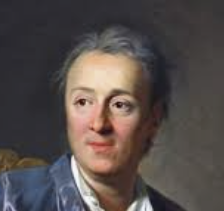
The most dangerous madmen are those created by religion, and ... people whose aim is to disrupt society always know how to make good use of them on occasion.

4 months 2 weeks ago
It seemed to him [Euphemius] it would be a brilliant notion to call in an outside force to fight on his behalf. This same brilliant notion has occurred to participants in civil wars uncounted times in history and it has ended in catastrophe just about every time, since those called in invariably take over for themselves. Of all history's lessons, this seems to be the plainest, and the most frequently ignored.
2 months 2 weeks ago
Time is heavy sometimes; imagine how heavy eternity must be.
3 months 2 weeks ago
For nature beats in perfect tune, And rounds with rhyme her every rune, Whether she work in land or sea, Or hide underground her alchemy. Thou canst not wave thy staff in air, Or dip thy paddle in the lake, But it carves the bow of beauty there, And the ripples in rhymes the oar forsake.
▼
Source
source
Wood-notes, no. II, st. 7

3 months 1 week ago
And yet it will be obvious that it is difficult to really know of what sort each thing is.

3 months 2 weeks ago
You can hardly convince a man of an error in a lifetime, but must content yourself with the reflection that the progress of science is slow. If he is not convinced, his grandchildren may be.
3 months 2 weeks ago
Intellectuals cannot be good revolutionaries; they are just good enough to be assassins.
▼
Source
source
Act 5, sc. 3
1 month 2 weeks ago
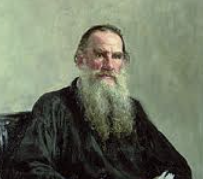
'BUT science and art! You are denying science and art: that is you are denying that by which humanity lives.' People constantly make this rejoinder to me, and they employ: this method in order to reject my arguments without examination. 'He rejects science and art, he wishes man to revert to a state of savagery - why listen to him or discuss with him?' But this is unjust. Not only do I not repudiate science, that is, the reasonable activity of humanity, and art - the expression of that reasonable activity - but it is just on behalf of that reasonable activity and its expression that I speak, only that It may be possible for mankind to escape from the savage state into which it is rapidly lapsing thanks to the false teaching of our time. It is only on that account that I speak as I do.
1 month 2 weeks ago
Nobody can doubt that the entire range of applied science contributes to the very format of a newspaper. But the headline is a feature which began with the Napoleonic Wars. The headline is a primitive shout of rage, triumph, fear, or warning, and newspapers have thrived on wars ever since.
▼
Source
source
p. 7

1 month 3 weeks ago
There are two kinds of people, killers, and everybody else.

3 months 2 weeks ago
And if he be too forward to venture upon his own strength and skill, and perplexity and trouble of a misadventure now and then, that reaches not his innocence, his health, or reputation, may not be an ill way to teach him more caution.
▼
Source
source
Sec. 94

2 months 3 weeks ago
In America, more than anywhere else in the world, care has been taken constantly to trace clearly distinct spheres of action for the two sexes, and both are required to keep in step, but along paths that are never the same.
▼
Source
source
Book Three, Chapter XII.
3 months 2 weeks ago
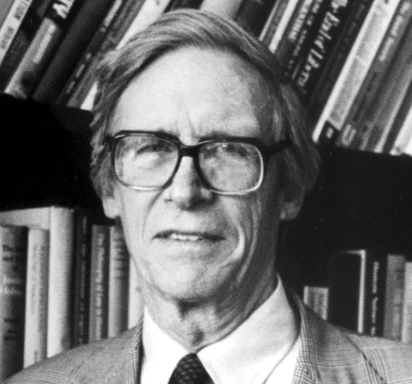
A conception of justice cannot be deduced from self evident premises or conditions on principles; instead, its justification is a matter of the mutual support of many considerations, of everything fitted together into one coherent view.
▼
Source
source
Chapter I, Section 4, p. 21

3 months 3 weeks ago
It is, therefore, a just political maxim, that every man must be supposed a knave: Though at the same time, it appears somewhat strange, that a maxim should be true in politics, which is false in fact. But to satisfy us on this head, we may consider, that men are generally more honest in their private than in their public capacity, and will go greater lengths to serve a party, than when their own private interest is alone concerned. Honour is a great check upon mankind: But where a considerable body of men act together, this check is, in a great measure, removed; since a man is sure to be approved of by his own party, for what promotes the common interest; and he soon learns to despise the clamours of adversaries.
▼
Source
source
Part I, Essay 6: Of The Independency of Parliament; first line often paraphrased as "It is a just political maxim, that every man must be supposed a knave."

2 months 3 weeks ago
I entirely agree with you, as to the ill tendency of the affected doubts of some philosophers, and fantastical conceit of others. I am even so far gone of late in this way of think, that I have quitted several of the sublime notions I had got in their schools for vulgar opinions. And I give it you on my word, since this revolt from metaphysical notions to the plain dictates of nature and common sense, I find my understanding strangely enlightened, so that I can now easily comprehend a great many thing which before were all mystery and riddle.
▼
Source
source
Said by Philonous (Berkeley) to Hylas in the opening of dialog 1 with reference to the recent surge philosophic endeavors (Locke, Newton, et al) that seemed to lead to skepticism about the existence of the world.
3 months 2 weeks ago
He thought human life a poor thing at best, after the freshness of youth and of unsatisfied curiosity had gone by. This was a topic on which he did not often speak, especially, it may be supposed, in the presence of young persons: but when he did, it was with an air of settled and profound conviction. He would sometimes say, that if life were made what it might be, by good government and good education, it would be worth having: but he never spoke with anything like enthusiasm even of that possibility.
▼
Source
source
(p. 48)
2 months 1 day ago
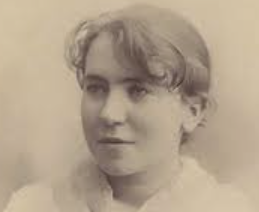
It is true that parents today are learning to enhance the physical qualities of their children. But their minds and characters they cannot mould. The antiquated system of education and our perverse social influences unfortunately do that. In view of the numerous misfit and marred children these institutions have created, I am quite content not to have contributed any of my own.

3 months 2 weeks ago
I have lived an honest and useful life to mankind; my time has been spend in doing good and I die in perfect composure and resignation to the will of my Creator, God.
▼
Source
source
Last will (1809), as quoted in The Fortnightly Review, vol. 31, pp. 398-399
3 months 1 week ago
It was an important moment. The old partners of the spectacle of punishment, the body and the blood, gave way. A new character came of the scene, masked. It was the end of a certain kind of tragedy; comedy began, with shadow play, faceless voices, impalpable entities. The apparatus of punitive justice must now bite into this bodiless reality.
▼
Source
source
pp. 17
1 month 1 week ago
Believe me, my friends, you are yet very deficient with regard to the best modes of training your children, or of arranging your domestic concerns.
2 months 3 days ago
The mentality of mankind and the language of mankind created each other. If we like to assume the rise of language as a given fact, then it is not going too far to say that the souls of men are the gift from language to mankind. The account of the sixth day should be written: He gave them speech, and they became souls.
▼
Source
source
Modes of Thought (1938).
1 week ago
There should be 2 systems. One for needs and one for wants. We shouldn't have to compete for needs, and we shouldn't expect the things we want. An ideal system would definitely be a seriously regulated capitalism with an uncompromised safety net that we focus on with automation and AI. But, those with just want those without to die. In the end, they will lose.
2 months 1 day ago
Could it be that sexual perversion and romanticism sprang from the same longing for distant horizons?
▼
Source
source
p. 17

3 months 2 weeks ago
I have received, sir, your new book against the human species, and I thank you for it. You will please people by your manner of telling them the truth about themselves, but you will not alter them. The horrors of that human society-from which in our feebleness and ignorance we expect so many consolations-have never been painted in more striking colours: no one has ever been so witty as you are in trying to turn us into brutes: to read your book makes one long to go on all fours. Since, however, it is now some sixty years since I gave up the practice, I feel that it is unfortunately impossible for me to resume it: I leave this natural habit to those more fit for it than are you and I.
▼
Source
source
Letter to Jean-Jacques Rousseau, August 30, 1755 referring to Rousseau's Discourse on Inequality.
CivilSimian.com created by AxiomaticPanic, CivilSimian, Kalokagathia